Taiwan’s Solar Renaissance: Is Perovskite the "AMOLED of Energy"? Targeting SpaceX's AI Ambitions: How Taiwan's Supply Chain is Pivoting from "Red Ocean" to Space Frontiers
While the semiconductor memory sector has driven recent market rallies, a new signal is emerging in Taiwan’s capital markets. Today (4th), major solar players such as United Renewable Energy (URE), Motech, Gigasolar, and Giga Solar Materials saw their shares surge by the daily limit. This momentum has extended to the "Perovskite" sector—a next-generation solar technology—fueled by speculation over future applications in space and Low Earth Orbit (LEO) satellites. Even display giant AUO has seen related stock activity.
For years, Taiwan's solar and panel industries were considered the most depressed sectors within the broader ICT landscape. They bore the brunt of overcapacity and fierce price competition from China—often referred to as the "Red Supply Chain." However, the electronics industry is defined by constant reinvention. The emergence of Perovskite technology and the burgeoning space economy are now acting as catalysts for a major industrial turnaround.
Taking the solar sector as an example: despite a brief boost from redirected orders due to the U.S.-China tech war, the industry struggled last year with low installation numbers (approx. 1.2GW). However, industry insiders now see signs of recovery. bolstered by aggressive government renewable energy policies and a forecasted rebound in domestic demand this year.
[The Tech Logic] Musk’s "Space AI" Bottlenecks: Why Perovskite is the Only Solution
The catalyst for this shift is the booming space economy. Elon Musk, CEO of Tesla and SpaceX, has identified solar energy as the linchpin for "Space AI," igniting new commercial possibilities. This is why Perovskite technology, actively developed by Taiwanese firms, has become a focal point for investors.
In early 2026, speaking at forums like Davos, Musk explicitly stated that "Space AI Data Centers" are the optimal solution to Earth's power bottlenecks and heat dissipation challenges. He identified two "Great Bosses" (Critical Hurdles) for AI computing: Power and Heat.
- Power: In space, there are no clouds and no day-night cycle. Solar generation efficiency is multiples higher than on Earth.
- Heat: The background temperature of space is near absolute zero. Through radiative cooling, space data centers can eliminate the massive water and electricity costs required for cooling on Earth.
Musk’s requirements for space solar tech focus on physics: High Efficiency, Scalability, and Mass Deployability. Analyzing his technical needs and SpaceX's roadmap, Perovskite stands out as the primary solution for three reasons:
- Lightweight & Flexible: It can be made into flexible films, meeting SpaceX’s extreme demands for minimizing payload weight.
- Efficiency: Theoretical efficiency can exceed 30-40%, crucial for generating massive power for AI workloads within the confined space of a satellite.
- Cost: Perovskite uses a solution-coating process, making it significantly cheaper than traditional space-grade batteries like Gallium Arsenide (GaAs).
[Supply Chain I] TSEC: The SpaceX-Verified Pioneer Entering the "Quantum Era"
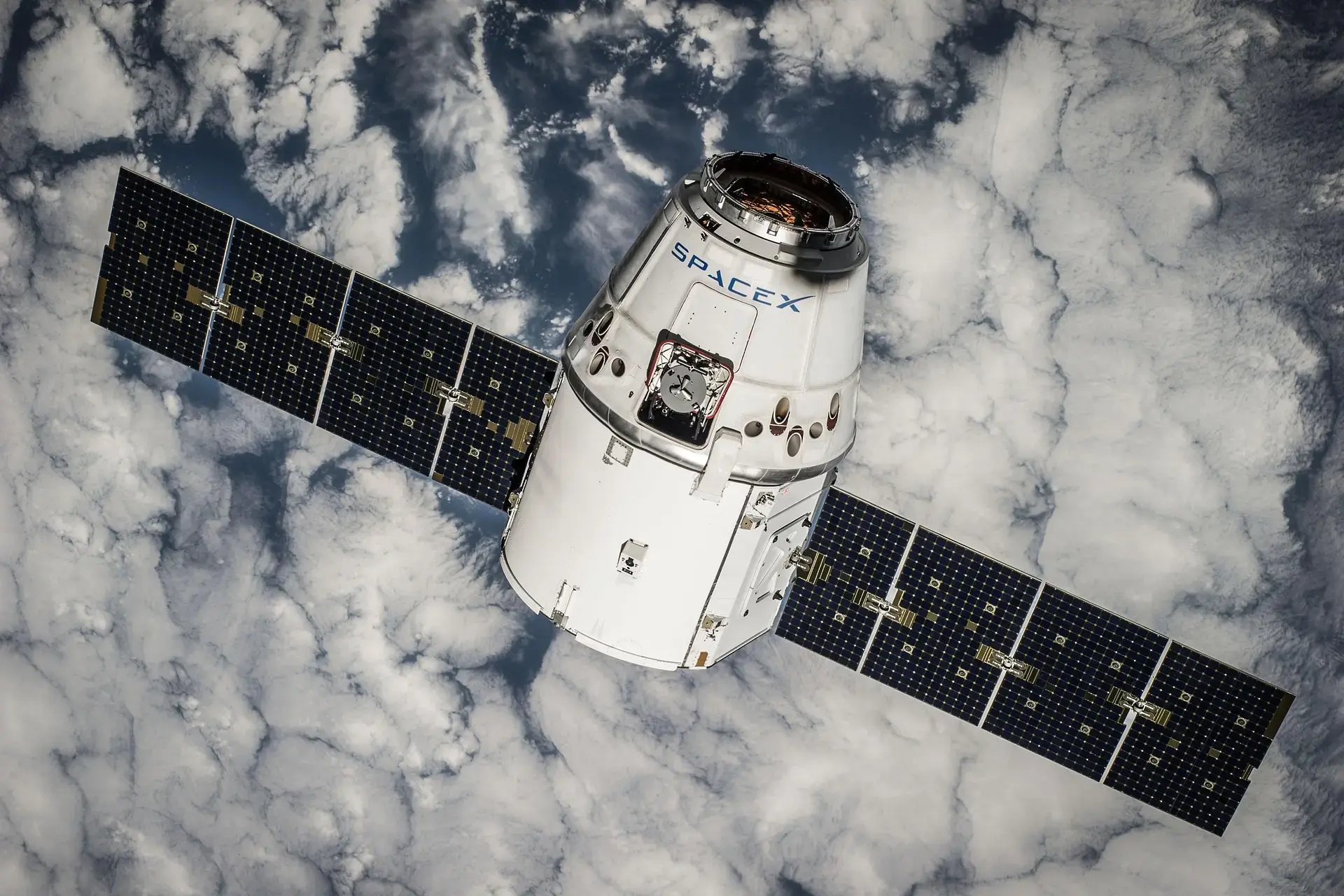
Among traditional solar manufacturers, TSEC Corporation is the clear leader in space deployment. TSEC is not only ahead in actual shipments and satellite verification but is also seen as a direct representative of the "SpaceX Supply Chain." It is one of the few Taiwanese firms capable of supplying solar cells and modules for Musk’s Starlink project.
TSEC Chairman 1Liao Kuo-jung has stated that the solar industry is entering a "Quantum Era." The company is aggressively developing "Perovskite + TOPCon Tandem Cells," with mass production targeted for 2028. This technology aims to break the physical limits of silicon, pushing conversion efficiency above 35%—a "dream product" for space missions that prioritize Specific Power (Power-to-Weight Ratio).
TSEC’s cells are already powering LEO satellites. Given that satellites cannot be repaired once launched, this adoption proves TSEC’s manufacturing process meets aerospace-grade durability standards. With Musk planning "Space AI Data Centers" and a mega-constellation of satellites (each requiring ~100kW of power), the potential order volume for TSEC is immense.
[Supply Chain II] URE: Defying Physical Limits for Payload Efficiency
United Renewable Energy (URE) is arguably the most aggressive player in Perovskite R&D. URE views Perovskite not just as an investment, but as its "Next-Generation Core Product," moving rapidly into patent filings and pilot production.
Technologically, URE has chosen the challenging but high-potential "Tandem Cell" route. In collaboration with National Taiwan University (NTU), they have achieved efficiencies exceeding 26%, with a goal to surpass 30% within 3-4 years—far beyond the ~29% physical limit of silicon.
URE is targeting the "Space AI" and LEO markets by leveraging Perovskite's lightweight advantage. Since launch costs skyrocket with every added kilogram, URE’s technology significantly improves the Power-to-Weight Ratio. As LEO satellites begin carrying power-hungry AI chips, high-efficiency Perovskite tandem cells are becoming the power source of choice.
URE expects to deliver its first pilot modules between late 2025 and 2026, targeting price-insensitive but performance-critical markets (such as space and BIPV), effectively decoupling from the low-margin silicon price wars.
[Technological Gene Transfer] A Powerhouse Alliance of Display and Solar: The Strategic Pivots of AUO and Motech
Motech, a veteran leader in Taiwan's solar industry, is currently focusing on high-efficiency N-type TOPCon cells. This strategic pivot aligns perfectly with the aerospace sector's stringent demands for power generation efficiency. As one of the first Taiwanese manufacturers to fully transition to N-type TOPCon technology, Motech capitalizes on the fact that N-type cells offer superior radiation resistance and significantly lower Light-Induced Degradation (LID) compared to traditional P-type cells.
Regarding space commercialization, although Motech's primary market remains terrestrial, its high-efficiency modules inherently possess the physical robustness required for the harsh space environment. In high-end application markets—such as mobile communication base stations and specialized vehicles—Motech is actively seeking opportunities to integrate into the global aerospace supply chain.
Meanwhile, AUO, a global display panel giant, hasn't explicitly built a "perovskite factory" under its own banner. Instead, it is strategically penetrating the space through profound talent networks, technology transfers, and industry alliances.
In fact, former AUO President L.J. Chen is the driving force behind the commercialization of perovskite technology. Beyond founding Taiwan Perovskite Technology Corp. (TPSK) and spearheading the Taiwan Perovskite Research and Industry Alliance (TPRA), he serves as the crucial bridge facilitating the current strategic partnership with AUO. Display panel manufacturing shares a remarkably high synergy with perovskite technology—particularly in precision thin-film processing, large-area manufacturing, and advanced encapsulation. These overlapping core competencies provide AUO with a formidable competitive edge as it pivots into next-generation perovskite solar cell production.
In recent years, AUO has aggressively pursued a dual-axis transformation by establishing AUO Energy, aiming to provide comprehensive green energy solutions. While AUO's current mass production still relies heavily on traditional silicon solar cells (primarily through its strategic alliance with Sino-American Silicon Products / SAS), its R&D division has been closely monitoring "tandem cell" technology. They aim to seamlessly integrate mature "silicon" with next-generation "perovskite" to shatter the physical efficiency barriers of traditional solar power.
Furthermore, AUO's deep strategic layout in the BIPV (Building-Integrated Photovoltaics) sector—such as solar roofs and smart glass facades—provides the perfect commercial application scenarios for the future "lightweight, thin, and translucent" characteristics of perovskite cells.
[Key Insight] Why Taiwan Wins: The "AMOLED" Moment and Escaping the Red Supply Chain
Dr. Chen Lai-juh argues that Taiwan possesses the world’s strongest "industrialization DNA" for Perovskite, citing three key factors:
- Manufacturing Core: The core processes—Large-Area Coating and Thin-Film Packaging—are identical to Taiwan’s decades-old expertise in LCD panels and semiconductor back-end processes. The equipment supply chain is already mature; Taiwan is not starting from zero.
- BIPV Demand: Taiwan’s dense urban landscape limits roof space. Chen promotes "Energy-Generating Windows," specifically the "Luban II" series (named after Luban, the legendary Chinese god of craftsmanship). This turns skyscrapers from energy consumers into energy generators, aligning with Taiwan’s 2050 Net-Zero goals.
- Geopolitical Strategy: Perovskite offers an escape route from the "Red Supply Chain" (China's dominance in silicon solar). The high entry barrier of "Material Science + Precision Equipment" allows Taiwan to leverage its strengths in customization and quality, targeting high-value aerospace and IoT markets rather than competing on price.
Dr. Chen draws a powerful analogy: "Perovskite is the 'AMOLED' of the solar industry."
"Early AMOLEDs were questioned for their lifespan and cost," Chen says. "But because they were thin, light, and offered superior color, they eventually replaced LCDs in smartphones. Perovskite will follow the same path. Through material evolution (like Tandem technology), it will prove irreplaceable in specific domains like architecture, space, and wearables."
Whether it is new technology or new markets, the electronics industry thrives on pivots. The convergence of Perovskite technology and the Space Economy offers Taiwan’s solar sector a golden opportunity to shed the "commoditized" label and upgrade into a critical high-tech value chain.
Related Articles
Micron Announces Its Largest Rewards Ever. Its Taiwan Union's Demands Expose a Clash of Pay Systems. A strike threat at Taiwan's largest foreign investor, read in three dimensions
TSMC's 3nm rinse comes exclusively from AEMC, a Taiwanese company once withdrawn from the Emerging Stock Board
Taiwan AI Industry Upgrade Forum Series || Event Report:America Wants More Manufacturing. What Does It Take for Taiwan’s Suppliers to Follow?