Winning Against Korea is Just the Beginning: From Baseball Soul to Semiconductors, Decoding How the "Team Taiwan" Ecosystem Shapes the Path to Success
Editor's Note: How does a small island consistently dominate the global semiconductor supply chain? To understand the "Taiwan Miracle" and its technological resilience, one must look beyond the cleanrooms of TSMC and onto the baseball diamond. Following Team Taiwan's dramatic performance in the 2026 World Baseball Classic, this special feature explores the shared DNA between Taiwan's baseball history and its tech industry. Through the lens of historical tenacity, cluster economics, and the unique "Team Taiwan" ecosystem, we uncover the cultural blueprint that drives Taiwan's success on the world stage.
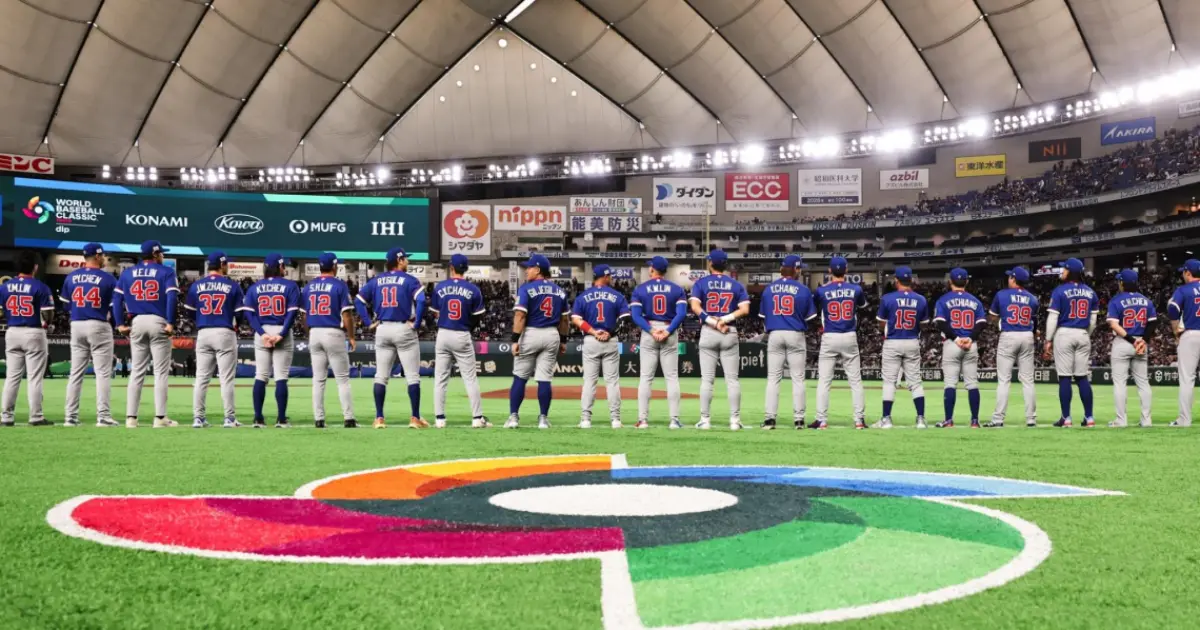
During the second weekend of March, the collective mood of the Taiwanese people was entirely dictated by baseball. Despite Team Taiwan losing its first two group-stage matches against Australia and Japan in the World Baseball Classic (WBC), they bounced back with a massive victory over Czechia and subsequently edged out their long-time rival, South Korea, by a razor-thin margin of 5-4. It marked Taiwan's first-ever WBC victory over the Korean national team.
For many Taiwanese, securing a win against South Korea carries profound significance. This victory transcends the scoreboard; it is the ultimate embodiment of the "Team Taiwan" spirit—a relentless refusal to give up, seamless teamwork, and the tenacity to fight until the very last pitch.
This distinctive "Team Taiwan" resilience did not materialize out of thin air. That same weekend, a concert gathering leaders from Taiwan’s arts and tech sectors serendipitously traced the historical roots of this very spirit. It is a story I want to share with international readers who might not be familiar with the cultural fabric of Taiwanese society.
A Century of Memory and Rebirth: From Williamsport to World Champions, the "Resilience DNA"
The OneSong Orchestra is arguably Taiwan’s most vibrant and creative symphonic group. For their March concert, they curated a baseball-themed program that chronologically revisited the development of Taiwanese baseball, selecting iconic tracks to represent each pivotal moment in history.
Serving as the guide for the evening was Dr. Cheng Mu-chun, an Assistant Professor at the Fu Jen Catholic University School of Medicine. Himself a former amateur baseball player and a die-hard fan, Dr. Cheng led the audience on a historical narrative through Taiwan’s baseball journey.
The opening piece struck a deep chord with Taiwanese born between the 1940s and 1960s. In 1972, the Taiwan Television Enterprise (TTV) adopted an instrumental version of Mr. Cannibal as the theme song for its Little League baseball broadcasts. Hearing that melody instantly transports a whole generation back to the days of waking up in the middle of the night to passionately follow live broadcasts. During an era when Taiwan faced severe diplomatic isolation, watching young Taiwanese players fight for the world championship in Williamsport, Pennsylvania, became the island's primary outlet for building national confidence.
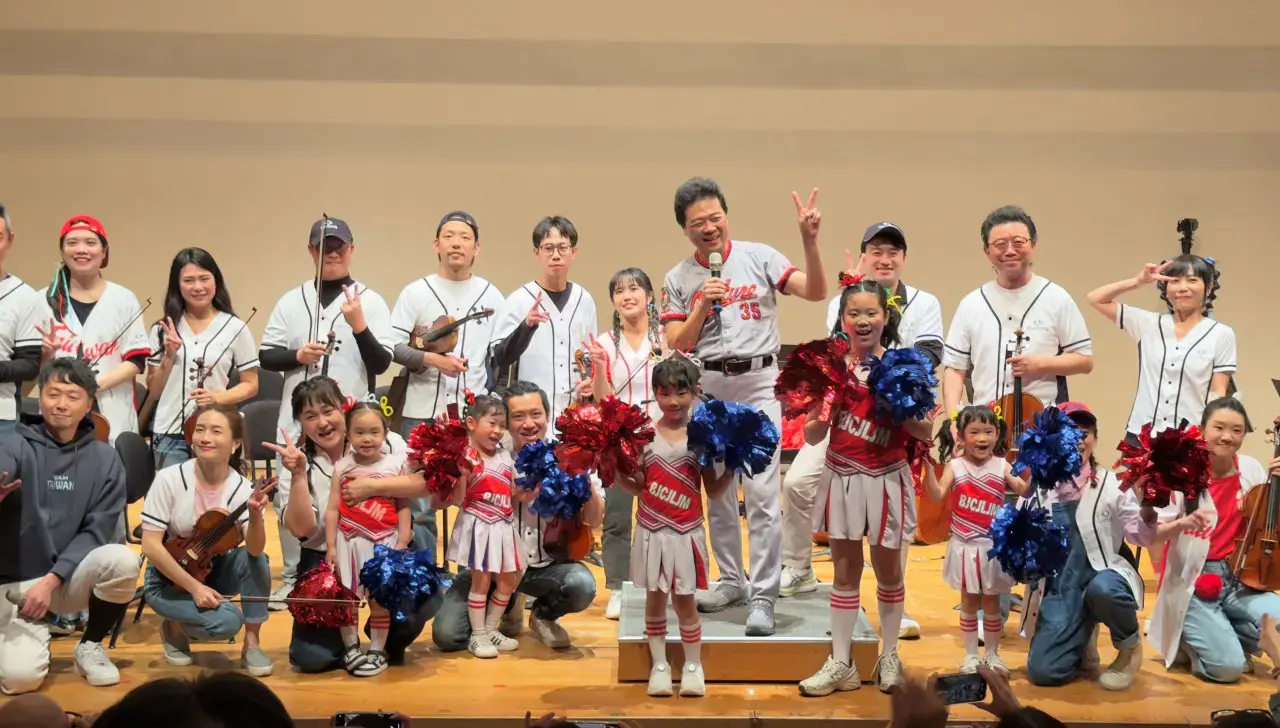
The orchestra subsequently performed several tracks marking critical junctures: the alma mater of KANO (Kagi Nōrin), the team that represented Taiwan (then under Japanese rule) and won the runner-up title at Japan's prestigious Koshien tournament in 1931; Set Out Again, a 2001 anthem symbolizing the sport's rebirth after a devastating match-fixing scandal; and Once Crazy, a tribute song by punk rock band Fire EX. dedicated to the retirement of legendary slugger Chen Chin-feng. The concert climaxed with a medley of cheer songs from the six franchises of the Chinese Professional Baseball League (CPBL), featuring the orchestra members' own children taking the stage as cheerleaders. The energy was electric from start to finish.
Fascinatingly, OneSong’s Music Director, Lee Che-yi, was a former baseball player for Chinese Culture University. Wearing his vintage college baseball uniform and wielding a bat on the conductor's podium, Lee engaged in lively banter with Dr. Cheng. He even led the sophisticated concert hall audience in a "wave" (La Ola), transforming a classical music venue into a roaring stadium.
Additionally, Huang Shao-hua—co-founder of tech giant Acer and currently the Vice Chairman of OneSong—was the captain of the National Chiao Tung University (NCTU) baseball team back in 1967. He invited five of his old teammates to the concert. This deep-seated passion for baseball has long been hardwired into the minds of leaders across Taiwan’s various industries, including its pioneering tech sector.

Adding to the immersive atmosphere, the concert coincided exactly with the WBC showdown between Japan and South Korea. Throughout the performance, the audience anxiously checked their phones. Korea took an early 3-0 lead, later tying it up at 5-5. The entire Taiwanese crowd was silently rooting for Japan (as Taiwan's advancement heavily depended on a Japanese victory). Tensions ran high, but when news broke that Japan had defeated Korea 8-6, a wave of cheers erupted across the hall.

Overcoming the Dark Ages: Not Just Seeking Victory, but Building a Robust "Ecosystem"
I have always been curious: why would a musician like Lee Che-yi, who trained in the violin and harp from a young age, risk playing baseball? For a musician, a single hand injury can spell the end of a career. Yet, his willingness to play underscores an immense, overriding passion for the sport.
During his commentary, Dr. Cheng noted that baseball was initially introduced to Taiwan by the Japanese. The legendary KANO team of 1931 blended Japanese, Han Chinese, and Indigenous players, combining their distinct traits to secure the Koshien runner-up title—a monumental page in Taiwan’s baseball history. When the Kuomintang (KMT) government took over, there was an initial inclination to eradicate remnants of the Japanese era, shifting the athletic focus to basketball and dodgeball. It wasn't until Hsieh Kuo-cheng, the "Father of Taiwan Baseball," actively promoted the sport and led the Golden Dragon Little League team to a US championship in 1969 that the baseball culture was preserved and expanded.
However, Music Director Lee also highlighted a heavier, tragic history. The famed Red Leaf (Hongye) Little League team—indigenous boys from rural Taitung—once won the world championship. But upon returning to Taiwan, many struggled to adapt. Lacking baseball-related career opportunities, they were forced into low-paying, grueling manual labor. Tragically, their average lifespan was a mere 38 years.
This stark reality illustrates why the subsequent development of a professional baseball league was such a vital process in building an "ecosystem"—it provided young athletes with long-term career prospects. Regrettably, in 1996, the CPBL was rocked by a massive match-fixing and gambling scandal. For over a decade, almost every franchise was tainted, and deeply betrayed fans abandoned the stadiums. It was the darkest era in Taiwan’s baseball development.
Today, Taiwanese baseball has regained its vitality and consistently excels on the international stage. This recent WBC match was Taiwan's first victory over South Korea in the tournament's history. Looking at recent matchups across various tournaments, Taiwan currently holds a 5-2 winning record against Korea. This indicates that Taiwan is finally shedding its long-held underdog complex—the desperate yearning of "just wanting to beat Korea"—and stepping up with genuine self-assurance.
I vividly recall the dramatic moment in the 2024 WBSC Premier12 when Taiwan stunned the world by defeating Japan to claim the championship. After the game, Manager Tseng Hao-ju humbly stated, "Even though we won, we never felt we were stronger than Japan. But every win makes us feel we are getting closer to them."
During his playing days, Manager Tseng joined the La New Bears in 2004, right at the violent peak of the match-fixing storm. As a player who maintained his integrity and stayed on the field through that dark period, he personally witnessed Taiwan baseball’s painful recovery. Understanding this background makes his quote—"We haven't surpassed Japan yet, but we are closer"—resonate on a much deeper level.
He wasn't merely talking about whether Taiwanese players have the skills to challenge top-tier teams. He was addressing the fundamental "environment and system" of Taiwanese baseball. He was asking: do we have the nutrients necessary to sustain a complete, robust, and self-perpetuating ecosystem?
From the Ballpark to the Wafer Fab: The "Cluster" Philosophy Behind Taiwan's Semiconductor Breakthrough
Shifting our perspective from the "environment and system" of the baseball diamond to the industrial sector, we find that the meteoric rise of Taiwan’s semiconductor industry is a masterclass in the exact same "ecosystem" logic. I gained a profound understanding of this during a forum exploring Taiwan-Japan semiconductor development that very same weekend.
My good friend from Japan, veteran journalist Tsuyoshi Nojima, is currently cycling 900 kilometers around Taiwan over nine days with 35 Japanese friends. As this year marks the 15th anniversary of the 311 Great East Japan Earthquake, they organized this tour to express their gratitude for Taiwan’s overwhelming financial support and solidarity during the disaster.
Nojima spent a decade interviewing nearly a hundred key baseball players, coaches, and figures across Taiwan and Japan to author his book, Yakyū and Bāngqiú: The White Ball Across the Sea and a Century of Taiwan-Japan Memories. The book chronicles the peaks and valleys of global home-run king Sadaharu Oh, as well as Taiwanese stars who played in Japan, like Tai-Yuan Kuo and Ming-Tsu Lu.
In his book, Nojima explains that his writing isn't just about wins, losses, or records. Instead, he asks: how did these individuals cross borders and survive amidst massive historical shifts? How did they use baseball to leave a mark on each other’s societies, gain identity, and redefine their own lives?
Yakyū and Bāngqiú is both sports history and reportage, but more importantly, it is a rewriting of a "century of Taiwan-Japan history" through the lens of a baseball. Nojima believes that Taiwan-Japan baseball exchanges are a microcosm of the bilateral relationship, offering a true grasp of the Taiwan-Japan community.
"When political language cannot fully articulate the complexities of history, the running, swinging, and fighting side-by-side on the field might be the most genuine and moving answer," Nojima said.
At the Kyushu-Taiwan Future Research Institute symposium I helped organize, former TSMC Vice President Chen Chien-pang delivered a keynote titled "TSMC's Original Intention, Ambition, and Myth," analyzing the roots of TSMC’s success and its ties to Japan.
Chen shared that during his 25 years at the Industrial Technology Research Institute (ITRI) and TSMC, he visited Japan no less than a hundred times. Back then, Japan was the undisputed semiconductor leader in Asia. He befriended many Japanese industry pioneers and is intimately familiar with Japanese media reports and semiconductor literature.
For instance, in 1991, Japan's NHK published a book titled Electronic Nation: Japan's Autobiography. By 2000, Japanese scholar Yusuke Mizuhashi noticed Taiwan's emerging dominance and wrote Taiwan's Electronic Nation. Chen pointed out that from 2000 to 2025, TSMC’s revenue grew by a staggering 25 times. The foresight of those Japanese observers was remarkably accurate.
The Transformation Challenge of IDMs and the Three Keys to Taiwan's Semiconductor Success
Chen noted that whenever he visits Japan, even Japanese friends he meets for the first time show immense respect toward visitors from Taiwan, which warms his heart. He attributes the phenomenal success of Taiwan’s semiconductor industry to three core factors:
First, because Taiwan is geographically small, companies had no choice but to collaborate, creating a highly synergistic "Cluster Effect." Second, because Taiwan was historically impoverished, the sheer instinct to survive forced everyone to be resilient, pushing them to fight to the bitter end.
The third reason, he believes, is Taiwan's proximity to Japan. In the 1980s, Japan was number one in the world. Taiwan consistently looked up to Japan's technological prowess, tirelessly chasing them until it eventually achieved the capability to surpass them.
Chen also shared an amusing historical anecdote. Forty years ago, a survey asked Taiwanese elementary school students, "Who do you like the most?" Coming in third place was "Mom." Chen joked, "Poor mothers, working so hard only to rank third." Second place went to "President Chiang [Kai-shek]," proving the immense influence of the government's education system at the time. So, who took first place? The Japanese manga character "Doraemon" (then known in Taiwan as Xiao Ding Dang). This perfectly illustrates the massive cultural influence Japan has exerted on Taiwan.
Chen also referenced a pivotal figure in Japan's semiconductor world: Tsuyoshi Kawanishi, the former head of Toshiba's semiconductor division. Chen met him at a semiconductor event in Scotland and recalled a famous quote of his: "The semiconductor industry is hell for managers, but heaven for engineers."
Kawanishi said this because the semiconductor industry is highly volatile and cyclical. In boom times, profits are astronomical; in downturns, losses are catastrophic, making it an incredibly challenging and stressful environment for corporate management. However, for those devoted to technology development, it is an industry that demands constant forward momentum, offering immense room for growth and opportunity.
Ultimately, the semiconductor development of major Japanese conglomerates did not proceed smoothly. Giants like Toshiba, NEC, and Hitachi were entangled in massive conglomerate structures where semiconductors were just one of many investment divisions. They were too late to spin off and consolidate their operations (the classic struggle of Integrated Device Manufacturers, or IDMs), which led to a gradual decline in their global competitiveness. Taiwan, conversely, focused squarely on the pure-play foundry model and hyper-collaboration, forging a completely different and highly successful path.
Chen’s analysis of the semiconductor ties between Taiwan and Japan illuminated a profound truth: whether in baseball or semiconductors, the fates of Taiwan and Japan have repeatedly intersected. Today, they have charted different courses, a divergent evolution that is deeply thought-provoking for industry observers.
I believe the ultimate goal of developing Taiwan’s baseball program shouldn't merely be to defeat Shohei Ohtani, South Korea, or Japan. The true objective is to cultivate athletes who harbor an unyielding passion for their pursuits and are willing to give their absolute all on the field, even in the face of daunting adversity. Today, Taiwanese baseball players undoubtedly embody this very sportsmanship. I am confident that when this "Taiwan Spirit" is applied to any profession, any industry, or any individual, it will continue to exert an increasingly profound impact across all sectors on the global stage.
Related Articles
Micron Announces Its Largest Rewards Ever. Its Taiwan Union's Demands Expose a Clash of Pay Systems. A strike threat at Taiwan's largest foreign investor, read in three dimensions
TSMC's 3nm rinse comes exclusively from AEMC, a Taiwanese company once withdrawn from the Emerging Stock Board
Taiwan AI Industry Upgrade Forum Series || Event Report:America Wants More Manufacturing. What Does It Take for Taiwan’s Suppliers to Follow?