Riding the SpaceX Wave: As Elon Musk Eyes a Historic IPO, How Taiwan’s Trillion-Dollar Supply Chain Becomes the New Star of Space Tech
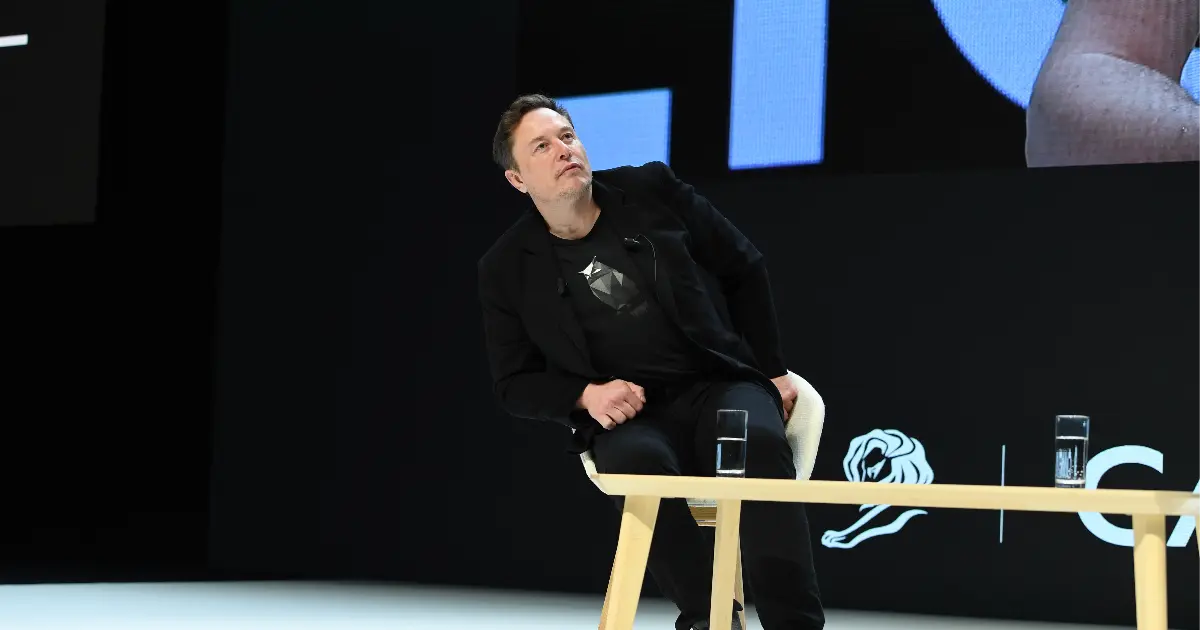
According to recent reports, three heavyweight enterprises are expected to go public in the U.S. stock market in 2026. Two of these are AI model giants Anthropic and OpenAI; the third is SpaceX, a company with immense strategic significance and a valuation already exceeding US$800 billion. Market analysts optimistically predict its valuation could soar to **US$1.5 trillion** upon listing, potentially making it the largest IPO in history.
The Taiwan stock market has always maintained a high correlation with U.S. equities. Recently, stocks related to Low Earth Orbit (LEO) satellites and space technology in Taiwan have surged, as many of these companies are core supply chain partners of Elon Musk’s SpaceX. Consequently, they have become the new "stars" of the international investment market.
Why has SpaceX's market value surpassed the trillion-dollar mark? What significance does this company hold for the future of the space industry? This can be observed from three key perspectives:
First, SpaceX has completely shattered the barriers of launch costs. Through the "reusable" technology of Falcon 9 and Falcon Heavy, SpaceX has reduced the cost of sending cargo into space by dozens of times. The cost per kilogram has dropped from several thousand dollars to just a few hundred dollars, with a long-term goal of reaching below US$200. In other words, while launching rockets used to be like flying a one-time-use aircraft that was discarded after one flight, SpaceX’s massive improvements in reusability and lift capacity—with single-load potential exceeding 100 tons—have turned rocket operations into something akin to a commercial airline, drastically lowering the threshold for entering space.
Second, SpaceX’s Starlink project has revolutionized global communication models. Starlink provides a global, high-speed satellite network that serves as a lifeline for remote areas and demonstrates irreplaceable resilience in national security (such as the war in Ukraine) and disaster relief. It has become a strategic asset highly valued by governments worldwide. Currently, Starlink’s cumulative launches have surpassed 10,000 satellites, with over 3,000 launched in 2025 alone—far outstripping Amazon’s Project Kuiper. Earlier this year, the U.S. Federal Communications Commission (FCC) approved SpaceX’s application to add 7,500 second-generation Starlink satellites. With this approval, the total number of SpaceX’s global Starlink satellites will reach 15,000, pushing LEO satellites into a phase of full-scale commercial development.
Finally, as the most vital partner of NASA, SpaceX’s Starship program is currently the only vehicle with the potential to realize "Mars Colonization" and "Lunar Bases." This expansion of the boundaries of human civilization has made SpaceX a leader in space exploration, earning it a high "Visionary Premium." This is the primary reason why Starlink, despite an estimated revenue of approximately US$24 billion this year, can support SpaceX’s trillion-dollar market valuation.
A Century from Now, the Entire Cosmos Will Be a Production Stage
SpaceX is not merely a rocket company; it is a Space Infrastructure Platform. The space opportunities led by SpaceX are transforming outer space from a site of scientific exploration into a tangible, profitable economic frontier. Expanding into outer space means the market scope is no longer limited to Earth. Previously, business opportunities were calculated based on Earth’s land and a population of 8 billion; moving into space opens entirely new markets.
In this regard, I consulted Gemini regarding the future market potential as humanity expands into space. Gemini noted that the space economy’s output in 2026 is approximately US$600 to US$700 billion (about 0.6% of Earth’s GDP). In the medium term (2035–2040), it could reach US$1.8 trillion to US$2.7 trillion (1.5% to 2.5% of Earth’s GDP). If we look a century ahead, it could create output equivalent to dozens of "Earths." Based on the current "Earth economy" scale—with 2024 global nominal GDP between US$100 trillion and US$110 trillion—creating just 10 times Earth’s current output would add US$1,100 trillion in new market potential.
While people alive today may no longer be here a century from now, this represents a profound hope and opportunity for future generations. Perhaps it is because this new opportunity is so imaginative that investors are flocking to SpaceX with such fervor. Why is the potential of space exploration so vast? The answer lies in "innovation creating new opportunities." Earth’s resources are finite (such as rare earths and energy), but a single asteroid rich in platinum could have an economic value exceeding several trillion dollars. Furthermore, solar energy supply in the solar system is tens of thousands of times greater than that on Earth’s surface. If humanity shifts to space-based energy—such as Space-Based Solar Power (SBSP)—the energy output will far exceed current oil and electricity markets.
Furthermore, can manufacturing occur in space? Scientists have found that microgravity environments allow for the production of high-performance materials impossible to manufacture on Earth, such as certain semiconductor crystals and biologics.
Therefore, although Taiwan’s historical development in the space sector was relatively modest, its powerful foundation in Information and Communication Technology (ICT) and semiconductors, combined with close cooperation with U.S. firms (such as Taiwanese companies integrating into the SpaceX supply chain), provides an opportunity to replicate the successful electronics industry model in outer space. A prime example is Ground Stations, which currently represent the largest portion of Taiwan’s space satellite output, including antennas, PCBs (Printed Circuit Boards), and communication chips. Regarding critical satellite components, Taiwan's National Science and Technology Council (NSTC) estimates that by 2029, the output value of Taiwan's satellite industry will exceed NT$1 trillion (approx. US$31 billion).
As for AI and data centers, as SpaceX and other companies increase investment and plan to establish AI data centers in space, Taiwan’s advantages in servers, semiconductor manufacturing processes, and Advanced Packaging (such as CoWoS) will allow the nation to bridge from being a terrestrial AI powerhouse to a key provider of extraterrestrial computing power, opening up an entirely new stage for growth.
Related Articles
Micron Announces Its Largest Rewards Ever. Its Taiwan Union's Demands Expose a Clash of Pay Systems. A strike threat at Taiwan's largest foreign investor, read in three dimensions
TSMC's 3nm rinse comes exclusively from AEMC, a Taiwanese company once withdrawn from the Emerging Stock Board
Taiwan AI Industry Upgrade Forum Series || Event Report:America Wants More Manufacturing. What Does It Take for Taiwan’s Suppliers to Follow?