Propelling the World's 7th Largest Equity Market: Decoding the "TSMC Ecosystem" and Taiwan's 41 Tech Heavyweights Commanding Global AI Pricing Power
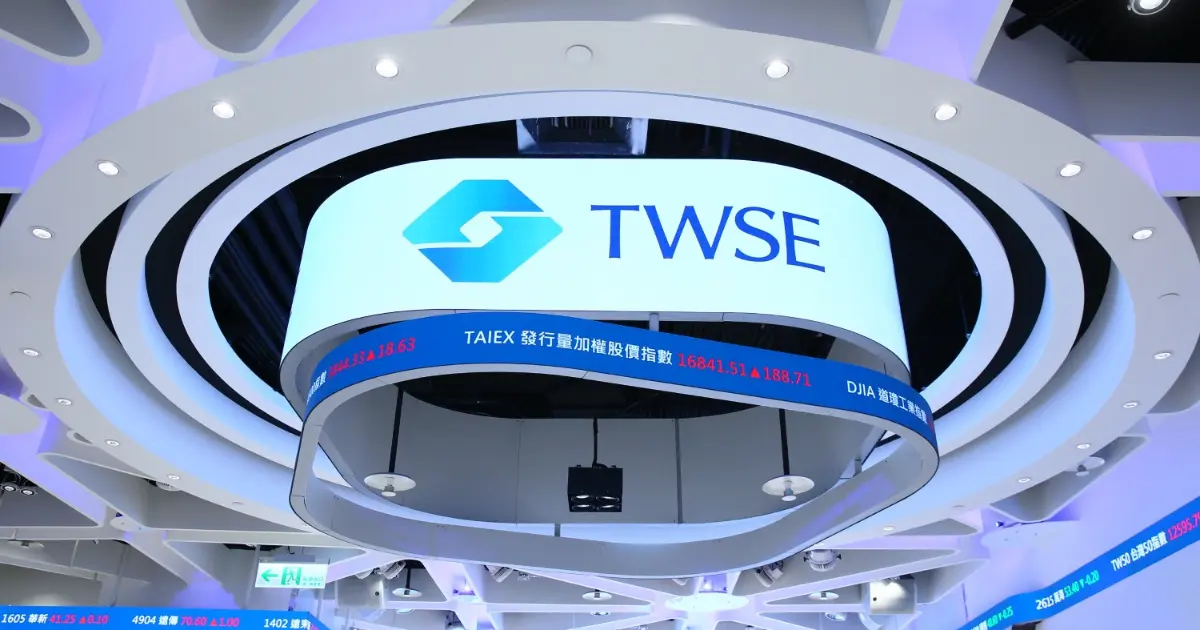
Over the past five years, Taiwan's equity market capitalization has experienced explosive growth, officially breaching the historic milestone of NT$100 trillion (approximately US$3.4 trillion) and surpassing France to become the world's 7th largest stock market. Amid this phenomenal capital expansion, the strongest performers are the record-breaking "41 ultra-high-priced tech heavyweights" (a group of premium stocks trading above NT$1,000 per share).
Driven by this robust capital foundation and the AI wave, the Taiwan stock market has demonstrated remarkable resilience despite geopolitical turbulence involving the US, Israel, and Iran. As of the market close on March 12, an unprecedented 41 companies listed on the main board and the Emerging Stock Market maintained share prices above NT$1,000 (meaning a single trading lot requires a minimum investment of roughly US$30,000). Notably, Aspeed Technology (a leader in server BMC chips) has firmly established its stock price above the NT$10,000 mark, marking the most stellar performance in the history of the Taiwanese market.
For global capital markets, the rapid rise of these 41 benchmark enterprises is by no means a mere influx of speculative hot money. Rather, it represents a strong signal that Taiwan's tech supply chain has completed a "Structural Re-rating":
- From OEM to Monopolistic Pricing Power: Taiwan's manufacturing sector has successfully shed its old label of "low-margin assembly." These companies have built formidable technological moats in areas such as intellectual property (IP), application-specific integrated circuits (ASIC), and baseboard management controllers (BMC). With profitability jumping tenfold, they now officially command the global pricing power for critical components.
- A 90% Market Share in AI Computing Hardware: As US cloud service providers (CSPs) prepare to inject over US$700 billion into the AI arms race, a staggering 90% of global AI computing hardware—ranging from TSMC's advanced packaging to high-end AI servers—is effectively supplied exclusively by Taiwanese enterprises.
Without Taiwan's hardware ecosystem, the global AI blueprint simply cannot materialize. This article decodes these 41 ultra-high-priced tech heavyweights to illustrate how the "TSMC Effect" has nurtured a hardware cluster with global dominance, serving as a must-read guide for anyone looking to participate in the next decade of technology.
From "Earning One Capital Base" to "Earning Ten": The Explosive Leap in Profitability
An in-depth analysis of these 41 enterprises trading above NT$1,000 reveals the completeness of Taiwan's high-end tech cluster. Among them, 38 are listed on the main boards (TWSE/TPEx), while 3 (Hermes Testing, V5 Technologies, and Innostar) hail from the Emerging Stock Market, a preparatory board characterized by high growth potential but higher risk.
Categorized by industry, with the exception of AirTAC (a pneumatic component giant in the traditional sector), the entire list consists of electronic technology companies heavily concentrated in two major segments: the "semiconductor supply chain" and "AI servers and thermal/power components."
- Semiconductor Critical Nodes: Includes TSMC, MediaTek, Phison, as well as IC design/IP firms with extreme technical barriers (Alchip, eMemory, GUC), and semiconductor testing and packaging equipment providers (WinWay, CHPT, MPI, Hon Precision).
- AI Servers and High-End Components: Encompasses major server integrators (Wiwynn), the dual leaders in high-end thermal solutions (AVC, Auras), AI server power supplies and slide rails (Delta, King Slide), and copper clad laminate (CCL) giants (EMC).
- Other Frontier Tech Sectors: Optical lens leader (Largan), low-earth orbit (LEO) satellite communications (UMT), and robot controllers (Syntec).
The core driver enabling the Taiwan stock market to simultaneously incubate such a massive cluster of high-priced stocks is the explosive enhancement of corporate profitability. Looking at last year's data, four companies saw their Earnings Per Share (EPS) breach the NT$100 threshold (effectively earning back more than ten times their paid-in capital): AI server giant Wiwynn (NT$275.06), Largan (NT$159.41), Aspeed (NT$103.92), and King Slide (NT$103.23). This indicates that Taiwanese enterprises have thoroughly transitioned from a "high-revenue, low-margin" OEM model into highly profitable technology monopolists with immense value-add.
In the past, it was considered quite an achievement for a Taiwanese company to generate an EPS of over NT$10 (earning back one capital base).
I recall when I first started covering financial news in 1993, the most expensive stocks on the market were PC contract manufacturing giants ASUS and Quanta. Their share prices peaked at around NT$700 to NT$800, which was already considered an "astronomical price" at the time. Back then, if a company's EPS reached NT$10 or NT$20 (earning one or two times its capital), it was celebrated as an extraordinary operational feat. Compared to the NT$100+ EPS figures routinely posted by today's ultra-high-priced heavyweights, the prosperity of that era pales in comparison. This 30-year span profoundly witnesses the historical transformation of Taiwan's tech industry from "contract assembly" to "high-end technological moats."
Beyond the continuous surge in EPS, rapid business growth has also significantly driven up the Price-to-Earnings (P/E) ratios of many enterprises. Take Aspeed, the BMC leader whose stock price has now firmly crossed the NT$10,000 mark. Based on last year's EPS of NT$103.92 and a share price of NT$10,000, its trailing P/E ratio reached 100x. Naturally, Aspeed's profitability will continue to grow alongside AI demand. If calculated using "Forward EPS"—a metric favored by foreign institutional investors—its actual forward P/E ratio would see a significant downward adjustment.
However, the list also includes companies with exceptionally high earnings but relatively low P/E ratios. For instance, AI server heavyweight Wiwynn earned NT$275 last year. Based on yesterday's closing price of NT$4,085, its P/E ratio is actually less than 15x. Therefore, despite a lofty share price of over NT$4,000, Wiwynn is not fundamentally expensive from a valuation standpoint. Institutional analysts forecast Wiwynn's EPS could reach NT$330 this year; at this projected earnings level, the forward P/E ratio drops further to below 13x.
Examining the statistical data of these 41 tech heavyweights allows for a deeper observation of Taiwan's capital market and industrial competitiveness. I believe there are at least three key dimensions that offer valuable insights for global investors.
"High TSMC Exposure" as the Key: Analyzing the Global AI Monopoly Across Three Dimensions
First, the Taiwan market's astonishing performance is primarily fueled by the global AI megatrend and the monopolistic position Taiwanese enterprises have secured in this AI era.
Global AI investment is currently surging. This year, the total capital expenditures of the four major CSPs—Microsoft, Google, Meta, and AWS—are projected to exceed US$650 billion to US$700 billion, marking the largest hardware investment initiative in human history.
In the face of this colossal investment, 90% of the hardware suppliers capable of meeting these demands hail from Taiwan. In the semiconductor chip sector, TSMC and Taiwan's semiconductor supply chain provide over 90% of the world's advanced AI chips. Regarding global AI server hardware infrastructure, Taiwanese system integrators (Foxconn, Quanta, Wistron, Wiwynn) and related component industries—such as Delta (power), AVC (thermal), EMC (CCL), and Accton (networking)—similarly supply over 90% of global capacity.
Consequently, as US tech giants initiate the world's largest AI infrastructure build-out, Taiwan has naturally become the primary supplier providing this hardware. This dynamic makes the US (software and architecture-driven) and Taiwan (hardware execution and implementation) the two most critical, mutually beneficial countries propelling the global AI industry forward. The AI megatrend benefits the US and Taiwan the most, which is the root cause of the Taiwanese stock market's robust performance.
Furthermore, having achieved a monopolistic position in the semiconductor and AI ecosystem, these companies spanning AI servers, IC design, advanced packaging, and high-end components have evolved from early-stage "assembly/OEM" to establishing "technological moats." While they may not yet fully dictate "base-level specifications" (a domain dominated by the US), companies like Aspeed (BMC chips), Alchip, GUC, and MediaTek (ASIC custom designs) strongly resemble TSMC: they possess extremely high technical barriers and the bargaining power to dictate global prices.
Moreover, looking at the competitiveness of the semiconductor supply chain, it is clear that TSMC acts as a crucial propellant among these companies. It can be said that all these ultra-high-priced heavyweights boast an exceptionally "High TSMC Exposure" (representing deep integration within the TSMC-centric ecosystem).
This is because almost all these semiconductor-related suppliers—whether they are TSMC's IC design clients, CoWoS advanced packaging and testing equipment providers, or facility, materials, and specialty chemical suppliers—operate in orbit around the TSMC system. Through synergistic technological upgrades with TSMC, they have squeezed into the ranks of the tech heavyweights, simultaneously helping TSMC consolidate its position as the global semiconductor leader. TSMC has elevated itself from a "one-man martial arts" (solitary strength) status to nurturing an entire "Mountain Range Protecting the Nation" (a resilient industrial cluster).
Supported by TSMC's continuous investment expansion—with its capital expenditure reaching US$52 billion to US$56 billion this year, an increase of over US$10 billion from last year's US$40+ billion—this massive CapEx provides abundant nourishment for the local supply chain, giving these beneficiary heavyweights an even stronger foundation for growth.
Second, a clear "winner-takes-all" trend is evident among these 41 heavyweights in terms of industrial competitiveness. The leading tier-one companies are widening the gap between themselves and their second-place competitors, and this distance is becoming increasingly pronounced.
For example, TSMC in foundry services has vastly outpaced UMC and others; CCL giant EMC has expanded its lead over TUC; Alchip, eMemory, and GUC have become the undisputed leaders in the IP and ASIC fields; while AVC and Auras have cemented their duopoly in high-end thermal solutions.
Additionally, Largan dominating GSEO in optical lenses, Delta leading Lite-On in power management, Phison and Innodisk outpacing other memory design and distribution firms, and Accton leading other networking stocks—these are all concrete examples of the expanding "leader premium effect."
Premiumization Drives Investment Structural Shifts: Fractional Shares, ETFs, and Risk Awareness
For investors, what exactly is the significance of such a large number of ultra-high-priced heavyweights appearing on the board? With the stock market already at historical highs, are these stocks still viable investments?
In my view, these heavyweights still possess immense growth momentum in the short term. Until the massive growth steps catalyzed by AI come to a halt, they will remain the core center of gravity driving the stock market upward. However, their high absolute share prices (requiring millions or even tens of millions of NT dollars for a single lot) effectively make them the primary holdings of foreign institutional investors and High-Net-Worth Individuals (HNWIs). For the average retail investor, buying such expensive individual stocks directly is largely out of reach.
Nevertheless, in the long run, the rise of these ultra-high-priced tech heavyweights has shattered many historical ceilings in Taiwan's capital market, such as the "P/E ratio ceiling."
Today, the market is willing to assign P/E ratios of 30x or even 50x to these companies with pricing power. Foreign capital is no longer solely focused on current profits; instead, it looks ahead to their long-term growth momentum in investments and infrastructure for frontier industries like LEO satellites and CPO (Silicon Photonics) over the next 5 to 10 years (e.g., post-2026). This long-term growth momentum has led to a significant expansion in corporate valuation.
Furthermore, the "Valuation Spillover Effect" generated by these heavyweights cannot be ignored. As the number of ultra-high-priced stocks increases, it triggers a catch-up effect among "NT$100-tier stocks" within the same industry, thereby elevating the valuation multiples of the entire sector. This has become another prominent ripple effect in Taiwan's capital market.
Moreover, as these heavyweights become the "standard allocation" for institutional and foreign investors, how general investors can ride this trend profitably represents a crucial shift in the investment ecosystem. In fact, as the number of expensive heavyweights increases and direct participation becomes harder for retail investors, Taiwan's traditional trading habit of buying by the "lot (1,000 shares)" has fundamentally changed. This has catalyzed the massive popularization of "intraday odd-lot/fractional share trading," "regular savings plans for Taiwanese stocks," and ETFs (Exchange Traded Funds) in the domestic market.
Lastly, investors must maintain a certain level of risk awareness. The current active trading of these ultra-high-priced heavyweights indicates robust market momentum, abundant liquidity, and heightened speculative sentiment. Ultimately, this investment momentum hinges on the continuous investment and development of the global AI industry. In the short term, there are no signs of this expansion halting. However, should there be a pause in the capital expenditures of US tech giants, or a major reversal in global geopolitical and economic dynamics, the high valuations of these heavyweights will inevitably bear the brunt of the impact. This is an area where all market participants must remain vigilant.
Related Articles
Micron Announces Its Largest Rewards Ever. Its Taiwan Union's Demands Expose a Clash of Pay Systems. A strike threat at Taiwan's largest foreign investor, read in three dimensions
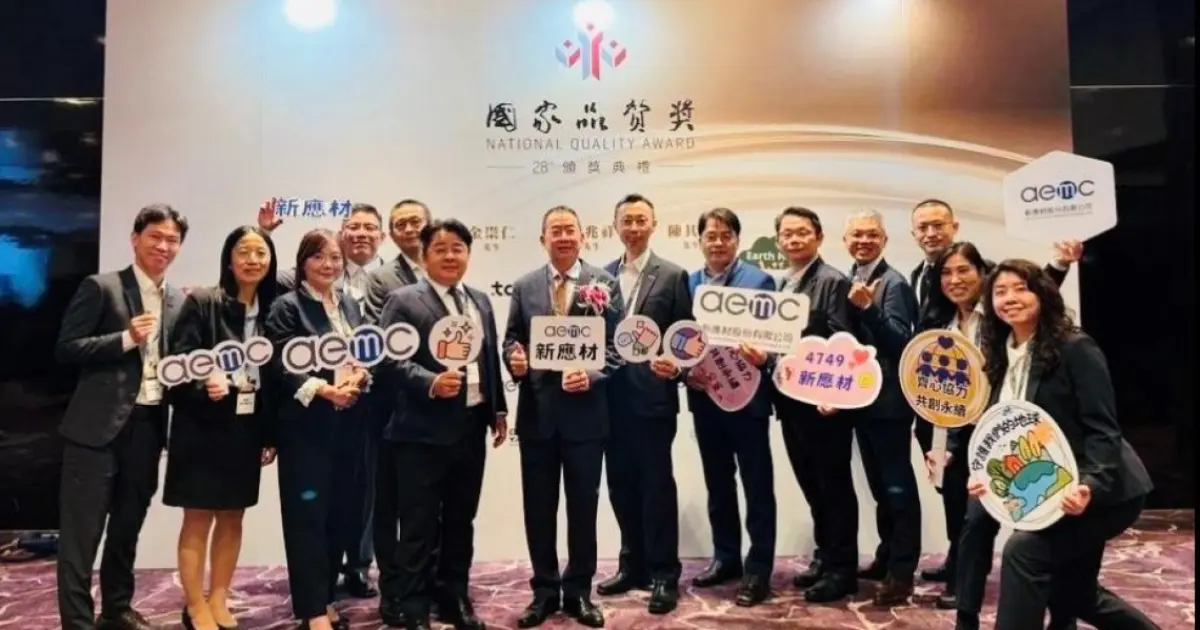
TSMC's 3nm rinse comes exclusively from AEMC, a Taiwanese company once withdrawn from the Emerging Stock Board
Taiwan AI Industry Upgrade Forum Series || Event Report:America Wants More Manufacturing. What Does It Take for Taiwan’s Suppliers to Follow?