The Real Story of Taiwan’s Semiconductor Rise — Documentary The Makers of Mountains Unveils the Hidden Forces Behind the Industry’s Miracle
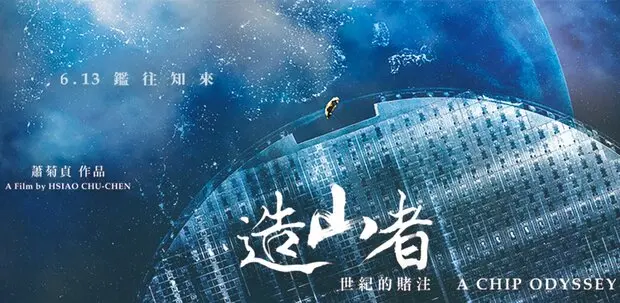
In late April 2025, documentary filmmaker Hsiao Chu-chen (蕭菊貞) invited a small group of friends to a private screening of her latest work, Makers of Mountains: The Bet of the Century. This is the first feature-length documentary focusing on Taiwan’s semiconductor industry. I was honored to be among the first to witness the debut of this remarkable film.
Watching the documentary stirred a deep emotional resonance in me.Having reported on the semiconductor industry for more than 30 years, the people and events depicted felt intimately familiar.In a way, these stories are a mirror of my own formative years.
The rise of Taiwan’s semiconductor industry stands as one of the most significant examples of Asia’s technological reconstruction in the post–Cold War era. Beginning in the 1980s with a technology transfer from RCA in the United States, Taiwan gradually built a comprehensive ecosystem for semiconductor research, development, and manufacturing. Today, Taiwan Semiconductor Manufacturing Company (TSMC) leads the world in advanced chipmaking, producing key components for major tech companies such as Apple and NVIDIA. TSMC’s capabilities have far-reaching implications for global supply chain stability and geopolitical dynamics.
More importantly, the extensive footage and interviews carefully preserved by Director Hsiao not only document the critical milestones of Taiwan’s semiconductor industry but also offer valuable perspectives for reflecting on the island’s transformation into a global “Silicon Island.”
Taiwan’s National Semiconductor Project Began in a Small Soy Milk Shop
Director Hsiao Chu-chen, widely recognized by international film festivals including the Golden Horse Awards, is best known for her documentaries on social and cultural themes. For this project, she ventured into the unfamiliar territory of semiconductors with rigorous research. With support from veteran tech journalist Wang Shih-chi, she conducted in-depth interviews with over 80 key figures and researchers who witnessed the rise of Taiwan’s semiconductor industry, carefully documenting its evolution.
The documentary took over five years to complete. Director Hsiao, who humbly refers to herself as a “tech novice,” remained deeply committed and meticulous throughout the process. Even on the eve of the April 2025 preview screening, she was still monitoring the latest statements by President Trump, wondering whether a final round of edits was necessary.
Although I consider myself well-versed in the history of Taiwan’s semiconductor development, I was still struck by the fresh and engaging insights presented in this documentary. Thanks to Director Hsiao’s attentive observation and persistent investigation, she uncovered many crucial details that had long been overlooked.
For example, in Taiwan’s semiconductor history, the 1974 breakfast meeting held at the “Little Hsin Hsin Soy Milk Shop” has long been regarded as a legendary episode within the tech community. Yet even industry veterans often cannot say for sure where this mysterious soy milk shop was actually located.
Determined to uncover the truth, Director Hsiao took an investigative approach. Using the historical address “No. 40, Nanyang Street” as a lead, she visited the site in person—only to discover that the location no longer existed. She then consulted old phone books and municipal land records, eventually confirming that the original building had been redeveloped.
In fact, the Little Hsin Hsin Soy Milk Shop was not just an ordinary breakfast stand. It was operated by the Veterans Affairs Council, the government agency responsible for assisting retired military personnel. According to accounts, Chiang Ching-kuo—the son of Chiang Kai-shek and then Premier of Tawian—frequently visited the shop to enjoy his favorite traditional breakfast: shaobing and youtiao (sesame flatbread and fried dough sticks).
At the time, the Veterans Affairs Council operated several enterprises under the “Hsin Hsin” brand, including Hsin Hsin Department Store, Hsin Hsin Bus Company, and Hsin Hsin Biotech. The Little Hsin Hsin Soy Milk Shop was part of this network, reflecting its ties to state-run initiatives and policy-driven planning.
The Veterans Affairs Council (officially the Veterans Affairs Commission, or VAC) was a powerful government body in Taiwan during its authoritarian era, tasked with overseeing the welfare and employment of retired military personnel. With vast resources and a sprawling business network—including ventures like Hsin Hsin Department Store and Hsin Hsin Bus Company—the council held significant influence and trust within the government. As such, the seemingly ordinary soy milk shop was, in reality, a discreet and trusted venue where top officials could gather to discuss national science and technology policy.
This critical discovery gave a credible historical foundation to a story that had long circulated by word of mouth. During the era when Taiwan was still under a one-party system, it became entirely plausible that seven high-ranking officials—including Premier Sun Yun-suan—could meet in such a semi-private, state-controlled setting to discuss major national strategies in confidence.
TSMC Founder Morris Chang Called It a “Bet” and a “Gamble” in His Briefing to Taiwan’s Executive Yuan
Another key figure in the rise of Taiwan’s semiconductor industry is Pan Wen-yuan(潘文淵). His name remains highly respected in the tech sector, and the annual Pan Wen-yuan Award ceremony is widely regarded as a major event in Taiwan’s high-tech community. I have personally hosted several post-award discussions with recipients. However, public knowledge of Pan’s life and contributions has long been limited to scattered records and anecdotes, lacking a comprehensive portrayal.
Director Hsiao Chiu-chen once again demonstrated her keen ability to reconstruct historical contexts. She successfully traced the Grand Hotel’s Room 508, where Pan Wen-yuan often stayed upon returning to Taiwan. Hsiao invited his long-time collaborator Shih Chin-tai(史欽泰) to revisit the room, where the two reflected on how Pan had painstakingly drafted the RCA technology licensing proposal in that very space.
The documentary’s title, The Gamble of the Century, came with an unexpected backstory. Director Hsiao explained that the phrase was never part of her original concept. However, during the filming process, she uncovered a series of official meeting records and historical documents. To her surprise, in a 1985 policy presentation to Taiwan’s Executive Yuan—the Cabinet-level executive branch of Taiwan’s government—by Morris Chang, she found the words “gamble!” and “bet!”—terms rarely seen in formal government reports—leaving a lasting impression.
The appearance of such unusual language in an official government document caught Director Hsiao Chiu-chen’s attention. She couldn’t help but wonder: “What kind of risks and pressures was Taiwan under, amid the international circumstances of the time, that such expressions would be used in a formal policy report?”
Half a century has passed since that historic gamble, which not only gave rise to Taiwan’s semiconductor miracle but also elevated the island’s status to an unprecedented level of global attention and geopolitical importance.
Taiwan’s semiconductor industry has drawn global attention not only for its technological leadership but also because of its critical geopolitical position. With companies like TSMC possessing world-leading chip fabrication capabilities, Taiwan has become an indispensable part of the global semiconductor supply chain. Amid intensifying U.S.-China trade and tech tensions, semiconductors are now seen as “strategic assets,” making Taiwan both “the most dangerous place on earth” and a vital node for the functioning of the global digital economy.
One of the most moving moments in the documentary is the interview with two pivotal figures in Taiwan’s semiconductor journey: Tseng Fan-cheng(曾繁城)and Shih Chin-tai. Both were sent to the United States in the 1970s to study semiconductor technology at RCA. After returning to Taiwan, Tseng went on to co-found TSMC, while Shih stayed at ITRI to advance research efforts. Together, they became pioneers leading the development of the semiconductor industry from both the private and public sectors.
One of the most poignant scenes in the documentary shows the two elderly gentlemen, now gray-haired, taking a walk through Kuang-Ming Village, the dormitory area of ITRI. Having fought side by side since their twenties, they are now in their twilight years, standing beneath a tall mango tree where they capture a rare and heartfelt photo together.
Tseng Fan-cheng recalled that during the 1970s, his father would send him mangoes from Kaohsiung every year. After eating them, he planted the seeds next to his dormitory. Today, that seed has grown into the lush tree standing beside them—so large that even he and Shih Chin-tai together cannot wrap their arms around it.
Director Hsiao also interviewed several retired female operators who had worked at the wafer fabs of UMC and TSMC. They recalled the constant anxiety they felt working in cleanrooms, always worried about accidentally dropping and breaking a wafer—something that could cost them several months’ salary. One woman shared that she bought her very first car by selling eight shares of UMC stock, laughing as she said, “I never knew stocks could be this useful!”
Many Key Figures in Taiwan’s Semiconductor History Are Gradually Passing Away
Yang Bing-he (real name: Yang Ding-yuan), who once led the RCA seed program, spoke about the immense pressure he faced while carrying out a national mission. He specifically recalled a remark by Sun Yun-suan, then the head of Taiwan’s Executive Yuan, who told him, “You are only allowed to succeed—not to fail.” That sentence, Yang said, remains deeply etched in his memory. As he spoke, he choked up and could not hold back his tears.
Yang Ding-yuan was not the only one moved to tears. Others, including Chiu Luo-huo and Liu Ying-da, also became emotional during their interviews. Director Hsiao’s camera captured these men, now in their seventies and eighties, as they recalled the tremendous responsibilities and challenges they bore during that transformative era. Overwhelmed by emotion, they choked up and shed tears.
To see so many seasoned men—pillars of the industry—moved to tears by the lens and interviews of a female director was truly remarkable. In all my years as a journalist, I had never witnessed such a powerful and emotional scene.
What makes it even more poignant is that many of the key figures behind this chapter of history are gradually passing away, one after another.
For example, Wu Chuan-yuan(吳泉源), an associate professor at the Institute of Sociology at National Tsing Hua University in Taiwan, played a crucial role in helping Director Hsiao gather historical research materials. He passed away in 2018. Another key figure, Hu Ting-hua(胡定華), former deputy director of the Industrial Technology Research Institute (ITRI), who was responsible for core planning of Taiwan’s semiconductor program, also passed away in 2019.
In addition, several key figures interviewed by Director Hsiao during the five-year production—such as Tu Chun-yuan(杜俊元) and Shih Min(施敏)—also passed away two years ago. The footage preserved in the documentary has become their final public appearance before passing, and for that reason alone, the film holds irreplaceable historical value.
Many of the individuals interviewed by Director Hsiao also experienced significant changes in their professional roles over the years. For instance, when Liu Deyin(劉德音) was interviewed, he was still Chairman of TSMC, but by the time the film was finalized, he had stepped down and was referred to as the “former Chairman.” Likewise, Tsai Neng-hsien(蔡能賢), who was then a Vice President at TSMC, had also become a “former Vice President” by the film’s completion.
Even more striking than personnel changes was the dramatic shift in global geopolitics during the five-year span of the documentary’s production. As Morris Chang noted, “TSMC has become a battleground for geopolitical strategists”—from the initial U.S.-China chip war during the Trump 1.0 era to the current tariff conflict under Trump 2.0.
Director Hsiao confessed that although she has produced numerous documentaries in the past, she has never encountered a subject like semiconductors—where new issues constantly emerge, each with far-reaching global implications. She felt a persistent anxiety every day, wondering how to revise the content and supplement materials, always fearing that she might miss a critical development.
A Documentary Repeatedly Delayed and Revised by Rapidly Changing Circumstances
A few years ago, when TSMC first surpassed Intel in terms of technology, Director Hsiao eagerly incorporated the event into her script, highlighting it as a major turning point in the film. However, by three years ago, what was once a central dramatic element had lost its impact. TSMC’s lead over Intel had only widened, and “being ahead” had become a given—no longer newsworthy.
Moreover, when generative AI burst onto the scene in 2023, Director Hsiao admitted that she spent nearly six months trying to understand what AI really was. At the beginning of this year, with President Trump returning to office and major developments making headlines daily, TSMC’s announcement of a $100 billion overseas investment prompted her to revise the script once again to include this update. With history evolving at such a rapid pace, the documentary has remained perpetually in a rough cut stage.
While writing this article, I came across the latest issue of The Economist, which once again features Taiwan on its cover. The headline, “A superpower crunch over Taiwan is coming,” highlights the intensifying rivalry between the U.S. and China and underscores the imminent and severe challenges that Taiwan now faces.
The Economist further warned, “A cross-strait conflict may be closer than you think.” This stark statement underscores the gravity of today’s geopolitical tensions.
Director said she was deeply moved when she read the report that morning. Reflecting on the five-year journey of filming the documentary, she noted how Taiwan had evolved from being described by The Economist as “the most dangerous place on Earth” to now facing drastic global shifts under the Trump 2.0 era. “In times of such crisis and challenge,” she said, “no one can stand on the sidelines, nor do they have the right to make cynical remarks.”
During the production of Mountain Makers: The Gamble of the Century, Director Chiu adapted to the shifting tides of the times, constantly considering what more should be added. As a result, the documentary was delayed by more than a year. “I never expected that just before its release, it would once again coincide with such a moment. Perhaps this film’s emergence is itself a response to a historical calling.”
From the Margins to the Core: Three Key Dimensions Highlighted in This Documentary
As I watched this documentary, many thoughts came to mind. I’d like to share three particular perspectives that stood out to me.
First, Taiwan’s journey in semiconductor development—once dismissed and underestimated—ultimately achieved extraordinary success. It is perhaps the clearest example of the idea that innovation often emerges from the periphery.
Mr. Shih Chin-tai(史欽泰) authored a book titled From the Periphery to the Core, which chronicles how Taiwan’s semiconductor industry transformed from being overlooked to defying the odds. In the beginning, it lacked attention and expectations, but thanks to a group of individuals who embraced the mantra “only success is allowed,” it ultimately achieved results no one had anticipated.
Secondly, Taiwan’s success in semiconductors was no accident—it was the result of a series of deliberate, interconnected decisions. From the government’s establishment of industrial policy and the licensing of technology from the U.S.-based RCA, to the founding of ITRI and the national science parks, and the emergence of key players like UMC and TSMC. This was followed by tax incentives, support from capital markets, and the strategic choice to adopt the foundry business model. Every one of these decisions was crucial—none could be omitted.
It was the tight interconnection and mutual reinforcement of all these elements that enabled the comprehensive success of Taiwan’s semiconductor industry. This highly systematic development path is not only of critical importance to Taiwan itself, but also serves as a valuable model for economic development that is closely watched around the world.
Taiwan is currently investing in a range of emerging sectors, including defense, space, and energy. Yet the lack of visible achievements and the evident challenges in these areas raise important questions. Insights from the semiconductor industry’s successful development may offer valuable lessons and reference points for overcoming such hurdles.
Finally, one of Director Hsiao’s most significant achievements lies in her ability to serve as an independent and objective observer—precisely because she openly admits to being an outsider with no prior knowledge of semiconductors. Through a humble and inquisitive lens, she offers a balanced perspective that reminds viewers: the success of Taiwan’s semiconductor industry was not the result of a few individuals, but rather a monumental effort powered by countless contributors across multiple generations who went all in to achieve the impossible.
I was also deeply moved by the power of visual storytelling—its emotional impact often surpasses that of words. Through her lens, Director Hsiao captured a precious record of history for this island striving to survive. Her documentary not only reconstructs the remarkable path of Taiwan’s semiconductor success, but also stands as a film of profound significance for those envisioning the next economic miracle.
Related Articles
Micron Announces Its Largest Rewards Ever. Its Taiwan Union's Demands Expose a Clash of Pay Systems. A strike threat at Taiwan's largest foreign investor, read in three dimensions
TSMC's 3nm rinse comes exclusively from AEMC, a Taiwanese company once withdrawn from the Emerging Stock Board
Taiwan AI Industry Upgrade Forum Series || Event Report:America Wants More Manufacturing. What Does It Take for Taiwan’s Suppliers to Follow?