Why Did Elon Musk Announce the "SpaceX and xAI Merger"? A War of "Surface" vs. "Orbit" That Has Amazon, Microsoft, and Google Feeling the Threat
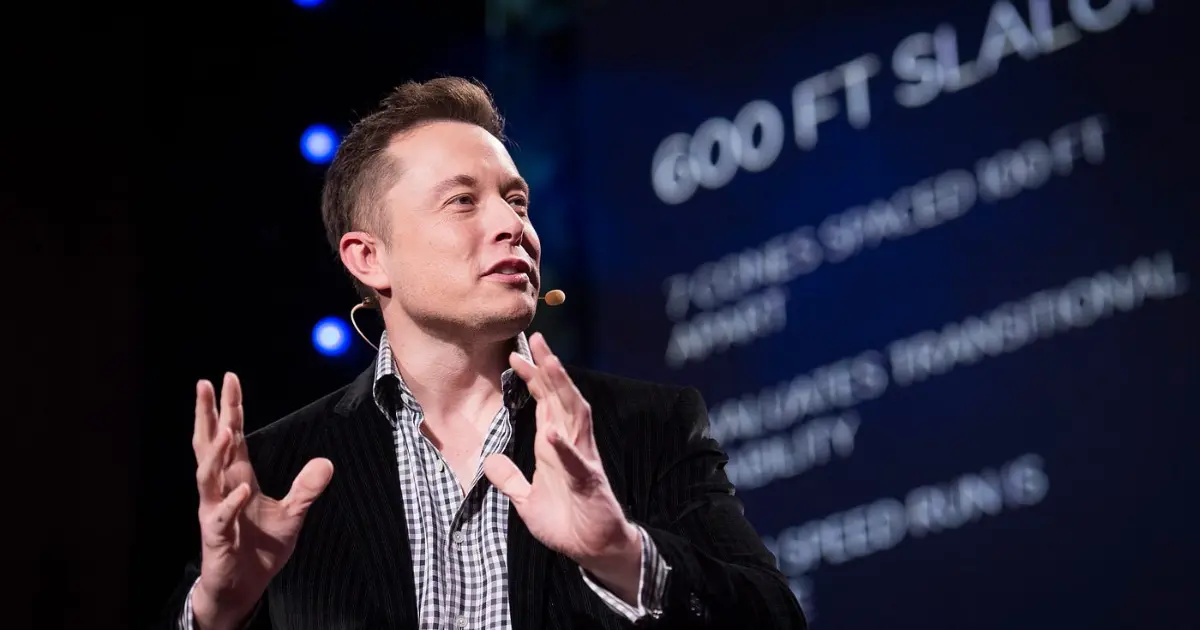
In early February, Elon Musk announced the merger of SpaceX and xAI, signaling SpaceX’s gradual transformation from a commercial rocket company into a comprehensive tech behemoth spanning space transportation, telecommunications, computing, and data infrastructure. This transaction catapulted the merged entity's valuation to a staggering $1.25 trillion, putting this historically massive initial public offering (IPO) squarely in the global spotlight.
But is this merely a merger where "a rocket company bought some AI software"? Or does the visionary disruptor Musk have a completely different endgame in mind?
When Musk announced the SpaceX and xAI merger, a "space data center" was the official rationale provided. However, a deeper analysis of this acquisition reveals that Musk’s ambition likely goes far beyond building a single orbital facility; he is aiming to construct a vertically integrated space infrastructure and a new empire of AI data, attempting to turn the entire Earth—and even the solar system—into his own giant computing nodes.
Musk's core thesis is that this master plan can shatter physical limits, escaping the terrestrial constraints of "energy and thermals." As the scale of AI models grows exponentially, power supply and heat dissipation on Earth have become severe physical bottlenecks.
In space, however, there are no clouds or nights to block the sun. Satellites can harvest solar energy 24/7, solving the critical issue of overloaded terrestrial power grids and making solar power the ultimate source of limitless energy.
Moreover, the cryogenic environment of space inherently solves the thermodynamic nightmare of cooling AI chips, serving as the optimal natural cooling solution. Musk has even projected that within two to three years, the cost of AI compute in space will drop below terrestrial levels.
Shattering Physical Limits and Valuation Ceilings: Forging the Perfect "Sovereign AI" Closed Loop
Furthermore, from a commercial deployment perspective, this creates the most compelling IPO narrative globally.
The consolidation of SpaceX and xAI is undeniably paving the way for the highly anticipated SpaceX IPO this year. The valuation of a pure-play launch provider has a hard ceiling, but if it transforms into a "monopolist of global AI compute and telecommunications"—shifting from an aerospace company to an AI foundational infrastructure giant—the premium on its valuation becomes boundless.
Additionally, xAI already shares deep synergies with X (formerly Twitter). By folding SpaceX into the mix, Musk effectively controls the "data source (X) + the model (xAI's Grok) + compute and connectivity (SpaceX/Starlink)." This forms an impeccably closed-loop data moat that relies entirely on zero external suppliers.
Through this move, Musk is also offering a grand future vision. As he noted in an internal memo, this marks humanity's first step toward a "Type II Civilization." A Type II Civilization, a concept introduced by Soviet astronomer Nikolai Kardashev in 1964 via the Kardashev scale, is a civilization capable of harnessing all the energy radiated by its host star. The core metric for measuring a civilization's technological advancement is the total amount of energy it can command and utilize.
Musk’s overarching architectural concept is to become the brain of interstellar colonization. Establishing bases on Mars or the Moon requires formidable, autonomous AI management and computing capabilities. By putting AI into orbit, he is essentially laying the foundational infrastructure for "multi-planetary life."
To achieve this objective, SpaceX has already applied to the FCC to launch one million satellites, targeting the deployment of 1 TW (Terawatt) of compute power in space. This vastly exceeds the scope of merely serving surface-level users.
Finally, the merger of these two entities represents a strategic synergy and fusion of both capital and talent. On the financial front, SpaceX is already highly profitable. As of January 2026, global Starlink users surpassed 9 million, adding roughly 20,000 new users daily, with projected 2025 revenues hitting $16 billion. In contrast, xAI is burning through roughly $1 billion a month, remaining in a highly capital-intensive R&D phase. Therefore, SpaceX’s robust cash flow can directly bankroll xAI’s cutting-edge research, eliminating the need for frequent external fundraising.
Regarding talent integration, AI engineers and aerospace engineers share massive overlaps in handling large-scale distributed systems, thermodynamics, and precision manufacturing, allowing for much deeper cross-pollination.
In reality, amidst the rapid explosion of AI, companies like Google, OpenAI, and Anthropic have all made swift advancements, effectively pushing xAI into the tier-two bracket of AI labs. However, merging with SpaceX allows xAI to unlock a completely new market in space applications, maximizing its value proposition while simultaneously injecting SpaceX with unprecedented growth opportunities and market imagination.
Therefore, to quickly summarize Musk's chess game: this is not simply "a rocket company buying AI software," but an audacious attempt to turn the Earth, and eventually the solar system, into his giant computing nodes.
Musk's announcement of this vertically integrated "SpaceX + xAI" juggernaut has already triggered a severe existential threat among the traditional cloud trinity: Amazon AWS, Microsoft Azure, and Google GCP. For these three titans, it’s not just about a new competitor entering the fray; more importantly, Musk is bypassing terrestrial physics altogether, attempting to rewrite the very rules of the computing industry.
The Brutal Reality of Space Compute: Severe Challenges in Thermals, Maintenance, and Latency
As previously highlighted, the greatest pain points for AWS and Azure today lie in land acquisition, power generation, and thermal management. The SpaceX and xAI merger delivers an "orthogonal disruption" (a dimensional strike)—shaking off surface constraints and the energy bottlenecks of terrestrial physics.
Currently, ground-based data centers face severe energy shortages and stringent environmental reviews; building a 1 GW (Gigawatt) facility often takes three to five years. In space, however, a single Starship launch can carry thousands of compute nodes, immediately tapping into 24/7 uninterrupted cosmic solar energy.
On the cost structure front, based on estimates from early 2026, if launch costs drop below $200 per kilogram, the cost of space-based compute will undercut terrestrial facilities. It completely circumvents exorbitant land prices, property taxes, and the colossal capital expenditures required for liquid cooling infrastructure.
Secondly, "SpaceX + xAI" introduces an "end-to-end" commercial monopoly. Historically, AI companies (like OpenAI or Anthropic) had to rely heavily on Microsoft or Amazon servers. Musk, however, is now constructing a self-sufficient "Sovereign AI Stack," independently completing a fully vertically integrated supply chain.
For example, imagine a Tesla vehicle or an Optimus robot. They would no longer need to route back to terrestrial AWS servers; instead, they would communicate directly with the "Space Brain" directly overhead. This kind of low-latency, dead-zone-free ubiquitous coverage is something no ground-based cloud provider can ever achieve.
Of course, regarding Musk's rhetoric on space deployment, there may be flaws or points of high contention. While many of these visions sound like infinite opportunities, there are still formidable hurdles urgently awaiting solutions.
Take the challenge of heat dissipation and cooling in space, for instance. On Earth, data centers utilize air or water for "convection" cooling. But in the near-vacuum of space, thermal conduction is notoriously difficult, leaving "radiation" as the sole method of heat transfer. If the extreme heat generated by AI chips cannot be effectively expelled, they will burn out rapidly. Experts have pointed out that cooling a 40MW cluster might require radiators of gargantuan proportions, which would significantly drive up launch weight and payload costs.
Furthermore, regarding economic viability and maintenance, Musk argues that space will become the cheapest place for AI compute within 36 months. But the crux of the debate is that a data center is foundational infrastructure requiring frequent hardware refreshes. The current AI chip lifecycle is roughly 1-2 years; therefore, if a chip fails in orbit, on-site physical repairs are virtually impossible right now.
In fact, AI chip titan NVIDIA currently rolls out a new architecture almost every 1 to 1.5 years, a blistering iteration speed. Coupled with high launch costs, even with cheap solar power, there remains a massive question mark over whether the Total Cost of Ownership (TCO) in space can truly fall below that of ground operations.
The final point relates to Latency. Although Musk tends to downplay this issue when discussing the topic, placing data centers in orbit will undeniably increase data transmission latency. While this has a minimal impact on "model training," latency could become a severe bottleneck for "inference" services that demand real-time responsiveness, making it less competitive than terrestrial data centers.
The Cloud Trio's Desperate Counterattack: The Interstellar War of "Surface" vs. "Orbit"
However, regardless of how difficult Musk's goals are, how they will be achieved in the future, or when they will be realized—these questions remain for Musk's team to solve. But the threat Musk poses to the other tech giants is highly direct and tangible. Today, these tech behemoths have begun to counterattack and strategize, evolving the conflict into a war of the "surface" against the "orbit."
For instance, Microsoft is aggressively accelerating its Azure Orbital program, adopting an open ecosystem approach to external partnerships. Beyond negotiating with SpaceX in the LEO (Low Earth Orbit) space, they are also attempting to partner with other LEO satellite companies like Telesat, as well as MEO (Medium Earth Orbit) satellite operator SES. What is fascinating here is that, despite Microsoft Azure and Amazon AWS being sworn enemies in the cloud market, Microsoft announced a deep partnership with Jeff Bezos's Project Kuiper as early as 2021 to prevent the future skies from being monopolized by SpaceX alone.
As for Amazon's Project Kuiper, it is a space initiative backed by an investment exceeding $10 billion. Its purpose is not only to counterbalance Musk but also to establish a formidable LEO satellite constellation. This is Bezos’s strategic counter-move against Musk. Amazon has now officially and deeply integrated its satellite program with AWS, attempting to leverage its entrenched market share in the enterprise sector to combat Starlink's first-mover advantage.
Additionally, Google has Project Suncatcher, taking a completely different, uncharted path. While Microsoft wants to extend the "cloud" into space, Google wants to build the "data center" directly in space. The current plan involves sending its proprietary TPU AI chips directly into orbit to deploy a tight constellation of 81 satellites. These satellites will be interconnected using high-speed Free-Space Optical communication (FSO/lasers), forming a "floating supercomputer" operating in the cosmos.
This war, expanding from the ground into outer space—whether looking at the future technologies and industries involved or the aggressive investments by American tech giants—clearly indicates that this will be a trendsetting, pivotal technological layout for decades to come. It will also be one of the most consequential key issues in the capital markets. Whether you are a trend watcher or an investor, this disruptive and revolutionary massive commercial opportunity simply cannot be ignored.
Related Articles
Micron Announces Its Largest Rewards Ever. Its Taiwan Union's Demands Expose a Clash of Pay Systems. A strike threat at Taiwan's largest foreign investor, read in three dimensions

TSMC's 3nm rinse comes exclusively from AEMC, a Taiwanese company once withdrawn from the Emerging Stock Board

Taiwan AI Industry Upgrade Forum Series || Event Report:America Wants More Manufacturing. What Does It Take for Taiwan’s Suppliers to Follow?