Taiwan AI Industry Upgrade Forum Series || Event Report:America Wants More Manufacturing. What Does It Take for Taiwan’s Suppliers to Follow?
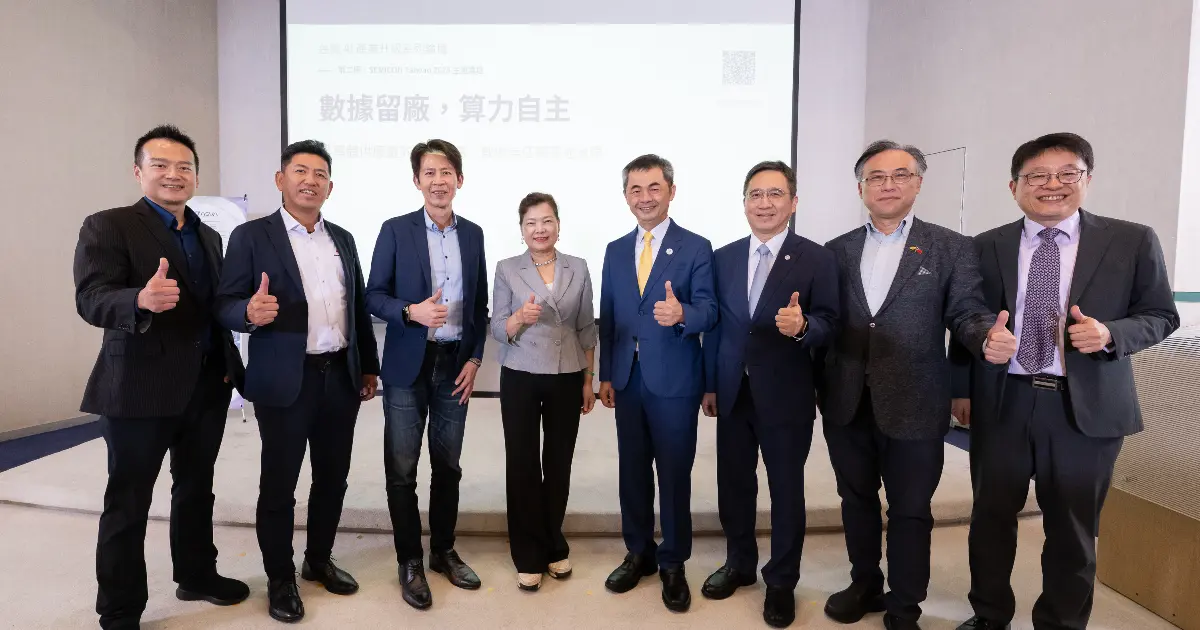
As TSMC expands in the United States, a group of 18 Taiwanese suppliers is working out how to follow—sharing investment risks, organizing engineering support and learning to build local teams.
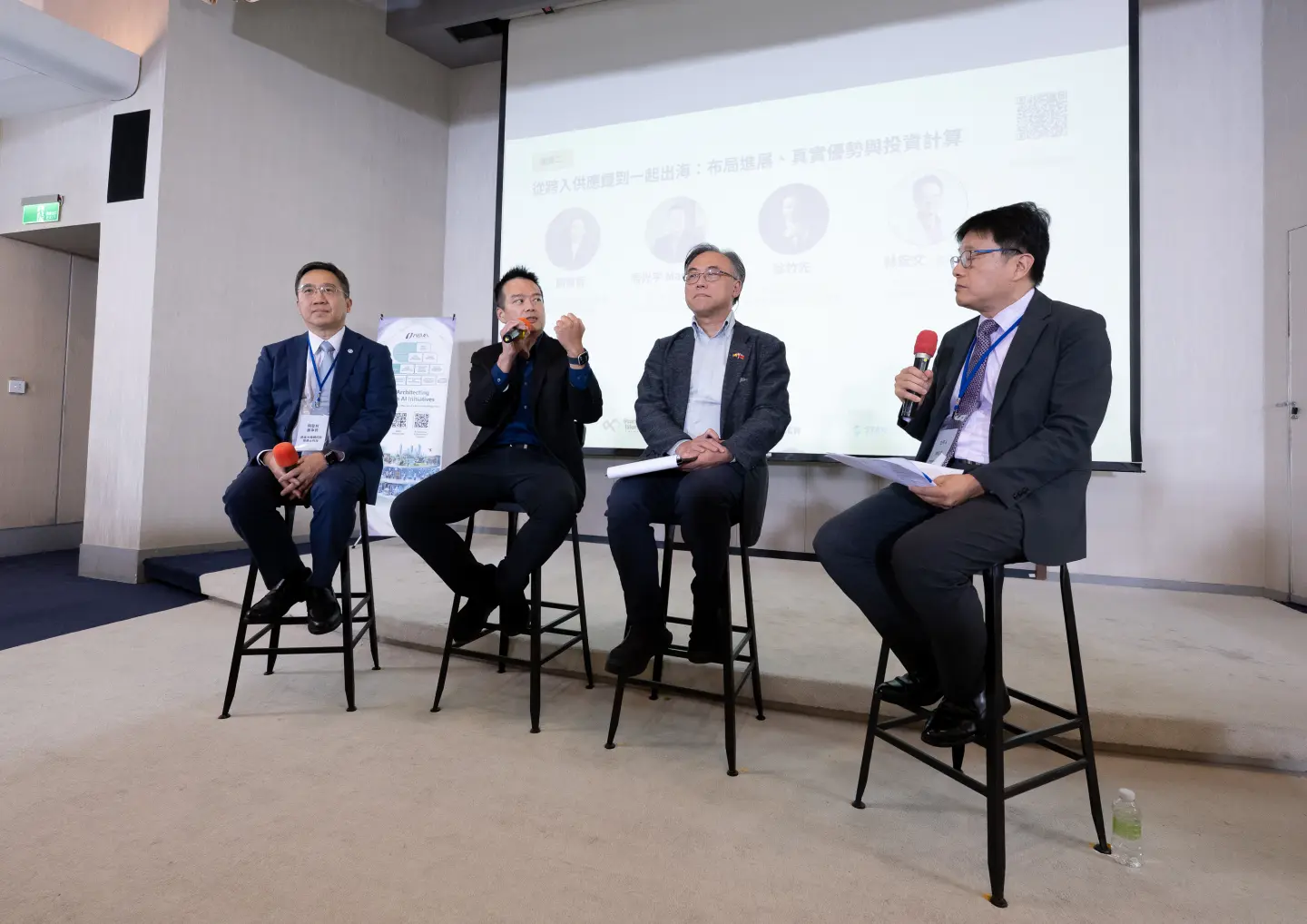
(Speakers and guests at the September 4 forum. From left: Mark Ma, MICH’s U.S. co-founder and CEO; Carter Pan, general manager of Super Plus Technology; Sway Teng, chairman of NEAT and founder and CEO of STARBIT; former Taiwan Minister of Economic Affairs Mei-hua Wang; Ming-chien Chiu, president of NiEA and founder and chairman of Gudeng Precision; James Chueh, chairman of TSS Holdings and Yeedex Electronic Corporation; Steve Hsu, executive director of the Arizona Trade & Investment Office–Taiwan; and Owen Lin, co-founder and chief writer of TAIWANinside.)
For the Taiwanese suppliers supporting TSMC, America’s push to expand manufacturing raises a practical question:how can they provide the same reliable service in the United States that they have spent years developing in Taiwan?
One response is taking shape through the Dexin semiconductor alliance, a group of 18 companies that supply TSMC directly or indirectly. Its members specialize in equipment, materials and software. Most are publicly traded in Taiwan, and the alliance has established shared offices in Arizona and Kumamoto, Japan.
Initiated by Ming-chien Chiu, founder and chairman of semiconductor carrier supplier Gudeng Precision, the alliance uses two holding companies—TSS Holdings Limited and TSS2 Holdings Limited—to bring members together through investment and shared resources. Each company retains its own products and operating independence.
For these suppliers, following a customer overseas involves decisions about capital, engineering coverage, staffing and management. A customer may need support locally before there is enough business to justify a larger manufacturing operation. Companies must decide what to establish first, what to share and when to expand.
Those questions shaped the September 4 Taiwan AI Industry Upgrading Forum in Taipei. Through three presentations and two panel discussions, executives explained how they were approaching overseas investment, equipment delivery, knowledge transfer and local team development.
Held on the final day of SEMICON Taiwan 2026 at the Nangang Software Park International Conference Center, the event was jointly organized by NiEA and NEAT. Startup Island TAIWAN provided guidance, the Asia Silicon Valley & AI Strategy Agency (ASVA) participated as a partner, and TAIWANinside handled media collaboration and event execution. TAIWANinside co-founder and chief writer Owen Lin moderated the discussions.
Following TSMC means following the need for service
Chiu approaches overseas expansion both as Gudeng’s chairman and as the initiator of an alliance coordinating the interests of specialist suppliers. He also serves as president of NiEA, Taiwan’s National Innovation and Entrepreneurship Association.
Gudeng makes carriers used to transport and protect semiconductor wafers and photomasks. Its business depends on understanding customer requirements, maintaining quality and responding when problems arise.
At the forum, Chiu repeatedly returned to those responsibilities. A supplier’s value includes helping customers develop products, coordinating engineering work and providing timely support. When customers expand overseas, suppliers have to consider how those capabilities will reach the new location.
This creates a commercial reason to follow. The customer relationship may have been built in Taiwan, but some of the work required to sustain it now has to be performed abroad.
Chiu argued that the additional expense should be assessed within the overall customer relationship and the business it supports over time. A cost that appears high when viewed in isolation may have a different significance when it protects continuity of service.
However, committing to service does not settle the timing of a manufacturing investment.
When Lin asked what would trigger larger-scale U.S. manufacturing expansion, Chiu explained that Gudeng was still assessing customer production growth and whether purchasing prices could support the operation’s break-even point. He also acknowledged that the company was still learning to adapt its staffing and management to the U.S. working environment; he was not claiming to have resolved those challenges.
His response showed that suppliers can move in stages. Establishing a service presence, testing manufacturing and committing to a larger factory are different decisions.
Three machines provide a place to start learning
Chiu described a small aerospace manufacturing pilot as one way Gudeng was preparing.
The company had purchased three machines and was working toward using an existing warehouse-and-office location, including obtaining the necessary approvals. The pilot would allow it to learn about staffing, management and local operating requirements at a more manageable scale.
He described this as learning to walk.
Gudeng’s precision-manufacturing experience provided a starting point for aerospace work. The smaller pilot could also generate lessons for a future semiconductor-related manufacturing investment, where the scale and cost of mistakes would be greater.
For Chiu, the advantage was to begin learning before a larger factory made those questions more expensive to answer.
This distinction is important in understanding Taiwanese suppliers’ investment decisions. Supporting a customer’s U.S. expansion does not necessarily mean replicating an entire Taiwan operation immediately. Companies still have to establish what level of investment the business can sustain.
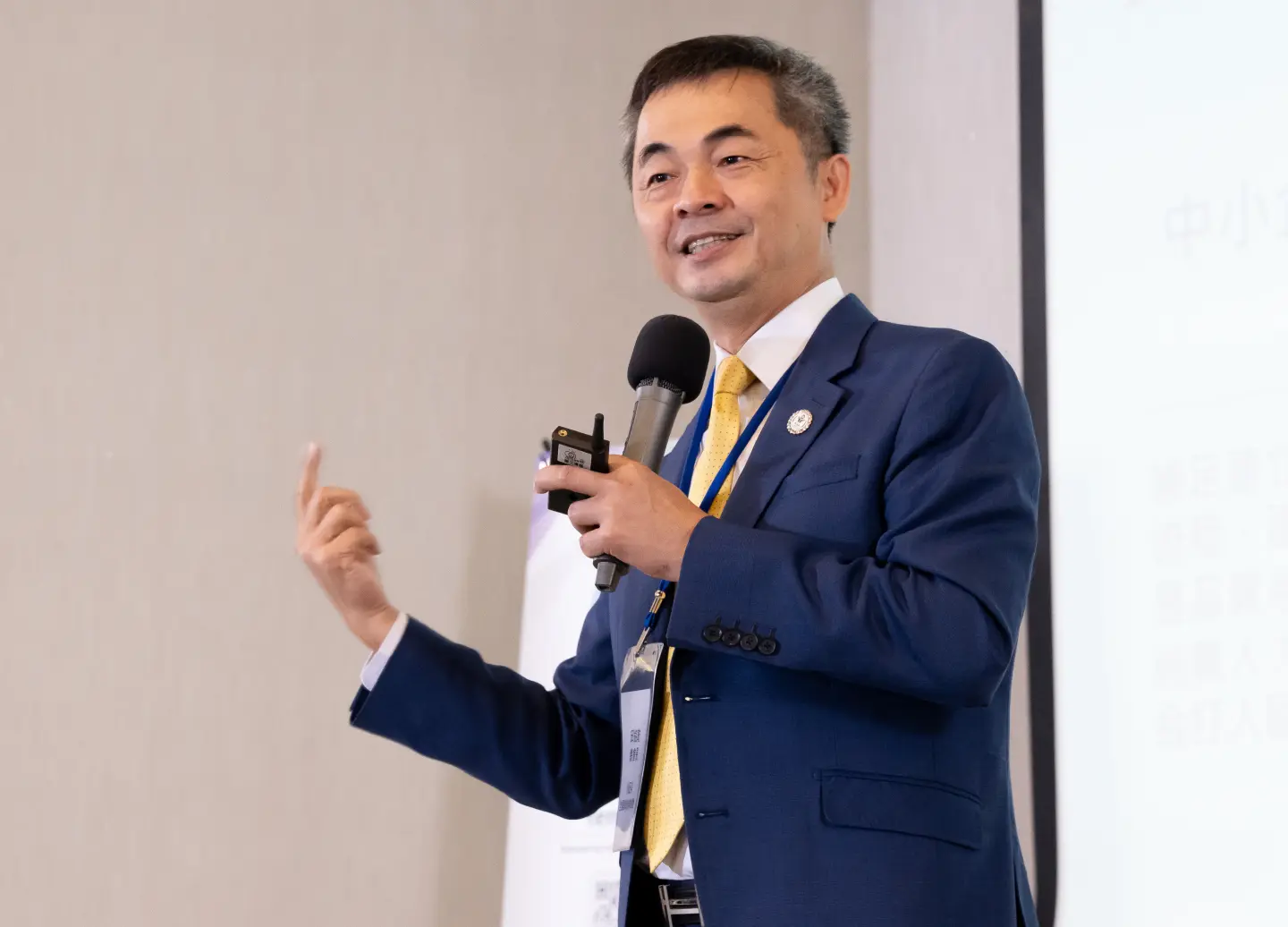
圖說|邱銘乾演講
Shared capital gives the alliance a foundation
A specialist supplier may have the technical knowledge a customer needs without having enough overseas business to support every local function independently.
Engineering coverage, administration and management all require resources. Establishing them separately in each company can increase the burden of entering a new market.
Chiu described shared investment as the foundation of the Dexin alliance’s response. The cooperation grew out of longstanding relationships among entrepreneurs and moved toward committing money and accepting the results together.
Eight companies participated in the first holding company, followed by ten new partners in the second. Chiu discussed joint investment in Gudeng’s U.S. operation as a basis for connecting customer relationships, technical experience and service resources.
He illustrated the operating logic through engineering support. Equipment suppliers need people for installation and maintenance. A shared overseas base can help organize resources to serve different members’ needs.
James Chueh, chairman of TSS Holdings and Yeedex Electronic Corporation, emphasized that members should preserve their product specialization and operating flexibility.
He described their niche markets as “blue lakes”: focused markets in which companies build technical depth and distinctive products. The alliance connects those firms to shared resources while allowing each to continue developing its specialty.
Cooperation still depends on the businesses involved. Sway Teng, chairman of NEAT and founder and CEO of STARBIT, noted that software firms may compete for similar projects. Their relationships do not necessarily resemble those of hardware companies with complementary products.
The discussion made clear that shared expansion requires more than a common destination. It needs compatible interests, financial commitment and workable responsibilities.
A staffing gap changed the cost calculation
Chiu also described how an unexpected departure exposed a weakness in Gudeng’s U.S. staffing arrangements.
According to Chiu, the gap could not be filled simply by flying an experienced engineer over from Taiwan. In the situation he described, that engineer could provide guidance but lacked authorization to perform the work directly. The company therefore arranged for a replacement with the necessary work authorization and additional support to bridge the experience gap.
The episode prompted him to reconsider backup coverage. If only one person could perform a critical role, that person’s departure could interrupt service to the customer.
Additional staffing would increase expenditure, but it would also reduce the risk of disruption. Customer production could not wait while the supplier resolved its personnel problem.
Chiu treated the experience as something his organization needed to learn from. Choosing to operate in the United States meant adapting to its working environment and strengthening management arrangements.
His account gives a concrete meaning to the cost of overseas service. Companies need to consider not only how many people are required to perform a task, but also the training, handovers and backup capacity needed to keep that task covered.
Equipment needs to arrive ready for acceptance
Carter Pan, general manager of Super Plus Technology, examined another point where a supplier’s internal processes affect the customer: equipment acceptance.
Super Plus works in semiconductor automation equipment, including equipment front-end modules that handle wafers entering and leaving processing equipment, as well as wafer sorting and storage systems.
Pan said the company had grown from roughly 20 employees to about 150 over four years. Purchasing, organizational and quality processes had to develop alongside that growth.
He contrasted the company’s direction with assembly practices in which equipment was built to drawings, shipped and then repeatedly adjusted at the customer’s site. In his experience, acceptance could take six months or longer, with some equipment requiring substantial rework.
Pan wanted more testing and verification completed before shipment. His requirement was for equipment to complete customer acceptance in about a week.
He said most equipment could now meet roughly that timeframe, while software remained an area requiring improvement. The distinction separated progress in equipment delivery from the work still needed to make software equally consistent.
For overseas operations, unresolved problems can mean more engineering time, additional international travel and longer waits before equipment can be used.
Chiu connected quality management to leadership. At Gudeng, he said, he personally oversees digitalization and leads the smart-manufacturing project meetings.
Implementation involves employees’ working habits and coordination across departments. Senior management has to make the systems part of everyday operations, connecting measurement, process control and information records to the work performed in the factory.
Those records help suppliers demonstrate their quality practices to customers and give teams in different locations a consistent basis for their work.
Knowledge must become usable by the overseas team
Teng described a problem that can accompany rapid growth: companies acquire different management systems, but their information remains separate.
Managers then depend on employees to collect and reconcile data before they can use it.
STARBIT’s work with Super Plus illustrates the effort required to connect those systems. Teng said five software providers had been planned for the project, with three already involved at the time of the forum. Implementation was continuing in stages.
The intended applications included allowing managers to ask questions about quality, operations and customer-related information in natural language. This remained a development direction within the ongoing project.
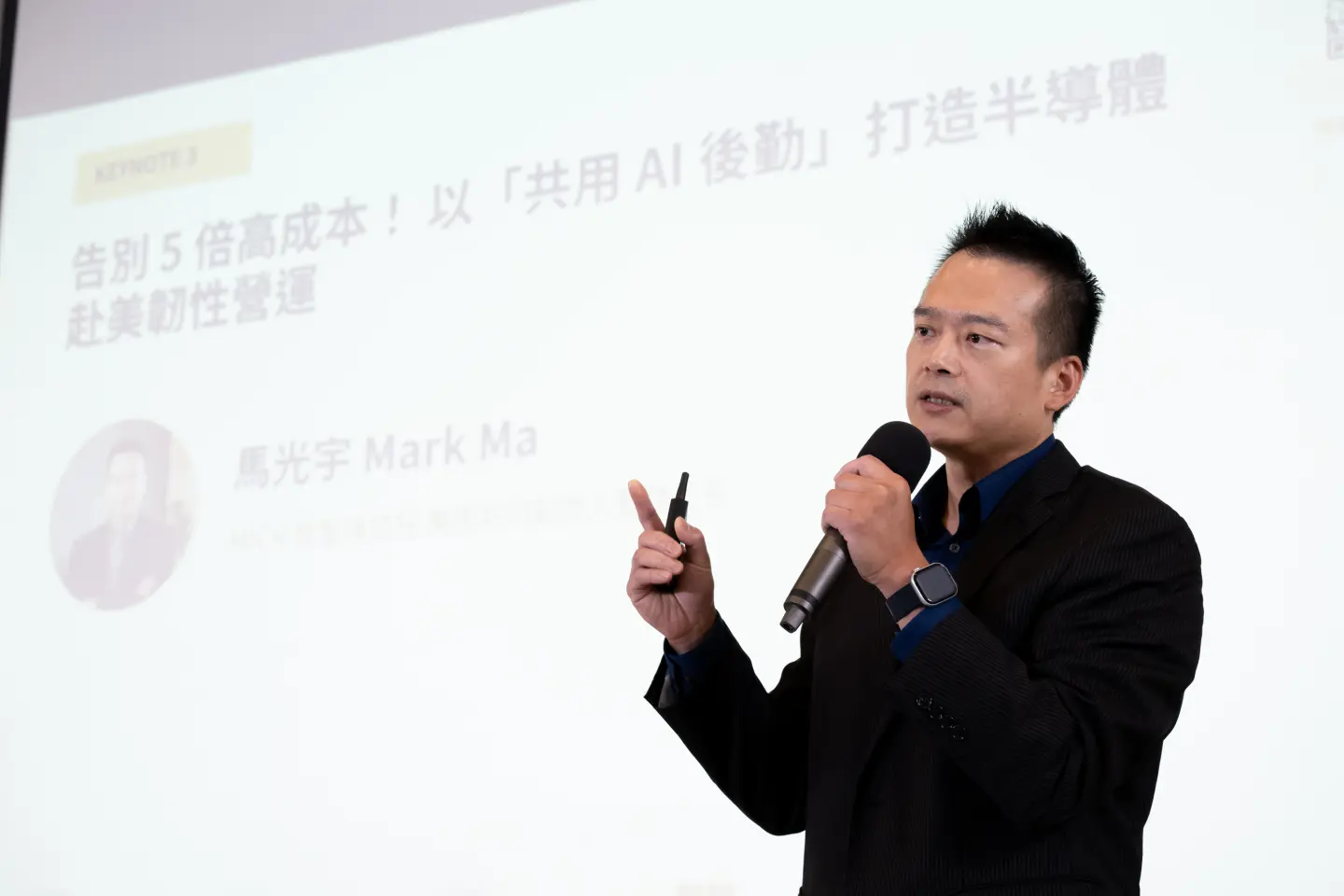
Mark Ma, U.S. co-founder and CEO of Micro Intelligence Computing Holdings Inc. (MICH), connected the same information challenge to overseas knowledge transfer.
He discussed using the LowsiteOS data platform and on-premises AI to organize company information, operating procedures and accumulated experience. The aim was to help employees retrieve knowledge and understand established ways of working.
His proposed sequence began at headquarters in Taiwan: define the scope, identify the data sources and agree on performance and return-on-investment measures. Deployment overseas would follow successful validation.
Ma also proposed evaluating shared support for functions such as administration, human resources and finance.
For local employees, access to organized knowledge could reduce their dependence on finding a particular person at headquarters. It could assist training and day-to-day problem-solving.
The company would still need to provide management support and develop employees’ ability to take responsibility. Making information available is one part of building a capable team.
Local partners can help make investment workable
Steve Hsu, executive director of the Arizona Trade & Investment Office–Taiwan, urged companies to separate different types of costs when planning U.S. operations.
Construction, regulatory requirements and staffing involve different problems and may call for different partners.
He proposed separating property investment from manufacturing operations, allowing experienced investors or developers to undertake real-estate work while manufacturers concentrated on running their businesses.
Hsu also discussed connecting employers with military veterans and exploring joint training. These were proposed directions for cooperation, rather than a completed recruitment or training arrangement for the alliance.
He argued that manufacturing expertise needs to be accompanied by management and capital capabilities. Companies should develop local managers or consider working with established local teams.
For American communities seeking manufacturing investment, these examples identify practical areas for cooperation. Incoming suppliers may need experienced partners, relevant training and help understanding the local operating environment.
Taiwanese employers also have responsibilities. They must adapt their management, explain their processes and prepare local employees to assume ownership of the work.
A welcoming environment and a company willing to learn can reinforce each other.
Overseas partnerships also require clear boundaries
The discussion of Japan showed that overseas expansion can serve several purposes.
Chueh said companies were looking for cooperation in materials, chemicals and equipment alongside opportunities to serve existing customers. An overseas presence could help them gain complementary expertise as well as support current business.
New relationships also require attention to intellectual property.
Responding to an audience question, Chiu reflected on a patent dispute that had resulted in a costly judgment against Gudeng. He said he had approached patents through an engineer’s reasoning and underestimated the importance of understanding them through a legal framework.
Hsu distinguished patents and trade secrets as different approaches to protecting technology.
Their exchange added another responsibility to the investment decision: companies need to understand how technology can be used, shared and protected as they establish partnerships.
The longer-term opportunity is a locally capable business
Toward the end of the forum, Ma described what could follow the initial move overseas.
An existing customer can provide the starting point. Once local employees have acquired the knowledge and ability to take on more responsibility, the operation may be able to serve additional customers.
That progression depends on the team, service record and relationships built after the first investment.
For Americans seeking to understand Taiwanese suppliers’ plans, this is a useful perspective. These companies bring specialized products and experience developed through years of customer cooperation. They are also learning how to invest, recruit, manage and build relationships in a different environment.
The forum showed the practical work involved: starting with a small manufacturing pilot, committing capital with partners, adding backup coverage and completing more testing before shipment.
America’s manufacturing ambitions create opportunities for these suppliers. Turning those opportunities into lasting businesses will require Taiwanese companies and American partners to build the people, services and working relationships that keep factories running.
Related Articles
Micron Announces Its Largest Rewards Ever. Its Taiwan Union's Demands Expose a Clash of Pay Systems. A strike threat at Taiwan's largest foreign investor, read in three dimensions
TSMC's 3nm rinse comes exclusively from AEMC, a Taiwanese company once withdrawn from the Emerging Stock Board
Taiwan Built the Foundry Model. It Does Not Transfer to Personalized Cancer Vaccines.