Intel's Pool Is Still Cold — and Musk's May Be Even Colder. C.C. Wei Says Samsung Is "Dreaming." So How Would Morris Chang Have Judged TSMC's Rivals?
I was recently interviewed by Chu Chu-wen, host of the Taiwanese financial talk show Finance Relativity. She asked why TSMC chairman C.C. Wei could dismiss the competition as "a dream" — especially after Samsung vowed to overtake TSMC within ten years — when the company faces rivals like Intel and Samsung. She also asked: if Morris Chang were still in that chair today, how would he comment on Samsung, Intel, or Tesla?
I found Chu's question a genuinely intriguing one — it made my eyes light up and brought the whole interview to life. I spent some time thinking through the current competitive landscape between TSMC and its rivals, recalling C.C. Wei's past remarks on various issues, as well as how Morris Chang has commented on competitors over the years. What struck me is that the two men answer questions in very different ways, each with his own distinctive style — well worth a closer look.
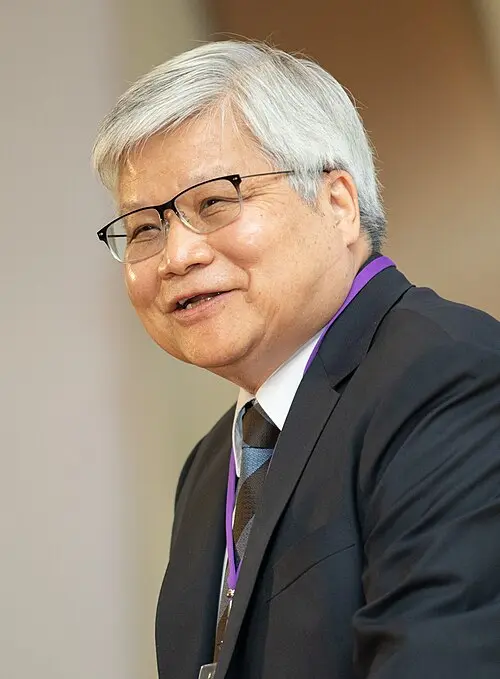
Let me begin with the speaking style of C.C. Wei (pictured; via Wikipedia). Wei talks very directly and colloquially, sometimes with a kind of hearty Taiwanese humor that makes you want to laugh — fitting for a man whose English name is C.C. Wei.
〔Translator's note: In Mandarin, "C.C." sounds like xi-xi, the sound of a giggle, so people affectionately nickname him "Giggly Wei."〕
He has said things like "no way," "dreaming," and "good luck to them" — few words, heavy punch, close to plain public speech, which is exactly why his one-liners travel so far.
Take the example from six years ago, when TSMC decided to invest in the United States and later drew criticism that it would become "USA Semiconductor," that technology would leak out and Taiwan would be hollowed out. In one response, Wei said that even with U.S. fabs, TSMC would hold firm to its production base in Taiwan, stressing Taiwan's importance to the semiconductor industry. Even if some capacity moved abroad, the real R&D would stay in Taiwan, and the initial volume production would happen in Taiwan too. To the claim that TSMC would turn into "USA Semiconductor," he shot back: "No way!"
At this year's shareholders' meeting, he was again full of one-liners. When Samsung proclaimed it would catch up with TSMC within ten years, Wei's verdict on the rival was simply: "Dreaming."
Asked how he viewed Intel as both customer and competitor, Wei said bluntly: "Intel is still one of our top ten customers. First, it's a big customer — we want to earn its money. Second, we will protect our own technology and information. TSMC has never lacked for competition; we've always won, and we will keep winning."
When a shareholder raised Intel's aggressive push into advanced packaging, Wei said: "Any competitor trying to scale up advanced packaging has to face challenges in technology, yield, mass-production capability, and supply-chain integration. We've never been afraid of challenges, and we've never been afraid of competition. So the bottom line is: 'Not afraid'!"
And when a shareholder noted that Samsung, Intel, and Musk all want to compete with TSMC, he replied: "TSMC has never lacked competitors. So what do we do? We keep working hard to beat them — that's what we do."
Asked how long Taiwan's semiconductor edge can last, Wei answered with humor: "Have confidence — I expect it to last forever. When Jensen Huang goes to South Korea, he checks with us first; I even know which kind of chicken he's going to eat."
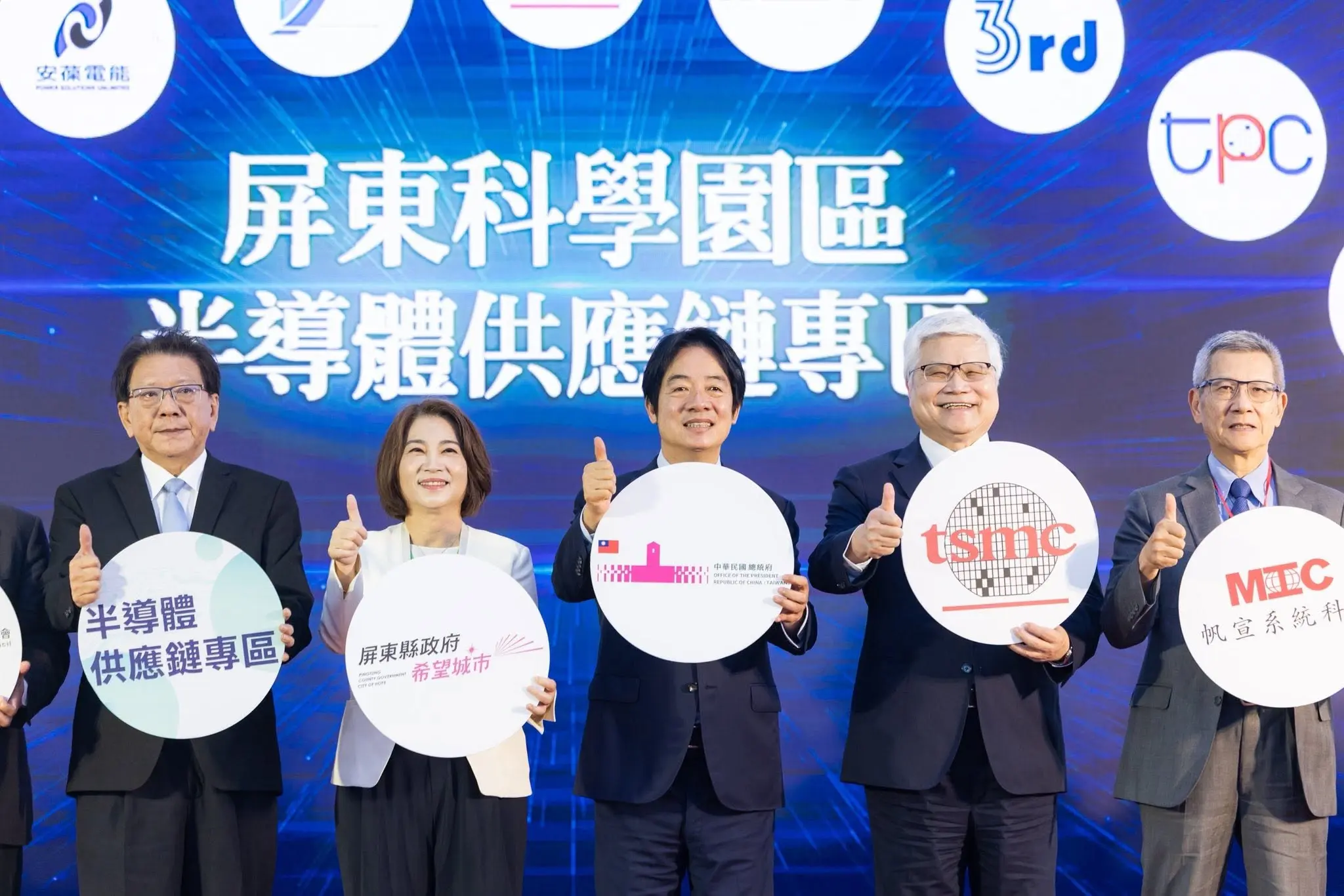
That is C.C. Wei's style — direct, satisfying, no fluff. The remarks above were all made by Wei (pictured, second from right; via President Lai Ching-te's Facebook page) in public settings. In private, his talk is just as witty and funny. I once wrote a piece — the first to do so — about his off-stage remarks, which likewise had everyone in stitches.
Last year, Wei had dinner with classmates from Taichung First Senior High School. TSMC was then trading at just over NT$1,000, and someone asked how high the stock would go. Chairman Wei posed a question to the table: "If you take the yolk out of an egg, what's left?" Someone said the egg white was left — and at first some people were puzzled, before the whole table burst out laughing.
〔Translator's note: The joke is a Taiwanese-language pun. "Egg white" (nng-tshing) sounds like "two thousand" in Taiwanese, so the punchline predicts TSMC's stock hitting NT$2,000.〕
Today TSMC's share price has long since broken NT$2,000, and that egg-white joke has become another of "Giggly Wei's" enduring lines.
As for Wei's boss, Morris Chang (pictured): looking back over the years at his comments on competitors, you find several distinctive features in his responses — unhurried, full of confidence, never trading insults head-on, yet often using precise industry analysis and slightly humorous metaphors to bring out TSMC's core competitive strengths: long-accumulated manufacturing capability, customer trust, and technological leadership — advantages latecomers find hard to replicate in the short term.
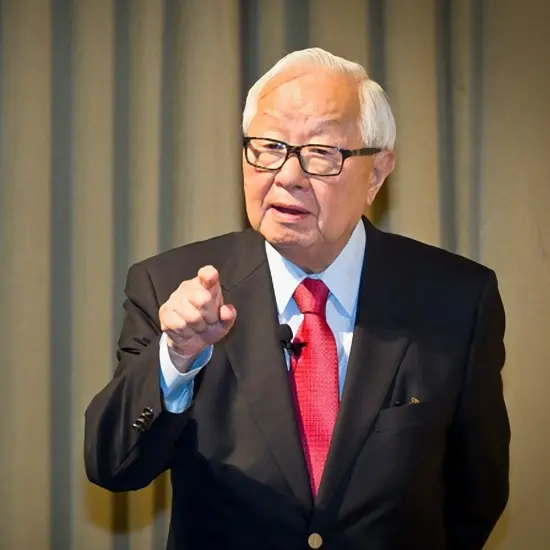
For instance, Chang's comments on Intel over the years have been the richest, and consistently the most confident in tone.
In 2016, when Intel moved into foundry services, Chang said Intel was merely "dipping a toe in to test the water," and that he believed "Intel would find the pool very cold." He also stressed that foundry is TSMC's central will, and that TSMC would defend it to the death against any intruder.
By 2021, when then-Intel CEO Pat Gelsinger announced a push into foundry services, Chang — speaking of a CEO he described as "well-spoken enough to be chosen, but with a strategy I don't think is good" — responded that, in his eyes, "it's a bit ironic." That was because, back when TSMC was being founded and raising capital in 1985, it had approached Intel and been turned down; at the time Intel rather looked down on wafer manufacturing services.
The most classic moment came in 2023, when Chang answered Intel by quoting Jensen Huang: "TSMC has learned to dance with 400 partners, while Intel has been dancing alone on the floor the whole time. I quite agree with Jensen's comment." The room broke into laughter when he finished.
In 2024, at the launch of the second volume of his autobiography, Chang again offered a verdict, bluntly calling "the lack of a new strategy" Intel's fatal wound — noting that after Gelsinger took over, his preference for sprinting into foundry services instead caused Intel to miss the AI opportunity, leaving it now facing a "double deficit" (lacking both a new strategy and a new CEO).
As for Samsung, Chang has commented several times.
At a forum in 2012, Chang likened Samsung and Intel to "two 700-pound gorillas," calling them TSMC's most "formidable" competitors. He acknowledged that TSMC survives on technology and manufacturing, that helping customers defeat Intel was a primary goal, and that TSMC was doing not just well but "very well."
On Samsung, Chang also once used the line "the devil you don't know is more dangerous than the one you do" to describe the South Korean tech giant, recalling how he had successfully resisted the temptation to collaborate with Samsung on memory — calling it "a fatal intersection of ambition and temptation."
At a 2024 book event, Chang pointed out that Samsung had technical problems at the time, noted that South Korea's domestic turmoil was a headwind for its companies, and recalled why he had declined to work with Samsung years earlier (a reference to 1988, when Samsung's Lee Kun-hee invited Chang to South Korea to tour Samsung, urging Taiwan not to enter semiconductors and to cooperate with Samsung instead). He said outright: "Working with him might not have turned out so well!"
As for China's SMIC, Chang has rarely commented. But in my book The Light on Silicon Island, I recorded a remark from an interview I did with him.
After SMIC was founded in 2000, when Taiwan was full of expectations about China's rise, I asked Chang for his view of SMIC. He predicted: "I think SMIC will not only fail to threaten TSMC, I expect its operations to be very tough. In good times it may make a little money, or none at all; but when a downturn comes, it will lose big." That assessment has since come true almost in full.
In 2023, Chang said at an event that China's semiconductor technology lagged Taiwan by about five to six years, mainly because the mainland runs into many difficulties producing advanced chips while TSMC manages it with relative ease — so the gap holds at roughly five to six years.
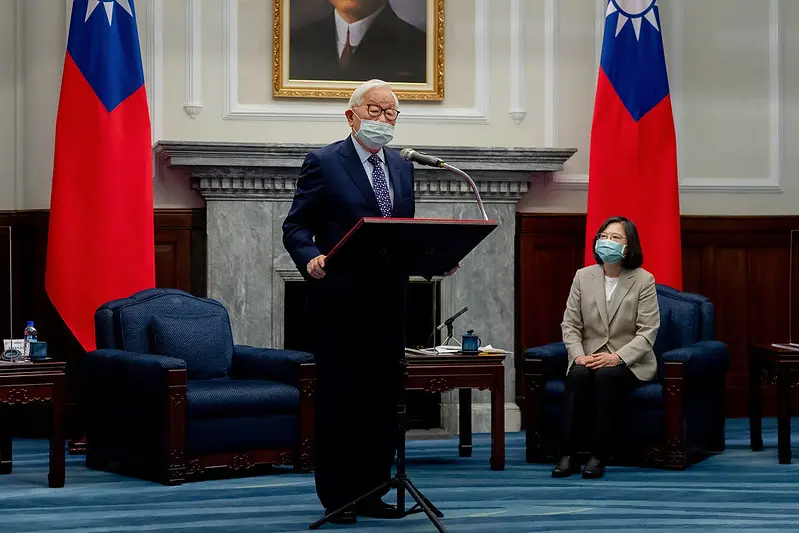
So, looking back over the years at how Morris Chang (pictured above; via the Presidential Office) has viewed global competitors, you can sense the foresight and seasoned cunning of this "godfather of foundry." His habitually humorous metaphors — the cold pool, the gorillas, the dance floor — all pinpoint TSMC's competitive advantages with precision. That is very much his consistent style.
So, back to Chu's question: if Morris Chang were still at TSMC's helm today, how would he comment on competition from Samsung, Intel, Tesla, and the rest?
What follows is my simulation of how Morris Chang has spoken in the past — perhaps these are the comments he would make.
Take Intel. Although Intel CEO Lip-Bu Tan's first year-plus in office has lifted Intel's stock sharply, the reality is that Intel Foundry posted a loss of US$10.3 billion in 2025 on revenue of just US$17.8 billion — more than quadruple its 2024 loss. At the same time, there are reports that the Trump administration is pressuring Tesla to shift orders for the AI 6.5 chip from TSMC to Intel, as political material for "bringing chip manufacturing back to America."
Faced with such a situation, Morris Chang would very likely say:
"The pool is still cold. Intel's predicament isn't that it hasn't burned enough cash; it's that for thirty years it has never survived inside a pure-foundry culture. What it relies on now are political orders, not technology orders. I keep those two things very clearly apart."
He would also very likely extend his old dance-floor metaphor, in light of the latest poaching episode — Intel's recruitment of former TSMC senior vice president Lo Wei-jen, which led TSMC to file a lawsuit alleging risk of process-secret leakage. Industry observers note that even poaching senior talent makes it hard to replicate TSMC's edge, because TSMC's core competitiveness lies in a tightly collaborating, large-scale mass-production team, not in any individual's expertise.
I imagine Chang would say lightly:
"Poaching a few people won't buy you thirty years of manufacturing culture."
As for Samsung: Tesla CEO Elon Musk confirmed in 2025 a US$16.5 billion long-term deal with Samsung running through the end of 2033, with the latest-generation AI6 chip to be fabricated entirely by Samsung. On the surface it looks like a major win for Samsung, but the reality is more complex. Morgan Stanley estimates the deal will affect TSMC's revenue by only about 1%, because TSMC keeps sustaining its output and manufacturing efficiency, and its market share remains far ahead.
Chang's comments on Samsung have always been calm with a sting, and he might say:
"Samsung winning the Tesla order doesn't surprise me, and it doesn't worry me. Diversifying risk among suppliers is normal business behavior. But diversifying risk and surpassing TSMC are two completely different things. In time, Tesla itself will find out that the gap in yield and mass-production efficiency isn't something a contract can change."
The well-known semiconductor analyst Andrew Lu has made a similar observation, suggesting Tesla may eventually find that TSMC still leads Samsung by a wide margin in production progress, yield, chip power consumption, and speed. This is of a piece with Chang's old logic that "the devil you don't know is more dangerous" — Samsung has always been, in his words, a formidable rival, yet also the one he keeps most at arm's length.
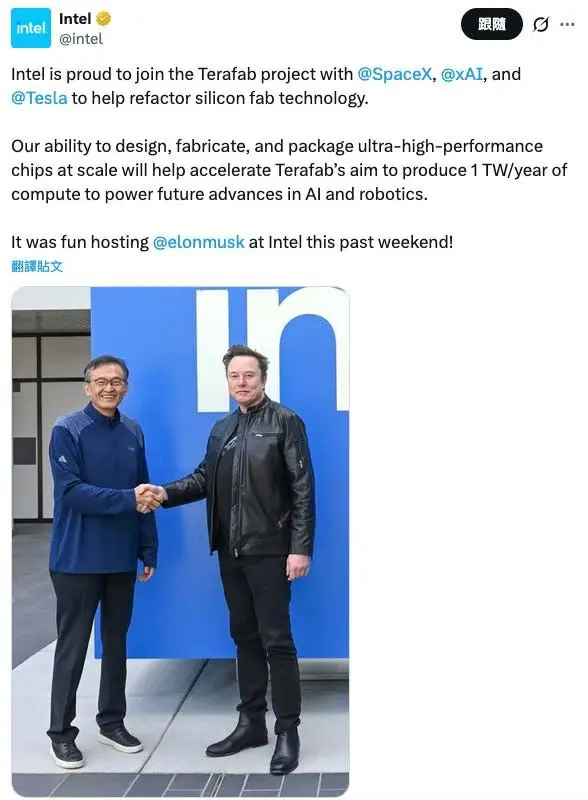
As for Musk's drive to have Tesla build its own fab, "Terafab" — this is the newest variable. At Tesla's earnings call in January 2026, Musk said bluntly that even in the most optimistic scenario, external suppliers' capacity could not meet Tesla's compute needs over the next three to four years — which is precisely the backdrop to his announcement of the "Terafab" mega-fab plan.
Tesla is the most unusual rival of all, because this is not a traditional foundry competitor — it's a customer turning into its own capacity. Chang's response to this, judging by his past style, would probably go like this:
"Musk is a man of great imagination. But a fab isn't a rocket — you don't build it and watch it fly. It took TSMC thirty years to get to where it is today; how many years will he spend? I wish him well, but I'm not worried."
He might even invoke what he said in 2021, with a touch of humor:
"Back then Intel found the pool cold — and that was Intel, with decades of semiconductor grounding. Tesla's pool will be colder still."
The remarks above are my own simulated conjecture, offered for readers' reference. In my view, the core logic behind Chang's answers to many questions rests on roughly three unchanging pillars. First, technology is real; politics is temporary. He would draw a sharp line between the orders the Trump administration pressures toward Intel and Tesla and genuine technological competitiveness.
Second, manufacturing culture cannot be rushed. Whether it's Intel poaching people, Samsung signing a big deal, or Tesla building a fab, he has always held that the trinity TSMC has built up over thirty years — "manufacturing excellence, customer trust, technological leadership" — simply cannot be replicated by taking shortcuts.
Finally: "Competition makes us better, but as for threat — I don't feel it." He never trades insults head-on; instead he uses the lens of industry analysis to make rivals' threats look pale by themselves. To me, that is exactly where Morris Chang is at his most formidable.
Today, his truest heir, C.C. Wei, is likewise making the most of his role, playing the steadying force behind the "sacred mountain that guards the nation."
〔Translator's note: "Sacred mountain that guards the nation" is a popular Taiwanese nickname for TSMC, reflecting its strategic importance to the island.〕
I wouldn't yet dare say Wei will surpass his mentor, but he has fully inherited Chang's craft. I believe TSMC will follow the path Chang laid down, passing the tests of the coming decade's global expansion — and carry Taiwan not merely safely through its geopolitical challenges, but to a decisive victory.
Related Articles
Micron Announces Its Largest Rewards Ever. Its Taiwan Union's Demands Expose a Clash of Pay Systems. A strike threat at Taiwan's largest foreign investor, read in three dimensions
TSMC's 3nm rinse comes exclusively from AEMC, a Taiwanese company once withdrawn from the Emerging Stock Board
Taiwan AI Industry Upgrade Forum Series || Event Report:America Wants More Manufacturing. What Does It Take for Taiwan’s Suppliers to Follow?