What Would It Really Take for America to Copy Taiwan’s Semiconductor Model? Science Parks, Ecosystems and the Culture Inside TSMC
A CNN reporter came to see me recently. They wanted to talk about American manufacturing coming home, about what the United States would have to do to reproduce what Taiwan’s semiconductor supply chain has built, and about which of Taiwan’s strengths are hardest for other countries to imitate.
I think these are questions worth asking. A great many Taiwanese companies are investing in the United States right now and running into every kind of difficulty, so this is a good moment to share what I told them.
CNN was making a seven-minute film about the ecosystem inside Taiwan’s science parks, the work culture there, and the way people in this industry cooperate. For those seven minutes they interviewed a long list of people. The care they put into it impressed me.
They found me because one of their reporters in the United States had read the English edition of my book and got in touch, and then asked a colleague in Taiwan to sit down with me. I spent close to two hours answering everything they asked, holding nothing back, and I wrote down both their questions and my answers.
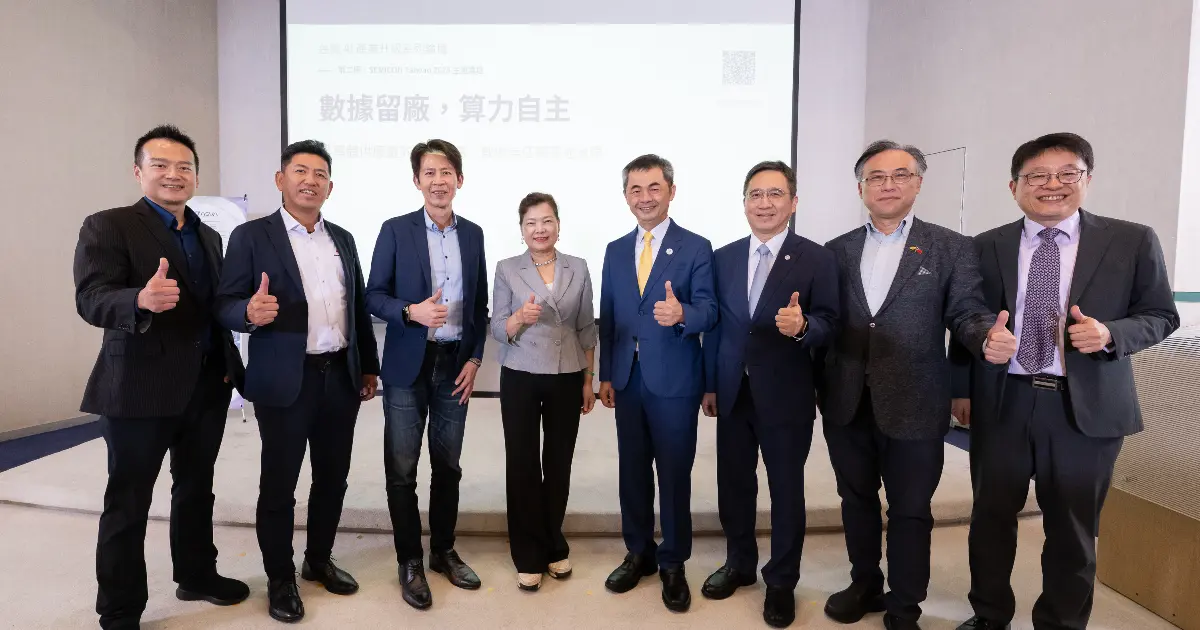
SEMICON Taiwan opens next week. On the afternoon of Friday, September 4, I will host a forum on how Taiwan’s semiconductor supply chain can go abroad together. Joining me will be Ming-Chien Chiu, chairman of Gudeng Precision Industrial, who has led delegations of Taiwanese suppliers to invest in the United States and who currently chairs the National Innovation and Entrepreneurship Association, together with Sheng-Che Chueh, chairman of TSS Holdings, the vehicle through which 18 Taiwanese suppliers to TSMC now go abroad together. TSS Holdings was formed in July 2023 by eight makers of front-end wafer equipment and consumables, and TSS2 Holdings followed in March 2025 with ten more firms in advanced packaging, process materials and industrial intelligence.
Before America copies Taiwan’s science parks, it needs the basics in place
The first question went straight to the point.
Q1: The science park was an American invention, and the United States has Silicon Valley and other technology clusters of its own. How do Taiwan’s science parks differ from them? What makes Taiwan’s parks distinctive? And if the United States now wants to build science parks, what should it take from Taiwan’s experience?
A: TSMC chairman C.C. Wei has described what happened when the company built its first fab in the United States. Speaking at a lecture at National Taiwan University’s EMBA program in January 2025, he said American authorities had no regulatory framework for an advanced semiconductor fab, so TSMC ended up paying for its own panel of experts to sit down with city officials and write the rules from the ground up. That process cost US$35 million and produced more than 18,000 rules.
He described a second cost too, one that never appears on an invoice. A production line takes about two and a half years to build, and over those years the process technology keeps moving. Every time a tool is improved, the layout of the line changes, and the power, water and chemical piping underneath it changes with it. In Taiwan the suppliers make that change immediately. In the United States, he said, any change means stopping, redrawing the plans, waiting for approval, and only then continuing.
This is what happens when a country has been away from manufacturing for too long. Fab process technology now advances faster every year, and the rules, materials and construction methods that go with it are entirely different from what they were. All of it has to be built again from nothing.
Taiwan’s science parks began in Hsinchu and spread to Tainan, Taichung and Kaohsiung. The central government coordinated every one of them, using national resources and national law to run a single service window that strips out administrative delay. Water, power and roads inside the park are ready before the tenants arrive. A manufacturer has nothing to worry about except its own products, its own technology and its own factory.
You do not necessarily find this model anywhere else. China copied it. Beijing invited large numbers of Taiwanese to advise it, built Taiwan-style parks across the country, and carried the whole approach over. That is a large part of how China became the world’s factory.
And the biggest single contributor to China becoming the world’s factory was Taiwan. In 2018, the year the trade war began, four of the top ten companies on China’s ranking of its 500 largest foreign-trade enterprises were Taiwanese. Two years later, on the separate list of China’s 100 largest exporters for 2020, six of the top ten were Taiwanese: three Foxconn subsidiaries, along with units of Quanta and Pegatron.
China did not stop at copying Taiwanese methods. Chinese firms grew into competitors of the Taiwanese companies that had taught them, and once they were large enough they dumped product on world markets at low prices. That is what put the United States on alert, and it set off the chain of technology and trade conflict that followed.
I have spent time in Japan over the past two years and seen the Japanese version of an industrial site. TSMC built its fab in Kumamoto with cabbage fields across the road. Japan has no concept of a dedicated science park in Taiwan’s sense, so the plant sits close to farmland, and that proximity has become a problem of its own. Residents will always wonder whether the water TSMC uses affects their water, and whether the source can be contaminated. Those questions have been a staple of Japanese media coverage for several years now.
When I interview Japanese companies, many people tell me the government does not really plan anything like a science park, because the big Japanese conglomerates already do it themselves. Their affiliated businesses cover everything: land development, plant facilities, water and power engineering. A Japanese manufacturing base is put together very differently from a Taiwanese one.
Korean journalists have also been coming to talk to me lately, and they are curious about how Taiwan plans and runs its parks. Their situation looks closer to Japan’s, with a handful of conglomerates able to handle the whole job in-house. Even so, a number of Korean reporters have come to Taiwan to look, because they have found elements in our park planning that they do not have. Water treatment and power facilities are two they mention, and they think Taiwan does both better than Korea does.
So what should the United States take from Taiwan’s science parks? My view is that it should get the infrastructure right first, and make the rules clear. Anything that makes life easier for a company that wants to invest there is worth doing, and a single window through which government talks to industry would be a genuine service.
Taiwanese firms work with one another, and specialization built the ecosystem
The second question was about the two ecosystems, and the answer to this one is clear.
Q2: How do the American and Taiwanese technology ecosystems differ?
A: I think Hsinchu and Silicon Valley have the two most complete industrial ecosystems in the world, and the two most alike. But there are differences.
Start with what they share. Silicon Valley’s ecosystem is a sanctuary for founders. It has powerful venture capital, angel investors and private equity, and behind all of them sits Wall Street. It has wave after wave of entrepreneurs generating good ideas daily, working without sleep, sleeping on the floor of the garage, driven by ambition. Stanford and Berkeley sit alongside as a talent pool. As an ecosystem for innovation and company formation, nothing is more complete.
Hsinchu accumulated its own version piece by piece from the 1970s. National Chiao Tung University and National Tsing Hua University sit next to it, along with the Industrial Technology Research Institute, the state-backed lab that seeded much of the industry and out of which TSMC itself was spun. It has a population of small and mid-sized business owners who like starting things and want to run their own companies. It has venture capital. It also has two features particular to Taiwan: employee profit-sharing paid in company stock, which turned engineers into shareholders, and an active market in shares of companies that have not yet listed, which let those shareholders realize value early. Add a stock market full of eager retail investors, and Hsinchu developed an atmosphere close to Silicon Valley’s.
Taiwan’s technology ecosystem is the closest thing to Silicon Valley there is. Japan and Korea, by contrast, belong to their conglomerates. They have produced plenty of successes, but they lack the innovation, energy and resilience that comes from Taiwan’s smaller firms. A Taiwanese founder is willing to sacrifice, because the shares in his hand can produce a result for him personally. That is not an opportunity a salaried professional manager inside a Japanese or Korean group can imagine having.
Where do Hsinchu and Silicon Valley differ? I think it is the work each does. Silicon Valley thinks up the concept, designs it, and hands it to Taiwan to build, at which point the price falls and the product spreads. America does zero to one. Taiwan does one to a hundred, and turns technology into something ordinary people can afford. That division of labor is a shared achievement of the two places.
The third question was an interesting one, and it made me think carefully.
Q3: Why do the firms in Taiwan’s semiconductor ecosystem tend to cooperate with one another? Jensen Huang and Lisa Su have both mentioned how closely different Taiwanese suppliers work together, and how they can be competitors and still cooperate and stay on good terms. Why is that?
A: I find the question a good one. Look closely at Taiwan’s industrial structure and you see a very large number of small and mid-sized companies, each specialized, each doing the part it is expert in. That makes cooperation up and down the chain necessary, because they win customer orders together. When Jensen Huang holds one of his banquets for Taiwanese suppliers, the guest list is the industrial chain itself. Cooperation is what keeps those orders in Taiwan.
Even the large companies visible today, TSMC, MediaTek, Delta Electronics, Foxconn, all began as small ones. They still hold their positions and still play a defined role inside a specialized structure. They do not expand their scope for the sake of it, and they do not diversify. Taiwan has nothing like the Japanese or Korean group that handles brands, products, components, equipment and materials all under one roof.
There is also a habit particular to contract manufacturers. When a major customer places an order, they will build whatever custom product or process it takes, because the customer’s success is their own. Jonathan Hurst, co-founder of the American humanoid robot company Agility Robotics, visited Taiwan and told me that Taiwanese firms will take on customized orders, while in most other countries companies say no and offer only the standardized products they have already defined.
Competitors do compete, of course. Foxconn, Quanta and Wistron all build AI servers, just as they all built notebooks before. But it does not turn vicious. Part of the reason is that hardware is not winner-take-all. Several companies will always coexist, unlike software and internet businesses, where Google, AWS, Meta and Microsoft each hold something close to a monopoly in search, e-commerce or social networking.
The other part is that hardware customers do not buy from a single supplier. Any large buyer building a supply chain insists on a second source, so hardware firms end up expanding the whole market together.
One more thing matters here. Taiwan is small. Everyone is either a classmate, a senior or junior from the same school, or a former colleague at ITRI. If you damage a relationship by competing too hard, you will still be running into that person for years. I have heard Taiwanese businesspeople in China say the opposite about the mainland: it is so large, with so many people, that a swindler can work one province clean and move to the next, and nobody will know.
And because Taiwanese are fond of starting companies, the person you refuse to work with today will turn up again sooner or later. In South Korea there are only a few conglomerates, competing hard against one another, and once you leave one of them it is difficult to work for a rival.
In the end, everything distinctive about Taiwanese semiconductors comes from that one structure: countless small and mid-sized firms, specialized and trusting one another. It is different from the Japanese and Korean conglomerate, and different again from the predatory habits China developed.
TSMC’s success is not just military discipline. It is the responsibility its employees carry
The fourth question touches on something I think is widely misunderstood, so it needs more explanation.
Q4: TSMC’s corporate culture is known for discipline resembling the military. How does that show up in practice? Where did it come from? And has military culture been overstated as a reason for the Taiwanese semiconductor industry’s success?
A: Every Taiwanese man has served in the military, and for the generations born between the early 1940s and 1980 army discipline is nothing unfamiliar. But discipline is only one reason a company succeeds, and TSMC’s success has many others.
TSMC is Taiwanese society plus Morris Chang. Taiwanese society produced the people, the culture and the entrepreneurial instinct. Morris Chang added an innovative business model, and outstanding leadership built the corporate culture on top of that.
The way TSMC is managed has its own features. A research mentality runs through every department, and development work happens inside the fabs themselves. Part of Fab 12 in Hsinchu is given over to pilot production, where a new process is proven before it goes to volume. Other leading chipmakers run development lines too. Intel’s D1X in Oregon is a dedicated technology development factory, and Samsung broke ground in 2022 on a research complex at Giheung. What separates TSMC is less the pilot line than what happens next, because it pushes a proven process to a volume scale its competitors find very hard to match.
Rather than call TSMC’s discipline military, I would call it a habit of acting without being told. The best example is the earthquake of September 21, 1999. It struck just before two in the morning, and by four the fabs were full of employees. The roads into the park were blocked. Many engineers left their families in their wives’ care and went back to work. Would an army that only follows orders behave that way?
I told CNN a story I picked up in Japan, from a Japanese supplier of semiconductor automation equipment who sells to TSMC, Samsung, Intel and Japanese manufacturers. When he presented at TSMC, the engineers crowded around him with questions, and a manager eventually had to tell everyone to get back to work. At the other companies people were polite, exchanged business cards, said a few words and left.
He told me that TSMC’s engineers really wanted to understand what made his equipment different, and that the light in their eyes stayed with him. How can an attitude like that be described as military discipline?
The last question is the one I think matters most, and it deserves the longest answer.
Q5: Taiwan is now helping the United States restore chip manufacturing on American soil. What do Taiwanese companies want out of working with the United States? And what message does Taiwan want to send to the American side?
A: My view is that cooperation between Taiwan and the United States produces a win for both. When Taiwanese companies invested in China, they lowered costs, expanded globally and grew stronger, and China gained a great deal in the process. Now Taiwanese companies are going to the United States hoping to win more chip and AI orders, and they will contribute to American manufacturing coming home. The result will be the same kind of win for both sides.
But there is an important condition attached, and it concerns the American mindset, which I believe has to change. Even today, Americans tend to look at contract manufacturing as low-grade work. For a long time the American view was that you get the design right and hand the tedious, heavy manufacturing to Asia. Buyers from large American companies would come to Taiwan, line up three or four suppliers, run a round of price cuts and go home pleased with themselves. That posture is no way to work with Taiwanese suppliers in the years ahead.
The value manufacturing creates today, and what it can do for a company, is far beyond what most people imagine. I doubt that America’s best and brightest ever dreamed of working in a factory. The most talented Americans still want to sit in an office, not stand on a production line, because that is work for people with grease on their hands.
So when TSMC invests in the United States, some Americans may still think there is nothing remarkable about it. How hard can manufacturing be? Chips should be easy. Americans used to make them. The Taiwanese only stole our technology.
That last idea is not one I am inventing to argue against. President Trump has said it repeatedly and in public. In a July 2024 interview with Bloomberg Businessweek he said Taiwan had taken the chip business away from the United States. On a podcast that October he said Taiwan stole it. At the White House in March 2025 he said the business is now almost entirely in Taiwan, and that Taiwan stole it and took it. He returned to the same line again this year, arguing on Fox News that if earlier presidents had put tariffs on imported chips the industry would never have left. CNN, among others, has examined the claim and found it does not hold, since Taiwan built its semiconductor industry through its own foresight, work and investment, and the founder of TSMC is an American citizen who spent 25 years at Texas Instruments before coming here.
If that view of Taiwan is not adjusted, I believe the American strategy to bring manufacturing home will fail.
I heard a story from TSMC’s fab in Arizona. An American employee, at five o’clock exactly, was going home. He had pushed a piece of equipment into an elevator, and he simply walked away. The tool rode up and down while the colleagues sent from Taiwan, badly alarmed, hurried to get it out.
Leaving when your shift ends is an American right. But nobody sent from Taiwan would have done it, because everyone feels responsible, and because this is basic common sense. Process tools are precise and sensitive and cannot take being jolted up and down. Anyone who has worked in a fab knows how to handle one.
America neglected manufacturing for a long time and is now tasting the consequences, but the attitude behind that neglect is old and will take time to change. If the United States wants manufacturing back, I think Americans need to be clear with themselves: respect the value that contract manufacturing creates, and acknowledge what this group of Taiwanese people has contributed.
America has its own strengths, and Taiwan has things to learn from it. But I believe the habit of looking down on manufacturing will gradually correct itself, and anyone who still holds that view would do well to change it soon. TSMC and the Taiwanese supply chain are nothing like as simple as people assume. Taiwan has earned more respect from Americans than it gets, and what Taiwanese manufacturing has given the world deserves more recognition than it has received.
Related Articles
Micron Announces Its Largest Rewards Ever. Its Taiwan Union's Demands Expose a Clash of Pay Systems. A strike threat at Taiwan's largest foreign investor, read in three dimensions
TSMC's 3nm rinse comes exclusively from AEMC, a Taiwanese company once withdrawn from the Emerging Stock Board
Taiwan AI Industry Upgrade Forum Series || Event Report:America Wants More Manufacturing. What Does It Take for Taiwan’s Suppliers to Follow?