TSMC’s Name Sounds Like a Government Agency—And That Was Part of Its Power
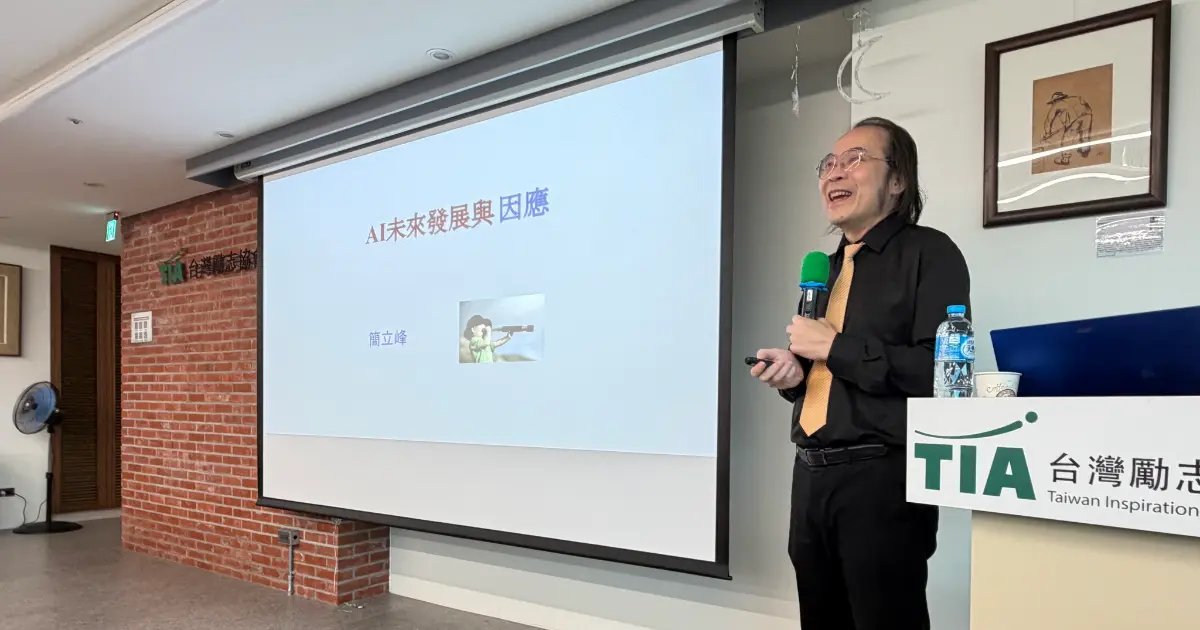
I began covering the semiconductor industry for Economic Daily News in 1993. From the outset, TSMC (台積電, Taiwan Semiconductor Manufacturing Company) stood out as a major force in the industry and quickly became a central subject on my reporting beat. I tracked it closely every day, constantly on alert not to miss any major development.
The first time I heard about TSMC was shortly after graduation, through a fellow alumnus from National Chiao Tung University (交大).
I graduated from the Department of Telecommunications Engineering at National Chiao Tung University in 1990. TSMC had been founded just three years earlier, in 1987. I recall that during my junior and senior years, the university hosted large-scale corporate recruitment events—what we called “open houses.” Many companies from the Hsinchu Science Park (竹科) set up booths on campus to attract engineering talent, and students eagerly visited each booth, discussing afterward which companies looked promising.
Looking back, I honestly don’t remember which companies came to campus to recruit. I certainly don’t recall TSMC being one of them.
Part of the reason was that I was going through a period of deep frustration during my years at Chiao Tung University. I felt I lacked the aptitude for engineering, and my interests and strengths simply didn’t lie in the sciences. Instead, I spent most of my time working as an editor for the student publication Chiao Tung Youth and serving as a student reporter for the Meichu Games—the annual intercollegiate competition between Chiao Tung and Tsing Hua universities. During my junior and senior years, I often sat in on sociology classes at Tsing Hua University’s Institute of Anthropology and Sociology. Working in the science park wasn’t something I was aiming for at all, so naturally, I didn’t pay attention to who was coming to recruit.
Later, I heard from classmates that there was a company called “Tai Ji”—a shorthand people used at the time for Taiwan Semiconductor Manufacturing Company before it was commonly known as “TSMC” after going public. This company had sent out blanket recruitment letters to several electrical engineering-related departments at Chiao Tung—such as Electronic Engineering, Control Engineering, Telecommunications Engineering, and Applied Physics. For the largest of them, the Department of Electronic Engineering, every graduating student reportedly received an invitation to apply.
One of my classmates from the Control Engineering department had received offers from both TSMC and Winbond Electronics (華邦電子). Unsure about the difference between the two companies, he went home to consult his father.
His father’s advice was simple: “Tai Ji sounds more official. The name reminds me of Taiwan Railways or Taiwan Bank. It sounds like a government agency—probably more stable and secure. You should go with that one.”
That classmate ultimately chose to work at TSMC, following his father’s suggestion. He only stayed there for a few years before deciding to pursue graduate studies abroad. But the experience he gained at TSMC proved invaluable—it gave his résumé a significant boost and helped pave the way for a smooth career in the tech and venture capital industries.
Of course, he didn’t choose TSMC just because of what his father said. He had also asked around and received positive feedback from alumni. Many of them told him that the company had great potential—its founder, Morris Chang(張忠謀), had come from Texas Instruments and the Industrial Technology Research Institute (ITRI, 工研院), and the core technical team was composed largely of people from ITRI. They were known for being capable and highly driven.
Looking back, he said he was glad he chose TSMC. It turned out to be the right decision. He also noted that the company’s name carried a certain weight—having “Taiwan” in the name helped create a strong and memorable impression.
TSMC’s “T”: From Texas to Taiwan
TSMC stands for Taiwan Semiconductor Manufacturing Company—a name that explicitly places “Taiwan” at the front. It’s a declaration that the company is rooted in Taiwan, but plays on the global stage.
Plenty of companies around the world include their national identity in their names. For example, in the early days of the U.S. semiconductor industry, there was National Semiconductor (which was later acquired by Texas Instruments). In China, the country’s largest foundry is called SMIC—short for Semiconductor Manufacturing International Corporation—with the “C” unmistakably referring to China.
Despite the name, TSMC is not a state-owned enterprise. However, when the company was founded in 1987, the Taiwanese government played a major role. At launch, 48% of the capital came from the government, 27.5% from Philips, and the remaining 25% or so from private investors.
TSMC’s founding team was largely drawn from ITRI (Industrial Technology Research Institute, 工研院). About 120 staff members, along with the institute’s pilot fabrication facility, transferred directly to the new company. In that sense, TSMC wasn’t just backed by the government financially—it also inherited public-sector talent, infrastructure, and policy support. The government offered incentives through investment programs, tax breaks, and industry development tools.
Given all that, it’s not inaccurate to say that TSMC was, at its birth, a company launched with significant government support.
In March 2023, TSMC founder Morris Chang (張忠謀) publicly challenged how Chip War author Chris Miller portrayed the Taiwanese government’s role in TSMC’s founding. During a conversation between the two, Chang said Miller had overstated the government’s contribution and that some correction was in order. TSMC, he argued, was not a company that owed its success to government subsidies.
While the government did invest in TSMC at the beginning, Chang recalled that the support wasn’t exactly enthusiastic. In fact, he said that only one government official—Minister K.T. Li(李國鼎)—believed in the project and offered genuine support. Li was not only a longtime friend of Chang’s, but also the only one in the government willing to take a bet on him. According to Chang, it was Li’s personal endorsement that convinced the government to invest at all.
TSMC went public in 1994, its seventh year of operation. According to Chang, the government quickly began selling off its shares after the IPO. When TSMC later listed on the New York Stock Exchange in 1997, that move too was partly intended to provide liquidity for further government divestment. Philips, another early investor, eventually sold all of its holdings as well.
But the Taiwanese government took a different path. Chang advised officials at the time not to sell everything. As a result, Taiwan’s National Development Fund (國發基金) still holds nearly 6% of TSMC shares today.
While TSMC benefited from government industrial policy in its early days, its path to success looks nothing like that of a typical state-run enterprise. The crucial difference lies in governance. Even when state-owned companies are partially privatized, it’s common for governments to continue exerting political influence—especially in appointing senior management.
TSMC followed a different model. Under the leadership of Morris Chang and a team of professional managers, the company stayed focused on global competition and long-term execution. The government didn’t interfere. That distance from political meddling became one of TSMC’s greatest strengths.
Chris Miller made another intriguing observation about the T in TSMC. While researching internal documents from Texas Instruments, he found a 1976 memo indicating that Morris Chang, then serving as vice president and head of the semiconductor group, had proposed launching a business unit to manufacture chips based on customer designs.
Though Texas Instruments didn’t pursue the idea at the time, the memo reveals what was essentially the earliest concept of the dedicated foundry model—what TSMC would later pioneer.
Miller remarked that it was a missed opportunity for TI. Had they followed Chang’s advice, the “T” in TSMC might have stood for “Texas” instead of “Taiwan.”
Former TSMC R&D director Mau-Chung Lin(林茂雄)once pointed out a subtle but significant detail in the company’s name. Before the 1980s, it was common for major companies in Taiwan to include the word “China” in their names—like China Steel, China Shipbuilding, or China Petroleum.
When Morris Chang established TSMC, however, he chose to use “Taiwan.” In hindsight, that decision showed remarkable foresight. Had the company been named “China Semiconductor Manufacturing Company,” its very identity could now be a geopolitical liability. In today’s climate of heightened sensitivities, a world-leading semiconductor firm headquartered in Taiwan but branded as “China” would almost certainly trigger confusion, if not outright controversy.
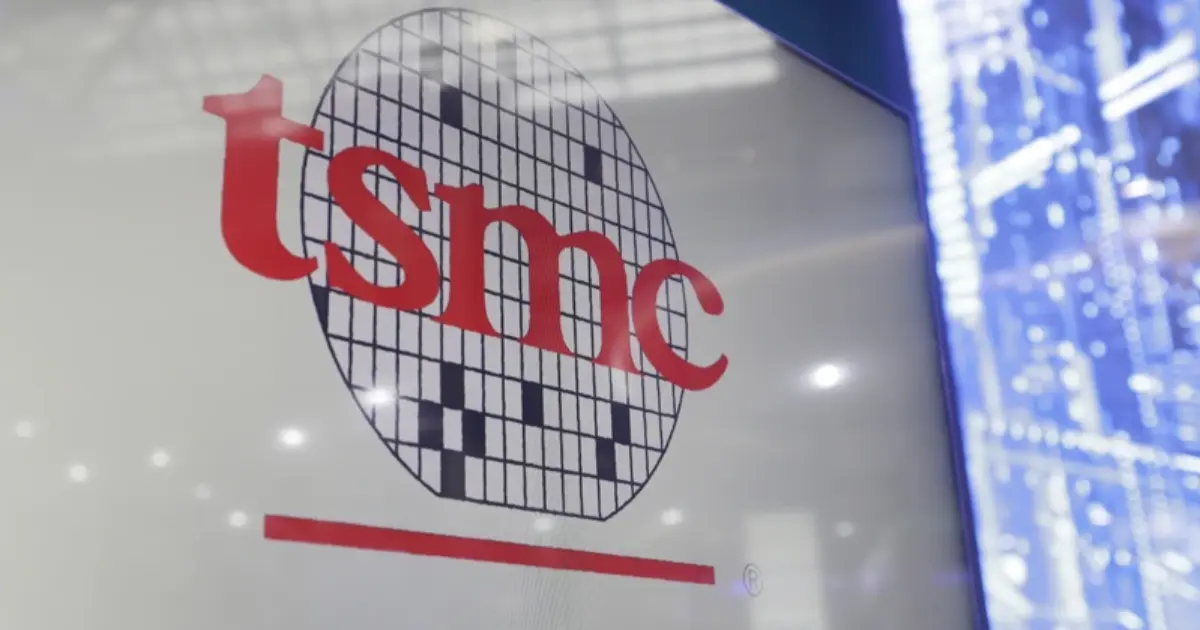
Some keen-eyed observers may have noticed that TSMC occasionally renders its name in lowercase—tsmc—rather than the more familiar uppercase version.
In English-speaking countries, individuals and companies sometimes stylize their names in lowercase to signal humility or understatement. But in TSMC’s case, there’s another explanation. The capital “T,” with its horizontal bar, was seen as visually heavy—symbolizing a kind of pressure or constraint. In contrast, the lowercase “t” was interpreted as reaching upward, symbolizing breakthrough, elevation, and visibility.
Of course, a good name doesn’t guarantee a company’s success. Plenty of firms with clever or prestigious names have failed over time. TSMC’s name, the way my friend’s father interpreted it, and the way it resonates today might just be a curious anecdote—nothing more than a conversation starter.
Still, I thought it would be fitting to begin this book with a story about the company’s name. From there, I hope to take readers into the world of TSMC, to share what I’ve learned about its founder Morris Chang, and to offer a closer look at the many small but revealing stories behind this global success.
Tags
Related Articles
Micron Announces Its Largest Rewards Ever. Its Taiwan Union's Demands Expose a Clash of Pay Systems. A strike threat at Taiwan's largest foreign investor, read in three dimensions
TSMC's 3nm rinse comes exclusively from AEMC, a Taiwanese company once withdrawn from the Emerging Stock Board
Taiwan AI Industry Upgrade Forum Series || Event Report:America Wants More Manufacturing. What Does It Take for Taiwan’s Suppliers to Follow?