Will the HBM Era Be Replaced by HBF? Could Nvidia Acquire Micron or SanDisk? Will the Prophecy of South Korea's "Father of High-Bandwidth Memory" Come True?
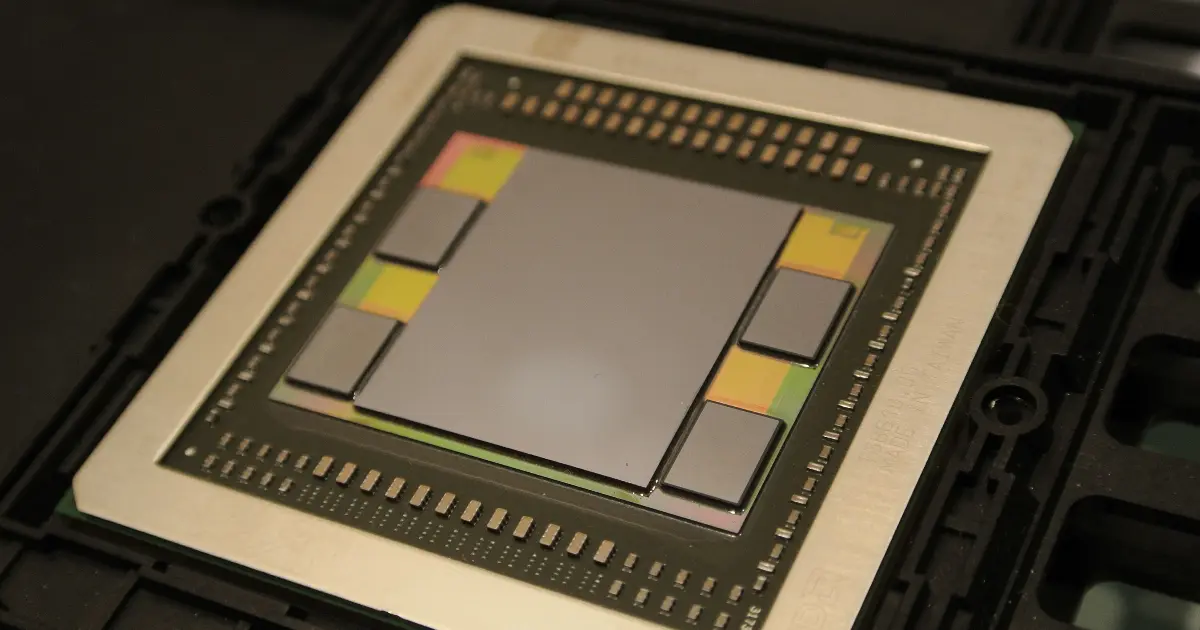
Professor Jung-Ho Kim of KAIST (Korea Advanced Institute of Science and Technology), known as the "father of HBM" (High-Bandwidth Memory), recently mentioned on a program, "The dominance in the AI era is shifting from GPUs to memory." He even stated bluntly that NVIDIA, in a bid to break its dependency on Samsung and SK Hynix, might acquire memory companies in the future, such as Micron or SanDisk.
Professor Kim also predicted that the new era will transition from the current HBM (High-Bandwidth Memory) to HBF (High-Bandwidth Flash). While the "M" in HBM currently stands for DRAM, the future HBF will use Flash. He also forecasted, "The HBM era is coming to an end, and the HBF era is about to begin!"
Professor Kim Jung-ho is a globally renowned memory expert, and KAIST, where he works, is widely recognized as one of South Korea's most influential top-tier research institutions. When he made this prediction, global memory company stock prices rose sharply in unison, sparking widespread market discussion.

Is there merit to the prediction that HBM will soon be replaced by HBF? And what are the chances that Nvidia's future acquisition of Micron or SanDisk will become a reality?
Price and Power Consumption vs. Lifespan: The HBF Dilemma
Let's first address the issue of HBM being replaced by HBF.
To state the conclusion upfront: when comparing price and power consumption, HBF does indeed have a chance to surpass HBM. However, when it comes to lifespan, HBF also has its shortcomings compared to HBM.
DRAM and Flash are both types of memory, but they have very different characteristics, with significant differences in function and lifespan. DRAM is mainly used for high-speed temporary storage, offering a long lifespan and low cost. As for Flash, it is used for long-term storage, has a limited lifespan, but does not lose data when powered off. Overall, DRAM's lifespan is longer than Flash's, especially in applications involving repeated writing.
Therefore, current AI systems are composed of Nvidia's logic computing chip (GPU) plus HBM (stacked by SK Hynix, Micron, and Samsung Electronics), all bundled together using CoWoS (a critical 2.5D advanced packaging technology used to integrate different chips at high speed). However, HBM is currently very expensive. With Nvidia's GPUs already being costly, the addition of expensive HBM prevents the price of AI systems from coming down. This is a problem that Nvidia must solve quickly.
The most critical reason for HBM's high price is that DRAM process technology has hit a bottleneck. Current DRAM process technology remains stalled above 10-plus nanometers. Although it has progressed from 1x, 1y, 1z to 1α, 1β, and 1γ, the actual advancement in each generation is minimal, failing to push below 10 nanometers. When technology cannot be scaled down, chip area cannot easily be reduced, making it naturally difficult for prices to drop.
Furthermore, HBM's manufacturing process, which involves stacking multiple layers of DRAM and using Through-Silicon Vias (TSV) as channels, is notoriously expensive. This is because each DRAM wafer must be ground extremely thin, making it fragile and prone to breaking upon contact, as well as causing warping issues. Consequently, HBM technology has hit a bottleneck, and its price cannot keep pace with Moore's Law.
As for Flash, its price is falling much faster, significantly reducing the cost of memory usage. This is also due to its stacking method, continually building upward. Current Flash technology can produce 236-layer products, with 280-layer or even 300-plus-layer technologies soon to be launched. According to academic research, it may be possible to stack up to around 1,000 layers in the future. This stacking dramatically increases capacity and storage density, which naturally allows for significant price reductions.
Moreover, current AI systems require fast parallel computing to speed up the processing of large amounts of data. Flash chips themselves are the result of continuous stacking and inherently possess advantages in parallel processing. In contrast, DRAM processing is random. Flash scores extra points on this front as well.
Looking at the bottlenecks in the overall AI industry, computing power, mainly from logic ICs, has increased by 60,000-fold to date. However, memory functions have only improved 300-fold, while communication transmission speeds have seen a minimum increase of just 30-fold. Both memory and transmission are failing to keep up with the rapid growth of logic IC functions. Future performance improvements for the entire AI system must tackle these bottlenecks, which is why there is discussion about HBM being replaced by HBF.
Additionally, from a power consumption perspective, Flash uses less power. And when the power is turned off, the data remains, meaning it is inherently non-volatile. DRAM, however, needs constant refreshing. The "D" in DRAM stands for Dynamic, because data in DRAM disappears when the power is cut, requiring continuous data refreshing. DRAM consumes more power than Flash.
Lu Chih-Yuan, General Manager of Macronix, one of the world's major Flash memory suppliers, said that AI systems already consume a significant amount of power, and HBM only exacerbates this. Therefore, from a product characteristic standpoint, replacing DRAM with Flash is a very natural idea, and Nvidia has also been urging memory manufacturers to work towards HBF.
Currently, the three major DRAM players—SK Hynix, Samsung Electronics, and Micron—as well as the top five Flash players—the aforementioned three plus Kioxia and SanDisk—have all committed to accelerating HBF research and development, with plans to enter the market by the end of 2026 or 2027.
However, from a lifespan perspective, Flash's read/write endurance is much shorter than DRAM's. DRAM does not require a physically wearing erase/write operation and thus does not have the strict write-cycle limitations of Flash. This difference in lifespan will also be a critical factor when embedding it into future AI systems.
This is because current AI systems package logic and memory together. Therefore, if HBF is similarly packaged using this type of advanced packaging (like CoWoS), its short lifespan becomes problematic. When it needs replacing, it is very troublesome, unlike in the past when one could simply plug and unplug it from the motherboard. CoWoS binds all the chips together, which will pose challenges for how to replace it, or whether the entire AI system will need to be replaced.
Therefore, based on the description above, HBF does have certain advantages in price and power consumption, and it has the potential to surpass or replace HBM in the future. However, from a lifespan perspective, HBF falls short of HBM, and this is a critical problem that must be overcome if it is to replace HBM.
Nvidia's Acquisition Calculus: Why Micron or SanDisk?
As for Professor Kim Jung-ho's prediction that Nvidia, in its quest to break dependency on Samsung and SK Hynix, might acquire memory companies like Micron or SanDisk—this has, of course, also sparked much discussion.
Professor Kim's mention of Micron or SanDisk as potential targets, rather than Samsung or SK Hynix, certainly has its logic. Both Samsung and SK Hynix are industry leaders, making the chances of them being acquired slim. Furthermore, both are Korean companies and powerful representatives of South Korea's current national strength; there is simply no reason for them to sell.
As for Micron and SanDisk, both are American companies, which might seemingly make an acquisition easier. However, in the current geopolitical climate, semiconductors have become a target of national competition. Micron and SanDisk also have production bases and offices in various countries around the world. Even if Nvidia wants to acquire these two American companies, the difficulty will likely not be low.
Of course, market capitalization is also a key factor. Even if Micron or SanDisk have smaller market caps, it is not guaranteed that even Nvidia, with its multi-trillion-dollar market capitalization, could smoothly absorb them.
The success or failure of an acquisition depends on too many conditions and factors. However, Nvidia's desire for memory suppliers to lower prices and coordinate with AI systems to achieve higher functionality and lower energy consumption is indeed a key focus in the current development of the AI industry. Professor Kim Jung-ho's prophecy is worth continuous observation in the future.
Related Articles
Micron Announces Its Largest Rewards Ever. Its Taiwan Union's Demands Expose a Clash of Pay Systems. A strike threat at Taiwan's largest foreign investor, read in three dimensions

TSMC's 3nm rinse comes exclusively from AEMC, a Taiwanese company once withdrawn from the Emerging Stock Board

Taiwan AI Industry Upgrade Forum Series || Event Report:America Wants More Manufacturing. What Does It Take for Taiwan’s Suppliers to Follow?