Forging a Taiwan-Japan Industrial Alliance: Complementarity and Co-creation, Inspired by Tohoku University Spinoff Ballwave
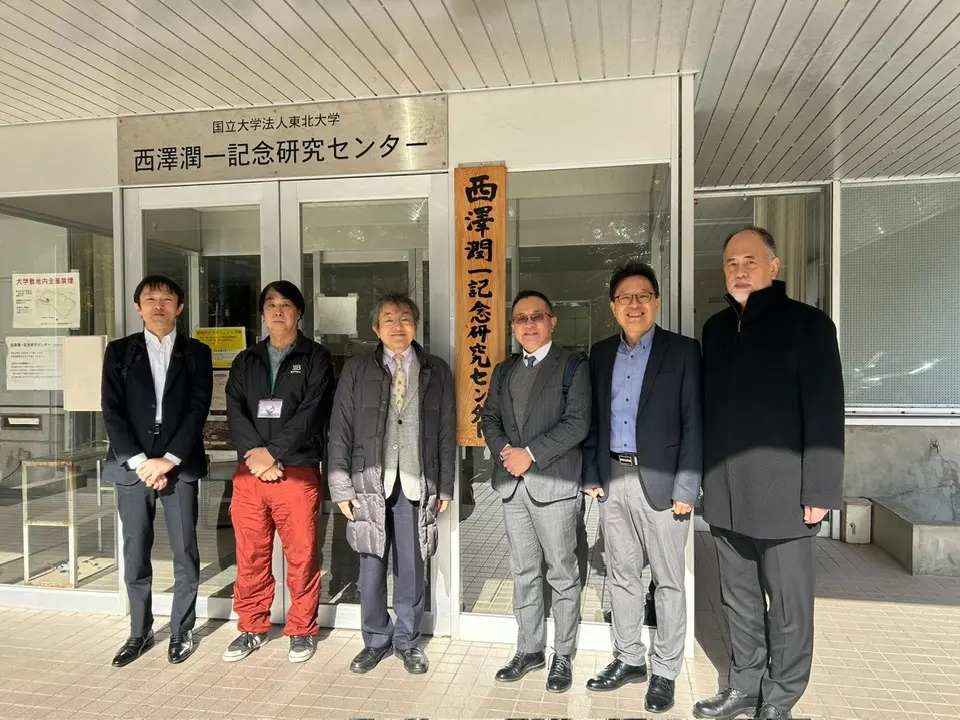
"This technology has been in development for nearly 30 years. We are thrilled to have finally found a market opportunity for mass application in Taiwan," said Yusuke Tsukahara, Chief Strategy Officer (CSO) of Ballwave, speaking with evident excitement from the historic Nishizawa Jun-ichi Laboratory—named after the renowned "Father of Japanese Semiconductors"—at Tohoku University.
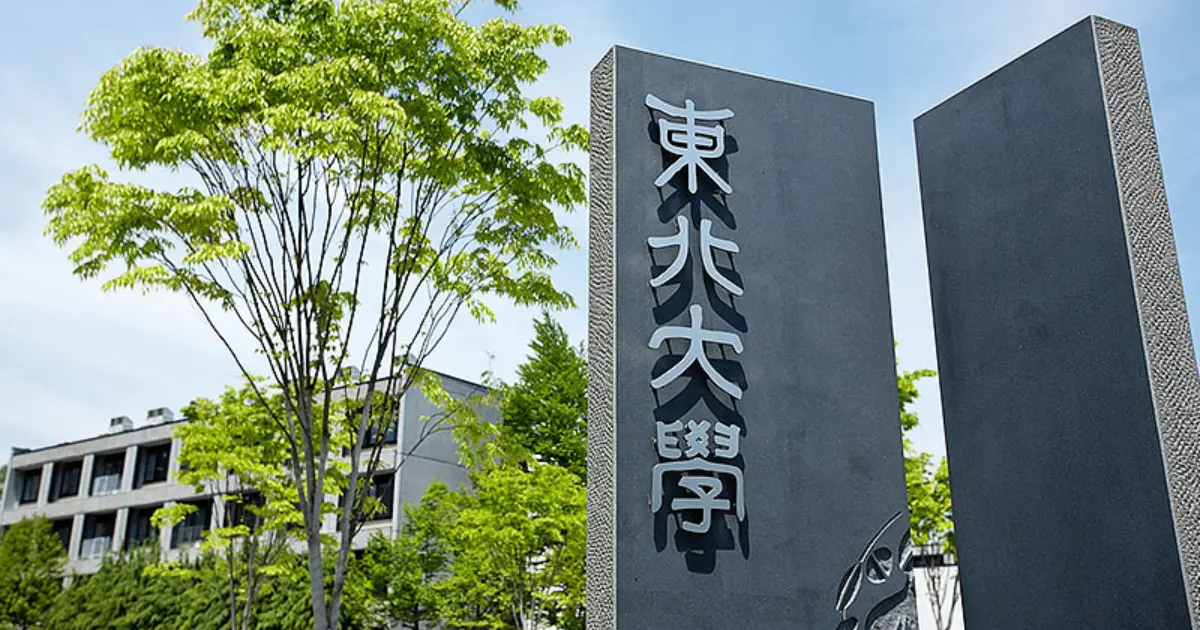
In mid-November, amidst the crisp 15-degree Celsius autumn weather of high-latitude northeastern Japan, where the mountains were ablaze with red maple and ginkgo leaves, the prominent Taiwanese venture capital firm Darwin Ventures hosted a seminar in Sendai City, Miyagi Prefecture. Titled "The Evolution of Japan-Taiwan Collaboration: Perspectives on Semiconductors, Geopolitics, and Startups," the event brought our delegation to Tohoku University to visit Ballwave, a spinoff company born from the institution.
Established in 1907, Tohoku University boasts over a century of history and stands alongside the University of Tokyo and Kyoto University as one of Japan's elite "Designated National Universities" (formerly the Imperial University system). This visit provided a close-up observation and deeper understanding of how the industrial sectors of Taiwan and Japan can collaborate and form alliances.
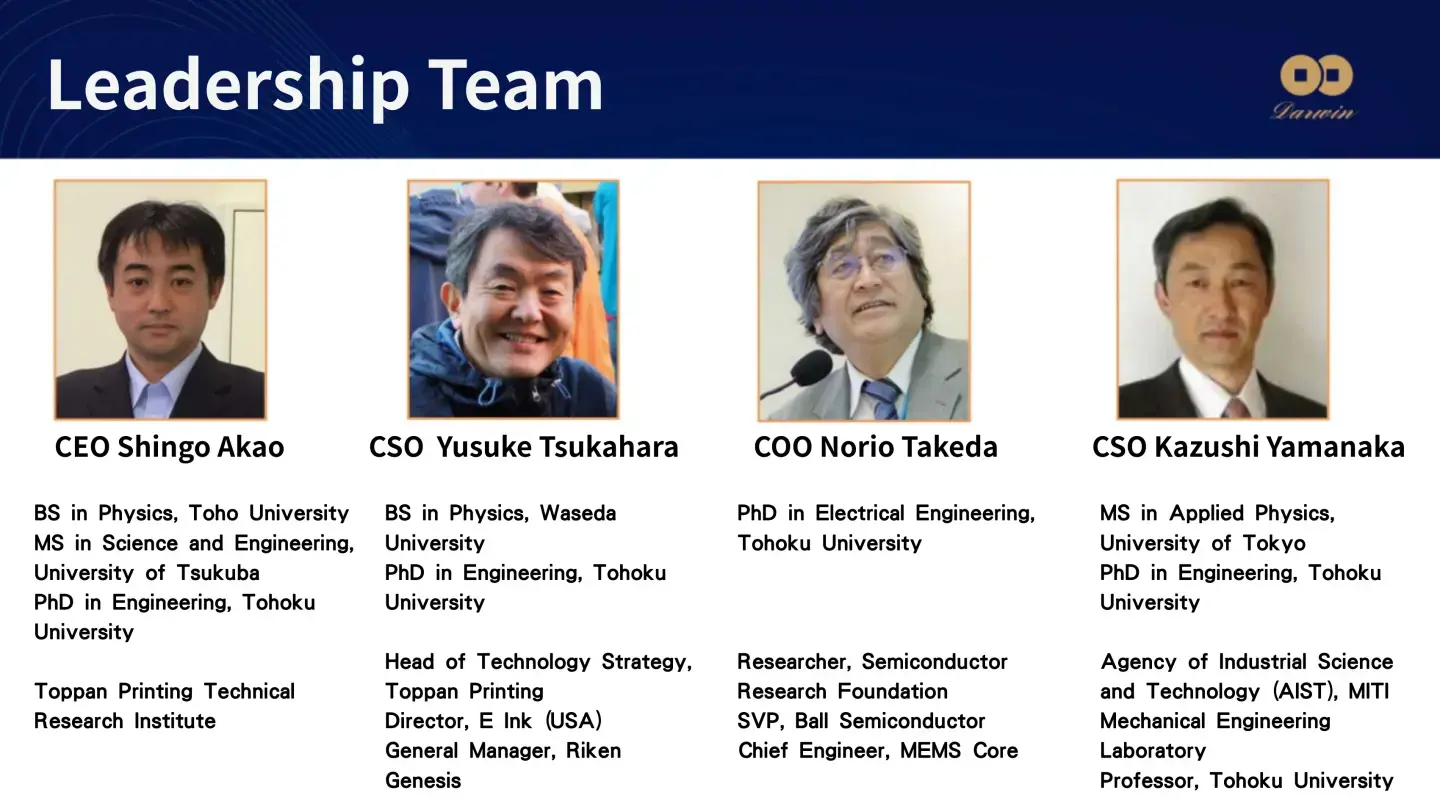
Founded in 2015, Ballwave's technology emerged from Tohoku University laboratories. Its four co-founders—Shingo Akao, Yusuke Tsukahara, Norio Takeda, and Kazushi Yamanaka—all hold PhDs from the university. Initially funded by the Tohoku University Venture Capital, the company later secured investments from Japanese entities such as Daiwa CVC, Real Tech Holdings, Sysmex, and IMM. From Taiwan, investors include Tronic Purity, the Innovation Technology Investment Co. (ITIC) under the Industrial Technology Research Institute (ITRI), and Darwin Ventures. (See photo below, provided by Darwin Ventures).
Ballwave's core technology is the Ball SAW Sensor (Surface Acoustic Wave sensor), which utilizes the unique properties of acoustic waves propagating along the surface of a sphere. The technology originated in 1996 from an attempt to develop spherical ICs. While the spherical IC concept did not succeed, researchers continued to adapt the spherical surface acoustic wave technology for high-sensitivity sensing applications, such as detecting minute changes in moisture or creating gas chromatographs (GC) for trace gas detection.
Consequently, from 2000 to 2014, the technology was progressively shaped under the guidance of researchers and spun off into an independent company in 2015. The company subsequently applied Ball SAW sensing to a variety of fields: measuring fermentation temperature and duration for sake and soy sauce in the food industry; analyzing exhaust gas from factory smokestacks; monitoring semiconductor and pharmaceutical production lines; detecting drugs via urine and skin; and assisting the Japanese government with virus detection during the pandemic.
Furthermore, Ballwave collaborates with the Japan Aerospace Exploration Agency (JAXA). To meet the stringent "light, thin, short, and small" requirements for space exploration, Ballwave successfully miniaturized a gas chromatography instrument from a standard 50 kilograms down to just 1 kilogram.
However, revenue contributions from these applications remained limited. Food processing plants for sake or soy sauce, for instance, typically require only one or two units. Despite having fewer than 20 employees, Ballwave found it difficult to sustain operations on such limited revenue streams.
Among various potential markets, Ballwave identified semiconductor fabrication plants (fabs) early on as the sector with the highest growth potential. As semiconductor manufacturing processes advance to nanometer levels (such as 7nm and 3nm), sensitivity to moisture and particulates becomes critical, driving higher demands for detection. However, Japan's semiconductor manufacturing technology has lagged for years, with no significant investment in advanced capacity beyond the 40nm and 50nm nodes. Consequently, the company set its sights on Taiwan, the global leader in advanced process technology.
In addition to seeking investors in Taiwan, Ballwave engaged Tronic Purity as its agent. In 2023, Darwin Ventures joined as an investor. Leveraging the support of its Taiwanese shareholders, Ballwave gradually secured certification opportunities with Taiwanese semiconductor plants, ultimately winning commercial opportunities with the world's leading semiconductor foundry, TSMC.
Among the four founders of Ballwave, Yusuke Tsukahara possesses an international business background. He previously served as the Head of Technology Strategy at Toppan Printing, a Director at the US subsidiary of E Ink (now part of Taiwan's Prime View International), and General Manager of Riken Genesis.
Tsukahara noted that while Japanese companies generally possess profound technical capabilities, talent capable of managing international markets is scarce—a common weakness among Japanese firms and an area that requires external supplementation.
Regarding foreign investment in Japanese firms, Tsukahara observed, "When foreign capital invests in Japan, true success comes from building trust and cultural understanding."
He expressed great satisfaction that Ballwave has established mutual trust and understanding with its Taiwanese shareholders, extending business opportunities into the Taiwan semiconductor market and finally providing a concrete application and implementation path for technology that has been under development for many years.
Toshiaki Konno, Japan Representative for Darwin Ventures, is a native of Akita Prefecture in the Tohoku region and a graduate of Tohoku University's Department of Mechanical Engineering. When Darwin Ventures began investing in Japan, Ballwave—a Deep Tech startup from his alma mater—became its first Japanese portfolio company. Today, Darwin has invested in over a dozen companies in Japan and continues to monitor startups with robust technical capabilities.
The question of how to facilitate industrial alliances between Taiwan and Japan has been a subject of my sustained interest in recent years. Based on Ballwave's development experience, I would like to share several insights.
Strong Technology, Weak Marketing: The Divergence of US and Japanese Management Through the Lens of SiTime
First, Japan possesses formidable R&D capabilities, with commendable long-term dedication and investment in technology—evidenced by the country's 30-plus Nobel laureates. However, technology requires commercialization. Japanese companies often lack the marketing prowess of their American counterparts and adopt a conservative approach to outsourcing, preferring a vertically integrated (IDM) model where they do everything in-house. This is a significant shortfall in corporate management.
Taking the deep tech accumulated at Tohoku University as an example, Micro-Electro-Mechanical Systems (MEMS) is a field where they hold global competitiveness. Yet, possessing superior technology is merely one advantage required to birth an internationally competitive enterprise. In contrast, look at the US: SiTime, currently the leading MEMS enterprise, has long moved past being solely a technology firm and is entering a phase of rapid revenue growth. Its revenue is estimated at approximately $200 million for 2024, growing to $310 million in 2025.
SiTime was founded in 2005 in Santa Clara, California. Its core technology is MEMS timing, aiming to replace traditional quartz crystal oscillators with silicon wafers. Founder Markus Lutz was a senior engineer at Bosch in Germany responsible for MEMS prototyping, while co-founder Aaron Partridge, a Stanford PhD, specialized in MEMS encapsulation and elasticity.
In 2014, SiTime was acquired by the Japanese IC design company MegaChips for $200 million. This acquisition led many to mistakenly believe SiTime was a Japanese company. However, SiTime re-listed on the Nasdaq in 2019. Over the past six years, its market capitalization has grown continuously, now approaching $10 billion. While MegaChips retains some equity, SiTime's operations and R&D centers have remained in the US.
From its development history, SiTime started with MEMS technology but integrated multi-national talent into its corporate management. The management team hails from around the world, and by keeping operations and R&D in Silicon Valley, they stayed at the forefront of innovation alongside their customers. This proximity allowed them to capture the fastest-growing AI opportunities, with half the company's revenue now coming from AI-related businesses, such as high-precision timing components for AI servers, network switches, and 5G base stations.
A Taiwanese entrepreneur with a PhD from Tohoku University remarked that Japan's MEMS technology does not lose out to SiTime's. However, corporate management relies on more than just technology; it requires the marketing power to expand into international markets and the ability to build alliances and trust with customers—areas where Japan is most deficient.
The Inevitable Path from Lab to Fab: Japanese R&D, Taiwanese Manufacturing
Therefore, while Japan's R&D is strong and continues to invent new technologies, the country has fallen behind in manufacturing. Latecomers like South Korea, Taiwan, and China have surged ahead. Japan's conservative stance on outsourcing and OEM manufacturing serves as another fatal wound.
Taking semiconductor fabs as an example, Ballwave had to seek application opportunities in Taiwan because Japan currently lacks advanced manufacturing facilities. In essence, Ballwave had "no place to use its martial arts" domestically. Thus, the transition from "Lab" to "Fab" required a pragmatic approach: seeking sales opportunities in Taiwan was the only viable path forward.
Beyond Ballwave, Japan possesses many globally leading front-end designs but cannot find wafer fabs domestically for production, necessitating the search for foundry opportunities in Taiwan. Such cases are becoming increasingly common.
For instance, Professor Seiji Samukawa, who previously taught at Tohoku University, came to Taiwan in 2022 to serve as a Chair Professor at National Yang Ming Chiao Tung University (NYCU). An expert in Neutral Beam (also known as uncharged plasma) technology, his work requires 2nm semiconductor process technology. Since Japan no longer possesses factories with such advanced processes, he moved to Taiwan to teach and seek commercialization opportunities for his products.
Additionally, in the field of advanced packaging and heterogeneous integration, Professor Tetsu Tanaka of Tohoku University is collaborating with Dean Chen Kuan-Neng of the College of Semiconductor Research at NYCU. The primary driver of this collaboration is, again, Professor Seiji Samukawa.
Professor Samukawa firmly believes that industry-academia cooperation and complementarity between Japan and Taiwan can generate more development opportunities for both sides. Specifically, Taiwan's vertical division of labor and the separation of IC design and manufacturing constitute an industrial ecosystem that Japan currently lacks. He is striving to bring Taiwan's successful experiences to Japan while introducing more of Japan's advanced technologies to Taiwan, allowing both nations to move forward together and co-create new future possibilities.
regarding co-creation in IC design, NYCU has been actively cultivating the Japanese market in recent years, facilitating cooperation between the Taiwanese IC design industry and Professor Tsuyoshi Isshiki of the Institute of Science Tokyo (formerly Tokyo Institute of Technology). Companies including Andes Technology, ARM, and PUFsecurity (a subsidiary of eMemory) have already entered substantive stages of cooperation.
Furthermore, Professor Satoru Nakatsuji of the University of Tokyo and the university's spinoff startup, TOPOLOGIC, have launched collaborations with the Taiwan Semiconductor Research Institute (TSRI), promoted by NYCU's Taiwan-Japan co-creation platform.
There is also Professor Hideo Ohno, former President of Tohoku University, known as the "Father of Spintronics and Magnetic Semiconductors" and a chief advisor to Japan's Ministry of Economy, Trade and Industry (METI). He currently interacts extensively with Taiwan's industrial sector and has been invited as a visiting professor at NYCU.
Today, Taiwan-Japan industry-academia cooperation is just taking off, with many collaborative cases currently brewing. The focus industries for cooperation extend beyond semiconductor manufacturing, IC design, and advanced packaging to include Silicon Photonics, Power Electronics, Smart Medicine, and MetaLens technology, promising a broader scope for future exchanges between Taiwan and Japan.
Related Articles
Micron Announces Its Largest Rewards Ever. Its Taiwan Union's Demands Expose a Clash of Pay Systems. A strike threat at Taiwan's largest foreign investor, read in three dimensions
TSMC's 3nm rinse comes exclusively from AEMC, a Taiwanese company once withdrawn from the Emerging Stock Board
Taiwan AI Industry Upgrade Forum Series || Event Report:America Wants More Manufacturing. What Does It Take for Taiwan’s Suppliers to Follow?