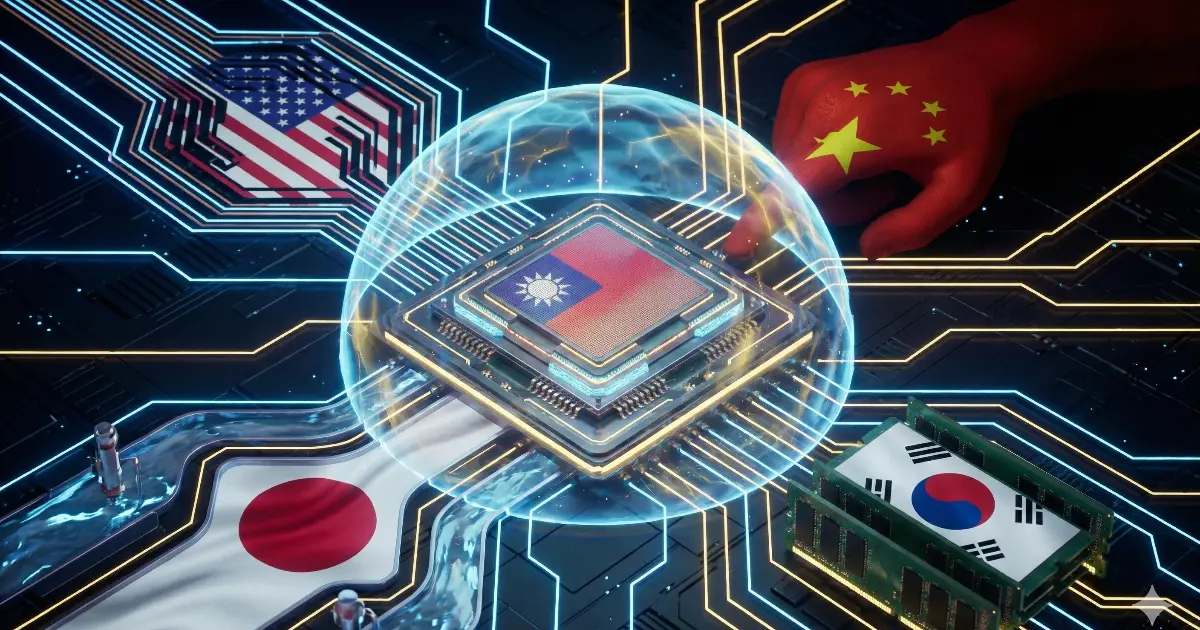
Both Are National Pillars, Yet Samsung is Often Criticized at Home While TSMC is Revered as the "National Guardian Shield." Why? — A Deep Dive into the Coopetition Triangle of the US, Japan, Taiwan, and South Korea
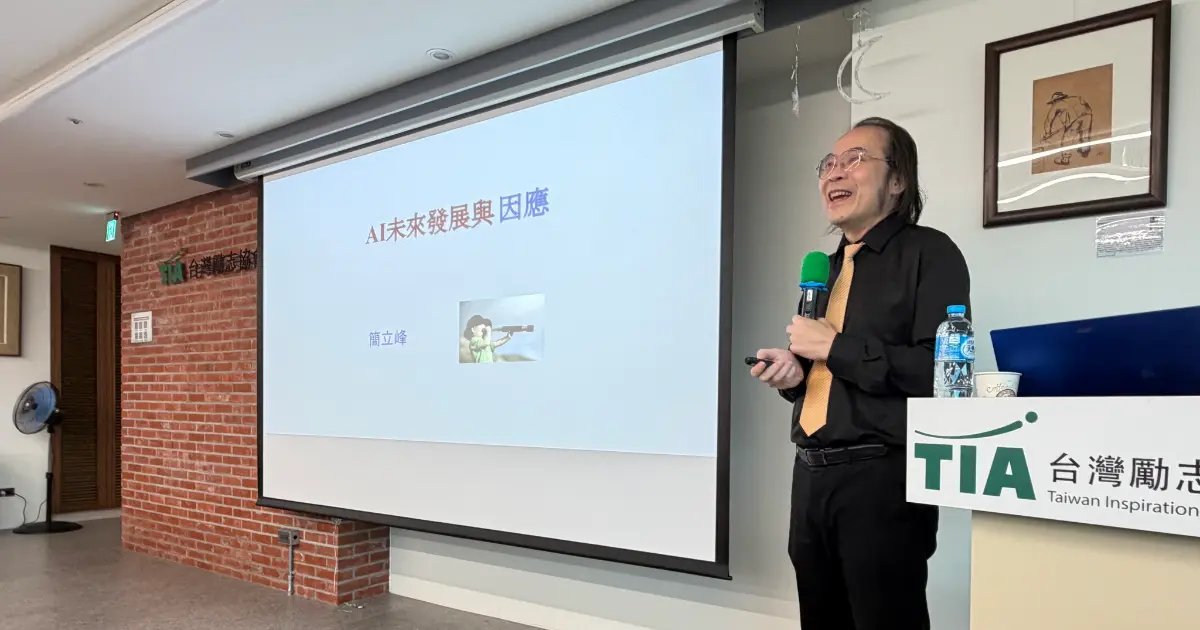
Recently, a South Korean delegation visited Taiwan, and I was invited to deliver a keynote speech discussing the US-China tech war and the competitive yet cooperative relationship between the semiconductor industries of Taiwan and South Korea. Whenever I give such lectures, the most exciting part is always the Q&A session. The audience is enthusiastic, and many of their questions are fresh and challenging, making me look forward to the exchange.
For instance, this time someone asked: "Why is Samsung Electronics often the target of public criticism in South Korea, whereas TSMC is deeply loved by the people in Taiwan, to the point of being called the 'National Guardian Shield' (often interpreted globally as the 'Silicon Shield')?"
Additionally, others were concerned about whether the deepening cooperation between the US and Japan would impact South Korea. One attendee, a friend who holds stock in SK Hynix, asked me bluntly, "Will SK Hynix eventually surpass Samsung in the future?"
These questions are fascinating and reflect a distinctively Korean perspective. For me, coming from Taiwan, these questions also offer excellent angles for reflection. I provided some brief directions on the spot, but due to time constraints, I couldn't elaborate fully. Therefore, I have summarized my thoughts here to share with my readers.
Samsung and TSMC: The Perfect Contrast Between Chaebols and Professional Managers
First, why is Samsung scolded by so many citizens within South Korea, while TSMC is widely supported in Taiwan and honored as the "National Guardian Shield"? This is an intriguing topic. I have summarized the possible reasons below.
I believe that while both Samsung Electronics and TSMC are the economic backbones of their respective nations, there is a distinct difference in their public reputation and defined social roles. This can be analyzed from three perspectives: business models, social burdens, and corporate image.
In terms of business models, the comparison between Samsung and TSMC serves as the ultimate case study contrasting the "Chaebol" (family-owned conglomerate) system with a "Professional Management" system.
Samsung's Chaebol model allows it to be an entity that touches every aspect of a Korean's life—from the cradle (birth), insurance, to the grave (funeral). To Koreans, Samsung feels more like a "Shadow Government." This sense of a monopoly that is "Too Big to Fail" creates a feeling of oppression among the public, fostering a perception that societal resources are monopolized by a few select families.
In contrast, TSMC founder Morris Chang comes from a background of professional management. Although there was initial government investment, state intervention has remained minimal. Morris Chang established a transparent and professional institutional system for TSMC, ensuring the company is governed by professional managers. Successive CEOs are selected based on performance and merit, not hereditary succession within a family.
Furthermore, TSMC focuses on the "Pure-play Foundry" model, adhering to the principle of "not competing with customers." It does not produce end-user devices, and its clients are primarily international. Therefore, it does not compete for profit with domestic SMEs (Small and Medium-sized Enterprises) like Samsung does. Instead, it acts as a "Locomotive," pulling forward Taiwan's massive upstream and downstream semiconductor supply chain, creating a social image of a leader helping everyone prosper.
As for Samsung's social image, controversies regarding government-business relations have been high in the past. It has frequently been involved in incidents of collusion, and successive Samsung leaders have been embroiled in political scandals and bribery cases, earning it the cynical nickname of the "Republic of Samsung" among South Koreans.
TSMC’s Transparent Corporate Governance: Rarely Involved in Political Struggles
Regarding corporate culture, the internal "Wolf Culture" and management pressure at Samsung are immense. Recently, there has been high discussion within Korea about Samsung's rigid management and the brain drain of talent to competitors like SK Hynix.
In addition, Samsung previously faced incidents involving occupational hazards, such as factory employees suffering from leukemia and miscarriages. Samsung's initial attitude of denial sparked a massive backlash in South Korean society, leading to significant criticism regarding its "sweatshop-like" management of employees.
Therefore, Koreans have a "Love-Hate Relationship" with Samsung. On one hand, they feel proud of it; on the other, they are filled with anxiety. When Samsung's yields in memory chips or foundry operations fall short of expectations, the Korean media and public review them mercilessly. This "scolding" often carries an emotion of "hating iron for not becoming steel" (being harsh out of an expectation for excellence).
Comparatively, TSMC is known for its professional governance. Founded by Morris Chang, TSMC has always been renowned for its transparent corporate governance and rarely gets involved in domestic political struggles. As I mentioned in my book Glory on the Silicon Island, Mr. Chang maintains a certain distance from politics. Every presidential election, when asked if he supports a specific candidate, he always answers, "I support the President elected by the people of Taiwan."
As for the work pressure on TSMC employees, it is certainly not light. Outsiders often use the term "exploding liver" (bao-gan)—a local slang for working oneself to the point of physical breakdown—to describe it. However, I have found that TSMC employees possess a higher degree of self-discipline and autonomy. Every time an earthquake occurs, many employees rush back to the company even at night. What the public sees is a professional attitude and a sense of responsibility, characterized by a willingness to dedicate themselves to the work.
Therefore, TSMC is not only seen as a symbol of Taiwan's technological prowess, allowing Taiwanese people to stand proudly on the international stage, but it has also won universal trust in society and the affection of the people. Since Taiwan lacks formal space for international participation, TSMC's leadership in cutting-edge technology has become a security guarantee for Taiwan's international status. Hence, it has been endowed with the honor of being the "National Guardian Shield" (Silicon Shield).
Moreover, under the geopolitical tension of the US-China rivalry, Taiwanese society universally regards TSMC as a critical asset in countering geopolitical threats from China. This unique attribute of "protecting the nation" results in extremely high public support for TSMC.
Of course, I also told my Korean friends that while Taiwanese society heaps praise on TSMC, there are occasionally voices of skepticism. For example, TSMC's massive hiring of top-tier talent leads many companies to complain that talent is becoming harder to find. Additionally, with Taiwan's limited green energy resources, TSMC consumes a large portion of them.
Furthermore, some voices in society believe that the concentration of Taiwan's semiconductor industry is too high, with TSMC forming "A Solo Champion in a Lonely Martial Arts World" (a single-pillar structure), potentially causing "Dutch Disease" in Taiwan. These discussions are objective phenomena that exist in Taiwanese society.
However, there are differing views on these discussions. regarding the "Solo Champion" argument, I believe this is already improving. TSMC is building a local supply chain in Taiwan, cultivating many excellent companies ranging from equipment and materials to chemicals. This is actually a very concrete and obvious transformation and upgrade of Taiwan's industrial structure. To keep saying TSMC is a "Solo Champion" is not a very precise comment.
Rapidus Faces Big Challenges; US-Japan Cooperation Poses Little Threat to Korea
Another question is: Will the US-Japan cooperation succeed? Will it threaten South Korea?
I told my Korean friends that I have always felt that although Korean enterprises are large in scale, their reaction speed is very fast—a characteristic that large Japanese conglomerates cannot catch up with. This is the main reason why, in the global semiconductor development history of the past forty years, Japan has clearly lost ground. Of the top ten global semiconductor companies, Japan had six in the 90s, but today has none, while South Korea still has two—Samsung and SK Hynix—firmly standing in the top ten.
As for US-Japan cooperation, I mentioned that the current cooperation between Japan, the US, and Taiwan involves the former investing in Rapidus with IBM, and the latter cooperating with TSMC to build a factory in Kumamoto (JASM). However, regarding the prospects of Rapidus, many Japanese friends I have contacted are not optimistic, and I myself feel its challenges are immense.
Therefore, my view is that the US-Japan alliance is not necessarily what Korea needs to worry about. Rather, I think the cooperation between Japan and Taiwan will definitely see long-term results. The Japan-Taiwan alliance is complementary and a win-win. Just as TSMC helped the rise of the US IC design industry in the past, it may help the renaissance of the Japanese semiconductor industry in the future. This is something Koreans cannot ignore.
In fact, I think what Koreans should worry about most is the US-Taiwan cooperation. It is not just TSMC actively investing in the US and entering deeper cooperation with US IC design firms and major system clients. Additionally, the extensive cooperation between US-based Micron and Taiwan's semiconductor industry—including Taiwan becoming its most critical manufacturing hub—and the cross-domain cooperation between Micron and TSMC will actually bring significant challenges to South Korea's memory industry. The US-Taiwan cooperation will be more powerful than the US-Japan cooperation, and I think Koreans may not have realized this yet.
Furthermore, the benefits of the political and industrial alliance between the US, Japan, and Taiwan will definitely emerge in the future. This is a direction that South Korea, which wants to have it both ways in the US and China markets, needs to pay attention to.
During my speech, I showed a few photos: one of Japanese Prime Minister Sanae Takaichi with US President Trump, Taiwan's APEC representative Lin Hsin-i, and another with Chinese President Xi Jinping. In the first two photos, everyone was smiling happily, but in the photo with Xi Jinping, both had stern faces.
I also showed photos of South Korean President Lee Jae-myung visiting China and taking a selfie with President Xi Jinping using a Xiaomi phone. As a result, Trump immediately threatened to raise tariffs on South Korea from 15% to 25%.
The US-Japan-Taiwan alliance keeps a distance from China, while South Korea adopts a "Two-Track Policy." This will form a significant variable for future semiconductor industry development. Sanae Takaichi, who is currently busy with the parliamentary election on February 8 (2026), has seen her popularity rise. Her insistence on the doctrine that "A contingency in Taiwan is a contingency for Japan" gives the Taiwan-Japan alliance more confidence. This is a major trend South Korea needs to watch.
As for the final question: Will SK Hynix surpass Samsung? The Korean friend said he started buying SK Hynix at around 200,000 KRW, and unexpectedly, it rose to around 900,000 KRW in just a few months. He was very interested to hear my analysis of the competitiveness of SK Hynix versus Samsung.
My view is that SK Hynix has already surpassed Samsung in HBM (High Bandwidth Memory). This is because SK Hynix started R&D on HBM very early and continued development without interruption, thus gaining NVIDIA's certification and support first. In contrast, Samsung's HBM development was intermittent, affected by factors such as Lee Jae-yong's lawsuits and imprisonment. Samsung's lag in HBM is clearly due to poor Corporate Governance.
Subhead: HBM Overtaken by Hynix: A Major Warning Sign for Samsung
As for whether SK Hynix will fully surpass Samsung in the long run? I think Samsung's layout is much broader than SK Hynix's, covering not only memory but also foundry, mobile phones, and TVs. The hegemony and competitiveness Samsung has built over many years will not be easily lost. However, currently being overtaken in HBM by SK Hynix is a major warning sign for Samsung.
Samsung's business scope is wide, but this has made the organization too complex. It does everything, and mostly does it by itself, maintaining a highly "Vertical Integration" investment layout. I believe this is Samsung's weakness. Especially in the current AI trend, alliances between companies are even more important. Samsung's reform will likely need to move in this direction.
Finally, another friend asked a question extending the previous comparison between Samsung and TSMC. He mentioned that although large corporations have made huge contributions to Korean society, many Koreans still hold antipathy toward big businesses. Furthermore, Korean entrepreneurs often become targets of government pressure or attacks; for example, the imprisonment of Samsung Electronics Chairman Lee Jae-yong is frequently mentioned.
Therefore, his question was: In such a situation, what exactly is the meaning of "Nationality" for an entrepreneur? If they continue to be treated this way in their home country, would moving their entire business overseas be a more rational choice?
Constant Political Smearing Against TSMC: A Warning Taiwan Must Heed
So, why do entrepreneurs still choose to stay in their home country to run their businesses and endure these pressures and sacrifices? He wanted to ask if TSMC has ever faced a similar contradictory situation. Do Western companies also face the same circumstances?
This friend's question was relatively complex, and through translation at the time, I didn't fully grasp the core of what he wanted to discuss. However, clearly, Samsung has indeed triggered various voices and discussions within South Korea.
I believe the main topic he wanted to explore was: When an enterprise or entrepreneur who has made high contributions to national development encounters backlash or pressure from society and the government at home, how should they face such reality? And how do they find the motivation and legitimacy to continue developing their business in their home country?
I think this problem, currently prominent in South Korea, is not yet too obvious in Taiwan. Taiwanese entrepreneurs are not yet at the point of being attacked domestically, nor do they face the pressure of being forced to leave.
However, Taiwanese society is now split in half, and unfounded political smearing is incessant. Many criticisms of TSMC are often baffling and devoid of logic. In this situation, there is no guarantee that entrepreneurs won't be forced to choose to leave in the future.
This should serve as a critical warning for Taiwanese society. It is a profound issue that deserves our reflection: If we fail to protect our strategic assets from domestic polarization, we risk creating a global supply chain contingency that no one wants to see.
Related Articles
Micron Announces Its Largest Rewards Ever. Its Taiwan Union's Demands Expose a Clash of Pay Systems. A strike threat at Taiwan's largest foreign investor, read in three dimensions
TSMC's 3nm rinse comes exclusively from AEMC, a Taiwanese company once withdrawn from the Emerging Stock Board
Taiwan AI Industry Upgrade Forum Series || Event Report:America Wants More Manufacturing. What Does It Take for Taiwan’s Suppliers to Follow?