AI-Driven Demand Reignites the Memory Boom: Why Understanding the Silicon Cycle is Key Before the 2028 Capacity Glut Hits Taiwan and Global Markets
Recently, during various speaking engagements, I am constantly asked: "Is it a good time to invest in memory stocks?" I completely understand the enthusiasm, and having navigated my fair share of investments in the past, I have plenty of experiences to share. Let's delve into this memory industry—a sector that easily makes investors love it, hate it, and ultimately become completely obsessed with it.
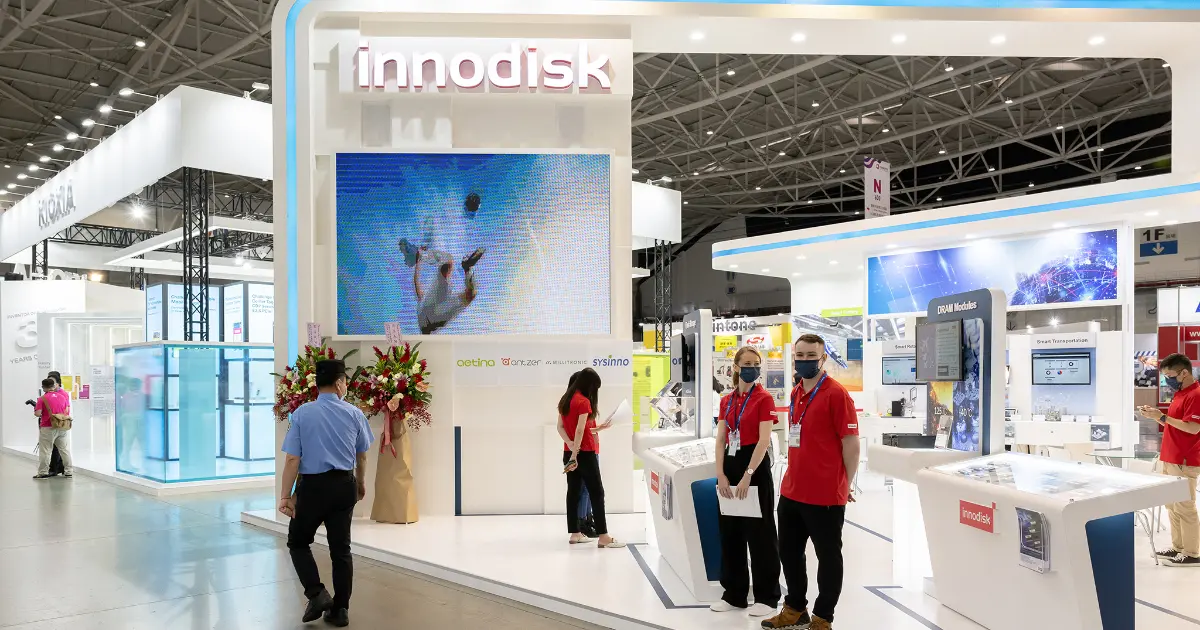
Let's first look at the recent news from several key players. Innodisk, a leader in industrial-grade storage, reported its single-month profit for February with an EPS (Earnings Per Share) reaching an astonishing 16.22 NTD—a 13-fold surge compared to last year, meaning its single-month performance has already surpassed its entire full-year earnings for 2024. ADATA, the world’s second-largest memory module maker, saw its Q4 profits explode last year, earning more in a single quarter than in previous full years combined; for January this year, it posted a single-month EPS of 11.09 NTD, an astronomical year-over-year increase of over 3,500%, with Q1 profits projected to exceed the entirety of last year.
Additionally, Phison, a major NAND Flash controller IC designer, posted an EPS of 41.98 NTD last year, and its revenue for the first two months of this year hit a record high. As for Macronix, a ROM/Flash giant that operated at a loss for the past two years, it has seen revenue growth in Q1 2026. Institutional investors optimistically project its EPS could hit 30 NTD this year, with some brokerages even estimating 100 NTD by 2027.
With these skyrocketing profit figures rolling in like a tidal wave, it is the absolute biggest incentive driving investors' current memory frenzy. Faced with continuously soaring profits and stocks hitting the daily upper limit of 10% (the maximum allowed on the Taiwan stock market) right at the opening bell, who could resist the temptation?
The 2028 Supply Glut Risk: Global Memory Capacity Expansion Set to Peak
The reason behind such stellar profitability for memory stocks is already clear to most. Driven by aggressively expanding AI investments, US tech giants have seen a massive surge in demand for High Bandwidth Memory (HBM), buying it up regardless of the cost. This has caused severe supply shortages, driving up quotes across the related memory sector.
As investors chase memory stocks right now, several critical questions inevitably come to mind: How long can this memory price rally last? And when will it reverse?
Currently, many industry insiders and brokerages estimate this shortage will persist for two years, with no signs of easing until the second half of 2027. Some bullish observers believe the shortage will last even longer.
However, Samsung Electronics, the world’s leading memory manufacturer, recently stated that the tight memory supply is expected to ease around 2028. As competitors aggressively expand capacity and the industry cluster effect promoted by the South Korean government materializes, the market may face the risk of a supply reversal. Consequently, Samsung is carefully calibrating its investment pace to avoid profit erosion from over-expansion.
The crux of Samsung’s market forecast is that global capacity expansion plans will converge around 2028. Besides Micron expanding its DRAM and HBM production lines in Taiwan, Singapore, and the US, emerging forces like Japan’s Kioxia and China’s YMTC are also investing aggressively.
Furthermore, the Yongin Semiconductor Cluster, spearheaded by Samsung and SK Hynix with an investment scale of nearly 1,000 trillion KRW, is expected to enter its second phase of investment in 2028, further amplifying production scale.
Despite this, a minority of brokerages believe a turning point will occur as early as 2027. The main focal points are whether global AI infrastructure investments will cool down and whether the introduction of new capacity by various companies will alleviate the supply-demand imbalance.
Aside from the question of how long the boom will last, looking at the historical trajectory of the memory industry prompts a few more questions. For instance, when memory stocks surge, who profits more: the manufacturers or the channel distributors?
Build-to-Order Reality: Soaring Memory Prices Impact Downstream PC and Smartphone Sectors
According to the operational logic of the upstream and downstream supply chain, manufacturers are undoubtedly the biggest winners because they hold the pricing power. Today, large memory manufacturers are focusing their development on HBM because it yields the best margins, subsequently reducing the supply of non-HBM products.
As for the explosive profit results currently shown by channel distributors, the key lies in the low-cost inventory they acquired previously. Under the current severe shortage, sustained profitability will depend on their relationships with manufacturers. Every distributor has its own way of leveraging superior strategic sourcing, and their ability to secure allocations varies. Meanwhile, some companies have transitioned into system integrators focusing on design and modules, allowing them to create even higher value.
However, whether a manufacturer or a channel distributor, both must bear the risk of inventory depreciation when prices reverse. When prices fall rapidly, the entire supply chain suffers equally.
From this perspective, manufacturers like Samsung, SK Hynix, Micron, Kioxia, and Western Digital/SanDisk are guaranteed to see explosive profits this year, potentially raking in massive earnings for two years. As for Taiwan's numerous channel distributors and system integrators—from ADATA, TeamGroup, and Apacer to Phison, Innodisk, and Transcend—they are also bound to deliver strong profit performances this year. Their low-cost inventory will be particularly potent in the first half of the year. However, whether their profits can continue to hit new highs in the second half will depend on whether their C-level executives possess the strategic bargaining power to secure direct allocations from major manufacturing giants.
Secondly, the surge in memory prices has a very direct impact on downstream industries such as laptops, smartphones, and general-purpose servers. A friend recently told me their company wanted to purchase a hundred computers, only to find there was no stock and they would have to wait half a year. Some PC manufacturing companies have even entered a "Build-to-Order" state, where they only produce after receiving an order. The most critical bottleneck is that they simply cannot get their hands on memory components.
For these downstream industries that rely heavily on memory, this is their most painful moment. But how can they mitigate the impact of memory price hikes and supply shortages?
Based on historical experience, the first step to ease the pain is adjusting product specifications and portfolios, potentially reducing memory usage. They will also implement defensive procurement measures, such as locking in Long-Term Agreements (LTAs) with original manufacturers. However, when costs genuinely become uncontrollable, they will resort to raising prices or prioritizing allocations to their most important clients, thereby passing the pressure onward.
Is This Time Different? The Immutable Law of the Silicon Cycle
The final question—and the one investors are most eager to know—is this: even if we fully understand these industry trends, can investors still jump into these soaring memory stocks right now? Will they make money, or will they be trapped immediately after buying?
My thought is that, with memory still in extreme shortage, the financial figures for the first half of this year will undoubtedly be full of positive news. Upon seeing these earnings reports, investors will inevitably generate impulsive buying momentum. Capital will pour in continuously, and stock prices will inevitably experience massive surges with minor pullbacks, relentlessly pushing upward.
However, I must remind everyone that memory is still a highly cyclical industry. Many say "this time is different," and the bulls argue that AI has broken the Silicon Cycle. Yet, every time the market booms, someone claims "this time is different." This is just the cycle of history repeating itself.
I agree that the boom cycle will lengthen. Facing the largest AI capital expenditure in human history, this explosive positive cycle of demand will indeed last for some time. However, I believe the fundamental Silicon Cycle of the memory industry will not change. Because memory prices are so attractive right now, a slew of companies are ramping up investments. This new capacity will come online sequentially in 2027 and 2028, at which point the market will have to face the challenge of a massive supply surge.
In addition to the global giants mentioned above (Samsung, SK Hynix, Micron, Kioxia, and YMTC) expanding their capacity, Taiwan's two major manufacturing fabs, Nanya Technology and Winbond, are also collectively injecting nearly 100 billion NTD into investments this year. This is the largest investment sum seen in years, and this new capacity will also gradually come online by 2028.
The cyclical nature of memory is defined not only by the fact that massive investments and capacities come online simultaneously but also by the fact that most of its products are highly standardized commodity products. This guarantees it can hardly escape the test of the economic cycle, making it a defining characteristic of the memory industry.
Of course, there are a few manufacturers capable of providing customized solutions and value-added services based on client demands, or those who can carve out new application scenarios in the AI era. This is especially true as the AI battlefield shifts from the Cloud to the Edge (such as AI PCs or Edge AI smartphones) or diversifies into more applications. However, not every company possesses this capability.
To Buy or Not to Buy? Divergent Views Between Short-Term and Long-Term Investors
Up to this point, I am sure that investors currently caught up in the frenzy probably won't listen to these warnings. As long as they see the stock price climbing, they will definitely rush back in. "Make the money first," they think—and looking back at the investment history of memory stocks, this has always been the case.
I feel that this wave of memory fervor will indeed last for a while, but volatility and turbulence will intensify, much like riding a rollercoaster. While enjoying the upward rush, investors must also consider if they have a strong stomach for volatility and whether they can bear such risks.
I know many veteran investors, and their views on memory stocks generally split into two camps. One camp says, "Of course we have to make a killing on this! Only a fool wouldn't!" The majority hold this view, especially younger investors. Who can resist the temptation of this "One Ring"? But this requires a high risk tolerance and the time to constantly monitor the market.
The other camp, which is more bearish, usually maintains a cautious attitude towards memory stocks, only dabbling lightly. These investors prefer long-term targets, choosing to park their money in blue-chip stocks with steady profit growth. Their rationale is that a memory stock might see a massive EPS increase this year and next, but turn into a loss the year after. Such extreme fluctuations make it impossible to calculate the company's long-term intrinsic value.
Think back to the vaccine or shipping stocks that skyrocketed during the pandemic, or the water-concept stocks during droughts. Memory might not be completely comparable to these sectors, but at the time, many investors were lured in by these soaring stocks, and some are still trapped at the top today.
I want to offer a well-intentioned reminder to investors right now, but I also know most people probably won't listen. In the past, too many people have been severely burnt by chasing memory peaks. Will history repeat itself? I believe history is constantly repeating. Most people only learn their lessons through painful experiences before transforming them into ingrained discipline or rules. Perhaps this current memory craze will simply be another high-stakes trial for investors.
Related Articles
Micron Announces Its Largest Rewards Ever. Its Taiwan Union's Demands Expose a Clash of Pay Systems. A strike threat at Taiwan's largest foreign investor, read in three dimensions

TSMC's 3nm rinse comes exclusively from AEMC, a Taiwanese company once withdrawn from the Emerging Stock Board

Taiwan AI Industry Upgrade Forum Series || Event Report:America Wants More Manufacturing. What Does It Take for Taiwan’s Suppliers to Follow?