Memory Shortage Could Last Past 2030, and TSMC Is the Unexpected Winner
Micron's gross margin hit 87% in its fourth quarter of fiscal 2026, and its CEO says memory will be even tighter in 2027 and 2028 than in 2026. One estimate has the memory shortage lasting beyond 2030. I think that conclusion is right, but three steps in the reasoning need correcting.
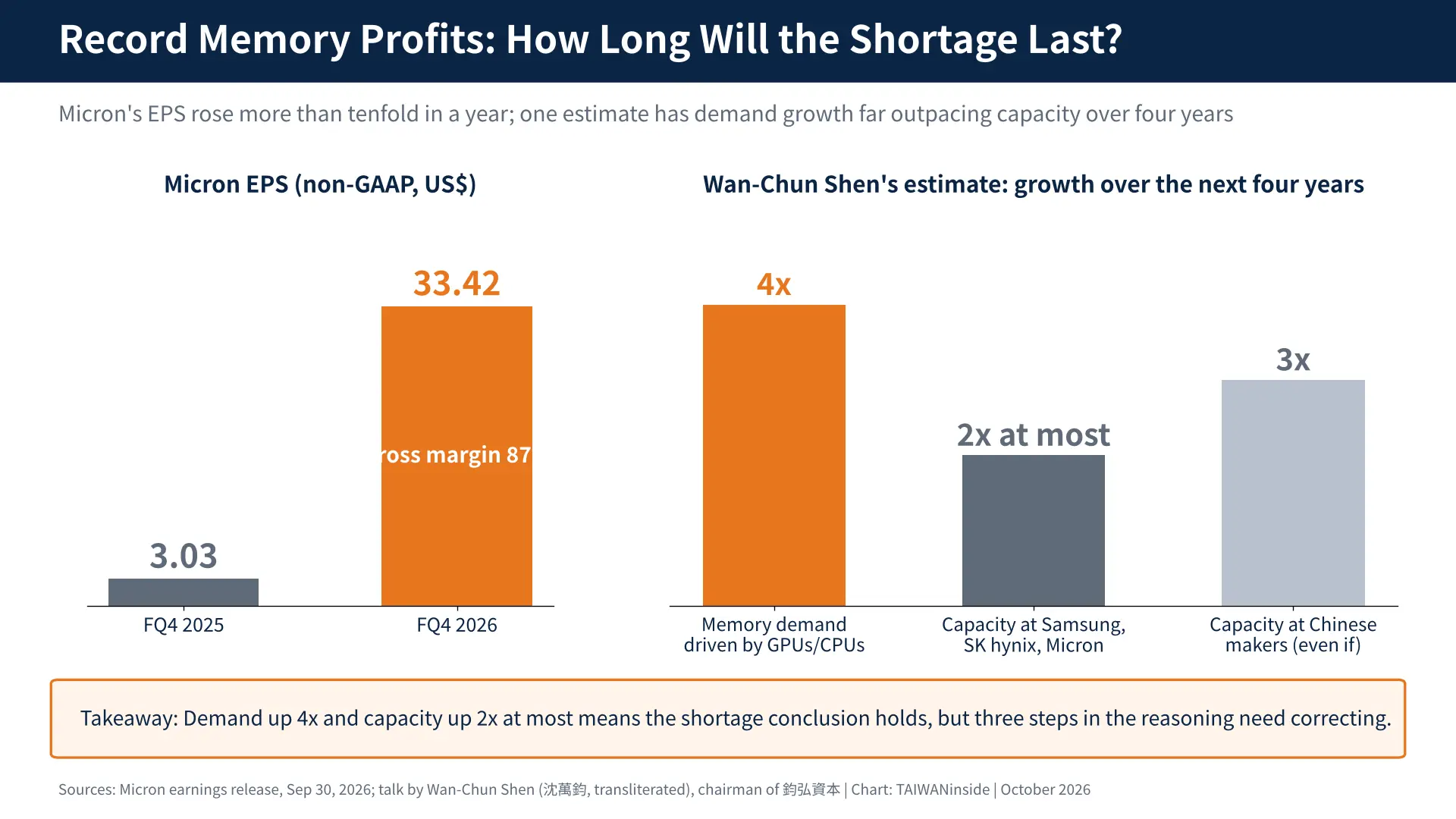
On September 30, 2026, Micron reported results for its fourth quarter of fiscal 2026, which ended September 3. Both revenue and earnings per share (EPS) beat expectations, gross margin reached a record 87%, and EPS jumped from US$3.03 a year earlier to US$33.42, more than a tenfold increase.
Micron CEO Sanjay Mehrotra also said that physical AI, such as autonomous vehicles and humanoid robots, will become a new growth driver. He stressed that memory and storage supply and demand will be tighter in 2027 and 2028 than in 2026, and that some long-term agreements will extend to 2031.
That the memory industry has entered a supercycle is now widely accepted. As for how long the boom will last, some say at least until 2028, and others say the shortage will persist until 2030.
Capacity Expansion Can't Keep Up With Demand: A Shortage Beyond 2030
How long will the memory shortage last, and what is causing it? I have recently pulled together some material and have a few new thoughts to share.
In addition, the surge in demand for HBM driven by AI has now spilled over to TSMC, because TSMC controls the CoWoS advanced packaging technology and capacity used to package logic chips together with HBM. This matters a great deal to Taiwan's industry, and it is worth discussing here.
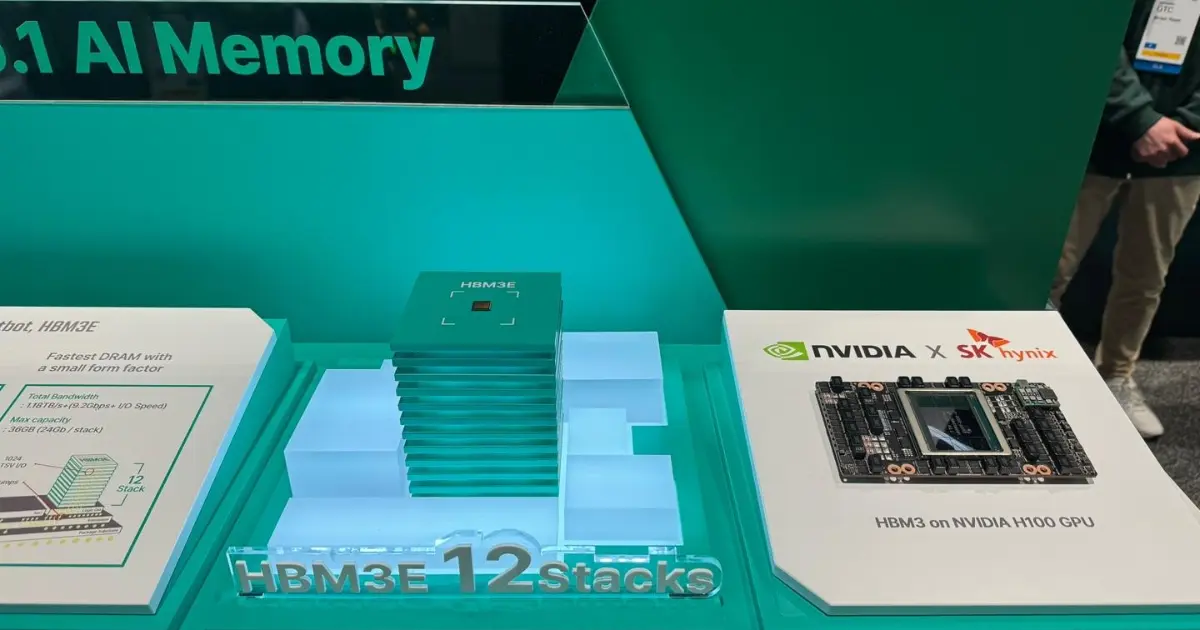
HBM (high bandwidth memory) is memory made by stacking multiple DRAM chips vertically. It is packaged together with GPUs and other AI chips and feeds data into the compute cores at very high speed.
First, I recently heard a talk by Wan-Chun Shen (沈萬鈞, transliterated), a former star fund manager and now chairman of the investment firm Jun Hong Capital (鈞弘資本, transliterated). He said the memory shortage will last for many years and may not be resolved even after 2030. His reasoning: look at how GPUs, CPUs and other chips are developing. In four years their performance will rise fourfold, and when GPU and CPU performance rises fourfold, demand for the memory that goes with them (DRAM and flash) will also rise fourfold. Yet memory makers' capacity expansion over the next four years will not reach fourfold, so supply will continue to fall short of demand.
On the capacity side, he said, a look at how fast each company is building new capacity shows that Samsung, SK hynix and Micron will at most double their capacity over the next four years. Chinese suppliers (CXMT and YMTC) may add somewhat more, but even if they triple their capacity, supply will still be badly short, and the imbalance will persist.
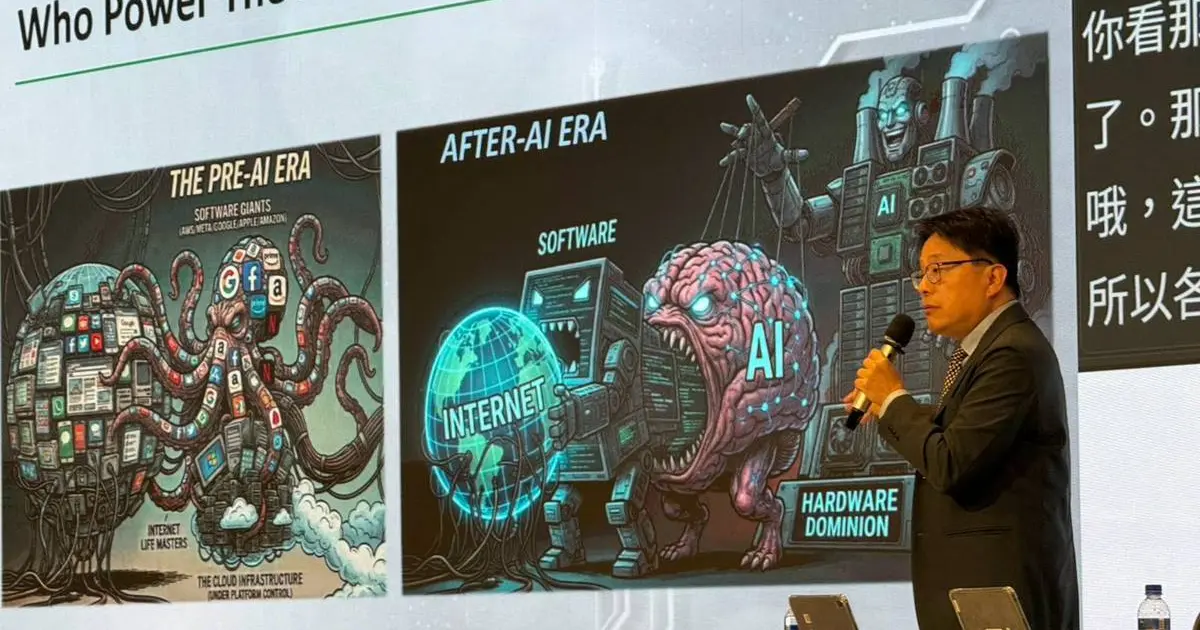
Shen graduated in electrical engineering from National Tsing Hua University and holds a master's degree in finance from Baruch College, City University of New York. He worked at TSMC, has managed more than NT$30 billion (roughly US$1 billion), has more than 18 years of institutional fund management experience and has won 18 Golden Diamond Awards (金鑽獎), a leading Taiwanese fund award. As a result, he often offers sharp views on the semiconductor and electronics industries.
His point is that when GPUs and CPUs compute and process data, the data must move in and out of memory, so memory is used constantly. Based on how fast GPUs and CPUs will advance over the next four years, memory will be in short supply. That is a concrete and clear way of looking at it, and I think it is quite insightful.
On closer analysis, however, I think the logic reaches the right conclusion, but three steps in the reasoning need some correction.
Premium Members Only
This is a premium article. Please join our membership to read the full content.
Become a member to unlock all in-depth reports and exclusive analysis.
Already a member? Login Now
Related Articles
Taiwan Mass-Produces, Japan Supplies Materials and Equipment: From Sony to Drones, Why the Taiwan-Japan Alliance Is Rare

Musk Admits He Doesn't Know How to Make Chips: The Three Red Lines TSMC Must Hold in Any Terafab Deal
The Day Morris Chang Laughed Out Loud: Chenming Hu's New Book and the Talent Network Behind Taiwan's Chip Industry