Nissan’s Loss Signals Auto Industry Shake-Up; Taiwan’s Kutech Bets on Low-Floor Chassis to Disrupt the Game
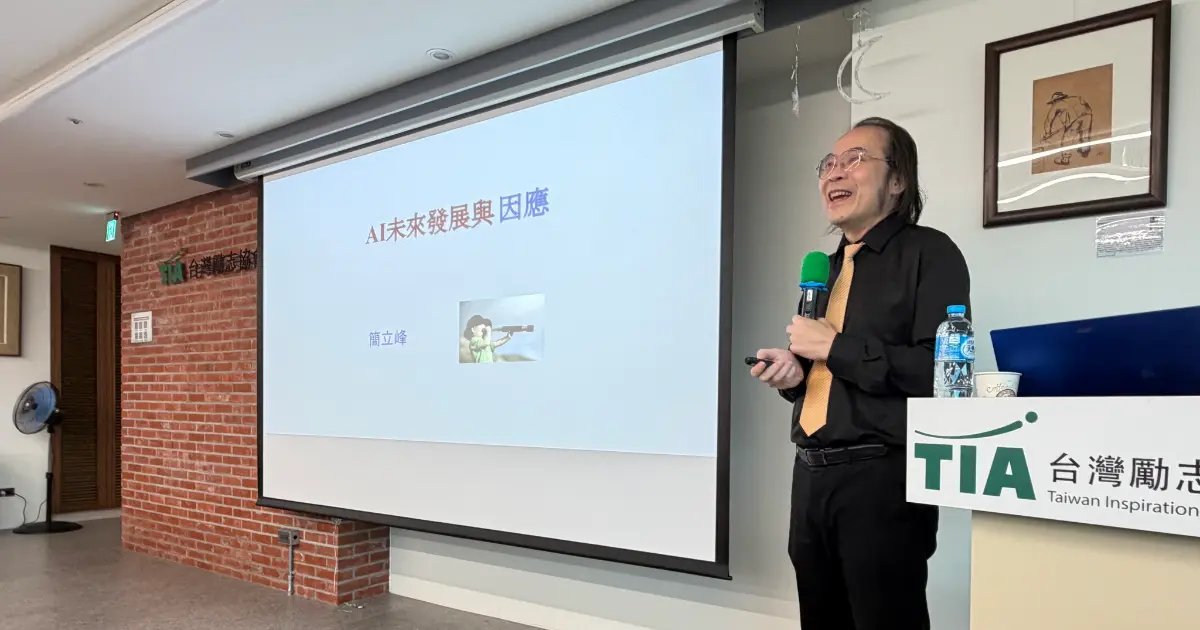
Last week, I was invited to give a lecture in Japan on potential areas of collaboration between Taiwan and Japan beyond the semiconductor sector. During the talk, I pointed out to my Japanese colleagues that the most significant transformation in the global semiconductor industry over the past four decades has been the gradual shift from vertical integration to vertical disaggregation. Taiwan successfully capitalized on this trend and secured a critical position in the global supply chain. In contrast, Japan lost its leadership edge by failing to adapt to this shift in time.
I also reminded the audience that the automotive industry is undergoing a similar structural revolution. Japan must be highly alert to the fact that the vertically integrated model it has long relied on is steadily breaking down. In this challenging environment, Japan’s auto sector must not only show the determination to reform but also actively seek to accelerate collaboration with Taiwan.
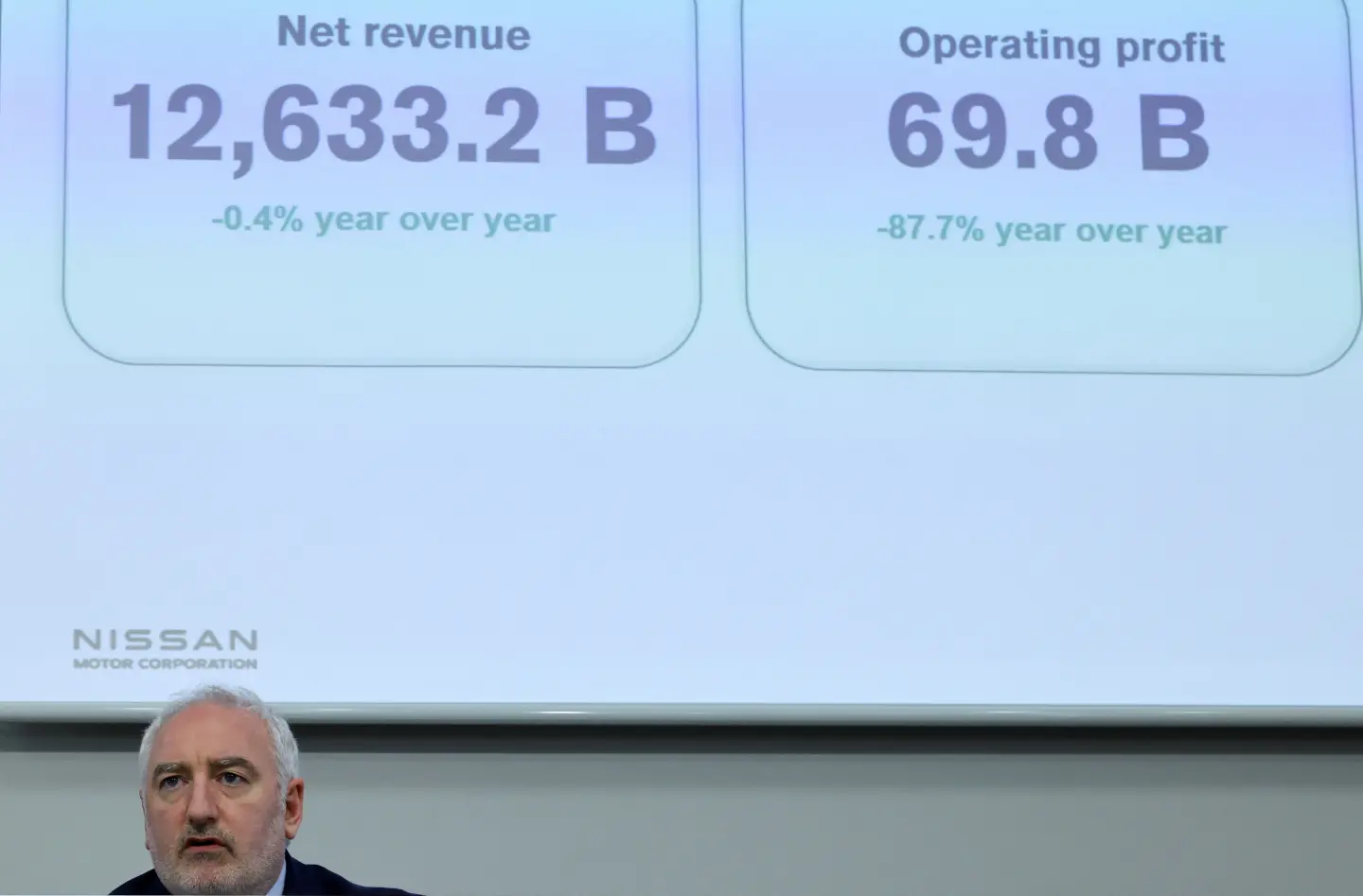
Sure enough, last Wednesday, Nissan announced its financial results for fiscal year 2024, reporting a net loss of 670.8 billion yen — its worst performance in 25 years. The company also revealed plans to lay off 20,000 employees, shut down seven factories, and reduce its annual production capacity from 3.5 million to 2.5 million vehicles.
The automotive industry is a vital artery of the Japanese economy, but it is now undergoing a revolutionary restructuring and disintegration. If Japan fails to respond and transform in time, it could face yet another industrial catastrophe. Back in the 1980s and 1990s, Japan was the global leader in semiconductors, with six of the world’s top ten companies being Japanese. Today, none remain in the top ten. Whether this kind of decline will also befall Japan’s auto industry is a serious question worth watching closely.
As the Global Auto Industry Shifts, Taiwan’s Underdogs Take on the Giants
When discussing the transformation of the auto industry, the most disruptive force undoubtedly comes from China. The rapid rise of low-cost Chinese electric vehicles has triggered severe price disruption across the global market. Whether it’s internal combustion engine vehicles, fully electric cars, or hybrids, automakers around the world are feeling the shockwaves firsthand.
Another powerful force of transformation is emerging from Taiwan. In the past, Taiwan’s small and medium-sized enterprises reshaped the personal computer and semiconductor industries. Now, that same disruptive energy is entering the automotive sector. Taiwan is poised to once again play the role of the underdog challenging the giants, potentially taking market share away from the world’s major auto brands.
Among these emerging underdogs, Taiwan’s Cruise10(庫得科技) stands out as a particularly noteworthy player. Chairman Wu Kuang-yi (吳廣義)personally invited me to visit the company’s headquarters in Taoyuan, Taiwan, where I experienced firsthand the growing energy of a budding startup.
Cruise10 currently has only a few hundred million NT dollars in capital, making it a very small player in the automotive industry, where investments often exceed tens of billions. However, the company boasts an impressive lineup of shareholders, including prominent business figures such as Stan Shih(施振榮), Tzi-chen Tung(童子賢), and Ming-tung Tsai(蔡明忠). Its management team is led by Wu Kuang-yi, who comes from the tech sector, and Yang Tzu-jen(楊孜仁) and his wife Chiang Pei-Shan(江佩珊), who have extensive experience in the automotive industry.
Yang Tzu-jen recalled that more than a decade ago, during a casual conversation with Stan Shih, he mentioned his idea of breaking down a car into several modules and adopting a low-floor, open design. Before he could finish explaining, Shih immediately responded, “Isn’t that just like a computer motherboard?”
Stan Shih not only immediately agreed with Yang Tzu-jen’s vision, but also quickly decided to invest, expressing his desire to take part personally in driving a new revolution of vertical disaggregation in the automotive industry.
Stan Shih explained that to build a new vertically disaggregated ecosystem in the EV industry, the first step is to develop the EV chassis, which serves a role as fundamental as the motherboard in a computer. Once the chassis is in place, it can be integrated with other key components and supplied to emerging players around the world who are eager to enter the EV space. This model mirrors the early days of DIY white-box desktop PCs. Taiwan can provide licensing and technical support to help countries manufacture chassis and components locally, enabling industrial localization and helping to overcome geopolitical and tariff-related barriers faced by many nations today.
However, more than a decade ago when Stan Shih made his initial investment, Yang Tzu-jen’s planned EV development project was ultimately put on hold. At that time, the electric vehicle industry was still in its infancy, with an immature supply chain, and even Tesla was still in its early development stage. Moreover, Cruise10 was originally targeting the passenger car market—a segment with high financial risk if things went wrong—so the team decided to hit pause on the project.
Today, the EV industry has become significantly more mature, and the shift from vertical integration to vertical disaggregation is increasingly taking hold. Against this backdrop, Cruise10 has seen its opportunity reemerge. This time, instead of entering the passenger car segment, the company is strategically focusing on the niche B2B electric logistics vehicle market.
Overcoming the Flaws of Traditional Delivery Trucks — Cruise10 Introduces Low-Floor Innovation
Why target the logistics vehicle market? According to Wu Kuang-yi, chairman of Cruise10, demand for e-commerce logistics has surged since the pandemic, and expectations for energy efficiency and carbon reduction have become stricter. One of the main barriers to the widespread adoption of electric vehicles is the lack of charging infrastructure. However, for electric delivery vehicles, routes are typically fixed, making it much easier to establish designated charging points and overcome this limitation.
This gap in the market— the lack of EV solutions specifically designed for logistics needs— is precisely why Cruise10 chose to enter this segment.
Yang Tzu-jen explained that traditional delivery trucks suffer from several clear design flaws. First, the chassis is typically too high—often reaching 90 centimeters—making loading and unloading inconvenient and requiring the use of hydraulic lifts. Second, many of these trucks rely on diesel engines for power. To maintain cold-chain logistics, the engine must remain running, resulting in both air pollution and significant energy waste.
As a result, Cruise10’s electric delivery vehicle adopts a low-floor chassis design that significantly reduces the vehicle’s ground clearance. This design also allows the battery to be fully enclosed within the steel beams, providing an additional layer of safety.
Yang Tzu-jen explained that traditional trucks typically house a central driveshaft and differential within the chassis, making it difficult to reduce the floor height. However, for delivery workers, who may load and unload goods dozens or even hundreds of times a day, a high chassis means relying on hydraulic lifts, which consumes valuable time. In addition, repeatedly climbing up and down the vehicle takes a serious toll on their physical energy. By lowering the chassis, workers can step directly into the cargo area, saving both time and effort.
Moreover, by lowering the chassis height, the available cargo space inside the vehicle is significantly expanded. As a result, Cruise10 can meet the practical needs of most logistics companies with a 4.5-ton vehicle design.
Many e-commerce logistics vehicles today may have low tonnage but offer ample storage space, which aligns perfectly with the practical needs of online retailers. This is because e-commerce packages often have large volumes due to packaging, but relatively low weight. In such cases, maximizing cargo volume—not weight capacity—is the key to an effective delivery solution.
According to Wu Kuang-yi, Cruise10’s logistics vehicle is rated for a payload of 4.5 tons, but offers a storage capacity equivalent to 6 tons. This configuration hits the sweet spot between market demand and cost performance. As a result, the low-floor chassis has become Cruise10’s unique competitive advantage, and the company has already filed a patent to protect the design.
Fleet Clients Drive the Push for ESG Points
More importantly, Wu Kuang-yi emphasized that Cruise10’s solution is not only sought after by fleet operators, but also strongly encouraged by the fleet owners’ end customers. In fact, it is these corporate clients who are the driving force urging Cruise10 to accelerate implementation.
The reason is quite straightforward: fleet operators’ upstream clients can earn a significant number of ESG credits by switching to electric delivery vehicles. These clients are often large corporations with strong commitments to sustainability and rely on extensive logistics networks. By replacing conventional vehicles with more efficient and environmentally friendly electric models, they can accumulate more carbon reduction credits, which are then reflected in their overall ESG performance reports.
“Right now, most of those reaching out to Cruise10 are actually the upstream clients of logistics fleets,” said Wu Kuang-yi. He explained that this reflects a clear and growing demand in the market. Fleet operators, facing pressure to meet their clients’ expectations, are thus becoming active participants in accelerating the shift toward vertical disintegration in the automotive industry.
Upstream clients are indeed the primary driving force behind industry transformation, and this logic makes perfect sense. It’s similar to how Apple requires its suppliers to adhere to energy-saving and carbon-reduction standards — a mandate that serves as a powerful incentive for any supplier hoping to secure Apple’s business.
In addition, traditional delivery trucks typically rely on engine-generated power. For cold chain logistics vehicles, maintaining low temperatures requires the engine to run continuously. For example, when a refrigerated truck transporting medical supplies arrives at a hospital, the engine must remain running to power the cooling system, resulting in constant emissions and energy waste.
As a result, Cruise10 carefully calculates the average daily mileage of each electric delivery vehicle, and evaluates whether the battery capacity is sufficient to support cold chain systems when such equipment is installed.
According to Cruise10’s estimates, urban logistics vehicles—those operating within a single city—typically travel a predictable distance each day. Therefore, the battery capacity designed by Cruise10 is sufficient not only for driving needs but also to power refrigeration equipment, eliminating the need for heavy onboard generators and avoiding continuous engine use that produces emissions.
Cruise10 is capable of offering customized designs for logistics vehicles, a key advantage made possible by the automotive industry’s shift toward vertical disaggregation. Under the traditional vertically integrated model, such customization demands were often overlooked. Even when major Japanese logistics firms placed large-scale orders—sometimes exceeding ten thousand vehicles—automakers rejected them, as they were entrenched in a closed, integrated system that lacked the flexibility to adapt to individual client needs.
Partnering with Elan Microelectronics to Build a Vertically Disaggregated Automotive Ecosystem
In addition, building a new vertically disaggregated framework for the automotive industry requires collaboration from a wide range of key component manufacturers. This mirrors the evolution of the computer industry, where a dense ecosystem of specialized suppliers worked together to establish a robust vertical disaggregation model.
As a result, Cruise10 actively collaborates with Taiwan’s information and electronics sector. For instance, Elan Microelectronics is responsible for developing digital rearview mirrors, surround-view cameras, and advanced driver assistance systems (ADAS). Meanwhile, other domestic suppliers in Taiwan contribute large-format digital instrument panels and touchscreens for vehicle interiors.
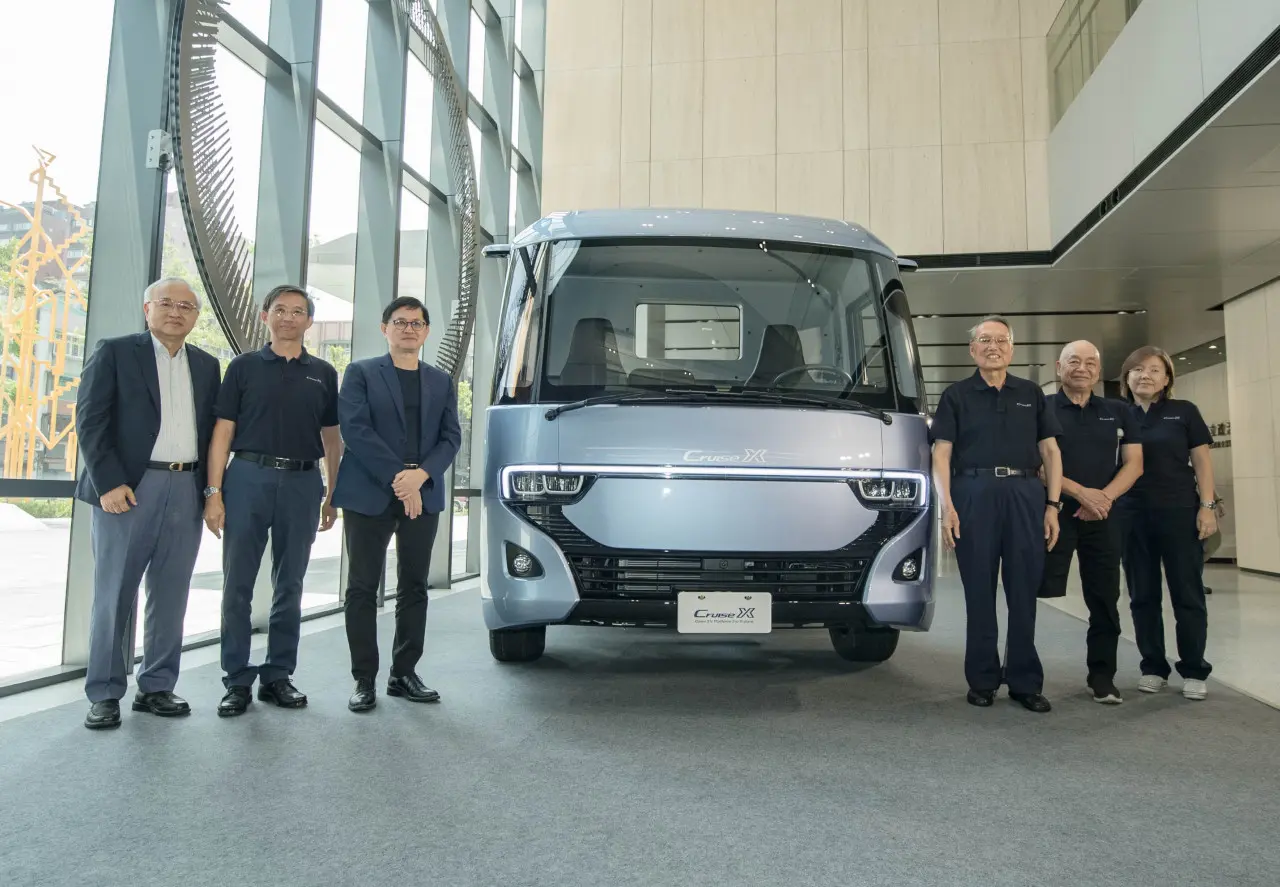
At the upcoming Computex trade show, Cruise10 will not have its own booth, but has arranged to display its electric logistics vehicle at the booth of its partner, Elan Microelectronics. This joint exhibition highlights the results of a collaborative effort by Taiwan’s supply chain and marks a significant shift for Computex—traditionally focused on computers and semiconductors—by showcasing Taiwan’s determination and capability to transform the global automotive industry.
Elan Microelectronics Chairman Yeh Yi-Hao(葉儀皓) noted that the company, once focused on touch ICs for notebook computers, is now expanding into smart mobility and automotive IC markets. In the area of advanced driver assistance systems (ADAS), Elan has not only developed side-view imaging ICs but also entered the field of AI algorithms. The company has already begun shipments to domestic electric bus manufacturers, with its next step being a partnership with Cruise10 on electric logistics vehicles.
Yang Tzu-Jen explained that Cruise10 divides each vehicle into seven to eight modules, following a modular development model similar to that of the early PC industry. The company adopts a light-asset approach, focusing solely on design without handling manufacturing. Its designs are licensed to overseas partners for royalties, enabling easy localization of production and distribution. This model aligns with many countries’ push for domestic manufacturing and stands in stark contrast to the capital-intensive, scale-driven strategies of traditional automakers.
Now 80 years old, Stan Shih remarked that he may not live to see the realization of a fully professionalized division of labor in the automotive industry. He noted that it took 20 years for the personal computer industry to undergo a paradigm shift and 30 years for the semiconductor industry to establish its division of labor. He predicts that the transition in the electric vehicle (EV) sector could take even longer—perhaps over 30 years—and urged Taiwan to act proactively now in order to seize this emerging opportunity.
The automotive industry is undergoing a profound transformation. In addition to pressure from China’s low-cost electric vehicles, the once-dominant vertically integrated model is now facing major challenges. Startups like Cruise10 may seem like small sparks today, but they have the potential to ignite sweeping changes across the industry and deserve close attention moving forward.
Related Articles
Micron Announces Its Largest Rewards Ever. Its Taiwan Union's Demands Expose a Clash of Pay Systems. A strike threat at Taiwan's largest foreign investor, read in three dimensions
TSMC's 3nm rinse comes exclusively from AEMC, a Taiwanese company once withdrawn from the Emerging Stock Board
Taiwan AI Industry Upgrade Forum Series || Event Report:America Wants More Manufacturing. What Does It Take for Taiwan’s Suppliers to Follow?