A Humble, Reflective Conversation: Lip-Bu Tan’s Turning Point in Intel’s Transformation
This year’s COMPUTEX Taipei opened with great fanfare, and the first day was bustling with activity. I watched NVIDIA CEO Jensen Huang’s keynote online and attended Qualcomm CEO Cristiano Amon’s speech in person. While both talks offered fresh insights, what left the deepest impression on me was the brief ten-minute conversation Intel CEO Lip-Bu Tan(陳立武) had with the media.
The reason this brief conversation stood out to me was because of who was speaking. Lip-Bu Tan, one of the most prominent figures in the global semiconductor industry, took on the role of Intel CEO in March 2025—at a critical juncture in the company’s transformation. Formerly the CEO of Cadence Design Systems and the founder of Walden International, Tan has played a pivotal role in advancing Taiwan’s venture and semiconductor ecosystem. For someone so deeply connected to Taiwan and attuned to the workings of the global supply chain to now lead Intel, it’s a moment that deserves close attention.
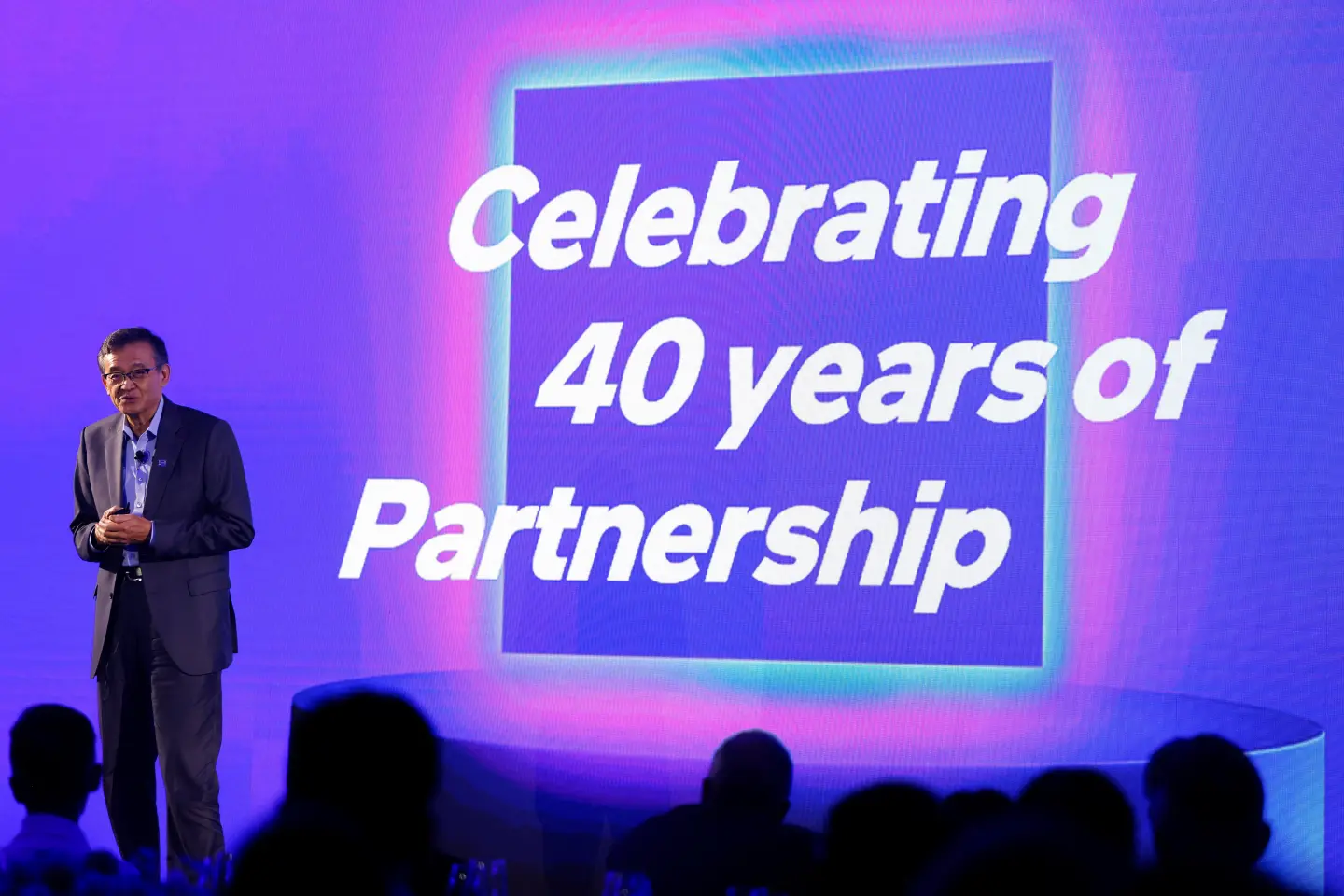
In fact, Lip-Bu Tan didn’t even hold a formal press conference. He simply made a few brief remarks before a dinner hosted for Intel’s Taiwanese supply chain partners, after which the media exited the venue.
Members of the media could only observe from a distance, using telephoto lenses to capture his image, while standing behind a cordoned-off area and listening to his remarks commemorating Intel’s 40th anniversary in Taiwan.
Although it wasn’t a conventional press conference, Lip-Bu Tan’s remarks conveyed a strong sense of sincerity. He spoke not only about his deep ties with Taiwan but also explained in detail how he plans to reform Intel and the rationale behind his approach.
In recent years, missteps in advanced process technology and product strategy have eroded its edge against competitors like TSMC, AMD, and even Apple. Market share has declined, and internally, Intel has suffered from cultural stagnation and technical inertia. Leadership turnover and repeated restructuring plans have yielded limited results. For Intel—a company once synonymous with Silicon Valley excellence—to reclaim its place, what it needs now is not just new plans, but a new culture and a leader with real vision.
For Intel, a company that has struggled for years, I believe its board of directors has finally found the most promising CEO to lead its turnaround.
To Taiwanese Journalists, Lip-Bu Tan Is More Than Just a Familiar Face
For Taiwan, Lip-Bu Tan is a well-known and familiar figure. Speaking in Mandarin, he reflected on the many lessons he learned during his time in Taiwan—such as being invited by Minister without Portfolio K.T. Li(李國鼎) to bring the American-style venture capital system to Taiwan, being advised by Yulon Chairwoman Wu Shun-Wen(吳舜文) to speak Mandarin at board meetings in the Republic of China, and being told by Chang Chun Petrochemical Chairman Kao Ying-Shih(高英士) that in Taiwan, one must “learn to be a good person before learning to do good work.”
When Lip-Bu Tan spoke about the lessons he learned in Taiwan and the mentorship he received from senior figures, I felt a deep resonance. Back in my days at the Economic Daily News, I covered Walden International extensively—some of its executives were even my college classmates.
Moreover, Walden International invested in a wide range of semiconductor and computer-related companies in Taiwan—including Elitegroup Computer Systems, Zih Fu, D-Link, Kuo Electric, Mitac, Everlight, ZyXEL, and later Powerchip, Taisil, TICP, and Miji Technology. I reported on all of them and can still recall the details as if it were yesterday.
In just over ten minutes, Lip-Bu Tan spoke about his leadership style. “I prefer to communicate directly with engineers,” he said, “because information often gets distorted as it passes through layers.”
He noted that Intel’s internal structure can sometimes be overly hierarchical, leading to communication errors. To address this, he now goes down seven or eight layers within the organization to speak directly with frontline engineers and obtain accurate, firsthand data for making improvements.
He frequently tells his colleagues and customers, “Tell me the bad news first—only then do we have a chance to fix it.” He also warns his employees that if he hears bad news from customers before he hears it internally, “you’re in big trouble.”
He also emphasized to the many Taiwanese supplier executives present, “I want you to tell me where Intel’s problems are. Only then can we improve, and only then can we succeed together.”
A Culture of Honesty and Engineering Faith: The Starting Point of Intel’s Revival
This culture of honesty is a key pillar of Lip-Bu Tan’s transformation strategy for Intel. When speaking about the future, he expressed strong confidence: “I’m not a marketing guy. I let results speak. For Intel to become great again, we must be humble, we must listen, and we must execute. That’s the new DNA of Intel.”
Lip-Bu Tan’s remark—“I’m not a marketing guy”—was simple yet powerful. It truly stood out.
Intel has a proud history of success, and its most notable achievements were led by engineering-driven CEOs. However, in recent years, several successive CEOs have strayed from this path, prioritizing finance and marketing over engineering and pragmatism—resulting in a steady decline in the company’s competitiveness.
Lip-Bu Tan stated that Intel’s future reform efforts will focus on two main priorities: building the best products and ensuring genuine customer satisfaction. To achieve this, he has already reorganized the engineering team’s structure so that it reports directly to him—ensuring clear R&D direction and driving a meaningful transformation across the semiconductor industry.
He also emphasized that Intel will continue listening to customer feedback and work closely with partners to solve problems. “You’re going to see a brand-new Intel,” he said.
Lip-Bu Tan also candidly acknowledged that some of Intel’s products still lack competitiveness. As a result, the company is pushing forward with reforms to close those gaps. “We must not underestimate the challenges,” he said. “But I believe that with execution, execution, and more execution, Intel can regain its vitality.”
In my view, a CEO who is willing to openly acknowledge their company’s problems has already achieved something significant. Such words would have been unthinkable coming from Intel’s previous CEOs. I believe only an outsider, unburdened by legacy constraints, could admit past mistakes and push for real reform.
Reflecting on his past experience, Lip-Bu Tan said with a smile that when he first became CEO of Cadence, he thought it would be a temporary three-month role. Instead, he ended up leading the company for 15 years, growing its market capitalization to $87.7 billion and seeing the stock price climb from $2.42 to $316.
Speaking about Intel, Lip-Bu Tan noted that he had previously served on the board of directors, then left the company, only to be called back this March to take on the CEO role. “I’ll stay as long as the company needs me,” he said. “It could be five years, ten years, or even twenty.”
Some of the things Lip-Bu Tan said may fall outside the scope of his authority as CEO—such as how long he can remain in the role. Nevertheless, it’s clear that many of his statements and actions are well suited to the needs of an Intel facing serious challenges.
That’s because Lip-Bu Tan has shown a humble, low-key demeanor and a willingness to listen to others. He stands in stark contrast to his predecessor, Pat Gelsinger, who often took an aggressive tone and frequently challenged TSMC in public remarks.
Moreover, I believe the reforms Intel is pursuing today are of critical importance. In contrast to previous media speculation about a possible joint venture or merger between Intel and TSMC, I see such a move as completely inadvisable. I also believe Lip-Bu Tan does not view it as a viable path forward.
If Intel were to pursue a joint venture, the most suitable partner would be GlobalFoundries—not TSMC. A merger between two American companies would allow for greater cultural alignment, whereas a partnership with TSMC would likely lead to more cultural friction and conflict.
While overhauling Intel’s foundry operations is certainly a major challenge for Lip-Bu Tan, the far greater task lies in reforming the company’s product division.
At present, Intel’s Client Computing Group—which accounts for over 40% of its revenue—still relies heavily on PC CPU products developed three decades ago. In areas like smartphones and AI chips, the company has completely failed to keep pace with industry trends.
Since becoming CEO in March, Lip-Bu Tan has decided to outsource production of Intel’s 2-nanometer flagship chips to TSMC. I believe this was absolutely the right choice, as it enables Intel to compete head-on with AMD, which also relies on TSMC for chip manufacturing.
Strengthening Intel’s product competitiveness must be Lip-Bu Tan’s top priority and most urgent mission. It is even more essential and time-sensitive than the overhaul of the company’s foundry operations.
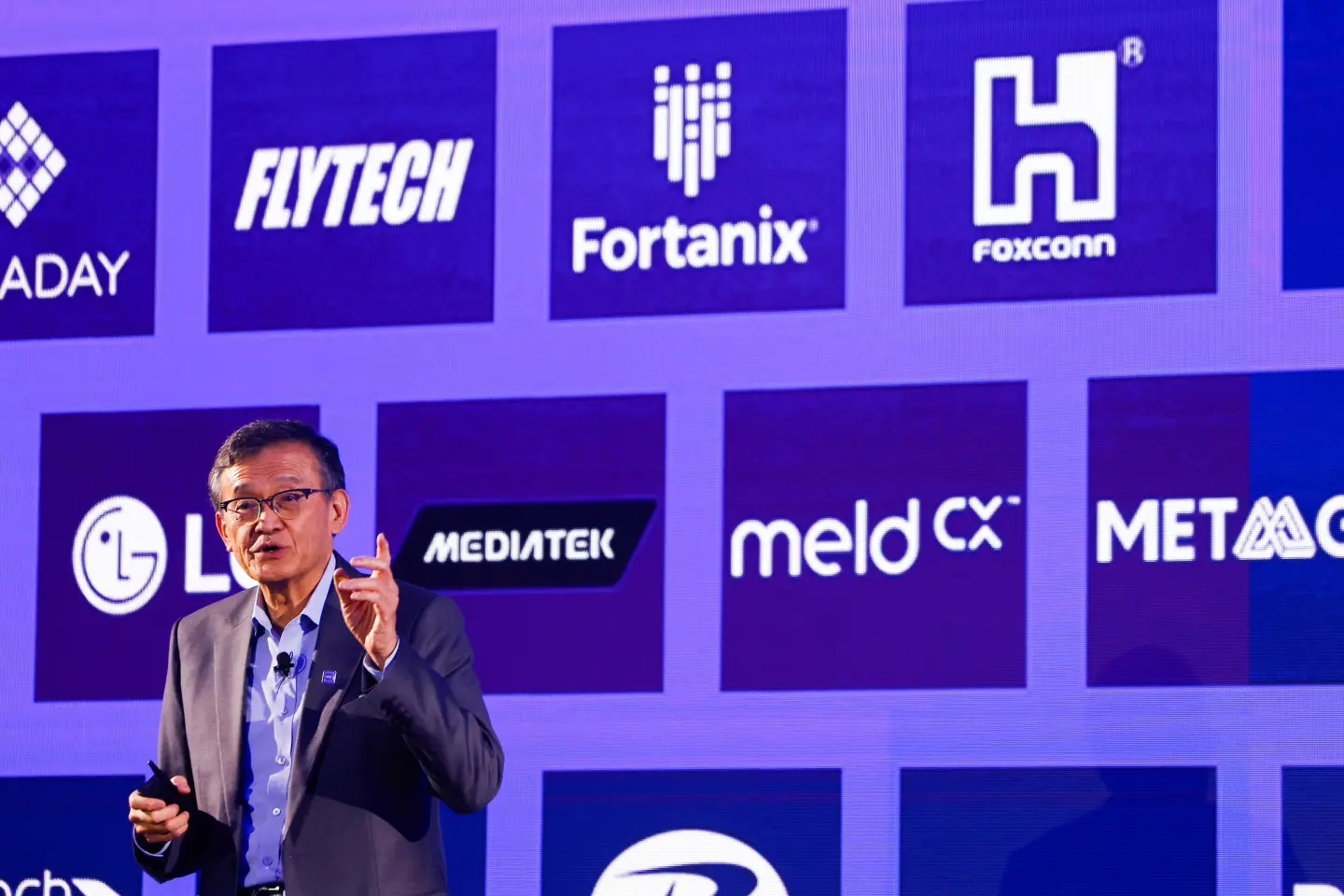
At last night’s dinner event, leading Taiwanese tech companies—including ASUS, UMC, Quanta, ASE, and Acer—were present to express their strong support for Intel and affirm the value of their collaborations. They also voiced hopes of continuing to create new opportunities together in the era of AI.
Taiwan’s Hope Lies Not Just in Cooperation, but in Shared Prosperity
I firmly believe these Taiwanese partners genuinely hope to see Intel regain its former glory. After all, Intel was one of Taiwan’s earliest and most crucial collaborators during the rise of its information technology industry. It was by joining the Microsoft-Intel “Wintel” alliance that Taiwan earned its first major profits, laying the foundation for its long-term growth.
In this sense, Intel’s relationship with Taiwan has always been more collaborative than competitive, and there’s little reason to fear that Intel’s future success would threaten TSMC’s market share. In fact, if Lip-Bu Tan can lead Intel back into market relevance and foster healthy, constructive competition with TSMC, it would create a more balanced semiconductor landscape—arguably the best-case scenario for TSMC.
That’s why I sincerely wish Lip-Bu Tan and Intel every success. If Intel’s reform efforts succeed, it will undoubtedly be a positive development—especially for Taiwan, given the long-standing partnership between the two. Intel’s cooperation with Taiwan has always outweighed competition, and its success would benefit the entire industry and serve the interests of the United States as well.
Even if Intel achieves progress in foundry manufacturing, it would still be a positive development for TSMC. With its strong foundations, TSMC has no fear of competition. In fact, if Intel performs slightly better, TSMC would become less conspicuous—reducing the likelihood of being singled out as a primary target of “attention” by President Donald Trump.
Lip-Bu Tan, who has deep ties to Taiwan, now serves as CEO of the American semiconductor giant Intel. I have no doubt that the pressure he faces is immense. Yet I also firmly believe that his wealth of experience in Taiwan will be a critical asset as he leads this semiconductor titan back to prominence. While industrial competition between nations always involves both rivalry and cooperation, the relationship between Taiwan and the U.S. has consistently leaned far more toward collaboration than competition.
That is why I wholeheartedly wish Lip-Bu Tan success in transforming Intel and delivering real results. If he succeeds, the entire Taiwanese public will have every reason to be truly grateful to him.
Related Articles
Micron Announces Its Largest Rewards Ever. Its Taiwan Union's Demands Expose a Clash of Pay Systems. A strike threat at Taiwan's largest foreign investor, read in three dimensions
TSMC's 3nm rinse comes exclusively from AEMC, a Taiwanese company once withdrawn from the Emerging Stock Board
Taiwan AI Industry Upgrade Forum Series || Event Report:America Wants More Manufacturing. What Does It Take for Taiwan’s Suppliers to Follow?