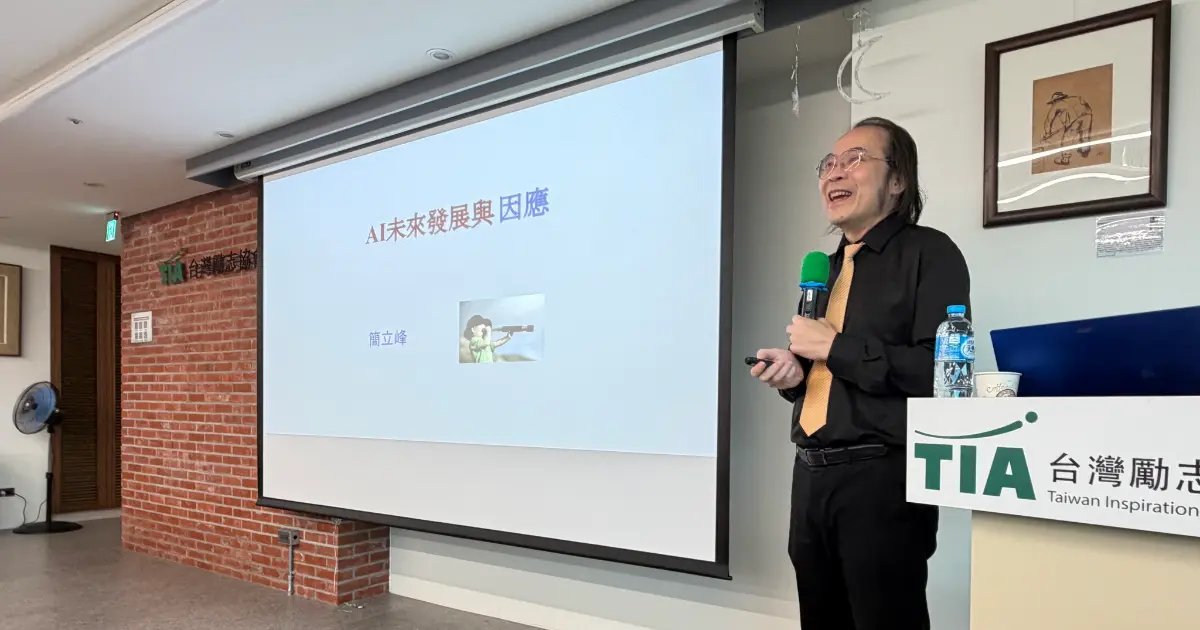
TSMC × Japan:A New Era of Semiconductor Alliance — Chiang Shang-Yi and Atsushi Osanai in Strategic Dialogue

In recent years, the relationship between Japan and Taiwan in the semiconductor industry has grown increasingly close. A key milestone in this partnership was the establishment of the Japan Advanced Semiconductor Manufacturing (JASM) plant in Kumamoto by TSMC (Taiwan Semiconductor Manufacturing Company), which has come to symbolize this deepening collaboration. Following JASM’s launch, both governments and industry leaders in Taiwan and Japan have engaged in ongoing discussions on how to best leverage their respective strengths—Taiwan’s prowess in manufacturing and commercialization, and Japan’s excellence in research and academic foundations—to reinforce their strategic roles within the global semiconductor supply chain.
In June, Taiwanese media outlet BusinessToday hosted the “Taiwan Future International Summit Forum,” inviting Atsushi Osanai (長內厚), a professor at Waseda University and author of Semiconductor Reverse Strategy, along with Shang-Yi Chiang (蔣尚義), Chairman of ASPEED Technology and former R&D executive at TSMC, for a joint discussion.
Both experts offered critical insights on how Japan can revive its semiconductor industry and how Taiwan and Japan can deepen collaboration in the sector. This article also incorporates the author’s own observations and reflections, organized here for reference.
Japan Focuses on R&D but Struggles to Adapt to Market Changes
Atsushi Osanai previously worked at Sony in Japan, where he contributed to the development of the flat-panel television business and was responsible for technical planning of imaging-related products as well as product strategy within the President’s Office. He later served as a visiting fellow at both Harvard University and National Chengchi University in Taiwan. He is currently a professor at the Graduate School of Business and Finance at Waseda University.
Atsushi Osanai has long been engaged with the semiconductor industry and has deep ties with Taiwan, having served as an advisor to the Chi Mei Group. In May of this year, the Chinese edition of his book Semiconductor Reverse Strategy, written from a Japanese perspective, was published by Business Today. The book analyzes the global development of the semiconductor industry and the challenges posed by geopolitics, and also explores differences between the Taiwanese and Japanese sectors as well as potential areas for future collaboration.
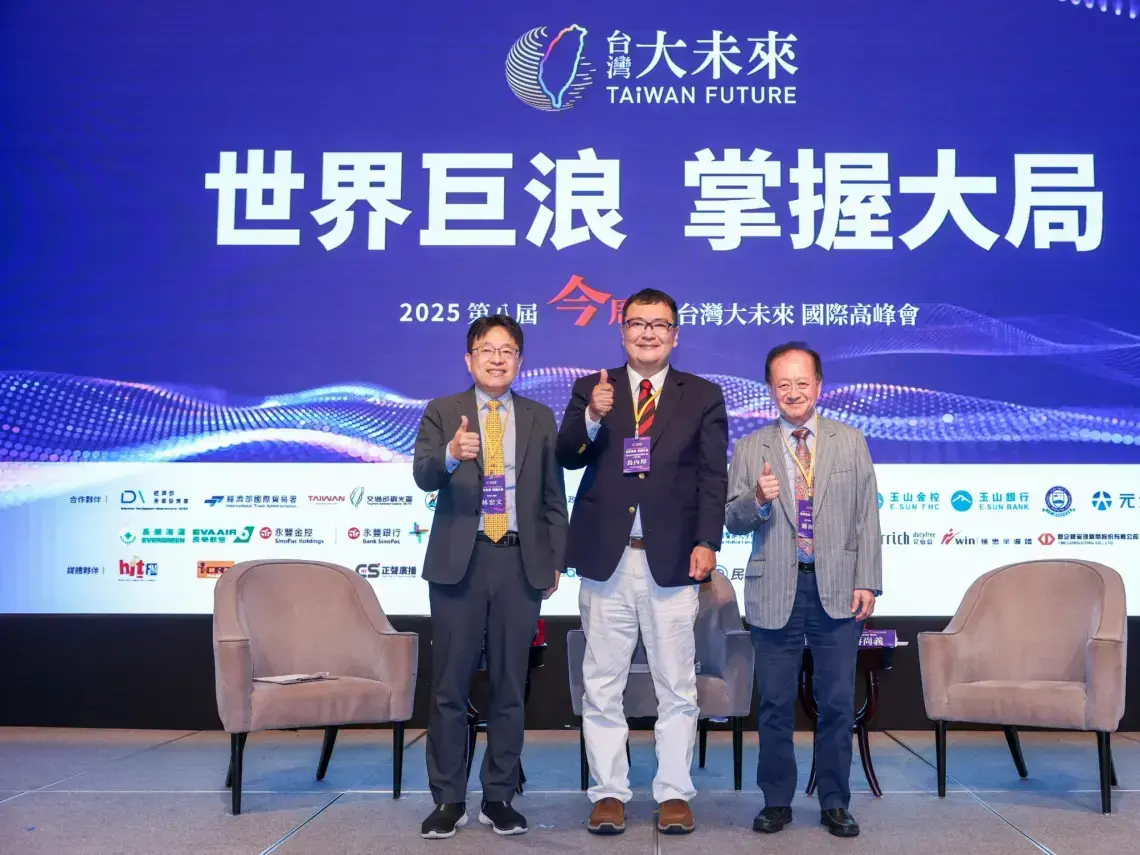
According to Atsushi Osanai , Japan’s industrial development exhibits both strengths and weaknesses. While the country excels at “value creation,” it struggles with “value capture.” As a result, despite being the earliest advanced industrial nation in Asia, Japan has fallen behind newer competitors like South Korea, Taiwan, and China in the semiconductor race.
Here is how I would interpret Osanai’s view: While Japan has made deep investments in technology and R&D, it lacks sufficient flexibility to adapt to market changes. Combined with slow response during the stages of mass production and commercialization, this makes it difficult for Japan to seize market opportunities as swiftly as its Asian competitors.
During his speech, Atsushi Osanai repeatedly emphasized this point. He noted that Taiwan excels at converting technology into commercial value, and that Japan could benefit from strengthening collaboration and exchange with Taiwan to leverage complementary strengths. “Only by bringing together our respective advantages can we create the greatest benefit,” he stated.
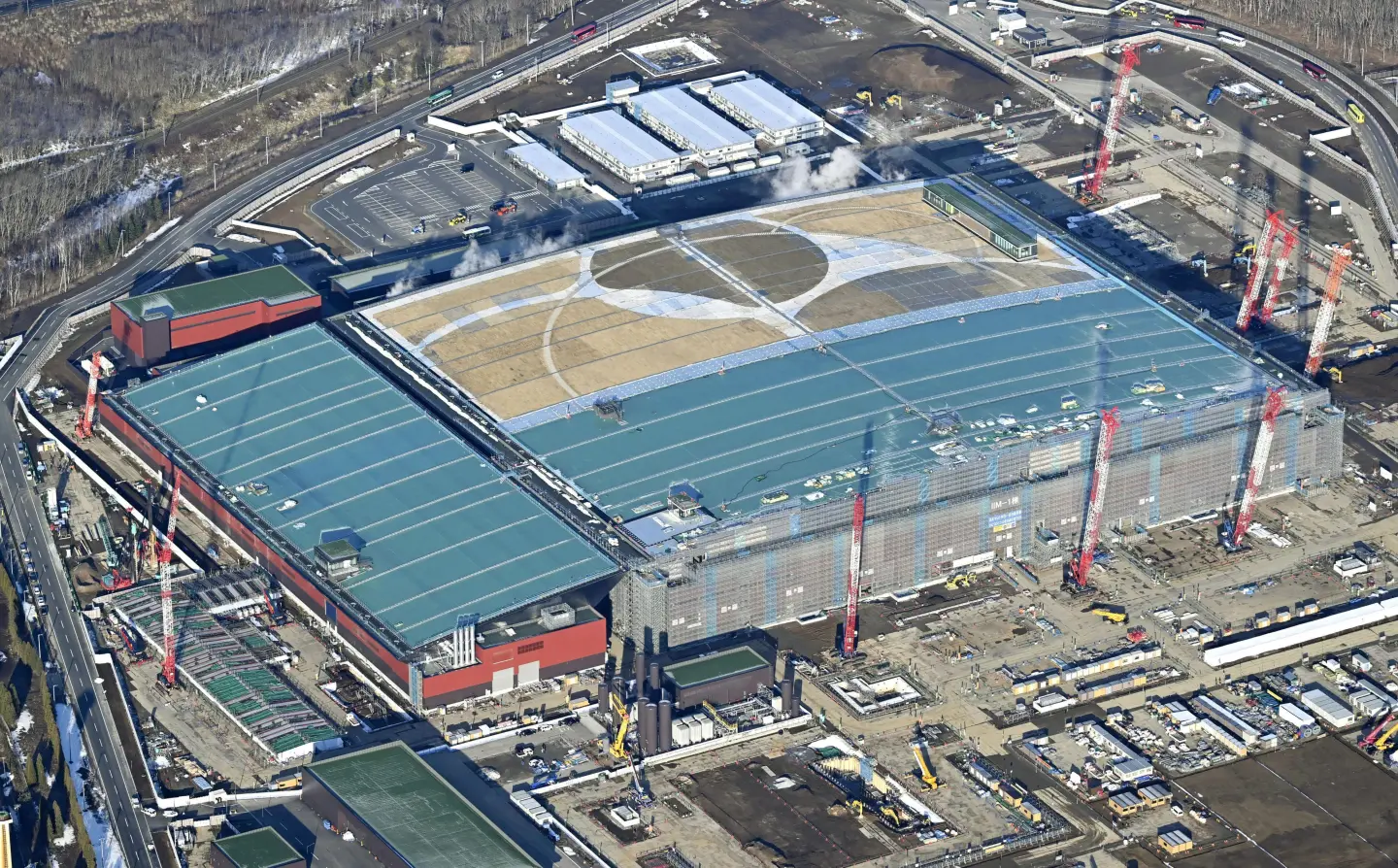
In addition, Atsushi Osanai drew a comparison between TSMC’s Kumamoto-based JASM and Japan’s Rapidus project in Hokkaido. He argued that JASM achieved a strong balance between technology and commercial viability by first identifying market needs and then producing semiconductors accordingly. As a result, it was profitable from the start and is now seen as a core symbol of hope for Japan’s semiconductor manufacturing revival.
In contrast, Rapidus continues to follow Japan’s traditional approach of “developing technology first and considering the market later.” The company is currently focused on 2-nanometer process R&D, with its main potential clients—AI chipmakers—located primarily in the United States. However, due to ongoing U.S. tariff protections, “there is no guarantee that these chips can be sold to the U.S. market.”
Atsushi Osanai pointed out that in Japanese society, there is a prevailing belief that if a company develops cutting-edge technology, the market will naturally follow. However, JASM’s investment in Japan has focused on 22nm and 28nm process technologies. Some in Japan find it difficult to understand why the country is producing what they consider “decade-old technology,” leading to criticism of the government’s policy to provide JASM with over one trillion yen in subsidies.
“In fact, the 28nm process precisely matches the current needs of the Japanese market. JASM’s largest customer is Sony, and the logic chips required to accompany Sony’s image sensors are manufactured using this process technology.” Therefore, JASM’s decision on process technology was entirely based on real customer demand.
Japan’s Semiconductor Production Focuses on In-House Use—A Barrier to Innovation
Therefore, in comparing TSMC’s JASM and Japan’s Rapidus, Atsushi Osanai expressed concern that Japan may once again fall into the outdated mindset of “technology first,” overlooking the fundamental business logic that technology must serve market demand. Even if Japan successfully develops a 2-nanometer process in collaboration with IBM, he warned, it would still struggle to compete with TSMC without clearly defined customers.
Professor Atsushi Osanai predicted, “Japan cannot replicate Taiwan’s model. TSMC is the only company that can truly make substantial profits from wafer foundry services.”
As the forum entered its discussion phase, I first invited Mr. Shang-Yi Chiang to share his views on Professor Osanai’s arguments presented in Semiconductor Reverse Strategy. I also asked him to comment on his observations regarding Japan’s industrial decline over the past 30 years and to offer suggestions on how Japan might revive its semiconductor industry.
Shang-Yi Chiang noted that Japan had made significant contributions to global semiconductor R&D and innovation in the past. He highlighted Japan’s advancements in semiconductor manufacturing equipment and materials as particularly noteworthy, adding that these achievements are valuable lessons for others to learn from.
However, Shang-Yi Chiang also candidly acknowledged that Japan’s innovation capacity is no longer as strong as it once was. In several critical areas of semiconductor devices and processes—such as photolithography, transistors, and interconnect technologies—most of today’s breakthroughs are coming from other countries, and Japan’s contributions have significantly declined.
Therefore, Shang-Yi Chiang asserted that for Japan to revive its semiconductor industry, it must significantly boost its innovation capacity and increase investment in research and development.
I then asked Atsushi Osanai for his thoughts on a view expressed by TSMC founder Morris Chang(張忠謀)in his autobiography. Chang had argued that Japan should not focus solely on manufacturing, but should allocate more resources and talent toward chip design. I invited Osanai to respond to this perspective.
Osanai responded that most of the semiconductors developed by Japanese companies are used internally in their own system products. In other words, the majority of chips are produced for in-house applications. For example, automotive chips as well as semiconductors used in various information and home electronics devices are in high demand.
However, because most of the semiconductors produced in Japan are used internally and manufactured in company-owned facilities, only a limited number are sold externally. In addition, many semiconductor divisions in Japan are embedded within large corporations rather than operating as independent profit-generating entities, making innovation more difficult to achieve.
Osanai noted, “Many young people in Japan believe it’s better to become a middle manager at a large corporation than to start their own small or medium-sized business. In contrast, young people in Taiwan tend to hold the opposite view.”
Osanai stated bluntly that Taiwan’s small and medium-sized enterprises have demonstrated remarkable innovation in the field of chip design. While Taiwanese firms are actively developing chips for external clients, Japanese companies remain largely committed to the IDM (Integrated Device Manufacturing) model, with large corporations designing chips exclusively for internal use—making it difficult to scale through external sales.
In my view, it’s not hard to understand why Morris Chang would express such an opinion. Since TSMC’s core business is wafer foundry, it naturally wants clients to outsource more of their products to the company—just as U.S.-based IC design firms now maintain deep partnerships with TSMC.
Taiwan’s Key to Success—Focusing on Manufacturing While Letting Clients Bear Market Risks
Today, TSMC’s wafer foundry business is performing better than ever, while Japan has clearly fallen behind in manufacturing. Rather than remaining fixated on in-house production, Japan should consider how to leverage support from TSMC and other foundries, and redirect more of its resources toward strengthening its own product development.
As Japan’s capabilities in both manufacturing and design continue to decline, the volume of outsourced semiconductor orders has remained limited. Currently, Japan maintains competitiveness mainly in semiconductor equipment and materials. From Morris Chang’s perspective, Japan has gradually faded from TSMC’s radar screen.
Professor Atsushi Osanai previously worked at Sony, one of the few Japanese companies that still holds a significant position in the global semiconductor market. In the field of image sensor (CIS) ICs, Sony currently commands about 50% of the global market share, largely due to its exclusive supply of CIS components for Apple’s iPhones. The second and third largest players in this space are South Korea’s Samsung and OmniVision, which has been acquired by China’s Will Semiconductor.
Osanai also commented on the key to Taiwan’s industrial success. He noted that Taiwanese companies place a high value on efficiency and focus primarily on contract manufacturing for clients in the U.S. and Europe. By concentrating on production and shifting market-related uncertainties onto their clients, Taiwanese firms have established a model that underpins their competitive advantage.
I agree with Professor Osanai’s perspective. Taiwanese companies have built their model around contract manufacturing, forming close collaborative relationships with U.S. clients. In this division of labor, the U.S. sets product specifications while Taiwan focuses on manufacturing and cost efficiency. This partnership has enabled the U.S. to quickly gain market share, while Taiwan has secured a critical role in the global supply chain, fueling five decades of impressive growth.
That said, I also believe that Taiwan’s shift to its current industrial model was the result of many years of accumulated experience and strategic adjustments. In the early days, branding and manufacturing were integrated, but clients increasingly demanded their separation to avoid conflicts of interest. This led companies like UMC, Acer, and ASUS to split their product and foundry operations, which in turn accelerated the growth of their manufacturing divisions.
I also asked Professor Osanai about the challenges Taiwan’s industry faces amid intensifying U.S.-China tensions and shifting geopolitical dynamics. Taiwanese companies are now under pressure to gradually relocate their production lines to the U.S., Europe, and Japan. Going forward, the challenge will no longer be limited to cost reduction, but will increasingly center on creating greater product value.
So what is the greatest geopolitical impact facing Japan? At present, China is exporting large volumes of low-cost electric vehicles (EVs) to markets around the world, posing a major challenge to Japan, a global automotive powerhouse. Observers are closely watching how Japan will respond to this growing pressure.
Industrial Complementarity – Taiwan-Japan Cooperation Can Advance in Three Key Directions
On this point, Osanai also criticized former President Trump’s contradictory policies. He noted that while Trump urged Japan to join the effort in countering China, he simultaneously imposed steep tariffs on Japanese goods. “You ask Japan not to sell semiconductor equipment and materials to China. Now Japan is trying hard to sell to the U.S., and yet you impose high tariffs, making it uncertain whether Japanese firms can even export to the American market,” he said.
In light of this contradiction, Osanai argued that the Japanese government should not unconditionally accept all of the United States’ demands. This also explains why tariff negotiations between Japan and the U.S. remain unresolved—because the high tariffs pose a severe blow to Japan’s automotive industry.
Finally, both Chiang Shang-yi and Osanai agreed that Japan and Taiwan should further strengthen their cooperation, as it represents a mutually beneficial and highly complementary relationship.
I also added that over the past two years, due to publishing a book in Japan, I’ve visited the country many times for lectures. In those speeches, I have consistently emphasized that TSMC’s Kumamoto plant has opened the door to Japan–Taiwan cooperation, and that going forward, the two sides can deepen their collaboration in three new directions.
First, in the semiconductor sector, Japan should not only leverage TSMC’s wafer fabrication capabilities but also further strengthen its collaboration with Taiwan’s IC design industry.
Currently, as much as 75% of TSMC’s revenue comes from American companies, which has helped propel the U.S. IC design industry to the top of the global rankings. In the future, Japan could also step up its investments in the IC design field. Taiwan boasts a robust and competitive IC design ecosystem, including numerous IP (intellectual property) firms. Companies like ARM—backed by Japan’s SoftBank—are ideal partners for Japan’s semiconductor industry to pursue deeper collaboration.
Second, I believe that Japan–Taiwan collaboration should not be limited to the corporate sector, but should also be extended to the academic sphere.
Japan’s academic community possesses cutting-edge R&D capabilities and holds the distinction of having the most Nobel laureates in Asia. With such a strong academic foundation, Japan could collaborate with Taiwan—known for its strengths in commercialization and mass production—to jointly develop more globally impactful innovations.
Third, Japan–Taiwan cooperation should extend beyond high-tech hardware into areas such as software and AI startups. Innovation and entrepreneurship are key priorities for both countries, and if entrepreneurs from Taiwan and Japan join forces, they could unlock even greater business opportunities on the global stage.
Tags
Related Articles
Micron Announces Its Largest Rewards Ever. Its Taiwan Union's Demands Expose a Clash of Pay Systems. A strike threat at Taiwan's largest foreign investor, read in three dimensions
TSMC's 3nm rinse comes exclusively from AEMC, a Taiwanese company once withdrawn from the Emerging Stock Board
Taiwan AI Industry Upgrade Forum Series || Event Report:America Wants More Manufacturing. What Does It Take for Taiwan’s Suppliers to Follow?