Why Samsung Falls Behind TSMC: Inside Korea’s “Chaebol Discount” and President Lee’s Reform Gamble
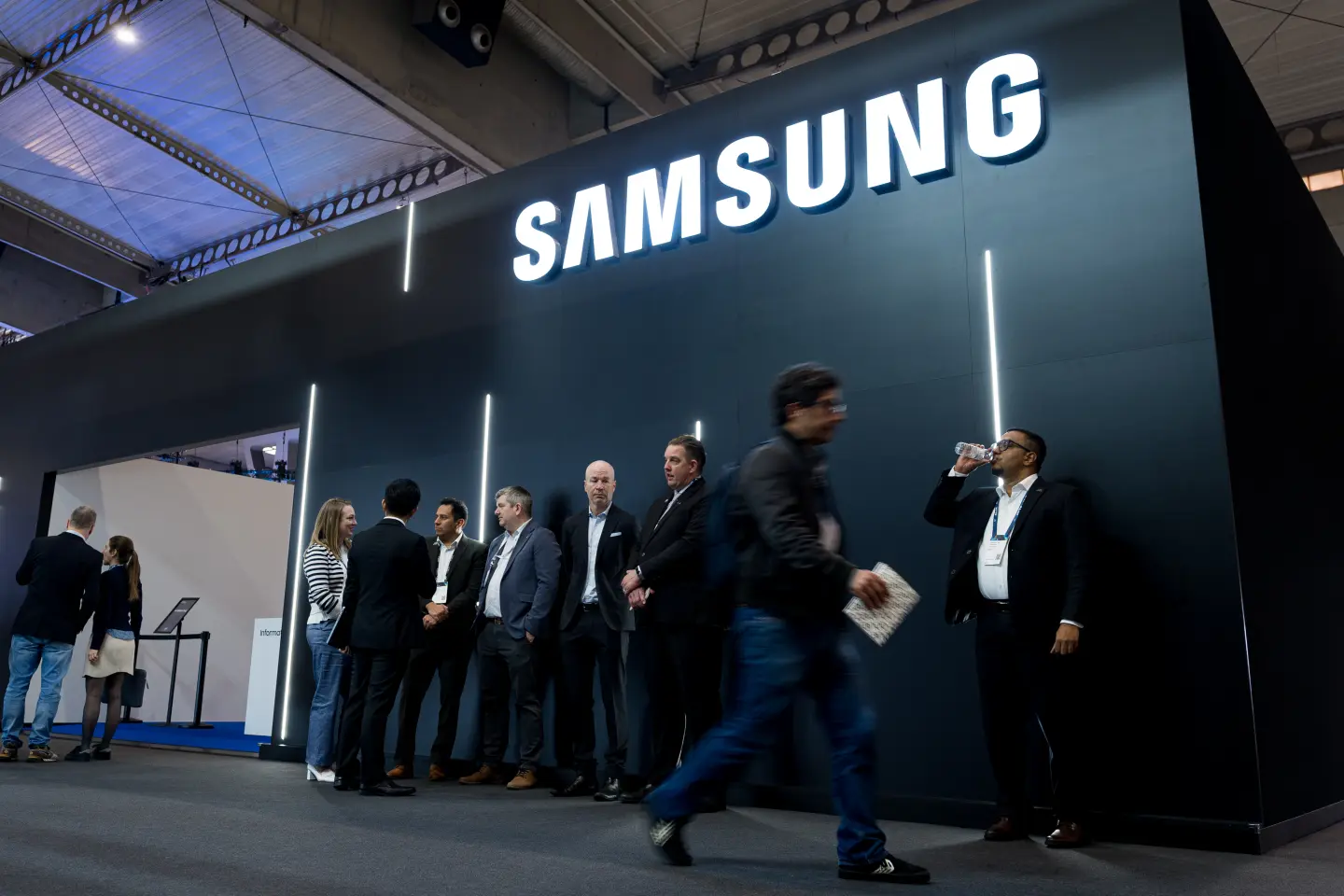
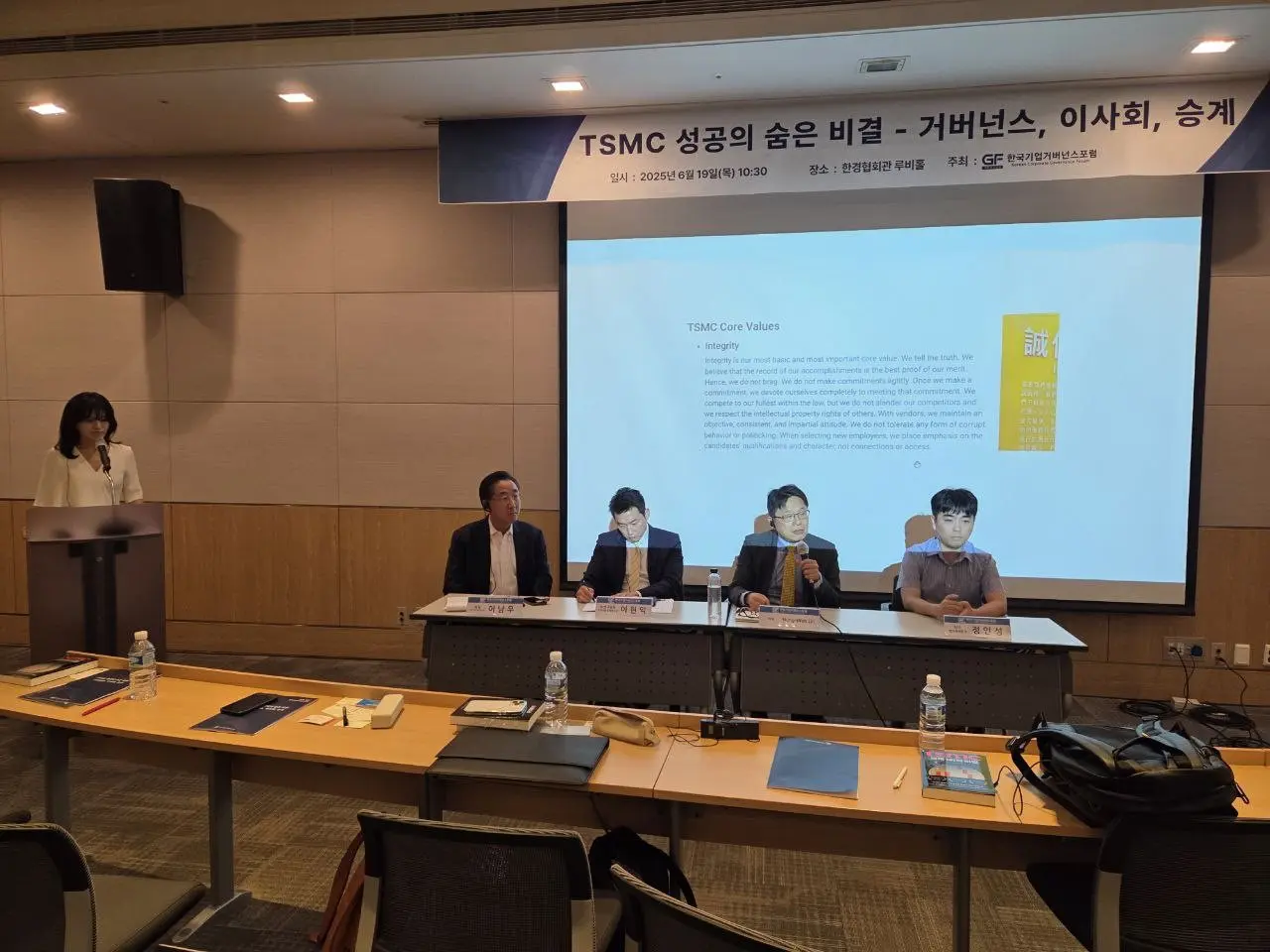
In June, I was invited by the Korea Corporate Governance Forum (KCGF) to deliver a speech in Seoul, focusing on the corporate governance of Taiwan Semiconductor Manufacturing Company (TSMC). The Korean attendees showed great interest in TSMC’s management model and were also curious about how family succession and governance structures function within Taiwanese companies, raising many related questions.
However, I later realized—perhaps unsurprisingly—that what concerned my Korean counterparts the most were issues within their own country. For example, the governance of family-run conglomerates in South Korea, particularly the management crisis currently facing Samsung Electronics, became the focal point of most discussions.
The person who invited me to the forum was Namuh Rhee(이남우), a well-known figure in South Korea’s financial community. He currently serves as the chairman of KCGF and a visiting professor at Yonsei University. Over the past 30 years, he has worked at major international investment banks such as Merrill Lynch, JP Morgan, and Nomura, making him a seasoned banker.
Namuh Rhee has conducted extensive research on corporate governance and compiled his insights into a book titled Good Stocks, Bad Stocks, which has also been published in a Traditional Chinese edition in Taiwan. In the book, he emphasizes that investors should not only assess whether a company is good or bad, but more importantly, whether the stock itself is good or bad. One of the most critical factors in making that determination, he argues, is the quality of a company’s corporate governance.
At the invitation of Professor Namuh Rhee, I gave a presentation on TSMC’s corporate governance to members of the Korea Corporate Governance Forum (KCGF) and several media outlets. I was also invited to Yonsei University to speak with international students on the topic “Chip Champion—How TSMC and Taiwan Triumph?”, which is also the title of the upcoming English edition of my book The Light on the Chip Island.
Only TSMC and Accton have more independent directors than executive directors among Taiwan-listed companies
At the beginning of the speech, Professor Namuh Rhee pointed out that, in terms of market capitalization, Samsung’s valuation was twice that of TSMC a decade ago. Today, however, TSMC’s market cap is four times larger than Samsung’s. This dramatic shift raises important questions and warrants further study and discussion.
In my presentation, I provided a brief overview of TSMC’s corporate governance structure, covering how the board of directors operates, its composition, responsibilities, and compensation system. I also discussed how professional managers are evaluated, how their compensation is structured, and how talent is selected and promoted. While I wasn’t entirely familiar with all these aspects beforehand, I thoroughly researched and organized the materials in preparation for the talk.
When it comes to corporate governance, TSMC founder Morris Chang(張忠謀)made his views clear more than two decades ago while teaching a course at National Chiao Tung University. He emphasized that the most important concept in corporate governance lies in the relationship between the board of directors, individual board members, and professional managers.
What Morris Chang emphasized most was the necessity for independence among the three pillars of governance: the board of directors, individual board members, and professional managers. He believed that only when all three maintain their independence can truly excellent corporate governance be achieved.
Currently, TSMC has ten board members, of whom seven are independent directors—outnumbering the three executive directors. Among these seven independent directors, six are foreign nationals. It is extremely rare among Taiwan’s listed companies for independent directors to outnumber executive directors; aside from TSMC, only Accton has adopted this structure. The intent behind such a design is clearly to empower independent directors to play a stronger supervisory and governance role.
Having more independent directors than executive directors is a bold and challenging governance design for anyone seeking to control corporate decision-making—whether large shareholders or management. Independent directors hold substantial authority, and when they outnumber executive directors, many critical decisions may ultimately rest in the hands of “outsiders.” For those in power, this represents a profound test of conviction. Yet companies that adopt such a structure demonstrate a high level of confidence, showing their willingness to entrust the board and its directors with a greater governance role.
In addition to TSMC and Accton, other major Taiwanese tech companies—such as MediaTek, Novatek, Realtek, and ASE Holdings—also have a relatively high number of independent directors. For example, MediaTek’s board consists of eight members, with four being independent directors and four executive directors. According to statistics, as of the end of last year, more than 170 listed companies in Taiwan had four or more independent directors on their boards.
The effectiveness of corporate governance depends on the key individual
In fact, only when the board of directors, individual directors, and professional managers each maintain their independence can corporate governance operate on the right track. This is a principle that should be self-evident. Comparing Samsung Electronics with TSMC, it becomes clear that many of Samsung’s governance issues likely stem from the board’s lack of independence.
Over the past decade, Taiwan has steadily advanced corporate governance reforms, introducing mechanisms such as the independent director system, mandatory audit and compensation committees, and greater transparency in financial and operational disclosures. While South Korea has implemented similar reforms, the high concentration of control within large family-owned conglomerates often prevents independent directors from exercising real oversight. This remains a key challenge in improving governance standards across Korea’s capital markets.
Take Samsung Electronics as an example: the group’s cross-shareholding structure is so complex that even I can’t accurately determine how much equity the Lee family actually holds. If the board and directors were truly independent, such cross-shareholding arrangements would likely not be permitted. Naturally, the reason Samsung has implemented such an intricate web of inter-company investments is to ensure that the Lee family maintains firm control over the entire group.
During the discussion session, many participants pointed out that most Koreans are deeply dissatisfied with the current state of corporate governance at Samsung Electronics. For instance, Lee Jae-yong(이재용), the third-generation heir of the Lee family and current chairman of Samsung Electronics, holds de facto absolute power within the company—yet he is not officially listed as a member of the board of directors, a highly unusual situation.
This may be the most alarming aspect: the individual who holds the final decision-making authority is not formally seated on the board, implying that discussions and resolutions within Samsung Electronics’ board may be largely ceremonial. It’s no surprise that many have criticized the board as little more than a puppet show orchestrated by Lee Jae-yong —a dynamic that poses a significant risk to the company’s management and governance.
However, I also believe that corporate governance cannot be judged solely by its formal structures. While the presence of independent directors and well-designed boards is certainly important, what matters even more is the individual who ultimately bears full responsibility. Whether that person is the CEO or the chairman or major shareholder with the power to appoint or remove the CEO, it is this central figure—the soul of the company—whose vision determines whether governance can truly be implemented.
In Taiwan today, many listed companies are either led by traditional family-owned businesses or operated under the decision-making authority of professional managers. But regardless of the structure, the quality of corporate governance ultimately hinges on whether the key person has the vision and capability to steer the company in the right direction.
In addition, one of the key reasons behind Lee Jae-yong’s recent legal troubles and imprisonment was South Korea’s steep inheritance tax, which can reach as high as 60%. When he inherited shares from his father, Lee Kun-hee, he faced an enormous tax burden. In an attempt to secure control of the company during the succession process, he was accused of bribing government officials—a scandal that ultimately led to his conviction and imprisonment.
Compared to South Korea’s inheritance tax rate of up to 60%, Taiwan’s rate is relatively low, ranging from 10% to 20%. While such a rate may seem favorable, overseas tax avoidance also incurs costs, making it unnecessary for many to move their assets abroad. However, this arrangement comes with both advantages and potential drawbacks.
Even if Samsung falls behind, there are still lessons to learn from South Korea
During the discussion, some participants also raised questions about Intel. I shared my own perspective: I believe Intel’s continued underperformance is largely due to the failure of its board of directors.
Over the past decade, Intel has gone through several leadership changes. After Paul Otellini stepped down in 2013, he was succeeded by Brian Krzanich, Bob Swan, and Pat Gelsinger—none of whom delivered strong leadership results. The board of directors bears responsibility for failing to select the right leaders. More importantly, the board fell short in guiding the company’s direction, responding to external changes, and issuing timely warnings about challenges facing Intel. Even when such advice may have been offered, it seems to have had little effect.
Professor Namuh Rhee has conducted extensive research on corporate governance in South Korea, particularly the influence of large conglomerates on the country’s stock market. He argues that one of the key reasons behind the so-called “Korea discount” is the “chaebol discount,” as many South Korean companies are operated under the control of powerful family-run conglomerates.
The term “Chaebol Discount” refers to the undervaluation of large family-controlled conglomerates in South Korea, caused by opaque corporate governance, complex cross-shareholding structures, and insufficient protection of minority shareholder rights. This phenomenon is a key contributor to the broader “Korea Discount,” in which the overall valuation of the South Korean capital market fails to reflect the actual performance and value of its companies.

Recently, South Korea’s newly inaugurated president, Lee Jae-myung(이재명), acknowledged the issue of the “Korea discount” and expressed his intention to improve the undervaluation of the country’s capital markets. One of the reasons Professor Namuh Rhee invited me to speak was to gain a deeper understanding of Taiwan’s achievements in corporate governance and explore which of those practices might serve as useful references for South Korea.
President Lee Jae-myung highlighted the need to address the long-standing “Korea Discount” issue throughout his election campaign. His platform emphasized increasing corporate transparency, strengthening shareholder protections, and regulating cross-shareholdings and undue influence by large conglomerates. While these proposals attracted support from younger voters and foreign investors, they also sparked resistance from conservative groups and entrenched business interests, posing significant obstacles to his reform agenda.
In my view, when a company is sailing smoothly, the board of directors may not appear to play a prominent role. However, during periods of headwinds or challenges, the presence of a capable board becomes highly valuable, as that is when the board’s ability to drive meaningful change becomes critical.
To ensure that the board can fulfill its role, it requires years of institutional and experiential accumulation. If a company faces a serious challenge without having built a strong board or solid corporate governance practices during normal times, the situation is likely to worsen—adding insult to injury.
However, I also told my Korean friends that there is no need to admire TSMC uncritically. While TSMC is indeed a benchmark company in Taiwan with outstanding corporate governance, many Taiwanese companies still suffer from poor governance. The kind of dissatisfaction and frustration felt by Samsung shareholders is also quite common among shareholders of Taiwanese firms.
In fact, looking beyond just TSMC and Samsung, South Korea’s capital market has outperformed Taiwan’s by a wide margin this year. As of last week, the South Korean stock market had risen 23% year-to-date, while Taiwan’s had declined by 3.5%. One major reason is that Taiwan’s market surged significantly last year, and this year, the emergence of “Trump 2.0” has brought a wave of negative factors that weighed heavily on many large-cap blue-chip stocks.
Moreover, examining South Korea’s top ten companies by market capitalization reveals that while Samsung’s overall valuation has declined, biotech subsidiaries within the Samsung Group have performed strongly, and SK Hynix has also seen a significant increase in its market value. In contrast, traditional industry groups such as petrochemicals, steel, and automobiles have experienced market cap declines, facing competitive pressures from China similar to those encountered by Taiwan’s traditional industries.
A Korean friend told me that they not only admire Taiwan’s achievements, but are also deeply wary of China’s rapid advances. He said, “Right now, the only three areas where Korea still leads China are semiconductors, K-pop, and soccer. In nearly every other industry, China has already caught up or surpassed us.”
In the past, Taiwan was deeply concerned about being overtaken by South Korea. Thanks to TSMC’s dominance, Taiwan has now regained some pride, at least temporarily. However, while South Korea may lag behind Taiwan in semiconductors, it has outperformed in many emerging industries. For example, in the defense sector, South Korea has already established a strong presence on the global stage, whereas Taiwan’s performance remains modest, with significant room for improvement.
Tags
Related Articles
Micron Announces Its Largest Rewards Ever. Its Taiwan Union's Demands Expose a Clash of Pay Systems. A strike threat at Taiwan's largest foreign investor, read in three dimensions
TSMC's 3nm rinse comes exclusively from AEMC, a Taiwanese company once withdrawn from the Emerging Stock Board
Taiwan AI Industry Upgrade Forum Series || Event Report:America Wants More Manufacturing. What Does It Take for Taiwan’s Suppliers to Follow?