Japan’s Rapidus Makes 2nm Breakthrough—Taiwan Offers Cautious Praise and Strategic Warnings
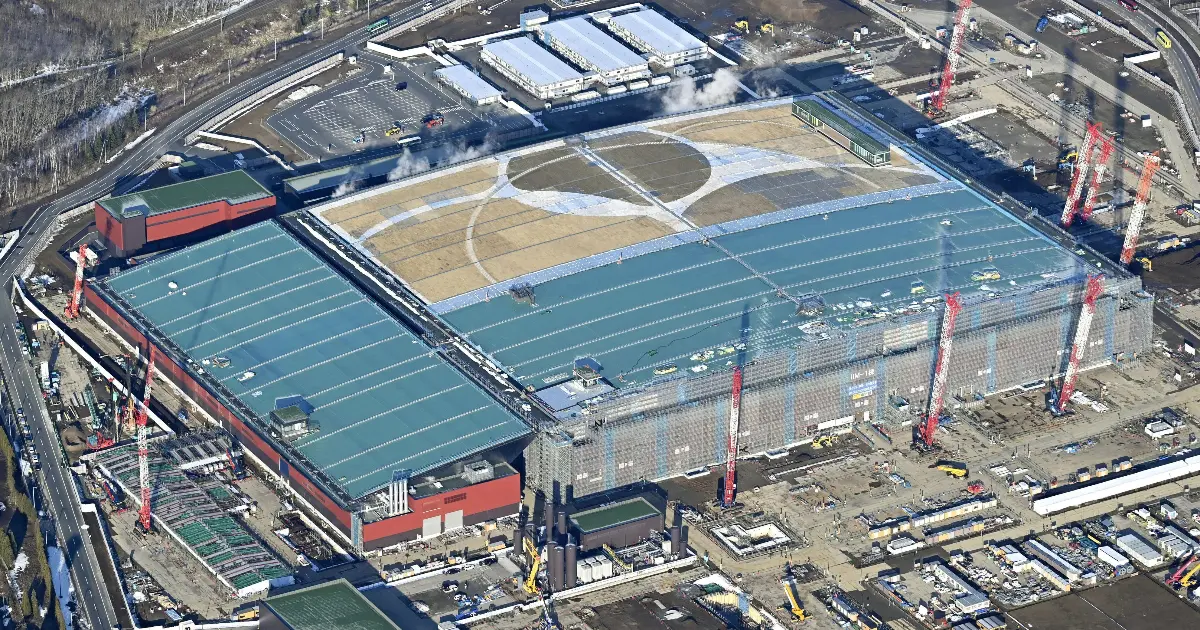
Japan’s Rapidus recently announced that it has successfully produced a trial batch of 2nm chips. A friend asked me, “Is it true?” What impact will this have on the world—and on Taiwan? Since many people are interested in this topic, I’d like to share some thoughts.
Rapidus was established through a joint investment by eight major Japanese corporations, with an additional ¥1.8 trillion in government funding as part of a national strategic initiative. The company has partnered with IBM and IMEC, and has sent engineers to the U.S. for technical training.
Rapidus’s successful trial production of 2nm chips marks its official entry into the ranks of the world’s most advanced semiconductor process technologies. It also demonstrates early progress in Japan’s effort to leapfrog ahead and revive its manufacturing capabilities.
Amid intensifying U.S.-China tech rivalry and escalating geopolitical tensions—along with setbacks in advanced process development at Intel and Samsung—Japan’s Rapidus achieving successful 2nm chip trial production carries significant strategic implications for diversifying global supply chains.
Rapidus is now in discussions with potential clients such as Broadcom, positioning itself as a possible second-source supplier for U.S. semiconductor companies seeking to reduce reliance on TSMC’s dominance in advanced nodes.
From the original intention of strengthening national security and supply chain resilience, Rapidus’s milestone achievement has already enhanced Japan’s economic security. In light of the growing strategic cooperation between Japan and Taiwan, I believe Taiwan should view Rapidus’s progress in a positive light.
For the United States and Western allies, Rapidus represents more than merely another option in the supply chain—it offers a politically trustworthy, technically transparent, and geographically lower-risk redundancy solution. Notably, its deep collaboration with IBM and cooperation with New York Creates at the Albany NanoTech Complex to train 135 engineers establish Rapidus as a potential manufacturing partner that U.S. chip design firms can trust without relying on China or overdependence on Taiwan.
For the U.S., which has long prioritized supply chain resilience and technological autonomy, Japan’s emergence via Rapidus is not just an added backup—it is a critical piece of its redundancy strategy.
What’s Next for Rapidus? Lessons from Taiwan, Looming Challenges, and Rebuilding Confidence
Of course, as a close ally of Japan, Taiwan’s electronics industry has also gone through many setbacks in the past—and these experiences could offer valuable lessons and advice to our Japanese friends.
Rapidus’s trial production success is only the first step. The company still faces numerous challenges ahead—whether it can achieve stable mass production in two years, maintain high yield rates, and provide reliable customer support. Over the long term, it must also contend with relentless financial pressures from massive R&D and capital expenditures.
There’s another key point that is often overlooked: Rapidus plans to reach a monthly production capacity of only 25,000 to 30,000 wafers by 2027. This limited scale makes profitability difficult—and certainly cannot meet the massive demands of major clients like Apple or NVIDIA, whose orders often exceed 100,000 wafers. While Rapidus may offer small-batch trial runs for mid-sized clients, becoming a true second-source alternative to TSMC will require far more effort.
Therefore, the biggest hurdle for Rapidus isn’t just technical—it’s financial. As the semiconductor industry moves deeper into the advanced process era, both R&D and capital intensity have raised the entry barriers dramatically. Even giants like Intel and Samsung are struggling to cope. Samsung has delayed its 14A development to focus on 2nm, while Intel canceled its 18A node and pivoted to 14A—which itself may now be at risk. The underlying issue is relentless spending and deteriorating financial health.
While TSMC has undoubtedly achieved remarkable success, Taiwan’s semiconductor industry also has its share of failures. For instance, in 2000, UMC attempted to develop a 0.13-micron process but failed. At the time, its technology partner was IBM—the same source Rapidus now relies on.
Taiwan’s DRAM industry also failed to take off, despite numerous Taiwan-Japan collaborations based on Japanese technology licensing at the time—most of which ended in disappointment. Other sectors like flat panels, LEDs, and solar energy also struggled, and smartphone brand HTC ultimately faltered as well. While Taiwan shines on the global stage today, its rise was paved with setbacks and hard-earned lessons—valuable experiences that Japan can learn from.
Beyond Criticism: Japan’s Engineering Drive and National Resolve Deserve Recognition
Since the publication of my book, The Light of Chip Island, in Japan, I’ve had many opportunities to engage with Japanese colleagues. During these conversations, I’ve heard frequent expressions of doubt and criticism about Rapidus, with many lacking confidence in its future.
I believe that Rapidus’s achievements to date are worth celebrating in Japan. They represent a significant milestone accomplished through joint efforts between the government and private sector—an effort that is rare and deserves full recognition.
Rapidus’s ability to complete 2nm trial production in such a short timeframe was not solely the result of policy support or funding—it was also driven by the exceptional professionalism and execution capability of its on-site engineers and management teams. According to the company, approximately 150 Japanese engineers who had previously worked at IBM’s research center in New York were invited back to Japan to serve as a core technical force for transferring and implementing the technology domestically. This move enabled Rapidus to accelerate everything from concept to test-line construction without delay, demonstrating Japan’s enduring depth of engineering strength and capacity to act.
In addition, Rapidus has signed a comprehensive collaboration agreement with Hokkaido University to jointly cultivate next-generation semiconductor talent. Through this partnership, the university provides research and educational resources to help develop a local talent base in Japan. In a country where the domestic supply chain is still maturing, such collaboration between academia and industry to establish local technological capabilities is not only a testament to Japan’s potential, but also a model other nations can learn from.
Looking ahead, deeper collaboration between Rapidus and Taiwanese technical teams or cross-national academic institutions could further accelerate technology transfer and enhance the strategic resilience of both countries as they face regional competition and evolving technological challenges.
Since the 1990s, Japan has gradually fallen behind in global technology development, starting with personal computers and continuing through software, mobile phones, cloud computing, and AI. The country’s industry entered what is now known as the “Lost Three Decades,” and policymaking struggled to achieve any major breakthroughs. It wasn’t until recent years—triggered by supply chain disruptions during the pandemic and rising geopolitical tensions—that Japan resolved to restore its former semiconductor glory.
Investing in semiconductors requires astronomical sums—even the wealthiest countries struggle to keep up. Yet Japan has made bold financial commitments, pledging ¥1.8 trillion for Rapidus in Hokkaido and ¥1.2 trillion for TSMC’s first and second fabs in Kumamoto. Such an investment scale demonstrates exceptional determination and is by no means an easy decision.
Japan’s decision to bring in TSMC aims to stabilize its domestic supply of mainstream process technologies—laying a solid foundation first. Meanwhile, Rapidus takes on a more aggressive role by tackling 2nm development, signaling Japan’s ambition for technological breakthroughs. While the path forward will undoubtedly be challenging, the country’s industrial strategy is clear and well-structured.
So far, I haven’t seen any Western country—or others, for that matter—willing to go beyond attracting major global players and actually invest in creating a new company to take on 2nm development. This makes it clear that Japan is seriously committed to taking on what many would consider an almost impossible challenge.
We’ve long seen how South Korea and China have aggressively pushed industrial development—never hesitating to pour in funding, with governments supporting industries through both policy and capital. In contrast, Japan’s government has historically been more cautious and less inclined toward such direct intervention. That’s why I believe Japan’s recent bold and proactive measures deserve recognition. I don’t mean to simply criticize Rapidus—anyone can see the company still faces a long road ahead. But now that Japan has taken its first step toward success, Taiwan, as its ally, should join in celebrating this milestone.
Of course, determination and sincerity alone aren’t enough to ensure industrial success—choosing the right strategies and methods is crucial. I encourage our Japanese friends to look closely at Taiwan’s experience. While success stories are worth studying, the lessons from failure are often even more valuable. Through mutual exchange, we can all grow and improve together.
Really, who can say for certain that Rapidus will fail? Taiwan’s semiconductor industry once rose from the periphery to the center of the global stage, despite being underestimated. While it’s understandable for some in Japan to doubt Rapidus, those of us in Taiwan—especially leaders at companies like TSMC—should remain humble. History repeatedly shows that the greatest threat to a market leader is not external competition, but arrogance from within. Taiwan must not fall into that trap.
Related Articles
Micron Announces Its Largest Rewards Ever. Its Taiwan Union's Demands Expose a Clash of Pay Systems. A strike threat at Taiwan's largest foreign investor, read in three dimensions

TSMC's 3nm rinse comes exclusively from AEMC, a Taiwanese company once withdrawn from the Emerging Stock Board
Taiwan AI Industry Upgrade Forum Series || Event Report:America Wants More Manufacturing. What Does It Take for Taiwan’s Suppliers to Follow?