How Will Taiwan Respond to U.S. Tariffs? A Strategic Look at Section 232, Reciprocal Tariffs, and Semiconductor Resilience
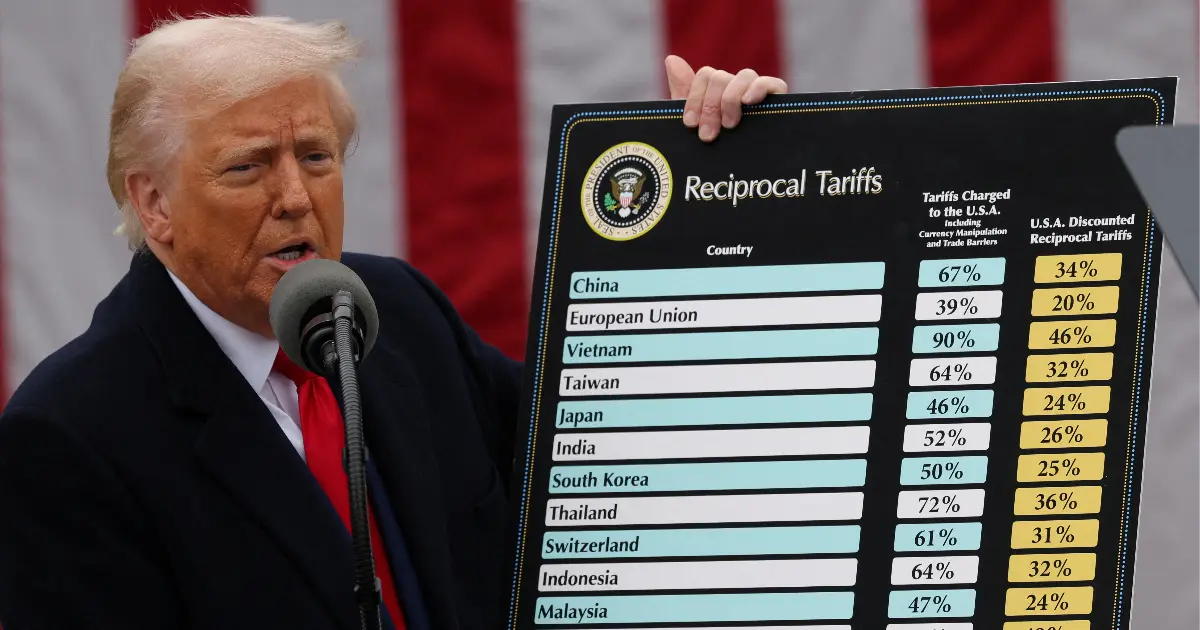
Recently, Taiwan has come under a 20% tariff imposed by former U.S. President Donald Trump, sparking a wide range of opinions. With semiconductors being a dominant industry in Taiwan, the ongoing Section 232 investigation has raised serious concerns. I propose three directions to analyze this issue.
High Tariffs on Taiwan Are Manageable if No Alternative Suppliers Exist
Before discussing tariffs, one must first evaluate the competitiveness of each industry. The strength of an industry ultimately determines whether it can endure and prevail. If the tariff gap is not overly wide, the impact can be controlled or mitigated.
For instance, some Taiwanese industries hold an irreplaceable position globally. In advanced semiconductor manufacturing and AI servers, Taiwan commands over 90% of the global market. There are no equivalent competitors in Japan, Korea, or China. If Taiwan is hit with high tariffs but no substitutes exist, the actual impact will be limited.
Direction 1: “Industrial Competitiveness” Is the Foundation for Responding to Tariff Challenges
Competitiveness is the fundamental issue—not just with tariffs, but with exchange rates as well. In earlier years, the New Taiwan Dollar often became a topic of concern. When it appreciated more than the currencies of Japan, Korea, or China, there were frequent claims that Taiwan’s competitiveness would collapse.
Take the motherboard or laptop industries, for example. Taiwanese firms control 80–90% of the global market. Even if a stronger NT dollar cuts into profits, other countries cannot suddenly create a rival industry. Once exchange rates stabilize, Taiwanese manufacturers usually emerge stronger.
The same logic applies in reverse. Industries with weaker competitiveness suffer more under tariff pressure, especially those already in decline. If Taiwan is taxed more heavily than its competitors, the consequences are much greater.
For example, Taiwan was once hailed as the “kingdom of machine tools,” but in recent years this sector has declined sharply. Taiwan now ranks eighth globally, behind China, Germany, Japan, Italy, the U.S., and Korea.
Taiwan’s Machine Tool Industry Faces Added Pressure
According to statistics, Taiwan’s machine tool exports in 2024 totaled only $2.2 billion—down 27.7% from 2019. The share of machine tools in overall machinery exports fell from over 10% to just 9.2%.
This decline is not new. Now, with Taiwan facing a 20% provisional tariff—higher than Japan or Korea’s 15%—the pressure is even more intense.
From another angle, however, China has been the fastest-growing country in the machine tool industry in recent years. Its technology overlaps with Taiwan’s. While Taiwan’s 20% tariff may be worse than Japan or Korea’s, it is far better than China’s 55%, which could give Taiwan a competitive edge.
Taiwanese Companies Should Pursue Markets Free of Tariff Disruptions
Beyond the U.S. market, there are many global markets with no tariff complications. These offer new opportunities that Taiwanese firms should proactively pursue.
In short, industrial fundamentals are the key to managing tariffs. Discussing tariffs without addressing competitiveness misses the point.
Direction 2: Taiwan’s OEM-Centric Model Allows Tariff Costs to Be Shifted
Taiwan’s industrial structure differs significantly from peer countries like Japan, Korea, or China. Taiwan is mostly OEM-focused, acting as a key link in the supply chain. It doesn’t manufacture branded end-products like Japan or Korea does—for example, automobiles.
According to the Ministry of Economic Affairs, most Taiwanese exports to the U.S. are intermediate goods. Semiconductors directly exported to the U.S. make up only about 4%. Thus, if semiconductor tariffs are applied, the impact on Taiwan will be relatively minor.
In many cases, when Taiwanese firms are hit with tariffs, the end customers—not the suppliers—absorb the cost. Taiwanese companies can either pass on the tariff or share it with the client.
For instance, Taiwanese semiconductor and AI server firms serve end customers like NVIDIA, cloud service providers such as AWS, Microsoft, and Alphabet, as well as AI data center builders like Meta and Oracle. These sectors remain in a high-growth phase, marked by supply-demand gaps and high pricing power—meaning Taiwanese companies can likely shift the burden of tariffs onto their customers.
The final point to examine is the Section 232 investigation itself. As the global hub of semiconductor foundries, could Taiwan be singled out for high tariffs? How significant would the impact be?
Direction 3: Section 232 Is Driven by Two Core U.S. Considerations
In 2024, Taiwan exported $111.4 billion to the U.S., accounting for 23% of its total exports. Of that, electronics and IT made up 71%, and traditional industries the remaining 29%. About 80% of Taiwan’s U.S.-bound exports fall under the scope of the Section 232 tariffs, while only around 20% are affected by “reciprocal” tariffs.
This means that the Section 232 investigation is just as important as the 20% tariff reduction—and possibly even more so for Taiwan’s development of high-tech core industries.
To understand the potential impact of Section 232, it is essential to first examine the rationale and background behind why the United States created this provision.
Section 232 is not specifically targeted at semiconductors but is a trade measure related to national security. It is part of the Trade Expansion Act of 1962, which grants the president authority to impose restrictions—such as tariffs—on imported goods deemed to pose a threat to national security.
Section 232 is based on two main considerations. First, it aims to protect national security. If the U.S. relies too heavily on foreign imports for certain goods, supply disruptions during times of war or crisis could threaten military operations and critical infrastructure. Second, it seeks to maintain domestic production capacity in strategic sectors—from steel, aluminum, and energy in the past to semiconductors today.
In recent years, the U.S. has conducted three major investigations under Section 232. One example is the 2018 probe into steel and aluminum imports, where the government determined that excessive reliance on foreign suppliers posed a threat to the defense industry. As a result, the U.S. imposed tariffs of 25% on steel and 10% on aluminum.
In 2019, the U.S. also conducted a Section 232 investigation into uranium, concerned about overdependence on foreign sources for nuclear power. However, no tariffs were ultimately imposed. That same year, the U.S. launched another investigation into foreign automobiles, questioning whether they undermined America’s technological leadership. This probe also concluded without the implementation of any tariffs.
The U.S.’s renewed Section 232 investigation reflects the government’s heightened concern over the security of the semiconductor supply chain. However, it remains unclear whether any concrete new policies will emerge as a result.
In fact, the U.S. has already implemented several policy tools to address semiconductor supply chain security. These include the CHIPS Act, which provides subsidies and investments to promote domestic semiconductor manufacturing; the Export Administration Regulations (EAR), aimed at restricting the export of U.S. technologies to countries like China; and sanctions against Chinese companies such as Huawei and SMIC to prevent the leakage of advanced technologies.
These policies were first initiated during Trump’s first term—often referred to as “Trump 1.0”—and have gradually begun to show results. China’s progress in the semiconductor sector has already started to slow.
Policy Shift—H20 Chips and ASML Equipment Allowed Duty-Free Access to the U.S.
Recently, however, there have been signs of change within Trump’s policy approach, including partial easing. For example, NVIDIA’s H20 chips and AMD’s MI308 chips are now permitted for sale to the Chinese market. These policy shifts may serve as bargaining tools in trade negotiations, while also reflecting growing U.S. confidence in its semiconductor lead over China.
Two additional developments are worth noting. First, Dutch company ASML’s equipment has reportedly been exempted from U.S. tariffs. Second, there are reports that Section 232 tariffs may only apply to mature-node manufacturing moving to the U.S. Although the underlying reasons for these moves differ, both signal growing U.S. confidence in its semiconductor advantage over China and suggest a shifting interpretation of “national security” within the Section 232 framework.
The exemption of ASML equipment from tariffs is easy to understand. The U.S. is actively encouraging TSMC and Samsung to invest in domestic fabs, and these facilities require substantial purchases of ASML tools. Imposing tariffs specifically on ASML exports would significantly raise investment costs for these companies and would be widely seen as a counterproductive policy move.
If TSMC can import ASML equipment tariff-free in Taiwan, but faces tariffs on the same equipment when investing in Arizona, wouldn’t that create an additional barrier to its U.S. expansion? Does such a move really support America’s goal of reshoring semiconductor manufacturing?
Another perspective suggests that Section 232 tariffs may apply specifically to mature-node processes. This view is grounded in a certain policy logic and rationale, and it merits closer examination.
Ultimately, the purpose of Section 232 lies in safeguarding national security and industrial competitiveness—specifically for the United States. The term “national” here clearly refers to the U.S. itself, and the provision is designed to serve its own strategic and economic interests. That is the central point.
So why is the U.S. considering tariffs on mature-node manufacturing?
From the U.S. perspective, mature-node manufacturing is highly competitive and easily substitutable. For example, 28nm processes have relatively low technological barriers, and many companies around the world possess the capability to produce them. By imposing tariffs, the U.S. hopes to pressure these firms into shifting production to the United States. If the cost of investing in the U.S. is lower than the cost of the tariffs, relocating production becomes a viable option. Thus, imposing high tariffs on mature-node manufacturers is seen as a strategic policy tool.
Additionally, mature-node technologies are used across a wide range of applications—including automobiles, home appliances, and industrial chips. These sectors are critical to America’s efforts to revitalize domestic manufacturing. The U.S. aims to use tariffs to support local production capacity for mature nodes and reduce its dependence on foreign sources.
The final point—and arguably the most critical—is that while the U.S. may impose tariffs on mature-node processes, it must be extremely cautious when considering high tariffs on advanced nodes. This is because advanced manufacturing is difficult to replace: TSMC and Samsung lead globally in 3nm and 5nm technologies, and the U.S. has no viable alternative suppliers in the near term.
What’s more, the primary customers for advanced-node manufacturing are concentrated in the U.S. If tariffs are imposed on these processes, the costs would ultimately fall on American companies like Apple, NVIDIA, Broadcom, and Qualcomm. In the end, it may be U.S. firms themselves that bear the highest price.
U.S. and Taiwan Are Strategic Partners—High Tariffs Would Be Self-Defeating
In summary, the U.S. Section 232 investigation into semiconductors may result in different approaches for mature and advanced nodes. These decisions are driven by American self-interest and cost-benefit analysis, which may not align with outside perspectives. While Section 232 will certainly impact foreign semiconductor players, I believe the effects remain within a manageable scope.
It’s important to emphasize once again that Taiwan holds a unique and irreplaceable position in the global semiconductor and AI server industries—and serves as one of the United States’ closest strategic partners. If the U.S. imposes high tariffs on Taiwan, it would essentially be shooting itself in the foot, offering no real benefit to American interests.
When discussing TSMC or Taiwan’s current situation, many draw parallels to the 1990s, when the U.S. imposed 100% punitive tariffs on Japan’s semiconductor industry. But today’s U.S.-Taiwan relationship is fundamentally different from the U.S.-Japan dynamic of that era. Back then, they were competitors; now, the U.S. and Taiwan are close partners—arguably a community of shared destiny. The two situations are not comparable.
From Trump 1.0 to 2.0, many have remained skeptical of Taiwan’s semiconductor sector. With every new challenge, critics are quick to doubt TSMC. Yet time and again, TSMC has proven them wrong—remaining resilient, outperforming expectations, and continuously breaking records in both revenue and profits. The doomsayers have repeatedly been left disappointed.
In my view, even if Section 232 ultimately results in tariffs, the impact will remain within manageable bounds, and Taiwan’s semiconductor industry will continue to maintain its strong global competitiveness.
While tariffs undoubtedly pose a significant challenge, their impact will vary across industries—and Taiwan must respond with care and foresight. Beyond working to reduce the current 20% tariff rate, Taiwan should also prepare for the potential implementation of Section 232 tariffs and actively engage in negotiations.
At a recent press conference, President Lai Ching-te stated that Taiwan intends to address Section 232 tariffs on semiconductors in tandem with the broader issue of reciprocal tariffs in its negotiations with the United States. The approach aims to create more balanced outcomes for both vulnerable and leading sectors within Taiwan’s economy. How Taiwan navigates these talks with Washington will be a key development for global supply chain watchers and trade policymakers alike.
This negotiating stance reflects Taiwan’s clear recognition of its critical role in the global semiconductor supply chain. As a key contributor of advanced technology and components, Taiwan has long worked with partner countries to build a transparent, stable, and trusted ecosystem. Looking ahead, Taiwan is committed to deepening collaboration with the international community—aiming to sustain its industrial competitiveness while contributing to global economic and technological security.
Related Articles
Micron Announces Its Largest Rewards Ever. Its Taiwan Union's Demands Expose a Clash of Pay Systems. A strike threat at Taiwan's largest foreign investor, read in three dimensions
TSMC's 3nm rinse comes exclusively from AEMC, a Taiwanese company once withdrawn from the Emerging Stock Board
Taiwan AI Industry Upgrade Forum Series || Event Report:America Wants More Manufacturing. What Does It Take for Taiwan’s Suppliers to Follow?