Trump’s Tariff Exemption Card: How Cook’s $600 Billion U.S. Bet Won Apple a Pass
On the 6th, U.S. President Donald Trump announced a 100% tariff on semiconductors imported into the United States. However, for Apple—which on the same day announced an increase in its U.S. investment to a total of $600 billion—there was good news. Trump stated, “If you have a factory in the United States, or have committed to building one, you will not be taxed.”
Trump’s announcement will have far-reaching consequences for the global technology supply chain. Companies that have already invested in U.S. manufacturing—such as TSMC, Samsung Electronics, and SK Hynix—stand a strong chance of receiving tariff exemptions. By contrast, nations and companies that have yet to invest in the U.S. will face significant disruption. How to play this “pay-to-enter-the-U.S.-market” game with Trump is now a critical test for many countries and small to mid-sized enterprises.
Let’s first look at Apple CEO Tim Cook, who on the 6th held a joint press conference with President Trump to announce an additional $100 billion investment, bringing Apple’s total U.S. investment to $600 billion. Under what circumstances did this event leave Trump so delighted that he declared on the spot that Apple would be exempt from the 100% tariff?
At the press conference, Cook presented a glass disk produced by Corning, shaped like a semiconductor wafer. The disk’s base was crafted from 24-karat gold sourced from Utah, and it was designed by a former U.S. Marine Corps sergeant who is now an Apple employee.
In addition, the disk was engraved with the name “PRESIDENT DONALD J. TRUMP,” along with the phrases “APPLE AMERICAN MANUFACTURING PROGRAM” and “MADE IN USA, 2025.” It also featured Apple’s logo and Cook’s signature.
Cook stated that the gift symbolized Apple’s support for American manufacturing and was seen by outsiders as a gesture of respect toward Trump’s policies. Trump, in turn, expressed his appreciation on the spot, emphasized the importance of domestic manufacturing, and declared that Apple would be exempt from tariffs.
Supply Chain Strengthening, Semiconductor Technology, and Artificial Intelligence — Apple’s Investments Span Multiple Sectors
Throughout the press conference, Cook appeared slightly nervous, but he still shook hands with Trump and personally placed the gift on the president’s desk in the Oval Office. These moments were clearly choreographed, with the intent of pleasing Trump.
Naturally, online reactions were sharply divided. Some criticized it as “flattery” or “absurd,” while others viewed it as a business decision by Cook—what they considered “pragmatic diplomacy.”
Beyond this carefully orchestrated performance, the bigger question for many is: What exactly will Apple invest in within the United States? As a company that has long relied on hardware outsourcing and pursued a light-asset, R&D-intensive strategy, how did it assemble the record-breaking $600 billion investment package? And what specific projects in the U.S. will that money be directed toward?
According to information provided by Apple, its total U.S. investment over the next four years will reach $600 billion, covering multiple sectors and projects. The primary focus will be on manufacturing, supply chain strengthening, semiconductor technology, AI infrastructure, and job creation.
At the core of these initiatives is the American Manufacturing Program (AMP), aimed at bringing more supply chains and manufacturing capabilities back to the United States. This includes supporting the expansion of Corning’s glass factory, relocating the world’s largest and most advanced smartphone glass production line to Kentucky, and investing $2.5 billion to produce glass for iPhones and Apple Watches.
In addition, Apple will use U.S.-made rare-earth magnets produced by MP Materials, and will partner with Coherent to manufacture laser modules for the iPhone’s facial recognition system. It will also work with Texas Instruments to install new equipment at its factories in Texas and Utah, and with GlobalFoundries to produce wireless charging chips in New York.
Apple is also partnering with Samsung’s Austin, Texas, facility to introduce an innovative chip manufacturing technology being used for the first time globally. This technology will produce chips that optimize power consumption and performance for products such as the iPhone.
Apple is also collaborating with Broadcom and GlobalFoundries to develop and produce more cellular semiconductor components in the United States. These components are critical to the 5G communications capabilities of Apple products.
In its collaboration with TSMC’s Arizona wafer fab, Apple will use chips produced at that facility and expects to manufacture over 19 billion chips through the U.S. supply chain within this year. Apple is also partnering with Amkor for chip packaging and with Applied Materials to produce semiconductor manufacturing equipment.
Apple also plans to build an AI server plant and a large-scale artificial intelligence data center in Texas, as well as construct data centers in multiple locations across the United States to strengthen its cloud and AI infrastructure.
Finally, President Trump’s grand plan to bring manufacturing back to the United States does not essentially include relocating assembly lines, as reviving U.S. manufacturing is not aimed at low-margin work. As a result, Apple’s assembly supply chain partners such as Foxconn and Pegatron are entirely excluded from the company’s $600 billion investment plan.
In terms of talent development, Apple will establish the Detroit Manufacturing Academy to train U.S. domestic manufacturing talent and support the long-term growth of the supply chain. It will also set up the Michigan Supplier Academy to enhance the technical and managerial capabilities of its supply chain partners.
$600 Billion Overlap with Supplier Investments? Further Observation Needed
Among these large-scale initiatives, the largest share of the “$600 billion investment” appears to be allocated to AI server plants and data center construction, which is likely the biggest investment at present. The second-largest portion is Apple’s pledge to establish a complete silicon supply chain in the U.S., with partners including TSMC, GlobalWafers, Samsung Electronics, Broadcom, Corning, Texas Instruments, and Amkor—another capital-intensive undertaking.
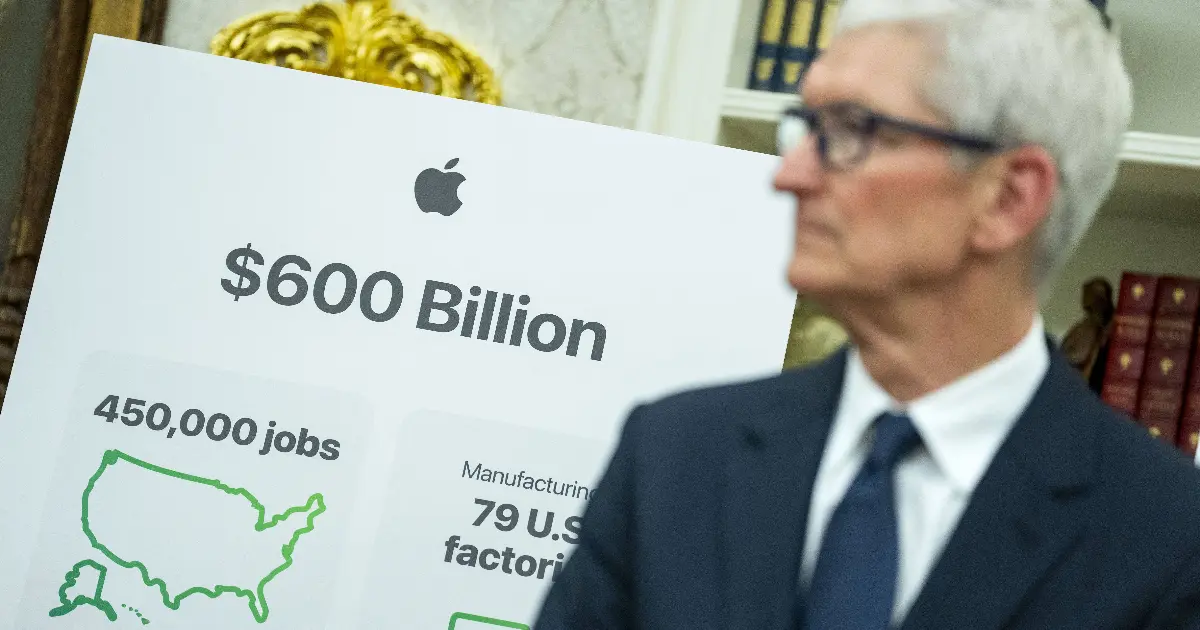
According to an infographic titled “$600 Billion U.S. Investment” published on Apple’s official website, the company has created 450,000 jobs across all 50 U.S. states through its suppliers and partners, is manufacturing in 79 U.S. factories, and is collaborating with companies such as Corning, Texas Instruments, Amkor, Broadcom, GlobalWafers, and TSMC to expand U.S. manufacturing capabilities.
In another infographic titled “Apple American Manufacturing Program,” Apple revealed: “All iPhone and Apple Watch glass covers will be produced in the United States, will use U.S.-made rare-earth magnets from MP Materials, and will establish an end-to-end silicon supply chain in the U.S.”
In addition, over the next four years, Apple plans to directly hire 20,000 employees in the United States, the vast majority of whom will focus on R&D, silicon engineering, software development, and AI and machine lea
In summary, the most important components of Apple’s $600 billion U.S. investment are likely its AI data centers and semiconductor supply chain.
However, in terms of the semiconductor supply chain, the process—from placing orders with TSMC’s Arizona fab and Samsung’s Texas fab, to using wafers produced at GlobalWafers’ Texas facility, as well as chips from Texas Instruments and Broadcom, glass from Corning, and packaging by Amkor—essentially follows the company’s traditional outsourcing model, except that these facilities are now all located in the United States.
However, this raises a puzzling question: Apple’s $600 billion investment appears to resemble the investments made by its supplier partners. For example, companies such as TSMC, GlobalWafers, Texas Instruments, Samsung, and Corning have all made significant capital expenditures. Could these amounts also have been counted again as part of Apple’s $600 billion investment figure?
To please Trump, has Apple included all of its suppliers’ U.S. investment amounts in its own $600 billion investment tally—counting them twice? This remains unclear for now and will be something to watch going forward.
Nevertheless, with Trump’s endorsement this time, Cook—who has often been singled out by the president—clearly went all out to try to reverse Apple’s fortunes. In the midst of Trump’s global web of tariffs, Cook put forward what is currently the largest U.S. investment by any company at $600 billion, a move that clearly played into Trump’s hands and could very well allow Apple to clear this hurdle.
Building Factories in the U.S. Means No Tax — But Details Are Lacking
In fact, few would dispute that Apple has been the biggest casualty of Trump’s global tariff policy.
For example, the main assembly and production bases for Apple’s iPhones are in China and India, but China is subject to a 55% tariff and India to a 50% tariff. In addition, Apple’s core chips are produced at TSMC’s Taiwan facilities, which currently face a 20% tariff. Other semiconductors and electronic components come from Asian countries including Taiwan, Japan, South Korea, China, Malaysia, and Singapore, each with its own tariff rate.
An Apple iPhone contains at least several thousand semiconductors and components, with design and manufacturing sites spread across the globe. Under President Trump’s tariff principles, how could a customs officer possibly determine the exact amount of tariff to be levied when such a phone is shipped to the United States?
Thus, under Trump’s policy of bringing manufacturing back to the U.S., Apple has effectively become the convergence point of countless variables. Even the most skilled industry analysts or economists cannot precisely calculate how much tariff should be applied. In the end, the simplest outcome may be for Apple and its suppliers to stage a $600 billion investment spectacle, delight Trump, and thereby secure a tariff exemption for the iPhone.
In reality, taxation itself is an inherently complex matter. Even though Trump has stated the principle that “if you have a factory in the U.S. or have committed to building one, you will not be taxed,” it remains a policy without a clear definition—one that leaves companies at a loss.
For example, the details of the tariff plan remain unclear, including when it would take effect and what share of a company’s U.S. production would qualify it for an exemption. In the case most closely watched in Taiwan, TSMC currently produces most of its chips at its Taiwan fabs—so after announcing a $165 billion U.S. investment, would it be fully exempt?
In addition, Taiwan’s foundries include UMC, Vanguard International Semiconductor, and Powerchip Semiconductor Manufacturing. UMC has stated that it is working with Intel on a manufacturing collaboration in the United States, but whether this project will be considered for exemption by Trump remains uncertain.
Moreover, another variable has emerged: Trump has indicated that he wants Intel CEO Pat Gelsinger (Chen Li-wu) to resign, and there is widespread market speculation that TSMC could take a stake in Intel in the future. How this ultimately plays out could significantly impact Taiwan’s semiconductor industry.
Powerchip Semiconductor Manufacturing has stated that because the proportion of its chips exported to the U.S. is small, it will not be affected by the 100% tariff. Vanguard International Semiconductor, on the other hand, has said it has no plans to invest in the U.S., and the tariff rate it will face in the future remains uncertain.
How to “Pay to Enter the U.S. Market” — A Test for Many Nations
However, Apple’s case may also present another opportunity for foundries. For example, if IC design clients of UMC or Vanguard International Semiconductor have investment plans in the U.S., they could qualify for tariff exemptions. This could be one of the few chances for mature-process foundries like UMC and Vanguard to break through.
In reality, while Trump’s chip tariff policy has a clear objective, it contains numerous exceptions that are handled on a case-by-case basis, and his stance continues to evolve. Ultimately, what he cares about most is whether companies are investing in the U.S. and whether manufacturing can return to America to fulfill his MAGA (Make America Great Again) agenda.
In order to please Trump, countries around the world have gone to great lengths during negotiations with him. For example, South Korea proposed a multi-billion-dollar investment plan in the U.S. shipbuilding industry, naming it MASGA (Make American Shipbuilding Great Again)—a clear play on Trump’s MAGA (Make America Great Again) slogan. The aim was to align with Washington’s push to revitalize domestic manufacturing and secure tariff exemptions or lower rates.
However, these repeated pledges to increase U.S. investment may not be too difficult for large corporations like Apple. With extensive supply chains and numerous partners, big companies can coordinate among themselves to clear this hurdle for the time being.
However, how to play this “pay-to-enter-the-U.S.-market” game is a real test for many countries. Nations such as the Philippines and Malaysia—where semiconductor manufacturing and back-end testing and packaging make up a large share of the industry—have recently expressed strong dissatisfaction.
These countries lack the capacity and resources to invest in building factories in the United States. To continue exporting products to the U.S., they would inevitably face high tariffs, and could even be forced to shift orders elsewhere or lose them entirely.
Related Articles
Wherever TSMC Builds a Fab, a Taiwanese University Brings Training: NYCU Plans Arizona Courses in 2027 and a U.S. Branch-Campus Application From 2030
Micron Announces Its Largest Rewards Ever. Its Taiwan Union's Demands Expose a Clash of Pay Systems. A strike threat at Taiwan's largest foreign investor, read in three dimensions
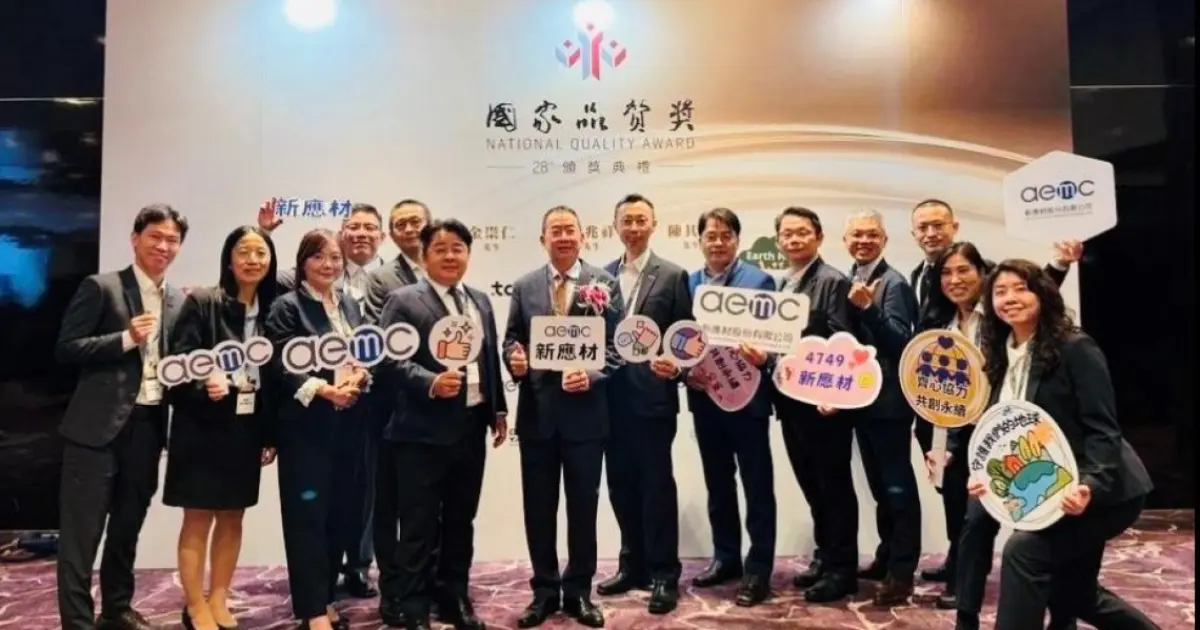
TSMC's 3nm rinse comes exclusively from AEMC, a Taiwanese company once withdrawn from the Emerging Stock Board