Wherever TSMC Builds a Fab, a Taiwanese University Brings Training: NYCU Plans Arizona Courses in 2027 and a U.S. Branch-Campus Application From 2030
German students come to Taiwan for training; Taiwanese students go to Arizona for internships. A university with deep ties to TSMC has drafted an "Ecosystem University" proposal that positions universities as the integrators connecting the semiconductor clusters of Taiwan and the United States.
TSMC, the world's largest contract chipmaker, has invested in Arizona, and Taiwanese electronics companies are following it into global markets. What new role should Taiwan's universities and research institutions play in this wave of overseas investment?
Once TSMC has built fabs in Arizona and in Dresden, Germany, how does the talent keep up? With geopolitics pushing Taiwan's semiconductor industry to expand abroad at speed, the question is no longer Taiwan's alone. The countries preparing to host TSMC's ecosystem are already spending money on it: Germany's federal government and the state of Saxony fund students to train in Taiwan, and Pima County in Arizona is a partner in a talent hub run with a Taiwanese university.
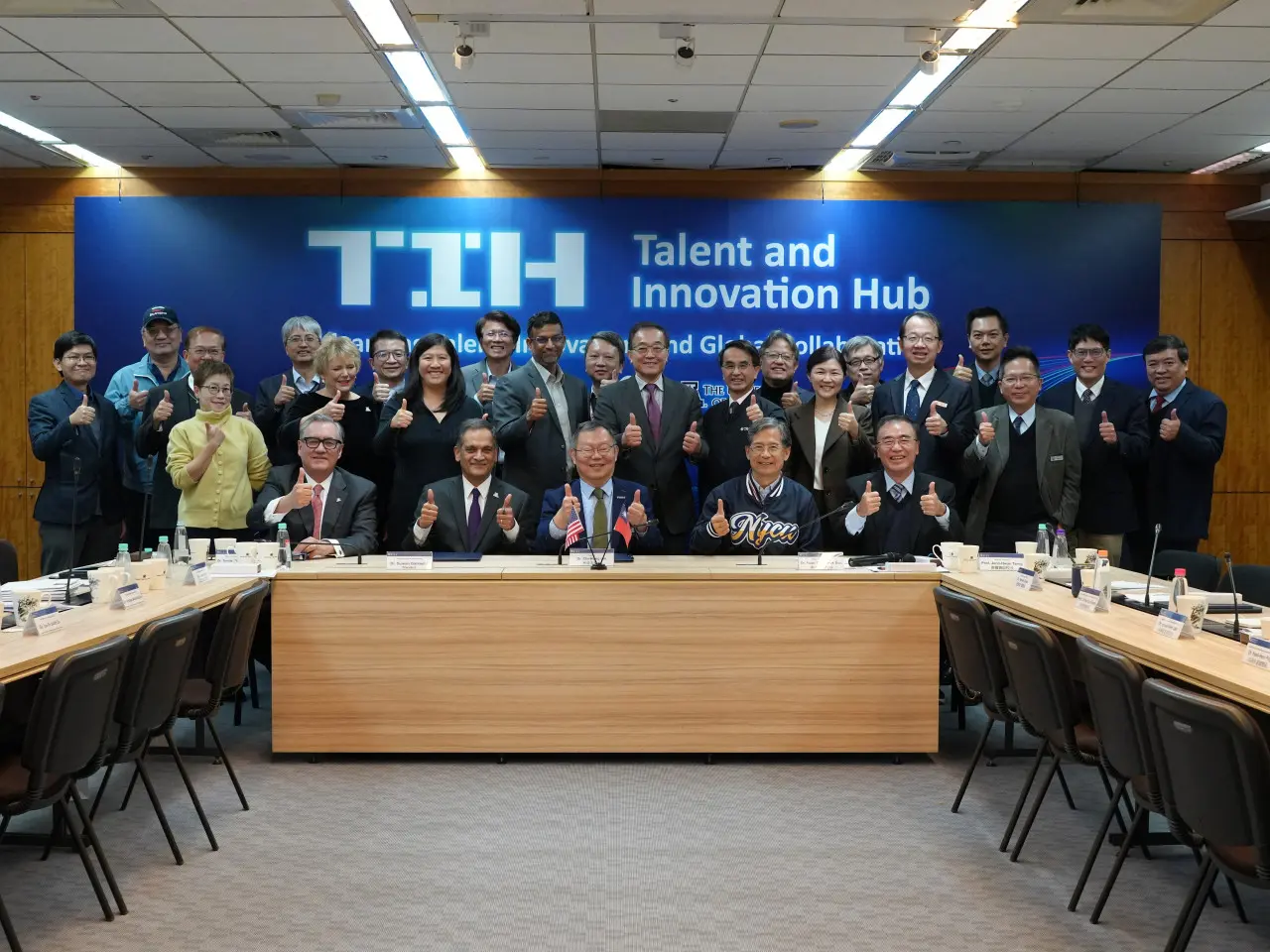
National Yang Ming Chiao Tung University (NYCU), based in Hsinchu and a major source of talent for TSMC, has a new plan that offers another answer from Taiwan: bring Taiwan's approach to semiconductor training to the doorstep of TSMC's overseas fabs and build an ecosystem partnership with the local universities. In January 2026, NYCU signed an agreement with the University of Arizona to establish a Talent and Innovation Hub. Courses are scheduled to begin in 2027, and from 2030 NYCU plans to apply to Taiwan's Ministry of Education for a branch campus in the United States. Meanwhile, German students are already travelling the other way: they take courses at a Taiwanese university, do hands-on training at TSMC's training center in Taichung, and then return to Dresden, where TSMC's European fab, ESMC, is being built.
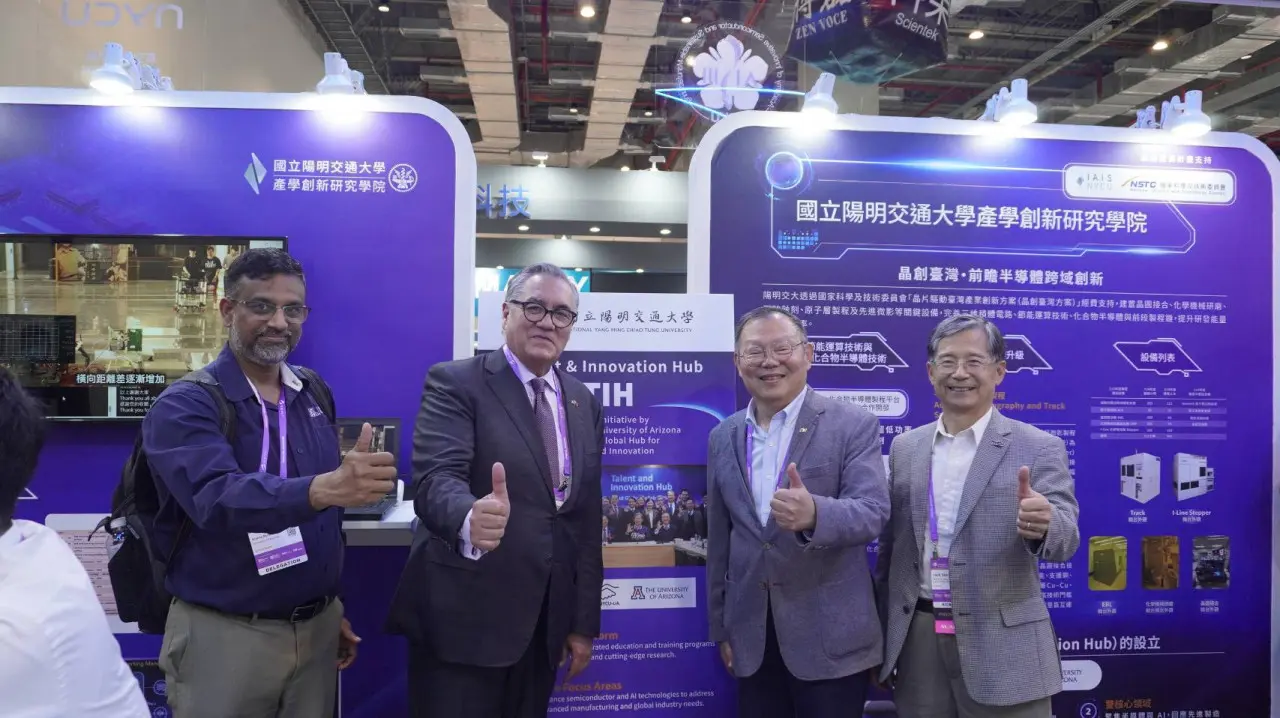
In early September 2026, during SEMICON Taiwan (the annual industry exhibition that the trade association SEMI holds in Taipei; the 2026 show ran from September 2 to 4), NYCU President Chi-Hung Lin and Vice President Jack Sun hosted Tomás Díaz de la Rubia, Senior Vice President for Research and Partnerships at the University of Arizona (UA), a public university in Tucson, Arizona. During those days I interviewed President Lin; Yuan-Chieh Tseng, Distinguished Professor in NYCU's Department of Materials Science and Engineering; and Robert Li, Chairman of Synopsys Taiwan (Synopsys is a U.S. chip-design software company). What I heard was a university working hard to build itself a new role, and using a theoretical framework it calls the "fourth-generation university" to explain what that role should be. I found the ideas forward-looking and creative, with real lessons for Taiwan's universities and research institutes. What follows is what I learned.
NYCU was formed in 2021 through the merger of National Yang Ming University and National Chiao Tung University. Its main campus in Hsinchu sits next to Hsinchu Science Park, the heart of Taiwan's semiconductor industry and home to TSMC's headquarters. Chiao Tung's ties to TSMC run deep. TSMC Chairman and CEO C.C. Wei graduated from Chiao Tung's electrical engineering department, and several of TSMC's current senior executives are alumni. Jack Sun, the NYCU vice president who hosted the Arizona delegation, is himself a former chief technology officer of TSMC; in 2013 he signed, on TSMC's behalf, the agreement establishing the NCTU-TSMC Joint Research Center, now the NYCU-TSMC Joint Research Center. In the 2025 semiconductor talent report published jointly by 104 Job Bank, Taiwan's largest online recruitment platform, and the Industrial Technology Research Institute (ITRI), a government-founded applied research institute, NYCU ranked second among the universities that semiconductor companies most want to hire from.
Why a University, Rather Than a Government or TSMC, Should Do the Integrating: The NYCU-UA "Ecosystem University" Report
Professor Tseng first gave me homework: read the "Ecosystem University" proposal that NYCU and the University of Arizona wrote together. The report has not been published; the two universities plan to release it as a formal paper. What follows is my reading of it. The report argues that, with the United States pushing to bring manufacturing home, Taiwan and the U.S. can jointly build semiconductor ecosystems in both places, and it sets out an action plan for the next five to ten years.
The report's new definition of the "fourth-generation university" rests on a clear sequence. First-generation universities transmitted knowledge (teaching). Second-generation universities created knowledge (research). Third-generation universities commercialized knowledge (the entrepreneurial university). The fourth generation now taking shape is the Ecosystem University, whose core function is ecosystem integration.
The decisive shift is from value creation to value orchestration. The core question changes with it. A traditional university asks, "What can the university produce?" An ecosystem university asks, "What can the university enable the ecosystem to accomplish?" In one sentence: the university moves from actor to integrator.
The report uses the NYCU-UA partnership as its case study. It argues that Taiwan's semiconductor cluster and Arizona's technology cluster can be joined through the two universities as anchors, forming an ecosystem-to-ecosystem link rather than the traditional bilateral university-to-university tie.
Reading the report, I found five particularly innovative features.
First, the framework is not invented from nothing. It stands on two established lines of scholarship: Wissema's theory of the third-generation (entrepreneurial) university, and the Triple Helix theory of university-industry-government relations developed by Etzkowitz and Leydesdorff. The report's contribution is to argue that the three-party Triple Helix is no longer enough, and that it must expand into a more distributed, more networked ecosystem, even a quadruple or N-helix.
Second, its answer to "why now" is clear. The report names four structural drivers: technological complexity (frontier technologies need capabilities that cross fields and organizations); geopolitical competition (semiconductors and AI are now tied to national security); the fragmentation of globalization (frictionless global integration can no longer be assumed, so trusted relationships become strategic assets); and social complexity (climate, energy and public health all cross borders). These four points lift the ecosystem university from an attractive concept to a necessary response to structural change. I find the argument compelling.
Third, and most important, the report asks why the integrator should be a university rather than a government or a company. Its answer is equally clear. Governments have political authority, companies have capital and market power, investors have money. Only universities combine knowledge, talent, institutional legitimacy and broad networks while keeping a degree of organizational autonomy.
That is why a university is well placed to convene actors who compete commercially but share strategic interests. This "neutral anchor" argument is the report's most central and most original contribution. It answers precisely the question of why an ecosystem university is well suited to this role.
Fourth, the "one anchor, two corridors" argument in the NYCU-UA case is concrete. The report describes NYCU as Taiwan's gateway to two talent corridors connected to TSMC. Seen from Taiwan, one corridor runs outbound to the United States through the Talent and Innovation Hub (TIH) with the University of Arizona, promoted through the government of Pima County, where UA is located.
The other is STIPT, the Semiconductor Talent Incubation Program Taiwan, run jointly by the state of Saxony in eastern Germany, TU Dresden and TSMC. That corridor runs inbound from Europe through the Saxon state government: German students come to Taiwan, train at TSMC's newcomer training center in Taichung, and then return to Dresden, where ESMC, TSMC's European fab, is under construction.
One line in the report captures the point: both corridors revolve around the same company, TSMC, and both enter through the same university, and that is the difference between a well-connected institution and an ecosystem anchor. This is theory joined to practice, turning a proposal into something that can actually be carried out.
Fifth, the report's paired concepts travel well. "From talent pipeline to talent circulation": in the traditional model the university's responsibility ends with the graduate's first job, whereas in the ecosystem model graduates stay in the network and keep contributing. "From competitiveness to resilience": a highly efficient system can be extremely fragile when capability is over-concentrated, hence "competitiveness without resilience is brittle." These are well-matched, memorable formulations grounded in scholarship, the work of a mature argument.
The concept of the fourth-generation university is clear, the architecture complete, and the timing right. But it still needs to be tested, and what matters is how it is carried out. NYCU has already signed the Talent and Innovation Hub (TIH) agreement with UA, and the task now is to turn the ecosystem university idea into a three-stage implementation plan.
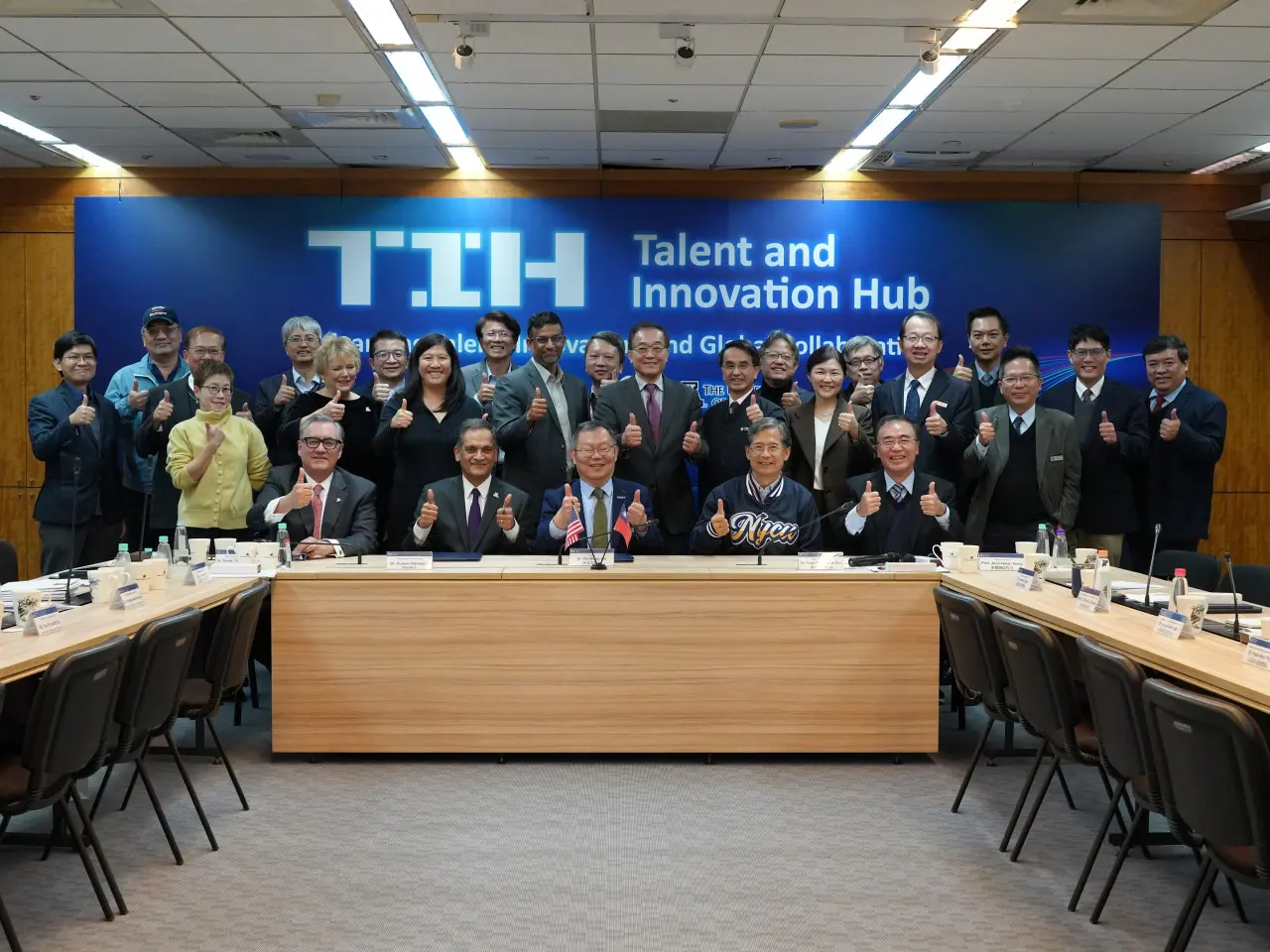
The core goal of the TIH is for NYCU, through its Industry Academia Innovation School (IAIS), to work with local universities in North America, mainly in Arizona, to build a talent and innovation center that serves directly the talent needs of TSMC's Arizona fabs and their U.S. supply chain.
The TIH is not a single fixed institution but a framework, open to other universities and institutions in North America and Taiwan that want to join in the shared goal of developing high-quality local talent in Arizona, where TSMC's investment is the anchor. Being a framework rather than a single site gives it flexibility and room to grow.
Borrow Classrooms First, Then Set Up a Base, Then Open a Campus: NYCU's Three Steps Into Arizona, and the Last One Needs Taiwan's Ministry of Education to Say Yes
The TIH proposal sets out a three-stage roadmap, with a U.S. branch campus as the end goal.
The first stage, preparation, runs from 2026 to 2027. NYCU would use existing facilities at Arizona universities to set up a pilot training site. This stage would offer short courses and micro-credential courses in semiconductors, digital health and AI health applications, prioritizing the immediate needs of TSMC and its supply chain.
This stage would also set up two-way internships: American students in Taiwanese labs and companies, NYCU students gaining on-site experience at TSMC Arizona. Cross-cultural and workplace-language skills are part of the package, including Mandarin and workplace-language instruction. In the early phase, partner universities or companies would issue the credentials, with NYCU providing academic endorsement. The key mechanism in this stage is train-the-trainer, expanding the pool of qualified instructors.
The second stage, development, runs from 2027 to 2029. Partner universities would host a semi-permanent NYCU base: a local office handling administration, outreach and limited teaching, plus an academic center supporting a full range of teaching activities, research projects and community engagement. Dual degrees and "3+2" programs may be launched, and the train-the-trainer results from stage one scaled up. The scope expands beyond talent development to include collaborative research in emerging fields.
The third stage, expansion, starts in 2030. Building on the first two stages, NYCU would apply to Taiwan's Ministry of Education to establish an overseas branch campus in the United States, an academic innovation center offering long-term, institutionalized, scalable education and research. This is the final step, and the one that most needs a regulatory breakthrough.
The TIH plan is therefore a three-step progression from pilot base to semi-permanent presence to a formal campus. It is a pragmatic sequence: test the water at the lowest cost and lowest risk by running short courses in borrowed facilities, scale up once feasibility is proven, and only then go for the campus. A staged design that allows for retrenchment as well as expansion clearly lowers the risk of failure.
The two universities have begun implementing the roadmap. A plaque-unveiling ceremony for the TIH at UA is planned for mid-November 2026, with President Lin, Vice President Sun and Kuan-Neng Chen, Dean of NYCU's International College of Semiconductor Technology, travelling to Arizona for the ceremony.
Having read the report, my instinct is that this is an important proposal, and for Taiwan's higher education in particular an opening.
Consider the past 30 years. When Taiwanese companies expanded into China and Southeast Asia, local education lagged behind Taiwan's. So as Taiwanese businesses (known in Taiwan as taishang) poured investment into China and Southeast Asia, Taiwanese primary schools went with them, offering a Taiwanese curriculum to the children of expatriate staff. In higher education, many Taiwanese universities opened executive MBA programs in China and Southeast Asia for the managers of Taiwanese companies there.
As long as education in Southeast Asia or China had not caught up with Taiwan, Taiwan's schools and universities could follow its companies abroad. But in advanced economies such as the United States, Europe and Japan, the local academic and cultural establishment is strong, and how Taiwan's education system follows its companies there is a real test. NYCU has now moved first, with planning complete from theory to action, and that is something to look forward to.
NYCU is also planning a short-term, hands-on semiconductor training program that brings international participants to Taiwan. It is positioned as a short certificate program focused on practical training, with hands-on work as the selling point. For example, students from a foreign university come to Taiwan for four weeks, led by one professor, and are distributed among the labs of participating NYCU professors for practical work.
The balance between classroom instruction and hands-on training follows that of lectures and lab work in the junior and senior years of a semiconductor engineering degree: each five-day week is split into 3.5 days of lectures and 1.5 days of hands-on work. The program is a way to export Taiwan's experience in hands-on semiconductor training and help students from other countries get up to speed faster.
Taiwan Also Needs More Instructors: SiCADA's Train-the-Trainer Program Has Certified 15 in Vietnam
Along the main line of the fourth-generation ecosystem university, there is one more development worth reporting, and it concerns the most important link in the semiconductor ecosystem: developing people. It is a train-the-trainer program driven by Robert Li, Chairman of Synopsys Taiwan, built around SiCADA (Silicon Creation & Advanced Design Academy, a training academy built on technology and tools provided by Synopsys), with the goal of establishing in Taiwan an IC-design training academy dedicated to solving the global shortage of semiconductor talent.
First, what SiCADA does. SiCADA is built on the technology, EDA tools and teaching materials of Synopsys, one of the two dominant vendors of EDA tools, the software used to design chips (by TrendForce's count, Synopsys held 31% of the global EDA market in 2024). It is positioned as a professional training academy for IC design engineers. In SiCADA's own words, its vision is to solve the global shortage of IC design talent through AI-enabled, industry-driven education.
SiCADA's biggest advantage, Li says, is that it has the backing of Synopsys: it can bring the industry's top EDA tools, IP (reusable chip-design building blocks), design flows and methodologies straight into the classroom, something an ordinary university or training institute cannot offer. Its clients span individuals, partner companies and government bodies. Its courses cover advanced IC design, onboarding of new hires and training of foreign talent, and it has integrated AI-assisted design across the curriculum.
At the core of SiCADA is a "six-party ecosystem": universities (theoretical foundations), companies (customized on-the-job training), industry experts (hands-on know-how), training institutions (TSRI, the public Taiwan Semiconductor Research Institute that provides universities with chip-fabrication and hands-on resources; ITRI; and TCFST, the Hsinchu-based Tze-Chiang Foundation of Science and Technology, among others), Synopsys training (EDA tools and methods), and SiCADA itself as the integrator in the middle. It sees itself as the missing piece between university VLSI (very-large-scale integrated circuit) education and what industry needs.
SiCADA has been at this for more than three years and is working with NYCU on a joint program. It offers courses at three levels: science outreach for students in grades 9–12, VLSI and CMOS (the mainstream chip-manufacturing technology) IC design courses for university students, and hands-on courses that pair with the theory.
Beyond the student programs that give would-be IC designers a practical foundation, SiCADA's other defining feature is its train-the-trainer program, designed for senior engineers and educators, which develops future course instructors through coursework and certification.
This "not just students, but teachers too" design fits the market as it is. In Taiwan there are no longer enough teachers to train semiconductor engineers, and with industry pay so good, Taiwanese academics are tempted to leave for industry. Countries without a semiconductor base are just as desperate for seed instructors, teachers trained to run the courses locally. A shortage of people able to teach is one of the biggest bottlenecks in the talent shortage, so the first step is to "mass-produce teachers" before anything can scale.
SiCADA also emphasizes AI enablement: it teaches students not only to design ICs with AI tools but to develop the critical judgment to evaluate and verify what AI generates. This matters. In the AI era an engineer cannot trust AI blindly; the core skill is knowing when AI is wrong.
SiCADA already has early results. By SiCADA's own figures, its summer 2024 program trained more than 100 participants over 8 weeks in 4 courses; 48 of the students came from 16 universities, more than 90% of them master's students, and 7 partner companies took part in recruitment matching. Certification pass rates were strong: 83% in digital design verification and 93% in SoC (system-on-chip) front-end design.
There is also an international train-the-trainer case. SiCADA trained 15 seed instructors for the Phenikaa Semiconductor Training Center (PSTC), part of Vietnam's private Phenikaa University: one week of training in Taiwan and one week of online certification. All 15 passed and became the seed instructors for Synopsys and SiCADA training in Vietnam. The Vietnam case is an early example of SiCADA's train-the-trainer model in practice.
Li, who has led SiCADA for three years, says SiCADA is intended to become independent of Synopsys in future and to pursue cross-border semiconductor talent training. He is himself an NYCU alumnus and expects more cooperation with his alma mater. He sees this as a vital part of the fourth-generation ecosystem university and hopes more like-minded people will join.
NYCU President Lin, for his part, hopes that in building the Ecosystem University, SiCADA will play an important role in NYCU's cross-border semiconductor education and professional training, and he too hopes more people will join in pushing SiCADA toward that international goal.
In sum, driven by both AI and geopolitics, semiconductors have become the most critical industry. Taiwan has to extend its reach abroad, and the force TSMC projects outward is more than a supply chain. Taiwan's universities can expand their international influence alongside it, and the NYCU-UA Talent and Innovation Hub is the starting point of that new attempt.
Talent has become a strategic national resource, and Taiwan is trying to turn its ability to develop talent into a form of competitiveness and soft power it can export to Japan, Vietnam, Germany and the United States. Within that larger strategy, SiCADA is an example of industry taking a direct role in training. Its progress will be worth watching.
Related Articles
Micron Announces Its Largest Rewards Ever. Its Taiwan Union's Demands Expose a Clash of Pay Systems. A strike threat at Taiwan's largest foreign investor, read in three dimensions
TSMC's 3nm rinse comes exclusively from AEMC, a Taiwanese company once withdrawn from the Emerging Stock Board
Taiwan AI Industry Upgrade Forum Series || Event Report:America Wants More Manufacturing. What Does It Take for Taiwan’s Suppliers to Follow?