NVIDIA Announces $100 Billion Investment in OpenAI: Has an “AI Super Virtuous Cycle” Formed — Should Investors Be Cautious?
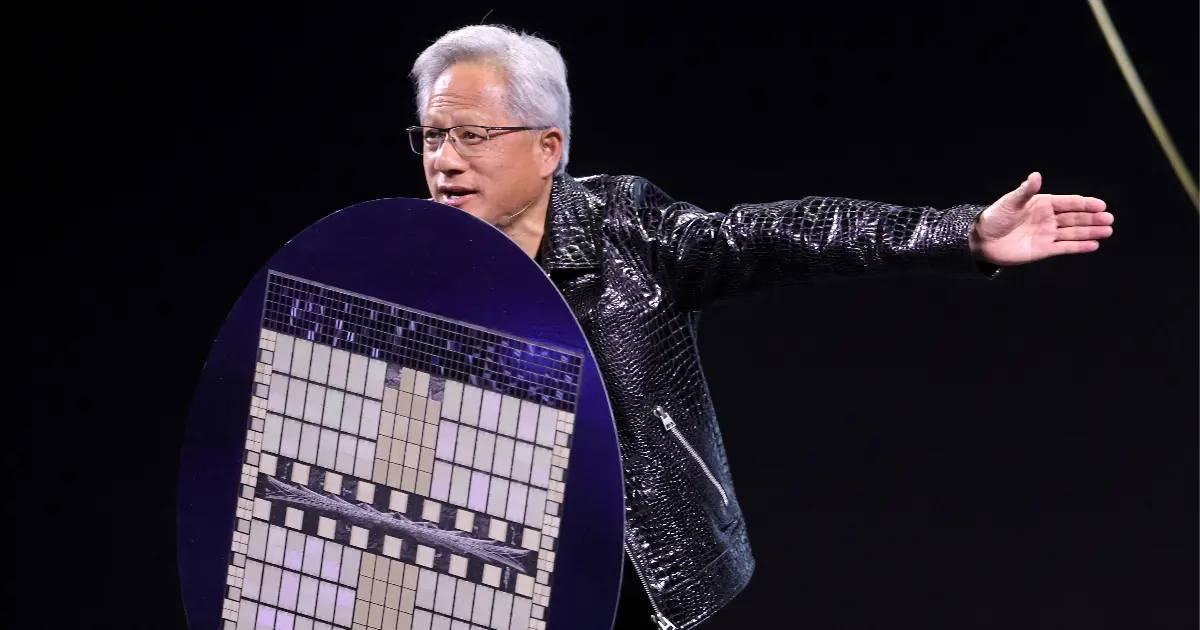
In 2025, the artificial intelligence (AI) industry continues to develop rapidly, with major news emerging almost daily, stirring sensitive nerves across global technology and financial markets. Each announcement not only signifies breakthroughs in technology or business models, but also frequently triggers dramatic volatility in capital markets, making investors feel as though they’re on a rollercoaster—nervous yet exhilarated.
According to an announcement released on September 22, 2025 (U.S. time), AI chip giant NVIDIA and ChatGPT developer OpenAI have launched a new round of strategic cooperation. NVIDIA will invest up to $100 billion to assist OpenAI in building the next generation of AI data centers, with power demand reaching as high as 10 gigawatts (GW), equipped with millions of graphics processing units (GPUs) to support the training and deployment of advanced AI models.
Under the terms of the agreement, OpenAI is expected to deploy NVIDIA systems with a total power requirement of 10GW. This scale is roughly equivalent to NVIDIA’s projected 2025 shipment of 4 to 5 million GPUs, which is about double its 2024 volume.
In addition, NVIDIA will become OpenAI’s “preferred” supplier of AI chips and networking equipment. According to the plan, the first phase of the data center is expected to go online in the second half of 2026, equipped with NVIDIA’s next-generation high-performance AI computing platform, the “Vera Rubin” system.
According to previous estimates from NVIDIA, building a 1GW-level AI data center would require a total investment of approximately $50–60 billion, of which about $35 billion would be spent on purchasing NVIDIA chips and integrated systems. Based on this, OpenAI’s planned 10GW scale could amount to a total investment in the hundreds of billions of dollars.
NVIDIA CEO Jensen Huang emphasized that this investment in OpenAI is an “additional injection” and will not affect previously announced collaboration agreements or financial commitments. This cooperation will also complement OpenAI’s existing infrastructure partners, including Microsoft Azure cloud services, Oracle, Japan’s SoftBank, and OpenAI’s planned “Stargate” super data center project.
OpenAI CEO Sam Altman stated in an interview that the company’s services now have over 700 million weekly active users, showing the continuing global expansion of AI application demand. This NVIDIA investment is expected to acquire about 20% equity in OpenAI and aligns with OpenAI’s rising valuation in recent secondary market transactions, which now reaches approximately $500 billion.
Not only has OpenAI’s valuation rapidly surged from $80 billion at the start of 2025 to $500 billion, but the capital frenzy surrounding the broader AI industry has also extended to other AI model developers. For example, Anthropic, founded by former OpenAI members, is now valued at $170 billion, while Elon Musk’s xAI has reached a valuation of $80 billion—both showing steep upward trajectories.
This strategic cooperation between NVIDIA and OpenAI reveals three key directions worth close attention.
First, it is important to observe how NVIDIA positions itself within the AI industry. With a market capitalization now exceeding $4.46 trillion, NVIDIA not only leads the AI revolution with its integration of chips, software, and systems but also plays the role of “savior” in the eyes of many AI firms and infrastructure players through its aggressive investments.
For instance, on September 18, 2025, NVIDIA announced a $5 billion investment in legacy chipmaker Intel and launched a joint development program for AI processors. This brought a significant boost in visibility and market attention to Intel, which has been under financial and strategic pressure in recent years.
That same week, Jensen Huang visited the UK with former U.S. President Donald Trump and announced a nearly $700 million investment in local AI data center startup Nscale. In addition to Nscale, the collaboration includes OpenAI and Microsoft. NVIDIA plans to build the UK’s largest AI supercomputer at the Loughton campus in London, initially deploying as many as 58,640 NVIDIA GPUs, with the potential to scale up to 300,000 GPUs and increase power supply from 50MW to 90MW.
At the same time, NVIDIA announced it would spend over $900 million to recruit Enfabrica CEO Rochan Sankar and his core technical team and secure a license to the company’s data center networking chip technology. Enfabrica focuses on developing “dataflow chips,” which significantly enhance communication efficiency between GPUs—crucial for large-scale AI model training—thereby strengthening NVIDIA’s position in data flow and low-latency AI computing.
Virtuous Investment Cycle Takes Shape, Reshuffling the Market and Competitive Landscape
The second aspect worth noting is NVIDIA’s strategy of aggressively expanding its investment portfolio, which is gradually raising concerns in the market over its capital deployment and long-term risk exposure.
This massive investment in OpenAI by NVIDIA essentially resembles a closed-loop model: NVIDIA funds OpenAI, and OpenAI then uses that capital to purchase NVIDIA systems. For NVIDIA CEO Jensen Huang, this represents a “virtuous cycle”; for OpenAI, it helps further strengthen its technology and valuation. However, whether this strategy yields long-term positive outcomes remains to be seen by the market and over time.
In fact, the current AI industry ecosystem is entering a stage driven by massive investments and sustained demand—a phase of “super virtuous cycle.”
Roughly two weeks ago, the market was stirred by news that OpenAI had signed a five-year, $300 billion cloud computing procurement deal with Oracle. The announcement triggered a 36% single-day surge in Oracle’s stock price, underscoring the market’s acute sensitivity to AI infrastructure investment.
When including Oracle in the financial flow context between NVIDIA and OpenAI, a reciprocal investment cycle emerges: NVIDIA invests $100 billion in OpenAI, OpenAI purchases equivalent cloud services from Oracle, and Oracle, in turn, buys AI hardware and accelerators from NVIDIA. All three parties profit handsomely in this closed loop, forming a highly strategic and synergistic capital deployment.
Moreover, NVIDIA’s continued massive investments in AI infrastructure are further widening the strategic AI gap between the United States and China. According to the latest report by research firm Epoch AI, China currently holds only about 15% of the world’s AI computing power, far behind the United States, which accounts for approximately 75%, highlighting a sharply growing disparity.
As for China’s Wuhu AI data center project, dubbed the “Chinese Stargate,” though it boasts a total investment of $37 billion—already a large-scale initiative—it still lags significantly behind the $500 billion “Stargate” super AI project planned in the United States in terms of scale.
Computing Power Escalates Pressure on Energy Transition, Nuclear Power Emerges as a New Option
Of course, NVIDIA—driving this super cycle—still firmly holds its position as the leader in the AI chip market. However, AI model developers that have not yet received direct investment from NVIDIA, such as Alphabet’s Gemini, Meta’s LLaMA and V-JEPA, Elon Musk’s xAI with Grok, and Anthropic’s Claude, while originally NVIDIA chip customers, will inevitably seek alternative solutions after being excluded from NVIDIA’s investment ecosystem.
These AI companies not included in NVIDIA’s portfolio may naturally shift toward using AMD’s AI GPU chips, with the key being whether AMD can offer differentiated products in terms of technology. Additionally, some companies may opt for in-house chip development or contract ASIC (Application-Specific Integrated Circuit) designers and manufacturers like Broadcom, Marvell, or MediaTek. Though these firms face competitive pressure, they may emerge as vital partners for the non-NVIDIA camp.
The third issue to watch is that as the AI industry enters a period of intense investment, with stakeholders racing to build infrastructure and enhance computing power, these highly energy-intensive activities pose unprecedented challenges to energy systems and environmental sustainability.
Take, for instance, the NVIDIA–OpenAI data center plan, which requires up to 10GW of electricity—equivalent to the total power consumption of a city with 8 million people. This presents significant pressure on regional grid stability and the capacity of renewable energy sources. Without proper planning, it may trigger controversies over increased carbon emissions and imbalanced energy distribution.
With mounting pressure for green energy transitions, NVIDIA and OpenAI will also face demands from governments and society to ensure their data centers utilize renewable energy and efficient cooling technologies. This will further accelerate the development of new energy technologies, cooling solutions, and high-efficiency power systems in the market.
In recent years, Small Modular Reactors (SMRs) have increasingly emerged as a novel option for distributed AI computing deployment. Governments and companies around the world are actively investing in SMR construction to provide flexible and rapidly deployable nuclear energy solutions.
Tech giants are also joining the effort: Microsoft is collaborating with Constellation to restart nuclear plants, while Alphabet is investing in building new nuclear power facilities specifically designed to supply energy for AI data centers. Nuclear energy is no longer just an alternative—it is rapidly becoming the “computational fuel” of the AI era.
Nevertheless, the challenges of nuclear energy remain daunting. In Taiwan, for example, society has long held an anti-nuclear stance. Nuclear projects also entail lengthy construction periods and high costs; a single plant typically requires 7 to 10 years to build and billions of dollars in investment, along with policy support and regulatory relaxation. Furthermore, issues such as nuclear waste management, disaster risk control, and local public acceptance pose formidable hurdles, making nuclear power a new but complex variable in the development of the AI super cycle.
Related Articles
Wherever TSMC Builds a Fab, a Taiwanese University Brings Training: NYCU Plans Arizona Courses in 2027 and a U.S. Branch-Campus Application From 2030
Micron Announces Its Largest Rewards Ever. Its Taiwan Union's Demands Expose a Clash of Pay Systems. A strike threat at Taiwan's largest foreign investor, read in three dimensions

TSMC's 3nm rinse comes exclusively from AEMC, a Taiwanese company once withdrawn from the Emerging Stock Board