Deep Dive into Taiwan’s Semiconductor Ecosystem: From TSMC’s “National Treasure” to Industry Alliances and Global Strategic Upgrades
(Editor’s note: “National Treasure” is a term of endearment used in Taiwan to refer to semiconductor giant TSMC, highlighting its vital role in the country’s economy.)
Taiwan’s premier semiconductor event, “SEMICON Taiwan 2025,” concluded a weeklong program in September, marking a new record in scale and international participation. The event attracted over 200 senior executives from global enterprises, including CXOs and executive vice presidents. It is increasingly becoming a key window for observing semiconductor production trends and supply chain dynamics across the Asia-Pacific region.
Hosted by the global SEMI association, SEMICON Taiwan has now entered its 30th edition and is often hailed as “the Olympics of the semiconductor industry.” This year’s event was not only elevated into a full-fledged international platform, but also showcased a new paradigm shift in Taiwan’s industrial ecosystem—from dependence on a single leader to collective upgrading. Taiwan’s role in the global semiconductor value chain is expanding from relying solely on TSMC to encompassing multiple domestic suppliers engaging in global collaboration.
For many years, Taiwan Semiconductor Manufacturing Company (TSMC) has been regarded as the absolute core of Taiwan’s semiconductor industry. Its market capitalization represents around 40% of Taiwan’s stock exchange, and it holds tremendous gravitational pull in attracting talent and resources. However, in recent years, TSMC has begun reinforcing its supply chain strategy—actively nurturing local partners and driving overall industry upgrades to elevate Taiwan’s systemic competitiveness on the global stage.
“TSS Alliance” Formed: 18 TSMC Partners Unite to Strengthen Taiwan’s Supply Chain and Expand Global Markets
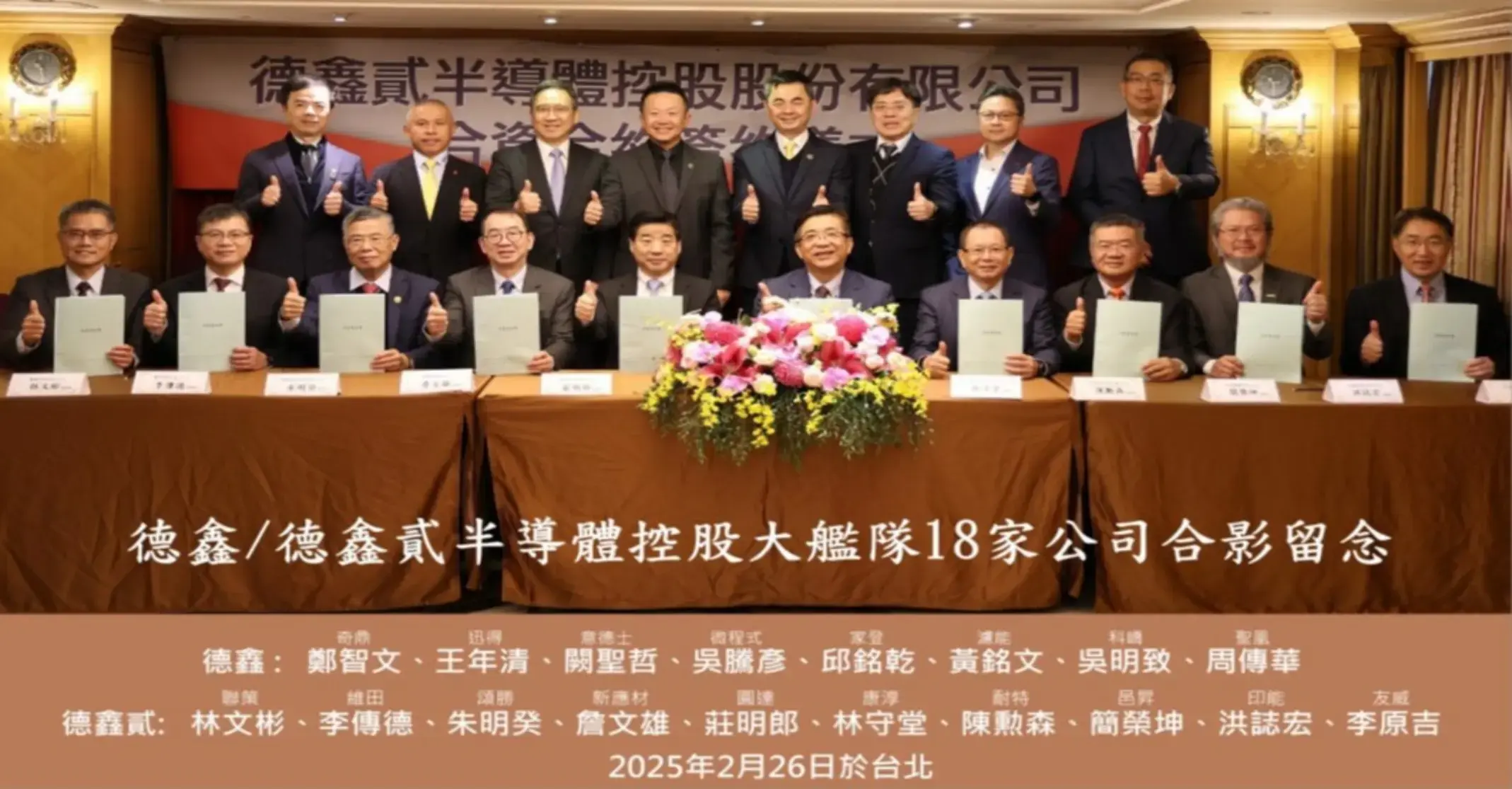
Within Taiwan’s semiconductor supply chain ecosystem, a group of 18 certified TSMC suppliers has formed a joint entity known as TSS HOLDINGS LIMITED (“the TSS Alliance”), debuting at SEMICON Taiwan 2025 with a dedicated “Alliance Pavilion.” Their exhibits covered critical areas such as wafer processing, packaging and testing, materials, consumables, and equipment manufacturing—demonstrating vertical integration capabilities and highlighting Taiwan’s transformation from single-point supply to systemic collaboration.
The TSS Alliance’s initial formation included eight companies such as K₂ (Gudeng), Eversun, and Synnex, followed by the inclusion of ten additional firms like Microprogram Information and Advanced E-Materials Corporation. All members have obtained TSMC vendor codes and span across upstream, midstream, and downstream manufacturing processes, collectively demonstrating Taiwan’s capacity to meet the demands of top-tier global foundries in terms of quality, lead time, and technical collaboration.
During the exhibition, several alliance members announced technology licensing agreements and MOUs with semiconductor equipment manufacturers from the U.S., Japan, and South Korea, further reinforcing cross-border technological exchanges and supply chain integration. TSS HOLDINGS also revealed plans to establish an R&D center in the U.S. by 2026, aiming to support global clients and expand its overseas presence—demonstrating Taiwan’s proactive momentum toward internationalization.
Chiu Ming-Chien, Chairman of K₂ and spiritual leader of the TSS Alliance, noted that despite currency appreciation and geopolitical uncertainties—such as tariffs and chip export taxes—impacting the outlook, the alliance remains committed to overseas market expansion. K₂ has revised its original target of reaching NT$10 billion in annual revenue by 2025, but will continue leveraging alliance cooperation to address global shifts and bolster the visibility of Taiwan’s supply chain in the international semiconductor ecosystem.
Chiu further emphasized that the U.S. government has recently shown strong interest in attracting Taiwanese investment, especially in strategic sectors like semiconductors and aerospace defense. For many mid-sized Taiwanese companies that previously had no overseas expansion plans, establishing a U.S. presence or entering into technical partnerships is now being actively considered as part of their response to global supply chain restructuring and geopolitical change.
G2C+ Alliance Leads Advanced Packaging Breakthroughs: Skytech Targets the PLP Equipment Market
Another highly anticipated alliance, the “G2C+ Alliance,” is led by three Taiwanese firms—CSUN, GPM, and GMM—with CONTREL joining as a co-exhibitor. At this year’s show, the G2C+ Alliance announced its comprehensive support for next-generation advanced packaging technologies, including CoWoS, SoIC, WMCM, and Hybrid Bond. A standout debut was CoPoS (Chip-on-Package-on-Substrate), considered an advanced version of CoWoS. This technology promises to increase chip area utilization to over 90% and deliver up to 30% in profit margin gains—demonstrating Taiwan’s innovative momentum and global potential in advanced packaging.
Liang Yu-Wen, General Manager of CSUN and a key figure in the G2C+ Alliance, shared that the alliance has grown to over 1,700 employees, with more than 30% engaged in R&D. Collectively, the alliance’s market valuation has grown fivefold over the past five years—from under NT$10 billion to more than NT$50 billion. GPM, one of its core members, has successfully pivoted into a semiconductor-focused business, with revenue from this sector now exceeding 50%, reflecting both technological and market advancements.
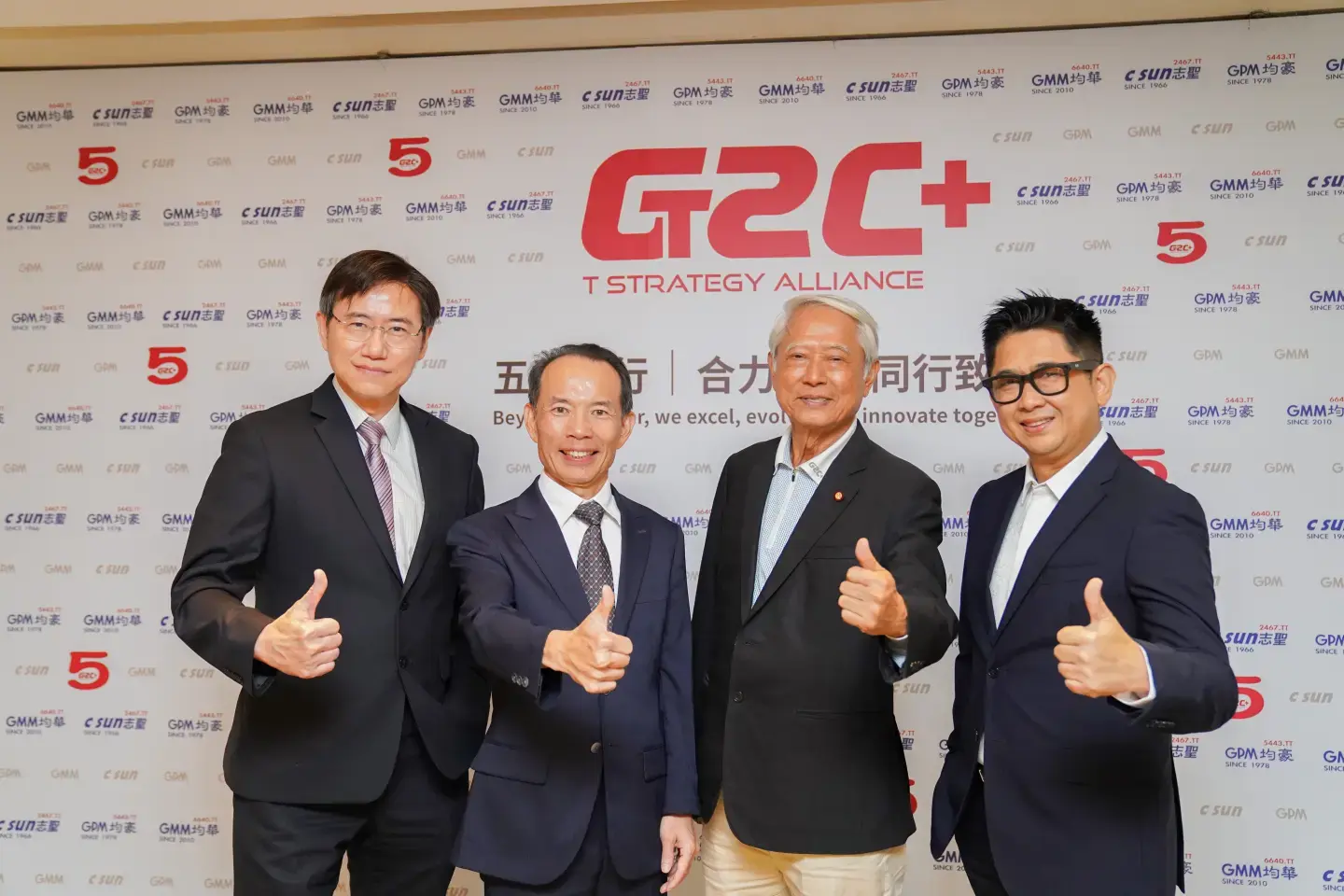
The G2C+ Alliance has also kicked off its overseas expansion plans. In October 2025, members conducted a site visit to the U.S. to assess opportunities for local manufacturing and technical partnerships in response to customer needs—showcasing their firm commitment to globalization and positioning G2C+ as a rising force within Taiwan’s semiconductor supply chain amid the ongoing AI wave.
Beyond large-scale alliances, local equipment vendors like Skytech are also emerging as key players. Rather than setting up its own booth, Skytech opted to exhibit through its strategic partner—demonstrating operational flexibility and efficient resource use. During the event, founder Luo Wei-Rui, chairman Huang Chien-Luo, and CEO Yi Jin-Liang were stationed at the booth for extended periods, directly engaging with visiting clients. All three executives previously worked at U.S.-based Applied Materials and bring international equipment expertise to the company. The dynamic interactions on-site highlight the growing global readiness of Taiwan’s equipment teams.
Skytech showcased multiple technological breakthroughs at the event, especially in advanced packaging and EUV (Extreme Ultraviolet) process equipment. Among the highlights was the debut of its Panel Level Packaging (PLP) equipment, supporting the mainstream 310mm × 310mm substrate size—a precise match for TSMC’s advanced packaging requirements. This indicates Skytech’s growing capability to meet international client specifications.
Skytech CEO Yi Jin-Liang noted that while formal certification for its PLP equipment is scheduled to begin at the end of the year, customer orders and revenue recognition may commence as early as Q4. From design to testing and shipment readiness, the development cycle was compressed to just four months, with full commercialization expected within 12 months—underscoring the speed and global deliverability now achievable by Taiwanese equipment makers.
More importantly, the localization rate of this advanced packaging equipment has reached 90%—significantly higher than the originally estimated 70%. Skytech has also consolidated its network of 12 local suppliers into a co-branded logo. These include Sanwa Engineering, HIWIN, K₂ (Gudeng), KUANHSU, HIGHLIGHT TECH, SHIH HER TECHNOLOGIES, Forcera, Yauyih, Chenfull, Beckhoff, Finesse, and Farsighted Specialty Materials—covering key mechanical components and material production. This reflects not only effective supply chain integration but also Taiwan’s progress toward a “Made in Taiwan” vision amid rising geopolitical risk.
Driven by TSMC’s efforts to cultivate its domestic supply network, Taiwan’s equipment vendors are rapidly gaining prominence. A wave of corporate alliances and system integrations is reshaping the industry. These once-overlooked local players are now enhancing their technical capabilities and product quality, moving away from foreign dependence and becoming foundational pillars for the sustainable development of Taiwan’s semiconductor industry.
More strategically, this wave of supply chain upgrading also symbolizes a structural transformation for Taiwan’s industrial landscape. Many equipment and materials vendors that once focused on PCB or display manufacturing have now pivoted—under TSMC’s guidance—toward supporting advanced semiconductor processes and packaging. As TSMC expands into the U.S., Japan, and Europe, these co-developing equipment, materials, and chemical suppliers are now poised to follow suit—unlocking new global opportunities for Taiwan’s small and medium-sized enterprises in the semiconductor supply chain.
Related Articles
Micron Announces Its Largest Rewards Ever. Its Taiwan Union's Demands Expose a Clash of Pay Systems. A strike threat at Taiwan's largest foreign investor, read in three dimensions
TSMC's 3nm rinse comes exclusively from AEMC, a Taiwanese company once withdrawn from the Emerging Stock Board
Taiwan AI Industry Upgrade Forum Series || Event Report:America Wants More Manufacturing. What Does It Take for Taiwan’s Suppliers to Follow?