Taiwan’s Chip Leaders Urge Deeper Ties With Japan as TSMC Anchors a New Asian Supply Chain
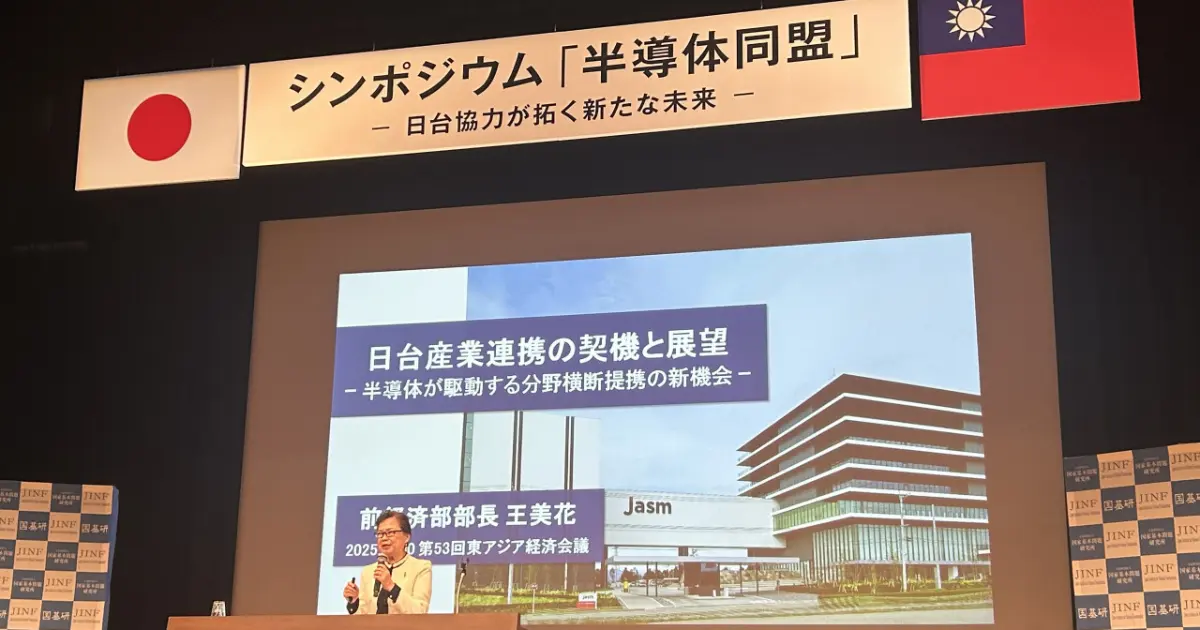
As geopolitical tensions reshape the global semiconductor landscape, Taiwan’s industry leaders are calling for stronger collaboration with Japan. At the center of this new alignment is TSMC, whose overseas expansion—from the United States to Japan—is redefining Asia’s supply chain. Experts say closer Taiwan-Japan ties could become a key counterbalance in the region’s technology race.
Global attention has focused on Taiwan Semiconductor Manufacturing Company’s (TSMC) expansion in the United States. When U.S. President Donald Trump publicly stated his wish to raise TSMC’s U.S. production share to 50 percent, concerns arose within Taiwan that such a move might lead to the “hollowing-out” of its chip industry. The debate centers on whether advanced processes and key technologies might shift abroad, weakening Taiwan’s manufacturing base.
However, at the Taiwan–Japan Semiconductor Alliance forum held in Tokyo on October 14, former Minister of Economic Affairs Wang Mei-hua firmly dismissed these concerns. She emphasized that more than 80 percent of TSMC’s production capacity remains in Taiwan and that new fabs are simultaneously being built across major hubs in Hsinchu, Taichung, and Kaohsiung.
Wang noted that Taiwan’s speed and efficiency in semiconductor plant construction have already set a global benchmark. Many of the new projects under way in the United States and Japan rely on Taiwanese teams for design and supervision, underscoring Taiwan’s leading position in global chip manufacturing. “TSMC’s fabs operate 24 hours a day, 365 days a year and still can’t meet demand,” she said. “Whether in advanced nodes like 3 nanometers and 2 nanometers or in mature processes, demand far exceeds supply—so there is simply no basis for fears of industrial hollowing-out.”
Lin Hong-wen, veteran semiconductor journalist and author of The Light on the Chip Island, echoed that view. “TSMC’s overseas fabs are driven by customer demand and supply-chain strategy, not by political pressure or diplomatic compromise,” he said. “Every TSMC investment is backed by rigorous return-on-investment calculations. It would never build a fab for political reasons.” Lin emphasized that as the world’s largest foundry, TSMC bases its decisions squarely on economic rationale and long-term competitiveness.
He further observed that Taiwan’s IC design sector now ranks among the strongest globally. Major players such as MediaTek, Novatek, and Realtek all place within the world’s top ten. “The next step,” Lin said, “is for Taiwan to actively link its design strengths with Japan’s prowess in semiconductor manufacturing and system development, helping Japan’s IC design industry accelerate its growth and internationalization, and building a more integrated Taiwan-Japan semiconductor ecosystem.”
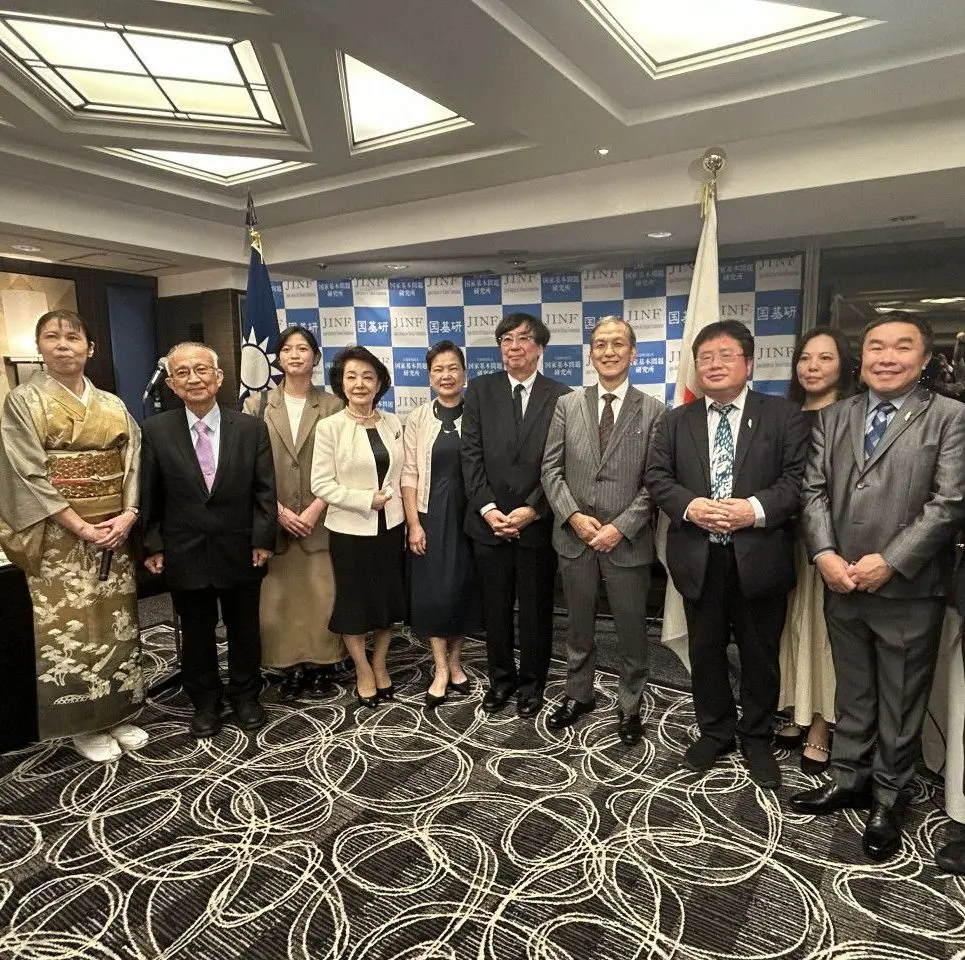
The forum, co-hosted by Akio Yaita, CEO of the Indo-Pacific Strategy Think Tank (IPST), and Yoshiko Sakurai, chair of the Japan Institute for National Fundamentals (JINF), brought together leaders from government, academia, and industry to discuss semiconductor collaboration and supply-chain security.
Addressing the question of whether TSMC’s overseas investment could hollow out Taiwan’s industry, Wang offered detailed evidence to the contrary. “In Hsinchu alone, four advanced-node fabs are operating; Taichung has another four under construction; Chiayi is focusing on advanced packaging; and Kaohsiung’s Nanzi district will host five new fabs for cutting-edge chips. All these sites are either under construction or in equipment-installation phases,” she said, highlighting the continuing expansion momentum of Taiwan’s chip manufacturing base.
She added that labor-mobility trends also tell a different story. “Over the past 15 years, the number of Japanese professionals working in Taiwan has doubled,” Wang said. “This reflects deepening industrial and human-talent linkages between Taiwan and Japan and demonstrates Taiwan’s attractiveness and competitiveness in the global semiconductor workforce.”
Wang stressed that Taiwanese companies expand strictly according to market demand, not through government subsidies or policy mandates. “Our firms build new fabs to meet customer needs,” she explained. “This differs from China, where central and local governments push policy-driven capacity expansion often leading to overproduction. In Taiwan, every investment is demand-driven and based on long-term customer relations, creating a healthy market-based cycle.”
Even amid geopolitical risk and U.S. tariff pressure, Taiwan’s semiconductor industry continues to show robust growth. “In August, Taiwan’s export value reached US $58.49 billion—surpassing South Korea for the first time and even exceeding Japan’s monthly export total,” Wang said. “This was once unimaginable.” She attributed the surge not only to Taiwan’s own strengths in manufacturing and R&D but also to contributions from Japanese material and equipment imports and Korean HBM (high-bandwidth memory) chips assembled in Taiwan—all key drivers behind the record-high exports.
Taiwan’s August Exports Hit Record High Wang Mei-hua: Japan and Korea Are Key Partners
Discussing Taiwan-Japan industrial cooperation, Wang pointed out that Japan’s government, industry, and academia are deeply engaged in reviving their semiconductor sector. “Our advice from Taiwan,” she said, “is that Japan should act faster. This industry keeps evolving; knowing what to do is important, but how and when to act is even more critical.” She emphasized that for Japan to regain competitiveness, it must execute policy and investment decisions more efficiently—an essential step to stabilizing Asia’s supply chain and sustaining export growth.
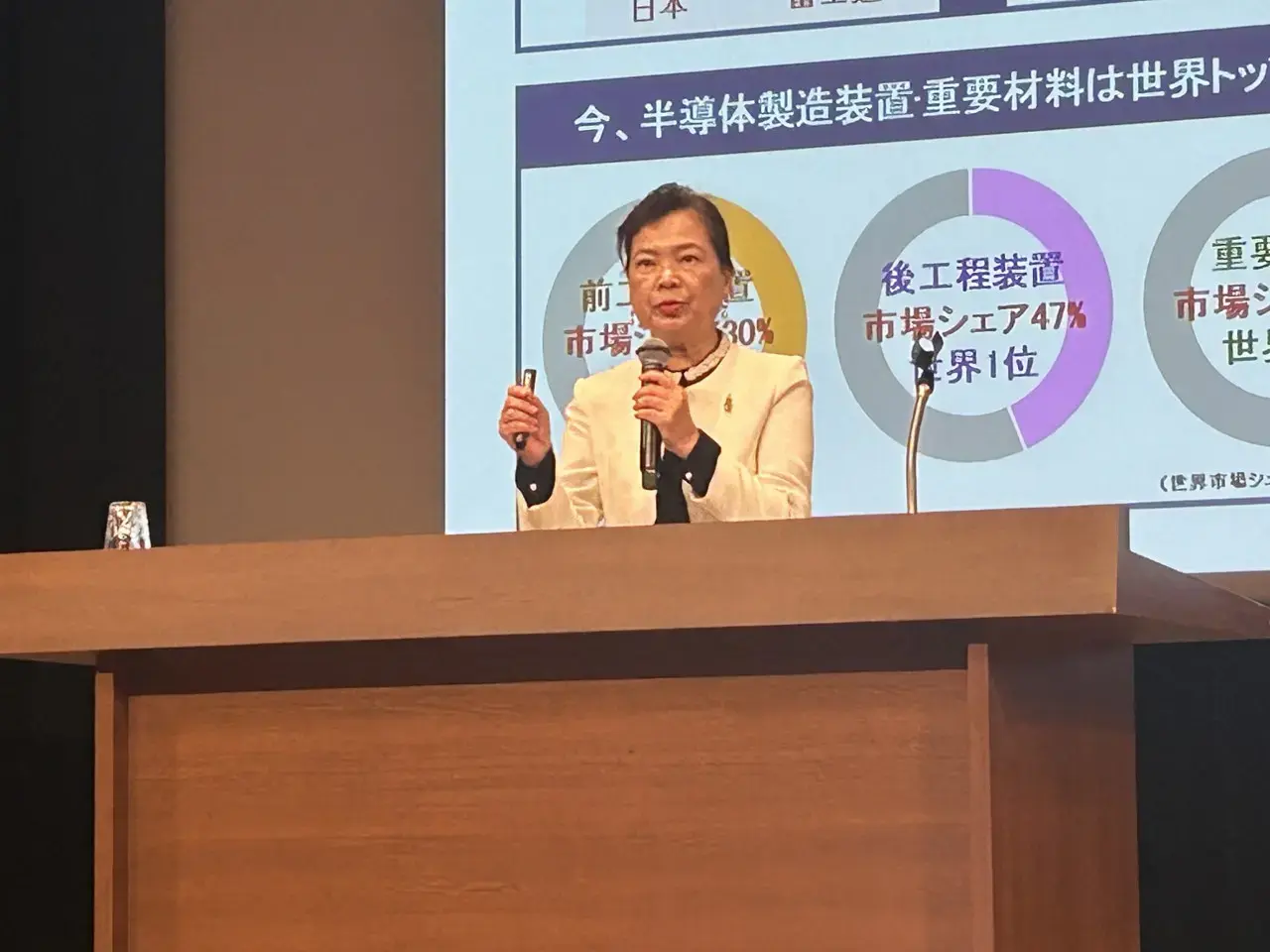
Wang also highlighted Japan’s shortage of STEM talent. “Only about 30 percent of Japanese university students are in science and engineering, compared with roughly 70 percent in Taiwan,” she said. “Such structural differences could limit Japan’s potential in high-tech industries. To strengthen competitiveness, Japan must restructure its talent pipeline and expand engineering education.”
She concluded by stressing that Taiwan and Japan should deepen cooperation in both semiconductors and AI, combining their respective strengths in manufacturing, materials, equipment, and design. “Through mutual exchange and complementary collaboration,” she said, “Asia as a whole can become the driving force leading the global technology industry.”
Minoru Kihara: Stability in the Taiwan Strait Is Japan’s Lifeline for Economy and Security Semiconductor Cooperation Is Now a Strategic Necessity
From both economic and security perspectives, Minoru Kihara, a core member of Japan’s Liberal Democratic Party and frontrunner for the next chief cabinet secretary, stated, “Stability in the Taiwan Strait is the lifeline of Japan’s economy and security. Japanese industry relies heavily on semiconductor supplies from Taiwan, and any disruption—whether by geopolitical or military factors—would severely damage Japan’s economy and directly threaten national security.” He added, “Taiwan-Japan semiconductor cooperation is no longer just an economic matter; it has become a strategic imperative.”
Kihara warned that East Asia’s security environment is deteriorating as China’s military power rapidly expands. “In April, China conducted large-scale military exercises around Taiwan, simulating a blockade,” he said. “This is not only a geopolitical warning but also a reminder that Japan must re-examine the close link between its semiconductor supply chains and national defense.”
“If a conflict erupts in Taiwan,” Kihara continued, “Japan will inevitably be deeply affected. Taiwan is the world’s largest semiconductor manufacturing hub. Any production halt or shipping disruption would throw global supply chains into chaos. The economic shock would far exceed that of the Russia-Ukraine war.” He stressed that this is “not a hypothetical scenario but a real challenge Japan must address in its industrial and security policy.”
Kihara further emphasized that “without semiconductors, no nation’s defense can function.” He noted that “the strategic value of Taiwan’s semiconductor industry has transformed the situation in the Taiwan Strait from an economic issue into a matter of Japan’s national security,” adding that “Japan must treat semiconductor development and cooperation as a matter of national strategy.”
He continued, “Japan must rebuild its semiconductor industry to ensure strategic autonomy. In the 1980s, Japan held more than half of the global semiconductor market, but that share has fallen below 10 percent. The government now aims to raise semiconductor sales to ¥15 trillion by 2030, with Kumamoto and Hokkaido as core hubs to integrate and upgrade Japan’s manufacturing, materials, and equipment capabilities.”
Kihara also said that TSMC’s decision to build in Japan marks a new phase in bilateral cooperation, prompting universities across Japan to invest more actively in semiconductor education and research. Kumamoto University, Kyushu University, and Taiwan’s National Cheng Kung University (NCKU) have jointly launched cross-border semiconductor programs and talent-training platforms. “Japan and Taiwan are building a new alliance centered on semiconductors—one that carries both economic and security significance,” he said.
In conclusion, Kihara urged Japan to prevent conflict through diplomacy while strengthening military deterrence and international cooperation. “Semiconductors are not just about industrial competition—they are the foundation of our survival,” he said. “Japan must act with speed, advancing policy, investment, and education simultaneously to safeguard its security and ensure supply-chain stability.”
Signs of Japan’s Semiconductor Revival The Taiwan-Japan Alliance Could Create a New Competitive Edge
Su Yan-kun, dean of the Semiconductor College at National Cheng Kung University (NCKU), observed that Japan’s semiconductor industry is showing clear signs of revival. Since restructuring began in 2020, Japan’s government and industry have established a three-stage strategy: first, importing mature technologies; second, advancing cutting-edge process development; and third, pursuing silicon photonics and next-generation high-frequency communication technologies. “Japan is taking a systematic approach to reclaim its place on the global stage and to rebuild a self-reliant semiconductor supply chain,” Su said.
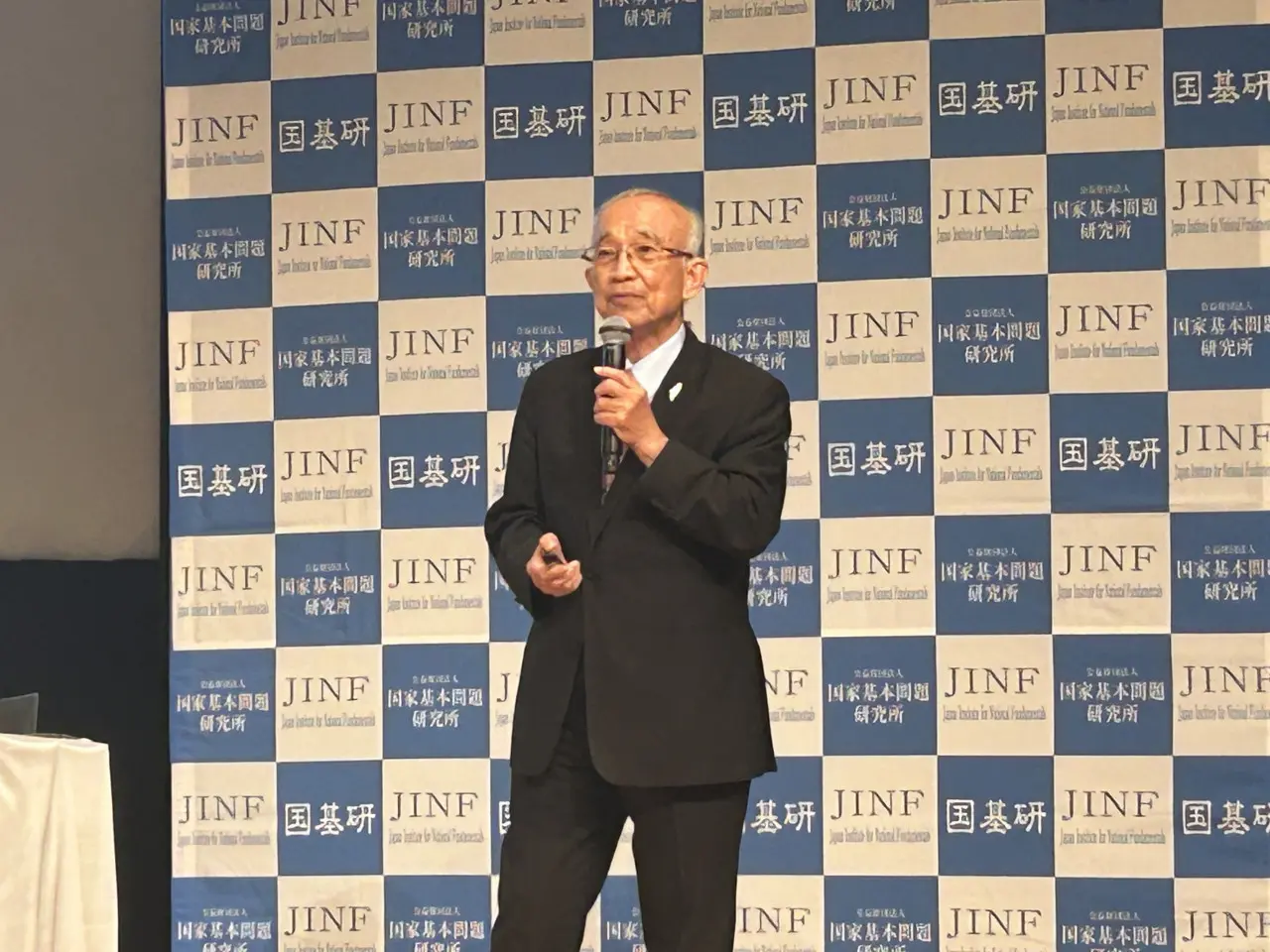
Reviewing Taiwan’s own development path, Su noted that Taiwan started more than 20 years behind Japan. “In 1976, the Industrial Technology Research Institute (ITRI) sent 19 engineers to RCA in the United States to study IC design, semiconductor manufacturing, packaging and testing, and equipment procurement,” he recalled. “Most of these young engineers held master’s or doctoral degrees and became the pioneers who opened the way for Taiwan’s semiconductor industry.”
After the establishment of UMC and TSMC, Taiwan built a comprehensive semiconductor ecosystem encompassing design, manufacturing, packaging, and testing. Entering the 21st century, the industry continued to grow and moved into the AI era. By 2025, Taiwan’s semiconductor output value is expected to reach NT$6.33 trillion (about US$200 billion), confirming its position as one of the most competitive and complete manufacturing hubs in the world.
By contrast, Japan once commanded more than 50 percent of the global market during the 1980s but declined after the Plaza Accord and the collapse of its bubble economy. Fortunately, with its deep expertise in materials and equipment, Japan still maintains roughly a 50 percent share in semiconductor materials and around 30 percent in equipment. “With TSMC’s Kumamoto fab and Rapidus’s new advanced facility in Hokkaido coming online, Japan is clearly regaining momentum—and one of its most critical partners is Taiwan,” Su said.
“Japan and Taiwan, if they work together properly, can create a genuine win-win relationship,” he added. “There is vast potential for collaboration in automotive power management chips, AI chips, and 3D stacking technologies. For example, combining Sony’s image sensor technology with Taiwan’s logic chip design could open new applications in 2.5D and 3D integrated packaging (Advanced Packaging), enhancing Asia’s influence in the global semiconductor arena.”
Su also highlighted the importance of talent. “If Japan hopes to restore its semiconductor glory, it must first adjust its talent structure and increase the proportion of science and engineering education,” he said. Academic collaboration between Taiwan and Japan is growing stronger. “For instance, NCKU and the Tokyo University of Science have co-hosted a Summer School program for three consecutive years, attracting Japanese students and professors to Taiwan for hands-on training and exchange. Building long-term complementarity between our two countries in both technology and education is crucial,” he said.
Su concluded, “Japan has solid research and development capabilities and clear policy determination. When combined with Taiwan’s manufacturing expertise and supply-chain integration experience, both sides can once again play a central role in the next wave of semiconductor innovation. Their cooperation goes beyond technical complementarity—it represents a shared effort to shape a new technological order in Asia.”
Lin Hong-wen: Taiwan-Japan Semiconductor Alliance Rapidly Evolving Across Three Dimensions
According to Lin Hong-wen, author of The Light on the Chip Island, cooperation between Taiwan and Japan has clearly accelerated since TSMC’s establishment in Kumamoto. “The partnership is moving beyond manufacturing integration toward co-creation of an innovation ecosystem,” he said. “The relationship is shifting from contract manufacturing to joint technological and research collaboration.”
Lin explained that TSMC’s Japan investment was based on customer demand and supply-chain strategy rather than political pressure or government intervention. “Every TSMC investment undergoes detailed financial analysis—it would never build a factory for political reasons,” he said. As Taiwan’s IC design industry continues to strengthen, with companies such as MediaTek, Novatek, and Realtek now among the world’s top ten, “the next step should be to combine Japan’s manufacturing and system-development capabilities with Taiwan’s design expertise to accelerate the growth of Japan’s IC design sector,” he said.
He added, “Taiwan possesses a robust ecosystem of silicon IP (intellectual property) and chip design services. If Japan can draw on these resources, it will be able to shorten product development and commercialization cycles, enabling more innovative ideas to reach the market.”
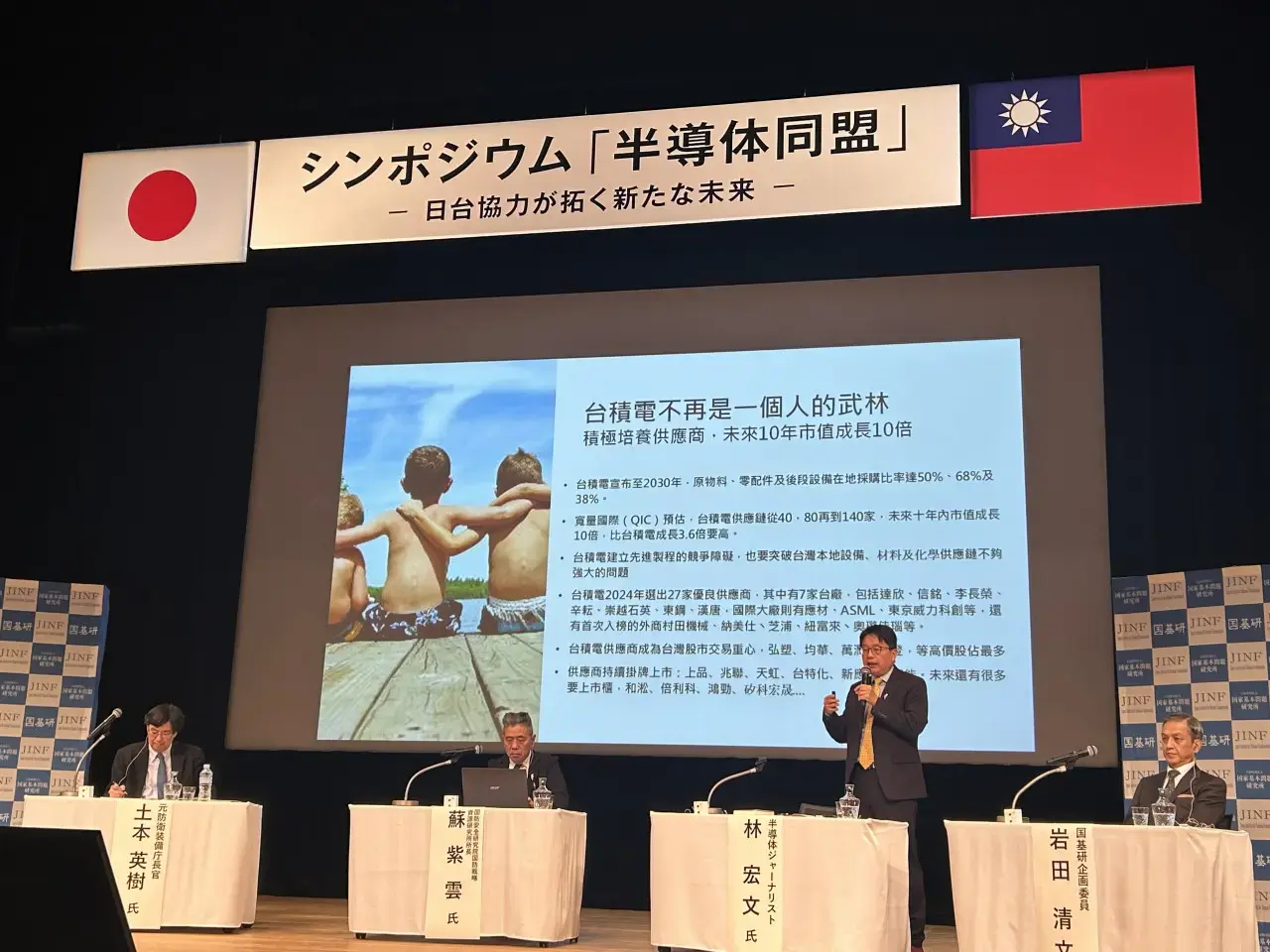
The second area of cooperation, Lin said, lies in linking academic research with industrial application. “Japan has deep foundations in basic research and talent development, while Taiwan excels at commercializing technology,” he explained. “Two-way collaboration between academia and industry could accelerate innovation in AI, materials science, and semiconductor processes, bridging laboratories and markets.”
Co-innovation and Entrepreneurship The Young Generation Turns Toward Japan
Lin identified the third pillar of collaboration as startups and entrepreneurship. “Japan’s government aims to foster 100 unicorn companies within five years, and Taiwan has set similar goals,” he said. “An increasing number of young professionals are choosing entrepreneurship over traditional corporate careers, and many Taiwanese startups are finding opportunities to thrive in Japan.”
He cited AI software company Appier as a prime example. “Appier has successfully listed in Japan, with more than 50 percent of its revenue coming from the Japanese market,” Lin said. “This demonstrates the high level of trust Japanese companies and investors have in Taiwan’s capacity for innovation.” He concluded, “The essence of Taiwan-Japan cooperation lies not in a single industry but in the fusion of culture, technology, and creativity. From chips to startups, the two nations can jointly build the next engine of growth.”
Grimm Compound Semiconductor, a professional supplier specializing in silicon carbide (SiC) technology, has long focused on the market development and technological evolution of third-generation compound semiconductors. Following the Tokyo forum, Wu Yi-chang, the company’s business division director, commented, “Most Taiwanese firms strongly support the concept of a ‘Taiwan-Japan Allied Supply Chain.’ Japan excels in equipment and materials, while Taiwan leads in manufacturing. The two sides naturally form a complementary relationship. However, every company must still protect its own interests. Only by understanding each other’s roles and maintaining a balance between competition and cooperation can both sides find the most advantageous position.”
Taken as a whole, the Taiwan–Japan Semiconductor Alliance forum revealed that cooperation between the two economies is moving beyond a simple supply-chain partnership into a new phase of co-developing technological strategies and industrial ecosystems. From government policy coordination to corporate investment, and from startups to academic exchange, both sides are demonstrating a shared determination to move forward together amid the ongoing global reconfiguration of the semiconductor industry.
Related Articles
Micron Announces Its Largest Rewards Ever. Its Taiwan Union's Demands Expose a Clash of Pay Systems. A strike threat at Taiwan's largest foreign investor, read in three dimensions
TSMC's 3nm rinse comes exclusively from AEMC, a Taiwanese company once withdrawn from the Emerging Stock Board
Taiwan AI Industry Upgrade Forum Series || Event Report:America Wants More Manufacturing. What Does It Take for Taiwan’s Suppliers to Follow?