From Stargate to Data Centers: AI Drives Power Demand, Taiwan’s Power-Supply Chain Accelerates
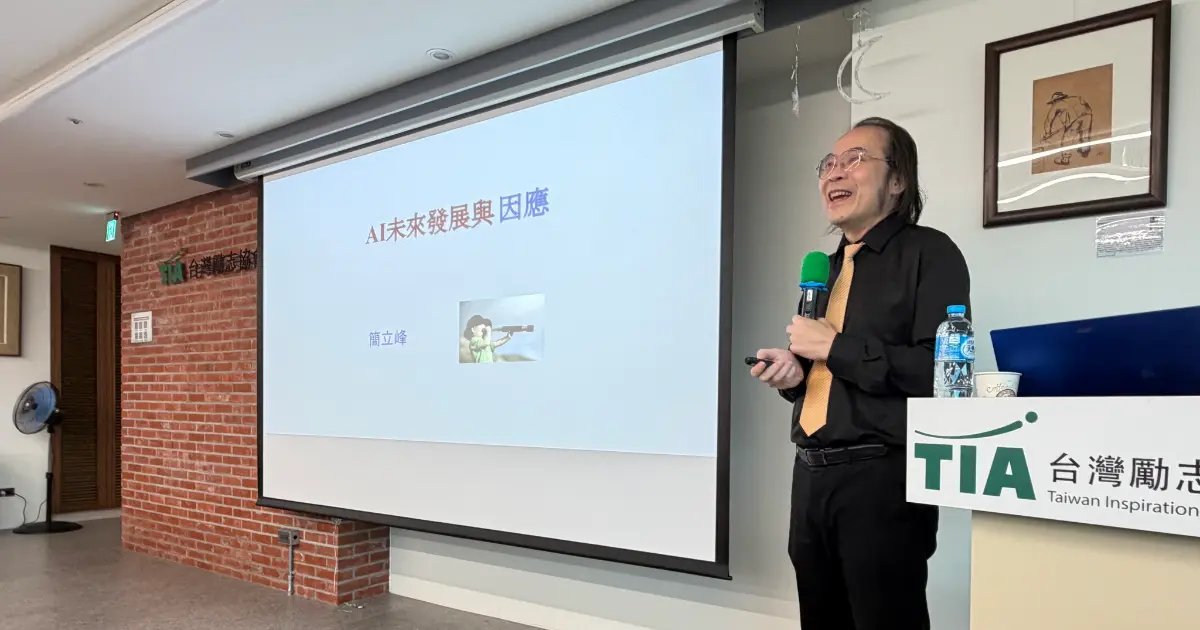
Recently I visited Inergy Technology Inc., a power-IC design company listed on Taiwan’s Taipei Exchange (TPEx) as 6693.TWO. Chairman Lin Mingzhang(林明璋) said Inergy has focused on power ICs for 18 years. As AI demand expands rapidly, the company has successfully entered related applications in recent years; AI now accounts for about 10% of revenue, and the internal goal is to lift that to 20–30% in 2026.
Inergy is a fabless designer of power and power-management ICs. 2024 revenue was about NT$1.094 billion, still small in scale. But AI demand has spilled over from GPUs and servers to thermal solutions and CCL copper-clad laminates, in turn driving an upgrade of power and power-management architectures. For industries not yet directly in the AI core, this presents an entry point to reposition business models and move up the value chain.
First, about Inergy. Founded in 2007, the company entered the field relatively late and therefore chose the less crowded DC/AC (DC-to-AC) market as its main track, gradually expanding into BLDC motor drivers, fan-driver ICs, and power MOSFETs. It is part of Taiwan’s local fabless design ecosystem, serving data-center and new-energy applications over the long term.
Founder and chairman Lin Mingzhang(林明璋) holds a Ph.D. in electronic engineering from National Chiao Tung University (now National Yang Ming Chiao Tung University). While in graduate school in 1997, he joined the nascent Anpec Electronics(茂達電子, 6138.TW) through his advisor’s introduction, becoming a founding team member and working in R&D for more than a decade before founding Inergy in 2007. Chen Shan-Nan(陳善南), Anpec’s founder, is regarded as one of the key drivers of Taiwan’s power-IC industry.

He recalls that during his studies he learned from leading scholars including Simon M. Sze(施敏), Chang, Chun-Yen(張俊彥), Wu, Ching-Yuen(吳慶源), and Ming-Dou Ker(柯明道); his advisor was Cheng, Huang-Chung(鄭晃忠). These mentors played a foundational role in Taiwan’s semiconductor education and research, forming a core lineage for local engineering and industry talent. Lin spent years in Lab 309, directly across from former NCTU president Wu, Chung-Yu(吳重雨) in Lab 307—days he still remembers fondly.
Taiwan’s Power-IC Ecosystem and Inergy’s Differentiated Path
Taiwan’s power-IC development can be roughly divided into three stages. In the first stage (DC/DC), representative firms included Analog Integrations Corporation (AIC, 沛亨半導體), Anpec(茂達), and Richtek Technology(立錡科技). In the second stage (AC/DC), Champion Microelectronic (CMC, 虹冠電子) and Leadtrend Technology(通嘉科技) stood out. As a later entrant, Inergy chose DC/AC as its point of entry, investing over many years before turning profitable. Most of these firms are Taiwan-based fabless IC designers that have long underpinned the local power-electronics ecosystem.
In recent years, Inergy also laid groundwork in automotive power/power-management ICs, focusing on high current and high reliability. Although automotive revenue did not scale as initially expected for the company, AI servers and data centers have surged, lifting the AI revenue mix to about 10%, with an internal target of 20–30% in 2026.
He noted that when he was a student, Morris Chang(張忠謀)—founder and former chairman of TSMC—gave a talk at the department. Lin asked him about the secret to entrepreneurial success. The answer: “Whatever you do, being fully prepared yourself is the most important thing.” As one of Taiwan’s most representative high-tech companies, TSMC has seen that maxim quoted repeatedly in local start-up and engineering circles. Looking back years later, Lin says he appreciates its implications for technical capability, product definition, and capital readiness.
From the perspective of overall AI trends, NVIDIA is not only leading the AI revolution but also raising power-density requirements in data centers, prompting comprehensive upgrades in power supply, power conversion, and thermal management. Demand for power-management ICs, high-efficiency PSUs, and power-distribution systems is rising in tandem.
Take “Stargate” as an example. OpenAI, SoftBank, and Oracle plan to build AI data centers in the United States, with investment potentially reaching US$500 billion. Over the next several years they aim to add five large campuses, with total capacity approaching 10 GW. On a full-year basis, 10 GW is about 87.6 TWh of electricity—roughly equivalent to the annual usage of five million U.S. households (based on average residential consumption). Projects of this scale also imply overseas opportunities for Taiwan’s supply chain in power, thermal solutions, and materials.
1 GW per year is about 8.76 TWh (8.76 billion kWh). Taiwan’s 2025 electricity consumption is estimated at about 320 billion kWh. By that yardstick, 10 GW of Stargate capacity would account for around 30% of national usage. As another reference point, TSMC’s electricity consumption last year was about 25.55 billion kWh, or roughly 9% of Taiwan’s total.
Capital Deployment in the AI Power-Hungry Era: Yageo and Delta Electronics
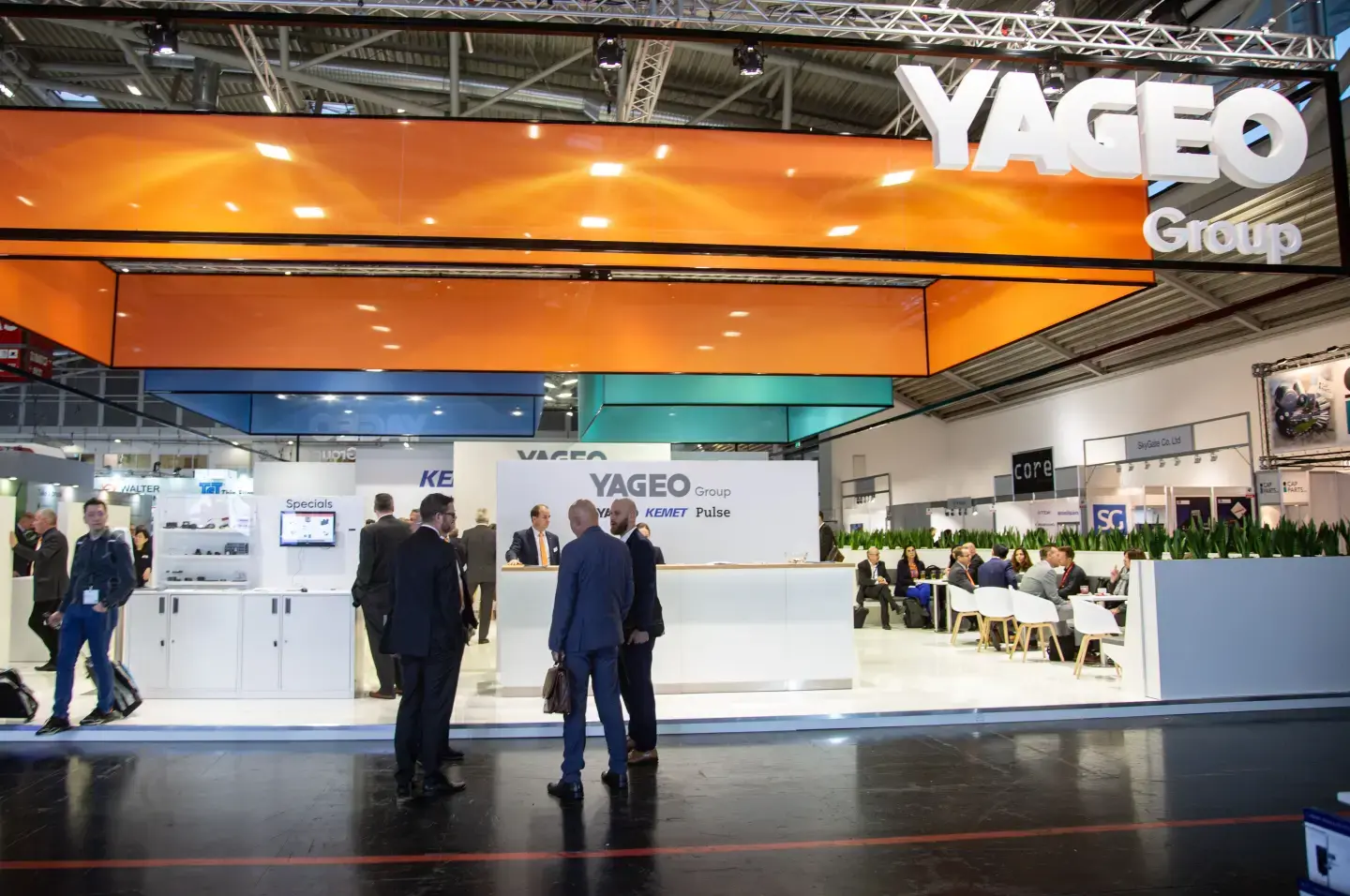
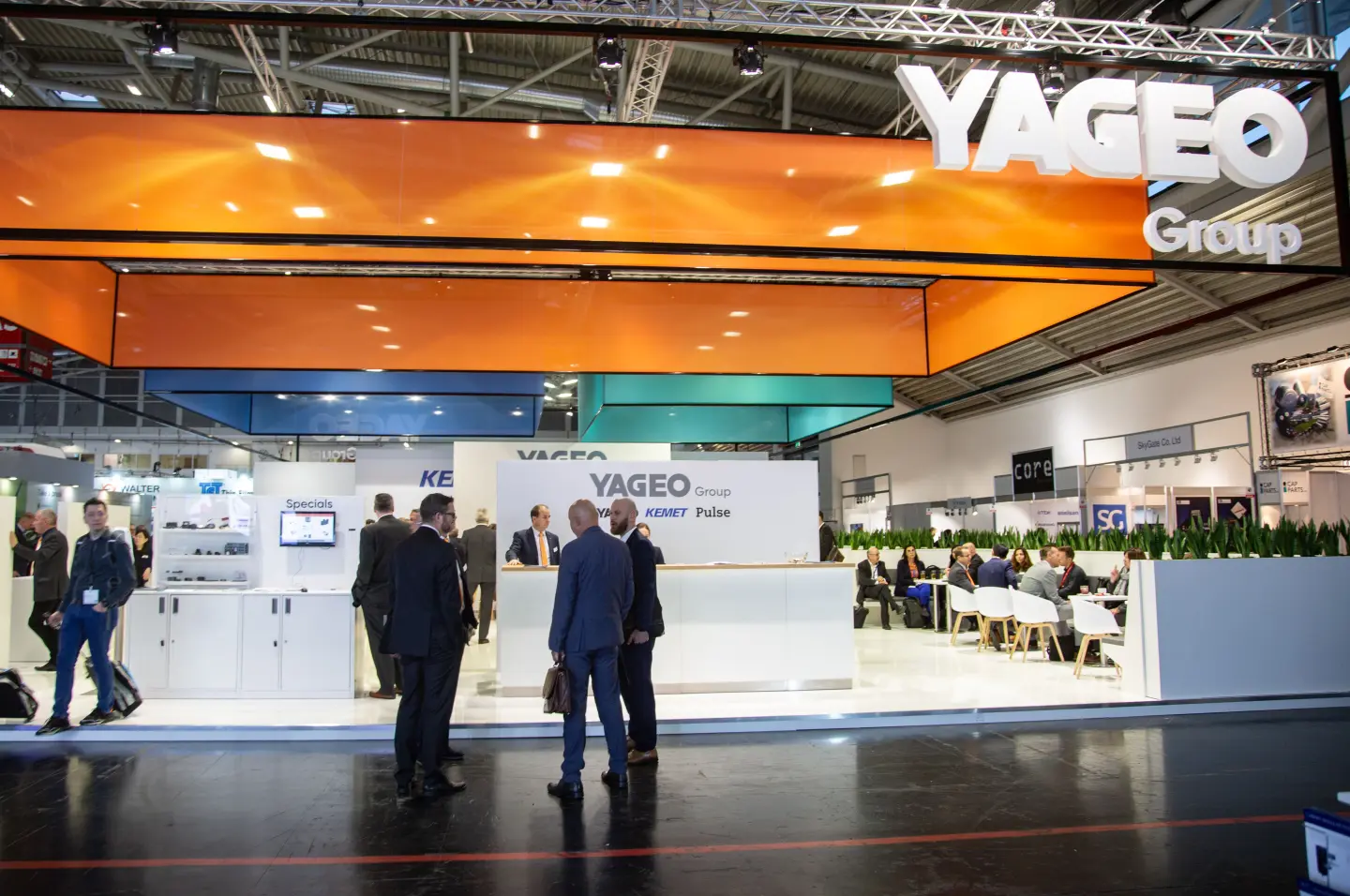
With electricity demand climbing, usage of PMICs and power ICs is rising sharply, accelerating capital deployment across the industry. The most notable move was Yageo(國巨, 2327.TW) launching an unsolicited tender offer for Anpec(茂達).
Yageo is a leading passive-component maker. In recent years it has not only acquired U.S. and Japanese passive-component firms to round out its portfolio but also ventured into power-management IC design. It has invested a total of NT$13.1 billion across Advanced Power Electronics(富鼎先進, 8261.TW), uPI Semiconductor(力智電子, 6719.TW), and Anpec(茂達, 6138.TW).
In semiconductor taxonomy, ICs are active components, while the resistors, capacitors, and inductors where Yageo excels are passive components. Passive parts do not generate or amplify energy; they dissipate, store, or regulate it. Active components require external power and can amplify or control signals.
Because AI is driving a surge in power processing, passive components tend to scale in quantity with active components; more actives in a device generally means more passives as well. Yageo has built a capability that rivals global leaders such as Murata Manufacturing(村田製作所) in passives and, by combining that with M&A experience and capital strength to cover both active and passive sides, has strengthened its bargaining power with large enterprise groups and further enhanced its global competitiveness.
Amid Taiwan’s supply chain, Delta Electronics(台達電, 2308.TW) has also gained prominence on the back of AI-driven demand for power and power supplies. Long known as a steady compounder, Delta has recently accelerated growth and become a leader in AI power supplies. Using 2024 market estimates for the top 15 power-supply vendors, the total market was about NT$500 billion, of which Delta accounted for about NT$171 billion, or a 34% share.
As of November 2025, Delta’s market capitalization reached about NT$2.7 trillion, placing it third on Taiwan’s stock market, behind only TSMC and Hon Hai, and ahead of MediaTek, Fubon Financial, and Quanta. In this period of sustained AI growth, companies should seize the paradigm-shift opportunities in power and power-architecture upgrades to redefine product portfolios and business models.
Related Articles
Micron Announces Its Largest Rewards Ever. Its Taiwan Union's Demands Expose a Clash of Pay Systems. A strike threat at Taiwan's largest foreign investor, read in three dimensions
TSMC's 3nm rinse comes exclusively from AEMC, a Taiwanese company once withdrawn from the Emerging Stock Board
Taiwan AI Industry Upgrade Forum Series || Event Report:America Wants More Manufacturing. What Does It Take for Taiwan’s Suppliers to Follow?