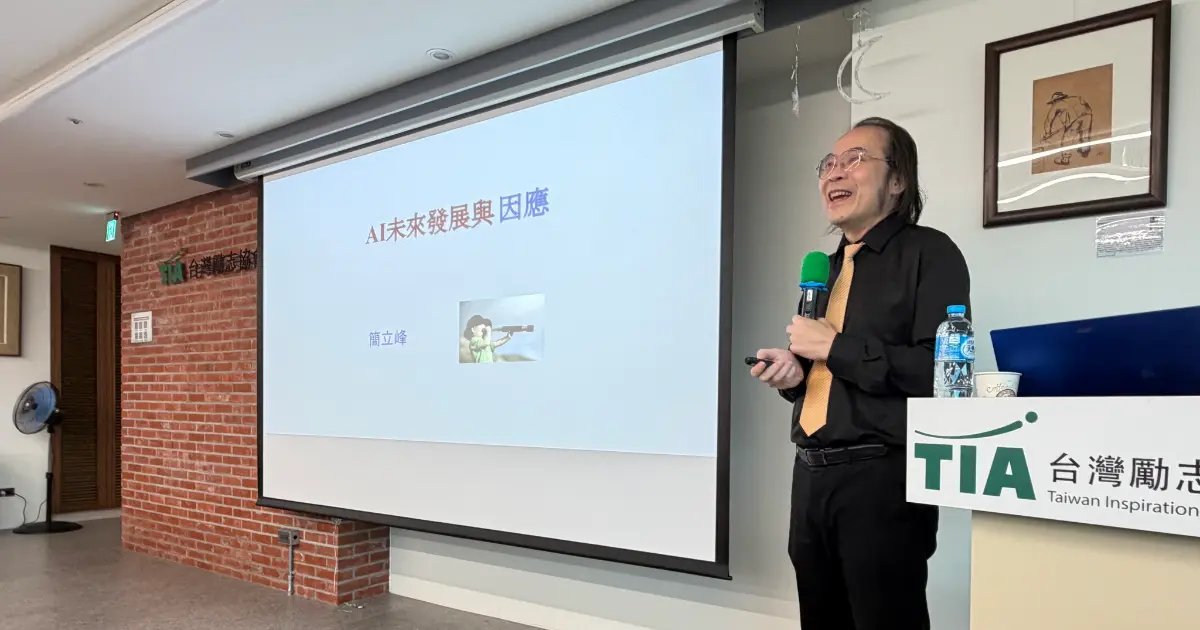
TSMC’s 3nm in Kumamoto is More Than an Investment: 3 Key Explicit and Implicit Meanings
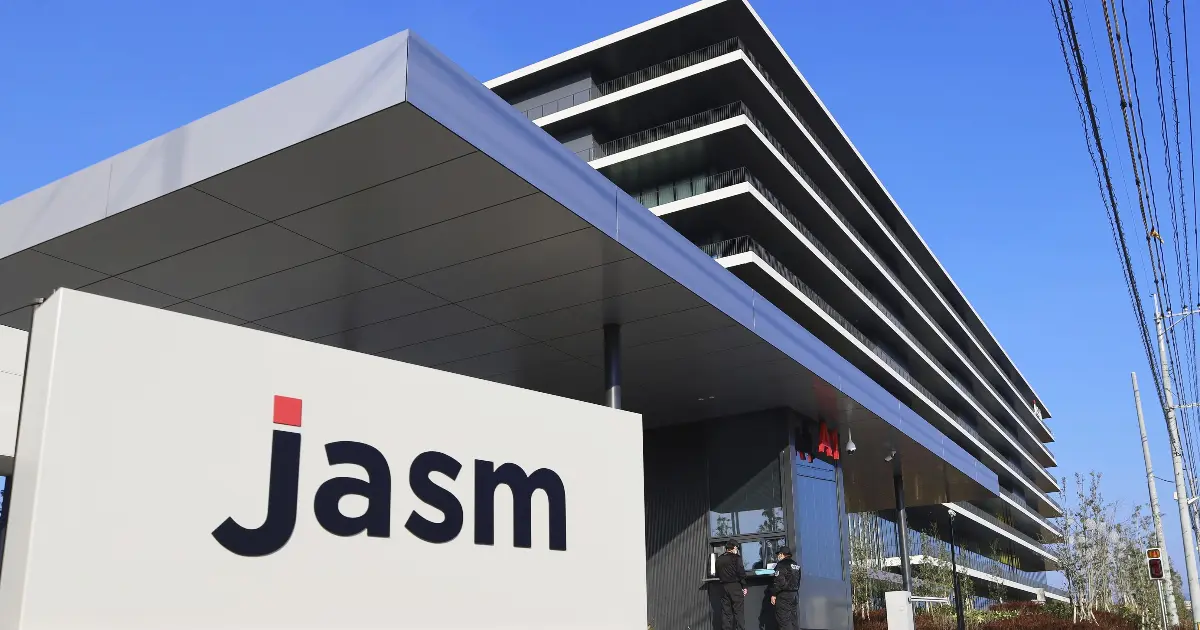
Yesterday (Feb 5), TSMC Chairman C.C. Wei met with Japanese Prime Minister Sanae Takaichi, announcing that Kumamoto Fab 2 will directly adopt 3nm process technology. This layout is not only of major significance to the Japanese semiconductor industry but also represents a further alliance of the U.S.-Japan-Taiwan semiconductor industries. It will bring concrete impacts and contributions to the development of the U.S.-China competition and geopolitics.
Currently, TSMC’s Kumamoto Fab 1, which has already entered mass production, has process technology nodes at 12/16nm and 22/28nm. The mass-produced products mainly consist of SONY’s CIS chips (image sensors), as well as automotive and industrial semiconductors, for which Japan has high demand.
As for the original production plan for Kumamoto Fab 2, it was intended for 6nm to 12nm. However, because the chip demand driven by AI is simply too strong, and TSMC’s expansion speed in the U.S. and Taiwan currently cannot keep up with demand, it was finally decided to skip mature processes and directly announce the upgrade of Kumamoto Fab 2 to 3nm advanced process technology.
This 3nm investment case by TSMC will have at least three major dimensions of influence that are worth further discussion.
Meaning 1: Japan Becomes a Super Strategic Stronghold
First, for TSMC, this is a cautious yet aggressive new strategy.
For TSMC, mass production after Kumamoto Fab 2 is built will be a matter of two or three years from now—meaning the mass production time should be in 2028 or 2029. By then, Taiwan will have already moved to A16 or A14, which is 1.6nm or 1.4nm (the Angstrom era). The process technology of overseas fabs will still be N-2 or an even lower-tier technology compared to Taiwan's fabs, which aligns with TSMC's current overseas investment principle of "Leading in Taiwan, Global Layout."
However, this is also a super-strong strategy TSMC has launched for the Japanese market. On one hand, it can aggressively compete for domestic Japanese orders in AI, self-driving cars, robotics, and more. On the other hand, for Rapidus—the company viewed as the hope for Japan's semiconductor revival, which will enter mass production in 2027—TSMC will also be an ultra-strong competitor. Rapidus must respond very carefully and seriously.
Furthermore, there is another benefit. Currently, there is a severe global shortage of advanced process chips. The future customer targets of Kumamoto Fab 2 may no longer be limited to Japanese domestic enterprises. In the future, orders from major European and American firms whose needs cannot be met will have the opportunity to move to Kumamoto for production.
Therefore, in the future, Japan is expected to become TSMC’s second semiconductor production stronghold in Asia, outside of Taiwan, with advanced process technology and order-taking capabilities. As for U.S. President Trump, Japan is a steadfast strategic ally of the United States. If major U.S. firms move their orders to Kumamoto for production in the future, it will not be a location that the U.S. opposes.
Meaning 2: A Lifting Effect on Japan’s Development of IC Design
Secondly, for the Japanese semiconductor industry, TSMC’s 3nm investment also has positive and active significance for Japan.
As the earliest advanced major power in Asia to develop the semiconductor industry, Japan was clearly surpassed by South Korea over the past thirty years. There is an ambition within Japan to rejuvenate and revive. Finding Taiwan as a helper now makes for the most complementary and mutually beneficial win-win partner.
Kumamoto is located in Kyushu, and Kyushu is the Japanese territory closest to Taiwan; it can be reached in just over two hours by plane. In the future, the industrial correlation between Kyushu and Taiwan will further increase.
TSMC upgrading the process technology of Kumamoto Fab 2 to 3nm not only brings a revival opportunity for Japanese semiconductors but also greatly helps the transformation and upgrading of Japan’s overall semiconductor industry.
For example, for Japan’s already leading suppliers of semiconductor equipment, materials, and chemicals, the future capital expenditures and investments related to 3nm will be huge business opportunities for these Japanese supply chains. Moreover, these Japanese suppliers can also develop toward even more advanced process technologies, with more opportunities for refinement and upgrading in the future.
Not only that, setting up 3nm semiconductor capacity in Japan will also bring a very significant lifting effect on prompting Japan to develop toward more advanced process IC design and product development.
In the field of IC design, Japan has not had very outstanding performance for many years. It hasn't had IC design companies like those in the U.S., Taiwan, or mainland China, which have long since become another "leg" of industrial development competitiveness. As for the large IDM (Integrated Device Manufacturing) plants, they are now very backward in product design. Therefore, TSMC’s Kumamoto Fab 2 has the effect of stimulating Japan to develop products toward more advanced process technologies.
In fact, I have mentioned this point many times when giving speeches in Japan. In the past, TSMC was a good helper in helping the U.S. semiconductor industry upgrade; in particular, the U.S. IC design industry became a world winner because of TSMC. In the future, TSMC can also help Japan make progress and take the lead in product design again.
I have also emphasized many times that for Japan to develop IC design now, it doesn't necessarily have to do everything itself. In fact, Japan’s SoftBank is currently the largest dominant shareholder of ARM Holdings, and ARM is the leading IP (Intellectual Property) firm in the IC design field. Therefore, Japanese people are not only not strangers to the IP industry, but they also quite understand the value these companies can bring.
Therefore, I have suggested many times that Japan can fully utilize Taiwan’s IC design services and ASIC (Application-Specific IC) industry chain—meaning companies like GUC, Alchip, eMemory, and Andes, which provide silicon IP components, or MediaTek, which also provides ASIC chip design services for major manufacturers. Taiwan’s mature and vital IC design industry chain is a boost that Japan should make good use of.
Of course, for Japanese industry, Rapidus will be the enterprise that faces more challenges. This company, partnered with the U.S.’s IBM and Belgium’s imec, expects to enter 2nm mass production in 2027 and will then engage in "hand-to-hand combat" directly against TSMC. But from another perspective, with a competitive threat like TSMC, it’s hard to say it will necessarily be a negative impact on Rapidus; perhaps it may also stimulate it to become stronger. How things change in the future is worth observing.
Overall, the Kumamoto 3nm fab is definitely much more positive than negative for Japan as a whole. Now, Japan is entering a stage of major reform, and Prime Minister Sanae Takaichi has also been constantly calling for Japan to support the government's determination for reform; otherwise, it will be difficult for Japan to become a competitive world-class nation.
I believe that TSMC’s investment in the Kumamoto fab will produce a huge stimulating effect for Japan and will be a very significant opportunity for the future growth of Japanese industry.
Meaning 3: The Investment Case Expresses Support and Gratitude to Takaichi
As for the final point, under the situation of U.S.-China confrontation, geopolitics is still constantly fermenting. I believe the upgrade of Kumamoto Fab 2 to 3nm at this moment also holds important significance.
Among these, I believe the most important is that before the Japanese Diet elections on February 8, Wei Zhejia chose to meet with Sanae Takaichi on February 5. Sanae Takaichi's polls and popularity are both very high. TSMC choosing to announce at this moment is equivalent to giving her a helping hand in the general election. It can also be seen that Wei Zhejia's political sensitivity is quite high.
Not only that, TSMC now possesses international influence. This announcement also expresses gratitude to Prime Minister Takaichi, who has always been very sincere toward Taiwan and has long-term support. Takaichi has many times proposed that "A Taiwan emergency is a Japan emergency" and has suffered strong protests and economic sanctions from China.
During the meeting, Wei Zhejia specifically brought the book published by Sanae Takaichi in 2021, Toward a Beautiful, Strong, and Growing Nation: My Plan for Strengthening the Japanese Economy, and stated that he has long supported Takaichi’s policy concepts, making Prime Minister Takaichi open her mouth wide on the spot, showing a surprised and happy expression.
Through the Kumamoto 3nm investment case, Wei Zhejia expresses Taiwan's support and gratitude toward Japan. It can be said that the meaning is beyond words; all Japanese and Taiwanese people who have experienced being bullied by a powerful country should be able to feel it.
Related Articles
Micron Announces Its Largest Rewards Ever. Its Taiwan Union's Demands Expose a Clash of Pay Systems. A strike threat at Taiwan's largest foreign investor, read in three dimensions
TSMC's 3nm rinse comes exclusively from AEMC, a Taiwanese company once withdrawn from the Emerging Stock Board
Taiwan AI Industry Upgrade Forum Series || Event Report:America Wants More Manufacturing. What Does It Take for Taiwan’s Suppliers to Follow?