From Tamagotchi Chips to a Trillion-Dollar Stock: How Hon Precision Became the Last Gate Before Nvidia's Chips Ship
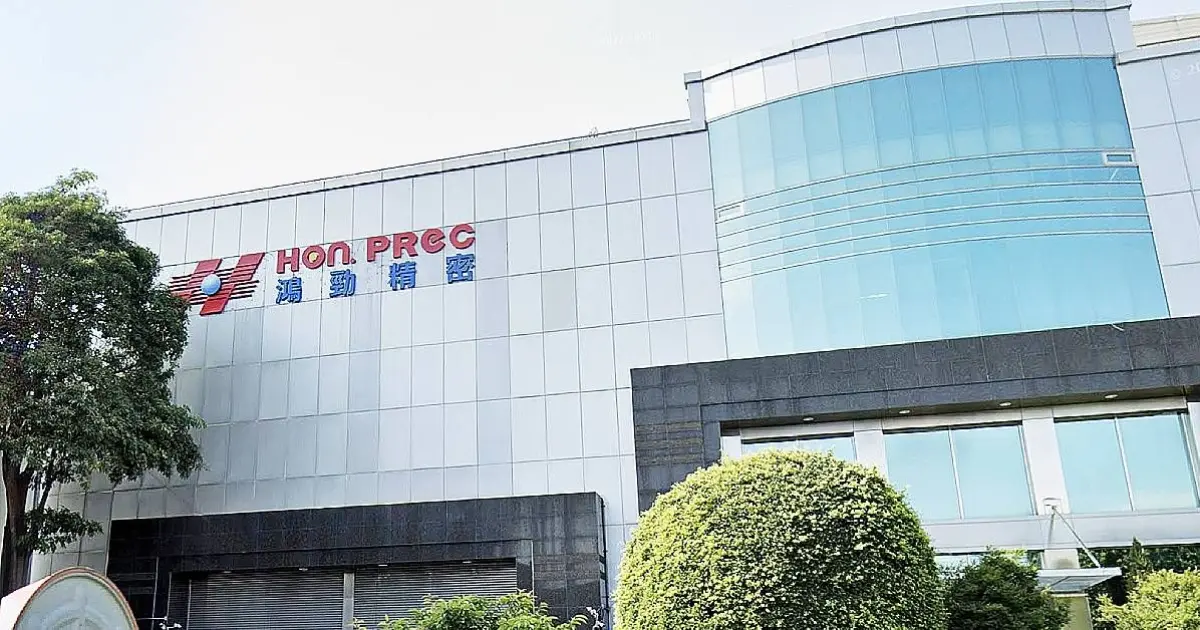
Last year, a company most of the media had barely noticed went public and rewrote the record for the highest IPO offering price in the history of Taiwan's stock market; within six months of listing, its market value had broken NT$1 trillion (≈US$39 billion). It began by testing the chips inside Tamagotchi toys. Today, the AI chips of Nvidia, AMD, Google and AWS almost all have to be tested on this company's equipment before they ship. How did it get here — and should the trillion-dollar valuation the market has handed it really be believed?
The Biggest IPO in Taiwan's History — A Company Barely on the Media's Radar
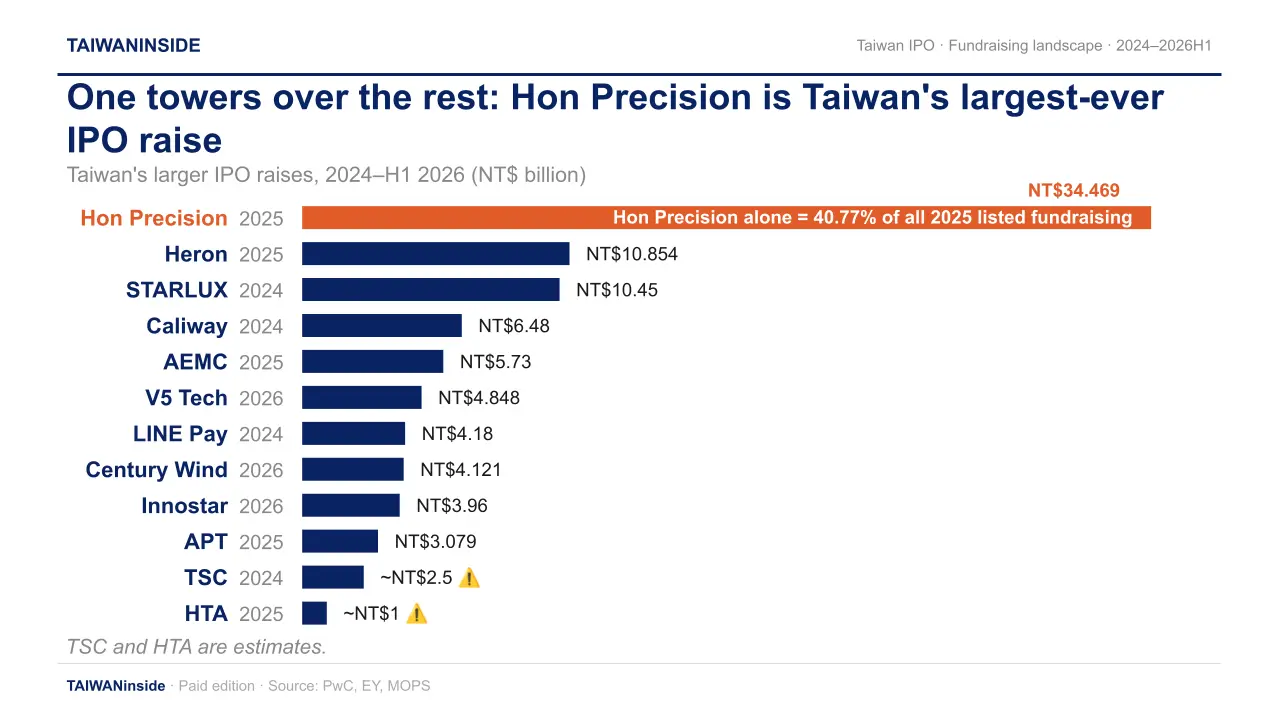
Something Edith Lee, president of the Taiwan Stock Exchange (TWSE), said at a forum recently caught my attention. For a long time, she noted, people have assumed Taiwan is a small market where a company can't raise much by going public. Yet last year one company listed here and raised more than NT$34 billion (≈US$1.1 billion) through its initial public offering (IPO) alone. Her point: the appeal of Taiwan's capital market is no longer what it once was.
Lee did not name the company. But a quick look tells you who she meant — and I know very well how this company made its way to where it is today.
The company she was describing is Hon Precision, Inc. (TWSE: 7769).
On November 27, 2025, Hon Precision listed at NT$1,495 (≈US$48) per share, rewriting the record for the highest IPO offering price in Taiwan's history. Even before it listed, the public subscription had set off a nationwide scramble: at the time Hon Precision's emerging-board price was far above the NT$1,495 offering price — a gap of nearly NT$1,000 — so a single winning lot meant an instant paper gain of nearly NT$1 million. An estimated 200,000-plus applications poured in, the allotment rate fell below 2%, and an estimated NT$300 billion (≈US$9.5 billion) of market funds was frozen. Six months after listing, its market value broke NT$1.22 trillion and it entered the Taiwan 50 index.
But what makes this story remarkable to me is not these numbers. It is the founder, Wen-Ta Hsieh — a machinist who graduated from the mechanical-design department of Taipei Institute of Technology and started out testing the chips in Tamagotchi toys, not a brand-name MBA and not a senior executive parachuted in from a global giant.
How does someone who began by testing Tamagotchi chips end up at a point where the world's most expensive AI chips almost all have to pass through his equipment before they ship? And why is it “him” who could set off a nationwide subscription frenzy?
Doing the Most Overlooked Corner of Chip Testing
Before a chip leaves the packaging house and goes to a system maker for assembly, it undergoes one last quality gate the industry calls Final Test (FT). This step uses three kinds of equipment: the tester (which sets the exam and verifies electrical function); the handler (which moves each chip precisely to the test site and sorts it by quality and grade); and the Active Thermal Control system (ATC, which holds the test environment's temperature steady within the required range).
〔Localization | EN | factual context〕For readers less familiar with Taiwan's chip supply chain: the foundry (TSMC and others) makes the wafer; the packaging-and-test houses (OSATs) package and test the finished chips; and companies like Hon Precision supply the equipment used for that final, pre-shipment testing.〔/Localization〕
Hon Precision does not touch the tester — the “exam-setting” machine — a market long carved up by Japan's Advantest and America's Teradyne. It focuses on the other two: the handler that moves and sorts, and the ATC that controls temperature.
This used to be an utterly unglamorous corner of the equipment business. Test equipment is only about 7% of the total semiconductor-equipment market; foreign testers take about 60% of that, leaving handlers at roughly 18%. But once AI arrived, this little corner became a matter of life and death. The reason is simple: an AI chip can draw hundreds of watts, so it heats up the moment you test it, and if the temperature drifts the test gear will misjudge good chips as bad and bad as good. Whether you can hold temperature steady under high power went from a “nice-to-have” to the very threshold of “can you test an AI chip at all.”
Two Key Questions: A Jarring Time Span, and a Rich Valuation
There are two things about Hon Precision worth separating out first.
The first is the jarring time span. Two decades ago this was a small shop that could only take low-end consumer-IC test orders — pagers, cordless phones, Tamagotchi toys — for customers like Sunplus, ELAN and Winbond. How did it get to the point where the GPUs of Nvidia and AMD and the ASICs (custom chips) of Google and AWS almost all have to clear its equipment before they ship? What happened in between is the real heart of this story.
The second is the valuation. Hon Precision's price-to-earnings ratio today is several times that of a traditional semiconductor-equipment stock, and its market value has crossed a trillion NT dollars since listing. Does that price reflect a moat others can't cross for a long time to come, or a bubble pumped up by the AI wave that could deflate at any moment? I'll answer that later in the piece, in a structured way.
Founded in 1999: Why Wen-Ta Hsieh Deliberately Avoided the Tester
To understand Hon Precision, you have to go back to 1999, to a starting point no one had any faith in.
The semiconductor test-equipment world back then belonged to the giants. The exam-setting testers were firmly held by Advantest and Teradyne; the handler market for moving and sorting was led at the time by Japan's Seiko Epson. For a Taiwanese engineer with no resources and no name to squeeze into a market cleanly divided among foreign firms was all but impossible.
Hsieh's choice was two “unreasonable” decisions stacked on top of each other.
First, he refused to touch the highest-tech, fattest-margin testers, which would have meant a head-on collision with Advantest and Teradyne; he chose the handler, where there was still a crack to slip through. In 1999 he left Taiwan Esmo, a burn-in test-equipment maker where he was a founding member, and started Hon Technologies on his own (today's Hon Precision was spun off only in 2015).
Second, even within handlers he did not pick the easy business. Unable to break into the global majors' supply chains, Hon Precision could only take the orders those majors looked down on — pagers, cordless phones, Tamagotchi toys. These chips took little time to test, sold for little, carried thin margins and drew plenty of complaints: the classic “work nobody wants.” But Hsieh brought in Jung-Li Chang Chien, who was good at writing game software, and Te-Kuei Weng, who had years of hands-on experience in packaging-and-test houses; the three split hardware, software and sales into the “iron triangle” that remains unchanged to this day, and they ground out that thankless work.
Looking back, it was precisely the skills honed over and over in those low-end orders — clearing faults fast, customizing machines, staying close to the customer's line — that became Hon Precision's real foundation.
The problem was that a foundation alone still couldn't out-compete Epson. So Hon Precision came up with an approach that sounds foolish, yet rivals couldn't copy.
Premium Members Only
This is a premium article. Please join our membership to read the full content.
Become a member to unlock all in-depth reports and exclusive analysis.
Already a member? Login Now
Related Articles
Micron Announces Its Largest Rewards Ever. Its Taiwan Union's Demands Expose a Clash of Pay Systems. A strike threat at Taiwan's largest foreign investor, read in three dimensions
TSMC's 3nm rinse comes exclusively from AEMC, a Taiwanese company once withdrawn from the Emerging Stock Board
Taiwan AI Industry Upgrade Forum Series || Event Report:America Wants More Manufacturing. What Does It Take for Taiwan’s Suppliers to Follow?