Why Is an American Giant With 80% of Its Market Paying US$16 Million for a Small Taiwanese Company’s Technology? It All Comes Down to TSMC’s Ecosystem Threshold
An American company holding more than 80% of the global market for contamination-control equipment is paying a one-time licensing fee of US$16 million for technology from a small Taiwanese manufacturer — a 15-year deal signed with Taiwan’s deputy economics minister in attendance. Why did the giant come calling? And what is each side really counting on?(Exchange rate used in this article: NT$31.4 = US$1.)
“That’s right — we’re brothers from different fathers and different mothers.”
The joke comes from Wu Ming-chih, chairman of Asia Neo Tech Industrial, a Taiwanese maker of semiconductor cleaning equipment. Many years ago, he told me in an interview, on the day he first met David Jarzynka, chief executive of the American semiconductor-automation group Brooks Automation, Wu had just finished describing how he worked his way up from a vocational school’s work-study program. Jarzynka’s response: we’re brothers!
Wu, feeling the same instant kinship, answered with the line above. In Taiwanese banter, calling someone a “brother from a different father and a different mother” — that is, no blood relation whatsoever — is a wry way of declaring sworn brotherhood.
And the two companies they run were, until now, potential competitors in the same market.
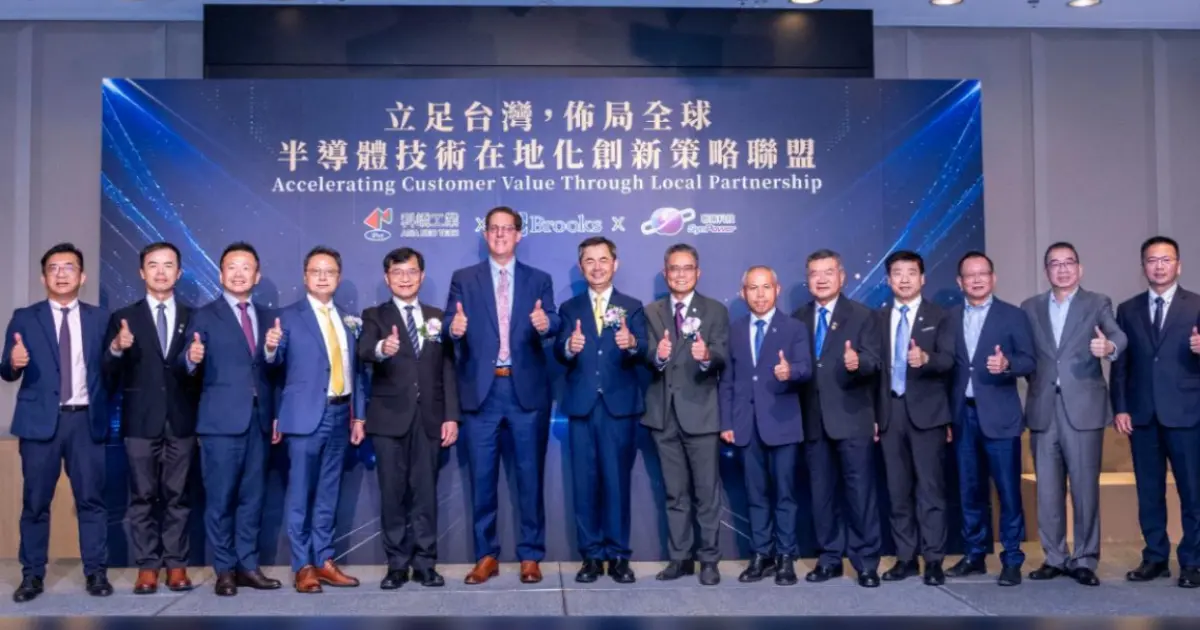
On June 30, 2026, the two semiconductor-equipment competitors sat down together and signed: Brooks, which holds more than 80% of the global contamination-control equipment market, will pay a one-time licensing fee of US$16 million (about NT$500 million) to Asia Neo Tech for an exclusive license to its FOUP (Front Opening Unified Pod) cleaning equipment. Through the license, Brooks can fold this Taiwanese technology into its own brand and global channels, sell it to fabs around the world, and answer TSMC’s demand for supply-chain localization at close range. For a small equipment maker like Asia Neo Tech, US$16 million equals roughly 70% of its 2025 revenue — and it means seven years of R&D can now go global without the company building its own brand or overseas channels.
The giant with 80% of the market bought its way into cleaning, too
TSMC and other wafer fabs move wafers through their plants in sealed containers called FOUPs. If a wafer is a precision cake worth millions of dollars, the FOUP is the cake box — and if the box is not clean, the cake is ruined no matter what it cost. As AI chips move wholesale into advanced packaging such as CoWoS, cleanliness requirements have turned brutal, and “washing the box” has become a specialized business.
Brooks Automation is the dominant force in that business. Founded in 1978 and headquartered in Massachusetts, Brooks is the leading maker of semiconductor automation and contamination-control equipment. According to the presentation Brooks gave at a Taipei press conference in late June , the company now holds more than 80% of the global contamination-control market and operates from 80 locations worldwide. In 2021, Brooks’s parent company split itself up: Boston private-equity firm THL bought the entire semiconductor-automation business for US$3.0 billion in cash, taking it private in 2022; the same presentation put revenue at US$897 million . Brooks’s customers run from TSMC, Intel and Samsung to chipmakers in mainland China. Jarzynka says the company has more than 40 years of semiconductor experience and customers in “every fab on Earth.”
Brooks bought its way into carrier cleaning in the first place — in 2014, it acquired DMS, a German maker of automated cleaning equipment, for about US$31 million to enter the field. Twelve years later, Brooks is paying for technology again. This time the seller is in Taiwan.
The seller, Asia Neo Tech, and its fellow signatory SynPower Technology both belong to an 18-company alliance of TSMC suppliers organized under TSS Holdings — both small and mid-sized Taiwanese equipment manufacturers.
The contract runs 15 years, and US$16 million is only the first installment. Under the two companies’ plan, as Asia Neo Tech achieves each milestone meeting the requirements of the customers — meaning TSMC and Brooks — the corresponding payments follow per the contract; once the equipment sells worldwide, Asia Neo Tech collects royalties on top.
From Asia Neo Tech’s side, granting an exclusive license to a company with 80% of the global market means handing over the road its own brand could have taken to the world. A company that has just turned semiconductors into its high-margin growth engine — why would it sign that away? The answer starts with the ecology of TSMC’s supply chain.
TSMC’s threshold: multinational scale and on-call local service, both required
TSMC sets an extremely high bar for suppliers. On one hand, it demands the scale and risk tolerance to serve a multinational market; on the other, service teams in Taiwan that answer the call at any hour. Most small Taiwanese makers cannot quickly meet the multinational-risk test; foreign suppliers with US and European reach are forever one step short on service.
Asia Neo Tech was founded in 2000, making industrial drying, oven and UV/IR curing equipment for the printed-circuit-board industry; its main customers were substrate makers Unimicron, Tripod Technology and Compeq — a long way from TSMC’s supplier standard.
Yet Asia Neo Tech made it to a listing on the Taipei Exchange, Taiwan’s junior board, in 2014 — a measure of how much potential Taiwan’s small equipment makers carry.
To understand the company, you have to understand Wu Ming-chih. He went through a vocational school’s work-study program, apprenticed as an electrician, and joined a drying-equipment maker expecting to stay until retirement. In 1990, a drunken brawl broke out between colleagues at the company’s year-end banquet (the wei-ya, a fixture of Taiwanese corporate life); Wu stepped in to break it up — and was the one disciplined for it. “If I hadn’t taken the blame, my people would have had to go.” He resigned; eight colleagues quit with him and talked him into starting a business.
Asia Neo Tech is a latecomer to semiconductors. Seven years ago, Bill Chiu, chairman of Gudeng Precision — TSMC’s sole supplier of EUV pods — asked Wu: “Want to develop semiconductor cleaning machines with us?” Gudeng was already inside TSMC’s supply chain; Chiu and Wu had both won national entrepreneurship honors from Taiwan’s startup association, knew each other well and trusted each other, and Wu said yes on the spot. Chiu later told me with a laugh: “For Wu to put serious money into that R&D back then — it must have been because he trusted me. If the development had failed, I would still have paid him. Other companies might not have. He did it because he trusted me.”
Under Gudeng’s lead, Asia Neo Tech went through the same brutal learning curve Gudeng had, step by step meeting TSMC’s exacting requirements and eating plenty of hardship along the way. Through 2023 and 2024, the semiconductor investment began to show results; in 2025, semiconductor equipment approached 18% of revenue, becoming the company’s high-margin, high-growth engine — and that is what finally caught Brooks’s eye.
On June 30, 2026, Wu and Jarzynka completed the signing in Taipei.
A 15-year exclusive license signed in Taipei: Asia Neo Tech cedes its own-brand global market
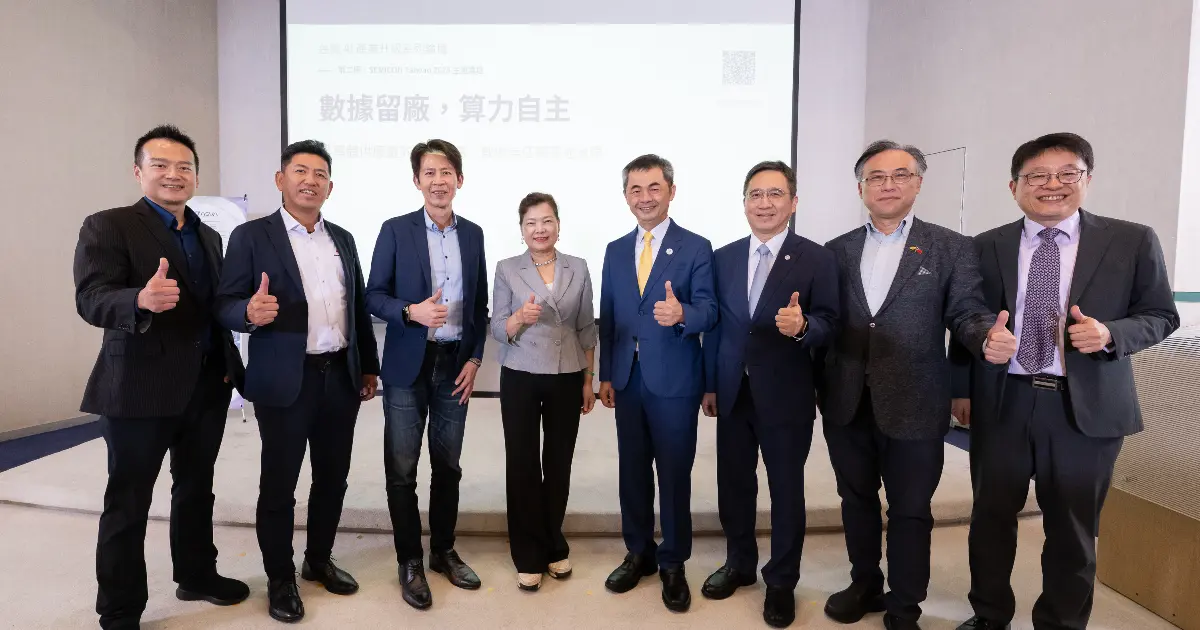
The signing carried more ceremony than technology-licensing deals usually get: Taiwan’s deputy minister of economic affairs attended in person, and the chairmen and presidents of a dozen alliance member companies turned out in support.
Wu later told me about what happened before the signing. At his first negotiation with Jarzynka, he said, the American opened by offering to donate US$100,000 to the community where Asia Neo Tech is based — a gesture that moved him. When the two discussed what the partnership was for, both called it a deal that could change the world: “Neither of us is thinking one-off. This is for a much longer relationship.”
Still, personal chemistry explains why the deal went smoothly — but for a small equipment maker with annual revenue of just NT$728 million (about US$23 million), this means handing its fastest-growing asset, in a single stroke, to a multinational peer that owns 80% of the market. Wu had his reasons for daring to sign.
Premium Members Only
This is a premium article. Please join our membership to read the full content.
Become a member to unlock all in-depth reports and exclusive analysis.
Already a member? Login Now
Related Articles
Micron Announces Its Largest Rewards Ever. Its Taiwan Union's Demands Expose a Clash of Pay Systems. A strike threat at Taiwan's largest foreign investor, read in three dimensions
TSMC's 3nm rinse comes exclusively from AEMC, a Taiwanese company once withdrawn from the Emerging Stock Board
Taiwan AI Industry Upgrade Forum Series || Event Report:America Wants More Manufacturing. What Does It Take for Taiwan’s Suppliers to Follow?