Outperform in Every Aspect Except Price—Unveiling the Mystery Behind TSMC’s Pricing Strategy

Among all the facets of the semiconductor industry I’ve covered over the past three decades, TSMC’s pricing strategy has remained one of the most intriguing and worthy of in-depth exploration. Since I began reporting on the sector 30 years ago, I’ve encountered countless discussions on price competition, price fluctuations, and the logic behind pricing decisions. In this article, I will delve into how TSMC formulates its pricing strategy and why Morris Chang, its founder, has long believed that pricing is the most crucial responsibility of the CEO—whom he often refers to as the “President.”
In fact, TSMC’s wafer foundry prices have been reduced almost every year, with an average annual decrease of about 4% across each process node. This pricing strategy is made possible by continuous advancements along the semiconductor manufacturing learning curve, including improvements in yield, enhanced efficiency, and tighter cost control.
Even with annual price reductions, TSMC’s mature process nodes remain a highly profitable core business. As for advanced nodes, they typically go through an initial burn phase due to the incomplete learning curve. However, TSMC adopts the industry’s shortest depreciation schedule of five years. Once depreciation ends in the sixth year, both gross and net profit margins surge significantly, helping to offset the losses incurred during the early stages of advanced process ramp-up.
TSMC has long maintained higher pricing than its competitors. This pricing premium is understandable—TSMC is the industry leader in foundry services, with a market share exceeding 50%, giving it strong pricing power. In contrast, the second-largest player, UMC, typically benchmarks its prices against TSMC’s, offering a 20–30% discount. This practice has become a widely accepted form of “pricing ethics” in the industry, reinforcing an established pricing order in the foundry market.
However, TSMC’s long-standing practice of reducing prices by an average of 4% annually has seen subtle changes over the past three years. During the COVID-19 pandemic, the semiconductor market experienced an unexpected boom. Combined with global lockdowns, port congestion, and inflationary pressures stemming from the Russia–Ukraine war, TSMC implemented two rare price increases—in 2021 and again in early 2023.
After the COVID-19 outbreak in early 2020, the global shift to stay-at-home lifestyles fueled a surge in demand for semiconductors, leading to a strong upturn in the foundry sector. Competitors such as PSMC, UMC, GlobalFoundries, and SMIC raised their prices repeatedly, with some even quoting higher than TSMC. To maintain market order and preserve its pricing gap with second-tier foundries, TSMC also decided to raise its prices.
By the second half of 2022, global inflation had intensified and the U.S. had begun raising interest rates, leading to a downturn in the semiconductor market. Customers began adjusting their inventories, and many foundry peers saw shrinking orders and weakening prices. Nevertheless, TSMC informed its clients that it would raise prices in the first quarter of 2023—by 6% for 8-inch wafers and approximately 3% to 5% for 12-inch wafers.
TSMC’s decision to raise prices was driven by multiple considerations. First, it was a response to inflationary pressures stemming from rising raw material costs and broader price increases. Second, the company’s leadership believes that TSMC currently holds a strong technological edge and should use this opportunity to secure profit margins and prepare for future uncertainties. Naturally, even with the announced price hikes, clients still retain room for negotiation.
Another key reason behind TSMC’s price increases lies in the rising costs associated with advanced process nodes such as 5nm, 4nm, and 3nm. As the company moves into these more cutting-edge technologies, the cost of EUV (extreme ultraviolet) lithography equipment has soared, extending the learning curve and increasing technical complexity. As a result, the pace of cost reduction in wafer manufacturing has slowed significantly. In other words, the trend once predicted by Moore’s Law—performance doubling every two years while costs halve—has noticeably decelerated, particularly in advanced nodes.
This is precisely why Jensen Huang, CEO of NVIDIA, lamented that “Moore’s Law is dead.” Despite continued process shrinkage and improved IC functionality, prices have failed to decline in parallel. In other words, wafer manufacturing is now experiencing “technological inflation”—a phenomenon driven not only by rising raw material costs but also by the hard limits of technological advancement.
Don’t Chase Quick Gains or Set Sky-High Prices
Pricing may seem straightforward on the surface, but it is, in fact, highly complex and cannot be governed by a few simple rules. In the previous sections, I outlined TSMC’s historical pricing strategies. Now, we’ll take a closer look at the core principles that guide its pricing decisions—and how the company internally approaches price increases or reductions.
First, TSMC’s pricing is derived from a highly sophisticated model that closely accounts for production costs in different countries. With manufacturing sites in mainland China, the United States, and Japan, TSMC faces significant cost variations across regions, which are directly reflected in its pricing strategy.
In addition, when customers place large-volume orders or request dedicated production lines, TSMC must calculate manufacturing costs and associated risks on a case-by-case basis. For example, in 2020, Intel initially planned to place substantial orders with TSMC. In response, TSMC began planning a dedicated production line at its Baoshan site in Hsinchu and developed a specific pricing model. However, after CEO Pat Gelsinger took office, Intel shifted its strategy and reduced its order volume, prompting TSMC to reassess both the investment and pricing for the Baoshan facility.
Second, TSMC generally prices its services higher than competitors, whether for mature nodes or advanced processes. As previously noted, TSMC, as the industry leader, offers superior yield, delivery times, and customer service—factors that justify its leadership premium. In the sub-7nm segment, only Samsung and Intel are viable competitors. Samsung often competes aggressively on price, making TSMC’s significantly higher pricing a natural result of its superior value proposition.
It’s worth noting that although TSMC charges higher prices than its peers, it refrains from opportunistically raising prices during market booms. Regardless of market cycles, TSMC has consistently adhered to its annual price reduction strategy—a policy that not only benefits customers but also incentivizes internal improvements in operational efficiency. More importantly, steady price reductions help foster long-term relationships and strengthen customer retention. In contrast, some competitors raise prices aggressively during upswings, sometimes quoting even higher than TSMC. Such short-term tactics resemble profiteering and undermine the foundation of sustainable, mutually beneficial partnerships.
In addition, TSMC primarily serves top-tier global clients whose orders tend to be more stable. Even when competitors face widespread order cancellations, TSMC typically sees only minor adjustments from its customers.
Wafer production involves over a hundred steps, and the timeline from design to final manufacturing can take more than a year. As a result, price is just one of many factors considered when placing orders—clients are unlikely to switch long-term suppliers for marginal savings. As the industry leader with superior technology, yield, and service, and a track record of consistent price reductions, it’s no surprise that TSMC continues to attract a growing roster of major clients.
Of course, there are instances where customers switch to other foundries—but such moves often lead to regret, as competitors typically can’t match TSMC’s manufacturing quality.
One well-known case involves Qualcomm shifting its orders to Samsung. This decision was shaped by a unique context: because Samsung uses Qualcomm chips in its smartphones, it offered its own orders as leverage to entice Qualcomm to place fabrication orders with Samsung. Qualcomm initially tried to use this arrangement to pressure TSMC into lowering prices, but when TSMC refused, the orders were redirected to Samsung. However, due to Samsung’s lower yield rates, Qualcomm did not ultimately gain the expected commercial advantage.
TSMC’s most important moat in the face of competition is its dominance in advanced process nodes at 7nm and below. These are high-value, high-barrier segments where competitors either lack access or fall short in performance—giving TSMC clear pricing power. Today, advanced nodes account for more than half of the company’s total revenue. Actual profit contributions depend on progress in yield, efficiency, and cost management. Once the learning curve is completed, profitability tends to ramp up significantly.
A major reason TSMC has been able to maintain its pricing dominance is the contribution of its largest customer—Apple. The U.S. tech giant currently accounts for 26% of TSMC’s total revenue. Apple not only places orders for its core ICs—covering PCs, smartphones, power management chips, and microcontrollers—but also requires its companion chip suppliers to manufacture at TSMC as well.
Apple’s requirement is a key element of its supply chain management strategy. The number of iPhones it can ship each year depends not only on TSMC’s ability to produce critical chips like basebands, but also on whether other suppliers can deliver supporting chips on time. If even one component is missing, the phone can’t be shipped. To streamline coordination and ensure full visibility over production schedules, Apple mandates that its companion chip suppliers also manufacture at TSMC—enabling more effective capacity planning and output alignment.
The above outlines TSMC’s general pricing strategy in recent years. However, some might wonder—these strategies rely heavily on the company’s current dominance in market share and technology. So how did TSMC approach pricing in its early years, when it wasn’t yet the industry leader in technology?
In its early years, TSMC’s process technology stood at 2 microns (2000 nanometers), which lagged approximately 2.5 to 3 generations behind the then-cutting-edge 1-micron nodes used by Intel, Texas Instruments, Motorola, and Philips. Despite this gap, TSMC leveraged Taiwan’s highly skilled workforce to achieve better yields and efficiency in the mature 2-micron process. The resulting pricing was highly attractive—offering customers excellent value for money. For TSMC, these prices still delivered solid profitability and supported the company’s strategy of annual price reductions.
This situation emerged because TSMC had a far greater ability to reduce costs than any of its competitors. One of its early major shareholders, Philips, quickly realized that outsourcing to TSMC was actually cheaper than producing chips in its own factories. This marked the beginning of the foundry model’s pricing advantage over IDM (Integrated Device Manufacturer) models. From then on, Philips began shifting large volumes of production to TSMC and gradually shut down its in-house fabs, ceasing further capacity expansion.
In the beginning of this book, I discussed the “3+1 factors” behind Taiwan’s semiconductor success. The first competitive advantage of Taiwan’s electronics industry lies in its hardworking, long-hour workforce and relatively low wage structure—resulting in much lower operational costs, including management, marketing, and R&D, compared to international rivals. While companies in the U.S., Europe, and Japan found it unprofitable to take on contracts with gross margins below 40%, Taiwanese firms were still able to earn solid profits. This cost advantage formed the most critical competitive barrier and was key to Taiwan’s early rise in the electronics sector.
The Highest Secret in Corporate Governance: Lead in Every Area Except Price
Morris Chang has extensive hands-on experience with pricing and has repeatedly emphasized that CEOs must personally take charge of pricing decisions and assert clear judgment. To support this philosophy, TSMC established a dedicated internal unit responsible for pricing models and strategy across its foundry services, including technology and customer support. This unit reports directly to the corporate planning organization and is headed by a vice president who delivers weekly updates to Chang. Former heads of this unit include Sun Chung-ping and Wang Chien-kuang, with Lee Chun-hsien currently serving in the role.
In 1999, Morris Chang handwrote what remains his only formal strategic document for TSMC—“The 11 Strategies of TSMC.” At the time, this manuscript was shared with only a dozen senior executives and was considered one of the company’s most closely held governance secrets. Among its core principles, the most important was this: TSMC must lead its competitors in every area except price.
In other words, while TSMC’s pricing is indeed higher than that of its competitors, it justifies this premium by outperforming rivals in every other dimension—technology, yield, delivery, and service. This comprehensive edge gives TSMC full pricing power, and clients are willing to accept its rates.
It’s much like how consumers still choose to buy Apple’s iPhones despite the higher price. TSMC’s foundry services follow the same logic: customers believe the premium is worth it.
Morris Chang once used corporate salary structure to illustrate the importance of pricing. He noted that a CEO typically earns 50 times more than a regular engineer and 400 times more than a frontline operator.
Why is a CEO paid so much more? Because corporate profits are essentially the result of price minus cost. If a company wants to reduce costs by 1%, it might need to lay off 1,000 engineers. But a CEO with pricing power can achieve the same result simply by raising prices 1%. And if the market accepts that higher price, it clearly demonstrates the CEO’s value—and justifies their high compensation.
Naturally, in a fiercely competitive market, maintaining prices is already difficult—raising them is even harder. Morris Chang pointed out that if you’re selling undifferentiated products, pricing is dictated by the market and your competitors. But if you’re offering customized products, you have greater flexibility in setting prices.
TSMC’s wafer foundry services are customized, unlike Samsung’s memory products, which are standardized commodities. As a result, TSMC enjoys greater autonomy in pricing. Moreover, as the industry leader, it naturally holds the authority to set the benchmark for pricing.
After stepping down, Morris Chang required C.C. Wei to closely oversee pricing decisions and also mandated that Chairman Mark Liu participate directly in three key meetings—on capital expenditure, pricing, and sales. The two were to make final decisions together to ensure no errors in pricing strategy. Such a governance structure is rare in most companies and underscores Chang’s exceptional emphasis on pricing.
Pricing strategy is not just a theoretical discipline; it is also a key measure of a CEO’s leadership capabilities. Morris Chang’s first handover to Rick Tsai ended in failure, and according to reports, disagreements over pricing strategy played a significant role in that outcome.
During the 2009 global financial crisis, capital flows froze and demand plummeted. Then-CEO Rick Tsai responded by aggressively cutting prices. However, Morris Chang reportedly disagreed with this approach. When he resumed the CEO role, Chang took a firm stance on pricing—holding the line on prices while ramping up capital expenditures to accelerate the development of advanced process nodes. As the economy recovered, TSMC quickly regained its leading position in the industry.
As mentioned earlier, TSMC has maintained an average annual price reduction of about 4%, primarily due to continuous decreases in manufacturing costs. This allows the company to pass on the benefits of improved efficiency to its customers. However, TSMC has never resorted to predatory pricing strategies to drive competitors out of the market. This may be because logic ICs are custom-designed rather than standardized products, and because the foundry sector has experienced long-term growth since TSMC’s inception—eliminating the need for price wars.
In contrast, during his tenure as general manager of the semiconductor division at Texas Instruments (TI), Morris Chang did use aggressive price cuts to defeat competitors. In one of his speeches, he showed a 1974 newspaper clipping with the headline: “TI continue cutting prices on TTL: Chang.”
“In the semiconductor industry, companies typically aim for gross margins above 50%, since R&D and design require massive investments. So why would TSMC lower its prices?” This is a question many people have asked.
“My strategy is to make the competition lose hope,” said Morris Chang. He recalled his time at Texas Instruments (TI), when he was in charge of transistor-transistor logic (TTL) products. Even though TI held nearly 50% market share, there were still many competitors. “TI was earning 40% margins, while our rivals were only making 20%. But I kept cutting prices. Plus, we had the advantage of the learning curve—they had no chance.”
The transistor-transistor logic (TTL) products developed by Texas Instruments (TI) at the time were standardized goods, making it feasible to drive competitors out of the market through aggressive price cuts. This strategy resembled Samsung’s approach in memory and other standard products today, and contrasts significantly with TSMC’s current pricing practices for custom logic ICs.
From TI to TSMC, Morris Chang has consistently regarded pricing as a core competitive strategy and has tirelessly articulated his philosophy on the subject. He is arguably one of the most systematic thinkers on pricing strategy among Taiwanese entrepreneurs.
Pricing is a fundamental issue across all industries, yet many companies still rely on tactics like price-cutting and low-margin volume sales. Regardless of your industry, Chang’s deep reflections on pricing offer valuable insights worth contemplating and learning from.
Related Articles
Micron Announces Its Largest Rewards Ever. Its Taiwan Union's Demands Expose a Clash of Pay Systems. A strike threat at Taiwan's largest foreign investor, read in three dimensions
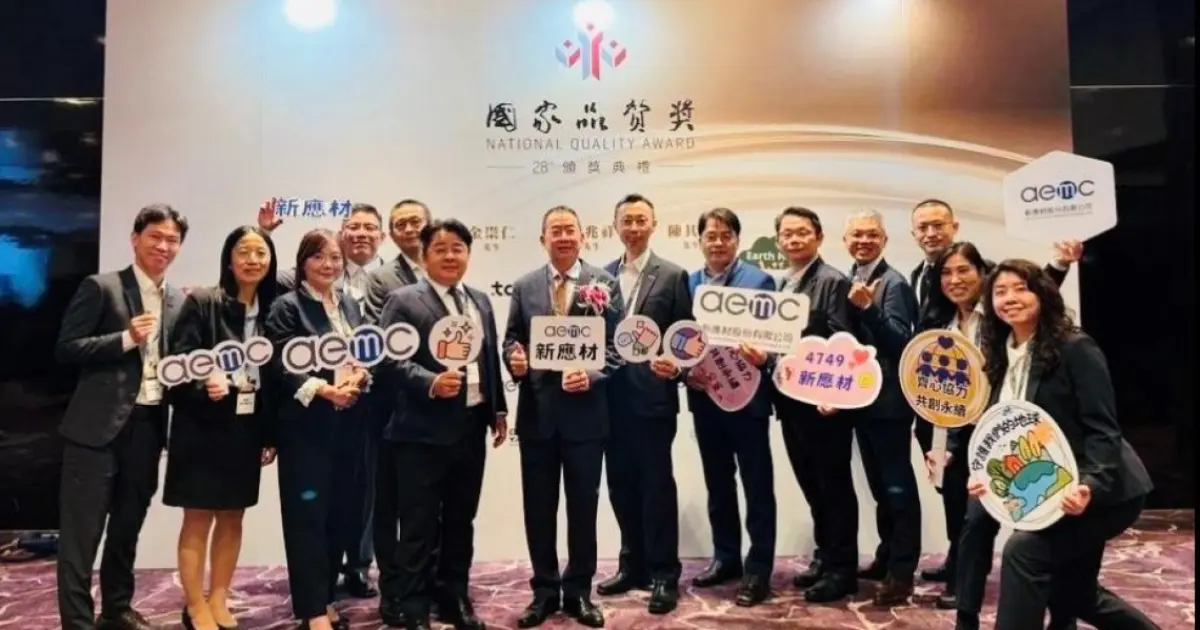
TSMC's 3nm rinse comes exclusively from AEMC, a Taiwanese company once withdrawn from the Emerging Stock Board
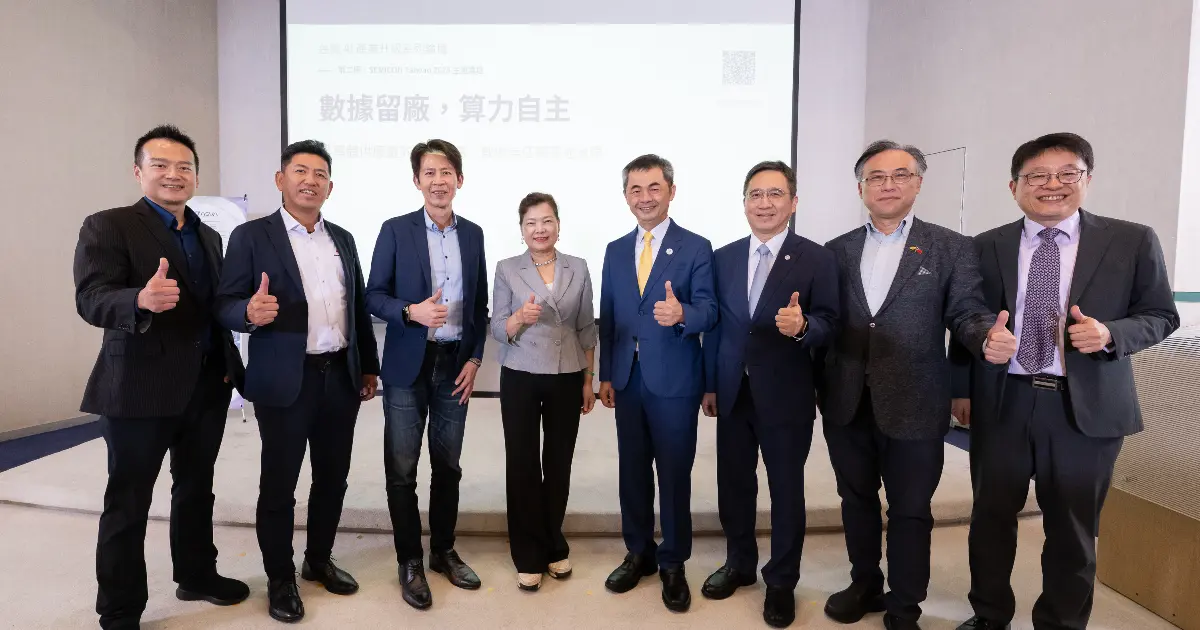
Taiwan AI Industry Upgrade Forum Series || Event Report:America Wants More Manufacturing. What Does It Take for Taiwan’s Suppliers to Follow?