Preventing Talent Poaching, Safeguarding Trade Secrets—The Case of “Chip Wizard” Liang Mong-Song
After the SMIC trade secret theft case concluded, TSMC filed a lawsuit in 2011 against its former senior R&D director, Liang Mong-Song(梁孟松), accusing him of leaking sensitive information to South Korea’s Samsung Electronics. In 2015, Taiwan’s Supreme Court ruled in favor of TSMC after a four-year legal battle, establishing the case as a landmark in the country’s intellectual property protection efforts.
If the SMIC infringement case stands as a classic example of “business-to-business” trade secret protection, then the Liang Mong-Song case serves as a landmark in “business-to-individual” disputes. Beyond clarifying the responsibilities of individual professionals, the case also accelerated amendments to Taiwan’s Trade Secrets Act, making it a crucial subject for further legal and industrial analysis.
Liang Mong-Song, now serving as Co-CEO of SMIC, is one of the most prominent figures in the semiconductor industry across Taiwan and China. He holds a Ph.D. in Electrical Engineering from the University of California, Berkeley, and joined TSMC in 1992 at the age of 40. Over 17 years at the company, he played a central role in the R&D department and was one of the “Six Knights of R&D” who led the successful development of TSMC’s 0.13-micron technology in 2000.
In February 2009, Liang Mong-Song resigned from his position as Director of R&D at TSMC and briefly taught for one semester at the Department of Electrical Engineering at National Tsing Hua University. His wife is South Korean, and in September of the same year, through his brother-in-law’s introduction, he took up a teaching position at Sungkyunkwan University in South Korea. In February 2011, after the expiration of his non-compete agreement with TSMC, he received NT$46 million in stock-based compensation for complying with the agreement. In July of that year, he joined Samsung’s foundry division as Vice President and Chief Technology Officer.
However, TSMC suspected that Liang Mong-Song had begun leaking confidential information to Samsung even before officially joining the company, while he was still teaching at Sungkyunkwan University. In 2011, TSMC filed a lawsuit with the Intellectual Property Court, outlining three main demands: (1) that he be prohibited from disclosing any trade secrets obtained during his tenure at TSMC; (2) that he be barred from providing information about TSMC’s R&D personnel to Samsung Electronics; and (3) that he be forbidden from working for or offering services to Samsung in any capacity until December 31, 2015.
The proceedings at the Intellectual Property Court were thoroughly reported by Chang Kuo-jen(張國仁), a journalist from the Industrial & Commercial Times. During the trial, Liang Mong-Song recounted in detail the unfair treatment he had endured at TSMC, speaking for over thirty minutes. “I am not someone who breaks promises, nor a defector who joined the enemy,” he said. “This has caused great harm to my character and my family.” At one point, he was so emotional that he broke down in tears in the courtroom.
In July 2006, TSMC’s Vice President of R&D, Chiang Shang-Yi(蔣尚義), retired. Liang Mong-Song, who had played a leading role in developing advanced process modules and made significant contributions to the company, initially expected to be promoted to the position. However, when the personnel decision was announced, the promotion went instead to Sun Yuan-Cheng(孫元成), another member of the “Six Knights of R&D,” while Liang was reassigned as Director of Infrastructure Projects, missing the opportunity to become VP of R&D.
Liang Mong-Song recalled that after being reassigned to a new department, he was left without any work for eight full months. “They issued the personnel order without my consent,” he said. “It was almost impossible for me to face my colleagues who knew me. Once, after returning from a trip abroad, I discovered that my former office had been converted into a shared space for four engineers.”
He continued, “Back when I was in my sixth-floor office, I never closed the door—engineers would come in freely to discuss ideas. But after being forced to move, I couldn’t even bring myself to open the door. They cut off all access to information, isolating me completely. At that time, everyone seemed afraid to see me, and I was afraid of approaching others too—worried that they might be labeled just for talking to me.”
Liang Mong-Song stated that despite working diligently at TSMC for 16 years, he was ultimately forced out in a manner that deeply damaged his dignity. “During those eight months, I never went to the cafeteria because I was too ashamed to face others,” he said. “With my qualifications, I shouldn’t have been assigned to a position where I couldn’t contribute. I felt deceived and humiliated. The management showed no respect for me at all.”
According to Chang Kuo-jen’s report, Liang Mong-Song became visibly emotional in court and raised his voice: “They wanted me out of headquarters R&D and reassigned to Europe—I couldn’t accept that. I contributed so much to TSMC, but this made me lose all face. When people asked what I had done, I couldn’t answer—I’m not that kind of person. I just couldn’t calm myself down. If I were lying, I would’ve written directly to the chairman and the VP. Do you really think I’m that kind of person?”
Liang Mong-Song emphasized that he had always honored his contract with TSMC. “Why was TSMC so heartless toward me?” he said. “I devoted my entire life to this company. All I wanted was a chance to return and contribute again, but I received no response.” He expressed gratitude that the company’s general counsel had once written him a letter, saying, “He was the only one who asked me to stay.” Liang added that he had told the general counsel at the time, “I absolutely intended to abide by the non-compete agreement.”
“Your honor, for eight full months, no one told me what I was supposed to do,” Liang Mong-Song testified in court. He concluded by saying, “I want to state sincerely and truthfully: I am not someone who breaks promises, nor am I the defector the media has portrayed. This matter has caused tremendous harm to my personal integrity and to my family.”
TSMC’s attorney, Chen Ling-Yu(陳玲玉), stated in court, “You know too many of TSMC’s secrets. To prevent any potential leaks, we had no choice but to take legal action.” TSMC’s then-Vice President and General Counsel, Tu Tung-Yo, also testified, “The company had a new project, and Liang Mong-Song understood it better than anyone. I truly didn’t want him to leave—he was a good friend. He once told me he wouldn’t work for Samsung, and I believed that agreement.”
The court hearing lasted for over two hours, during which journalist Chang Kuo-jen carefully documented all key statements. After the session ended, Liang Mong-Song, dressed in light blue jeans and a pale-colored shirt, quietly and briskly exited the courtroom, declining to speak with the press.
In response to TSMC’s three claims, Liang Mong-Song maintained that he did not disclose any trade secrets and only joined Samsung after the expiration of his non-compete period, thus violating no regulations.
According to the ruling by the Intellectual Property Court, TSMC prevailed on the first two injunctions related to trade secrets. However, regarding the non-compete clause, the court determined that since the agreed-upon two-year period had expired, and based on constitutional protections of the right to work, Liang Mong-Song was free to take a position at Samsung or any other company. The case remained subject to appeal.
Regarding the ruling, TSMC commented that although it technically won the case, it was disheartened by the outcome. Liang Mong-Song had worked at TSMC for 17 years, receiving over NT$600 million in salary and bonuses, and after the expiration of the non-compete period—during which he was paid NT$46 million in compensation for compliance—he immediately joined Samsung as a vice president. The company expressed deep regret over the situation.
TSMC later appealed to the Supreme Court. In August 2015, Taiwan’s Supreme Court ruled that former senior R&D director Liang Mong-Song had leaked industry secrets to South Korea’s Samsung Electronics, and ruled in favor of TSMC. The court overturned the previous Intellectual Property Court’s decision and upheld the non-compete clause, prohibiting Liang from working for Samsung until the end of 2015.
The Supreme Court accepted an expert report commissioned by TSMC titled “Comparative Structural Analysis of Key Process Technologies in Products from TSMC, Samsung, and IBM.” The report highlighted that the structural differences between Samsung and TSMC’s 45nm, 32nm, and 28nm process nodes had narrowed significantly. In particular, the silicon-germanium compound used in the P-type transistor electrodes of Samsung’s 28nm process closely resembled TSMC’s distinctive rhomboid structure. The report further predicted that the 16nm and 14nm FinFET products mass-produced by both companies were likely to become even more similar, and concluded that Samsung had imitated TSMC’s “fingerprint-like, uniquely identifiable, and hard-to-replicate” technological features.
Liang Mong-Song’s immediate recruitment by South Korea’s Samsung following the expiration of his non-compete period shocked the international community and prompted Taiwan to accelerate amendments to its Trade Secrets Act. The revised law, enacted on January 30, 2013, introduced criminal liability for those who obtain, use, or disclose trade secrets through improper means such as theft or unauthorized reproduction. It also included enhanced penalties for overseas violators. Prior to the amendment, violations of trade secrets were subject to civil liability only.
In fact, during Liang Mong-Song’s tenure at Samsung, the company made rapid technological advancements. In 2014, TSMC founder Morris Chang openly acknowledged that Samsung had overtaken TSMC in 16nm process technology, which led to a sharp decline in TSMC’s stock price and a downgrade in its credit rating.
Ultimately, TSMC won the lawsuit, and the ruling has been regarded as a landmark in both Taiwan’s judicial history and the practice of trade secret protection. As the leading force in Taiwan’s semiconductor industry, how TSMC utilizes the Trade Secrets Act to safeguard the domestic tech sector has become a critical issue—otherwise, the nation’s intellectual property may face the serious risk of being hollowed out.
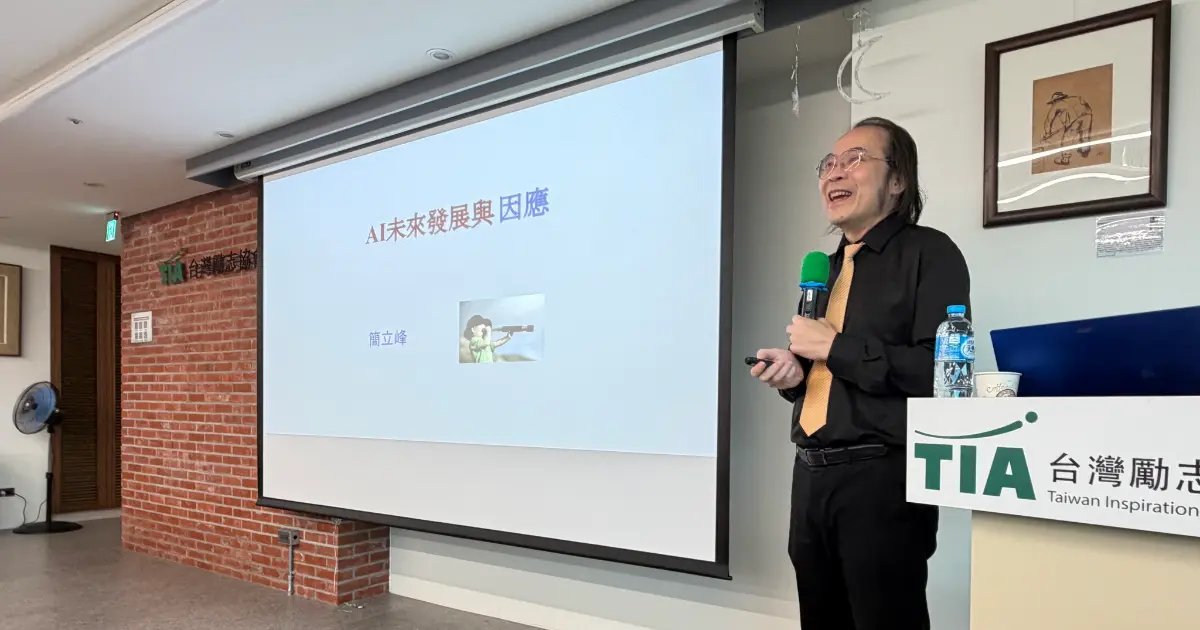
Both sides in this case were represented by highly prominent attorneys. TSMC was represented by Chen Ling-Yu of International Commercial Law Offices, while Liang Mong-Song was defended by Koo Li-Hsiung(顧立雄), who would later serve as Chairman of the Financial Supervisory Commission and Secretary-General of the National Security Council. Both were considered top-tier legal figures in Taiwan. I also appeared in court as a witness, as my 2012 book Business Predator: SAMSUNG mentioned Liang’s teaching position at Sungkyunkwan University, which was supported by Samsung, prompting the court to ask me to testify about my reporting.
Today, Liang Mong-Song serves as Co-CEO of SMIC, where he is leading the company’s push toward 7nm process technology. He was also a key contributor to Samsung’s rapid technological progress during his tenure there. Because of his influence, The Wall Street Journal once dubbed him a “chip wizard,” recognizing him as one of the most important figures in China’s current semiconductor development.
Liang Mong-Song, the former TSMC executive who once tearfully testified in court about the company’s unfair treatment, never acknowledged himself as a “defector.” Yet today, he is pouring his full energy into helping TSMC’s rival advance its technology—as if determined to make those who once looked down on him regret it.
Liang Mong-Song is widely regarded as an unconventional figure—by colleagues and supervisors alike. He not only possesses exceptional talent and technical expertise but has also developed his own way of navigating complex environments. His ability to remain in a top leadership role at SMIC for years amid intense geopolitical tensions is no small feat. Many of his former TSMC comrades are now working across various fronts, contributing to cross-strait industry dynamics, the U.S.-China chip war, and their own personal convictions.
Related Articles
Micron Announces Its Largest Rewards Ever. Its Taiwan Union's Demands Expose a Clash of Pay Systems. A strike threat at Taiwan's largest foreign investor, read in three dimensions
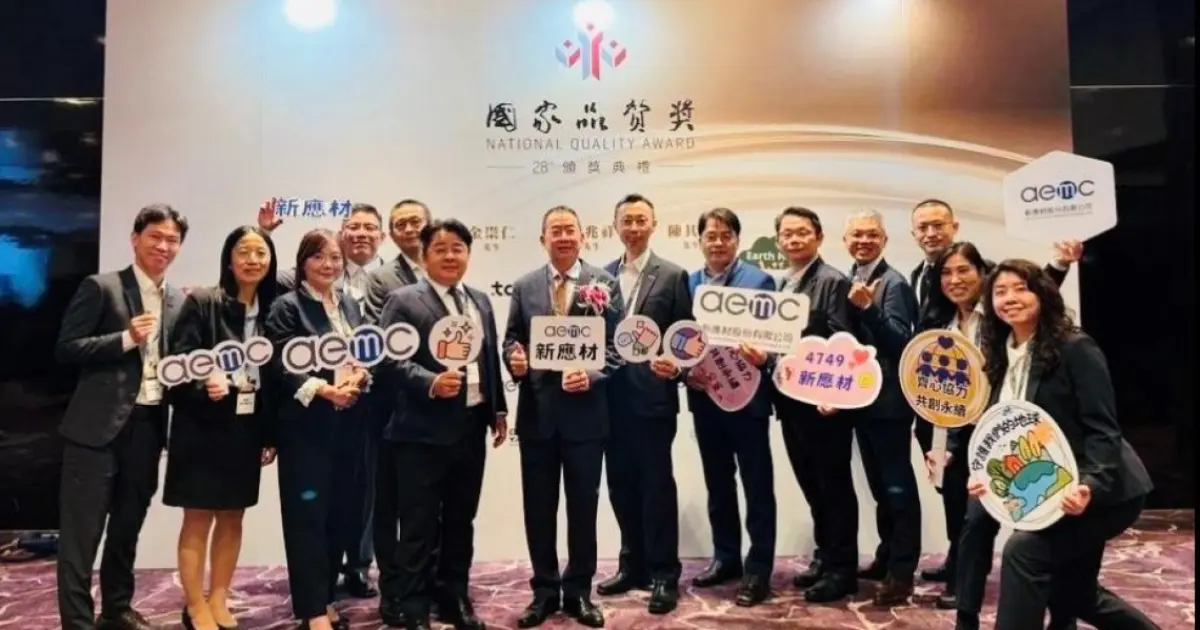
TSMC's 3nm rinse comes exclusively from AEMC, a Taiwanese company once withdrawn from the Emerging Stock Board
Taiwan AI Industry Upgrade Forum Series || Event Report:America Wants More Manufacturing. What Does It Take for Taiwan’s Suppliers to Follow?