Taiwan’s Unique Profit-Sharing Stock Bonus System: The Hidden Power Behind the Rise of Its Semiconductor Industry
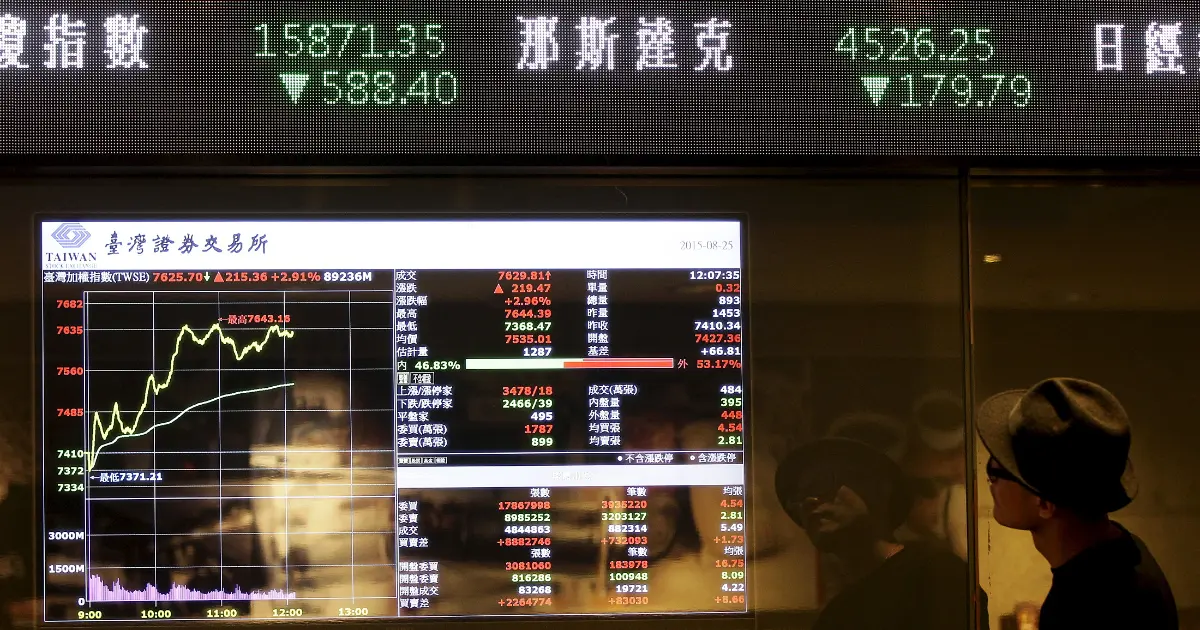
When discussing the key factors behind Taiwan’s semiconductor success, many people are unaware—or have never even heard—that the country once had a powerful secret weapon: an employee stock bonus system.
Taiwan’s employee stock bonus system was first adopted by companies in the mid-1980s and officially ended in 2008, lasting around 20 years. Under this system, companies allocated a portion of their previous year’s profits to employees—primarily in the form of stock, with cash bonuses playing a secondary role. As the stock market was booming at the time, employees saw significant increases in their actual income, making the system a highly effective tool for boosting morale.
In its early years, the employee stock bonus system served as a powerful incentive to attract overseas Taiwanese professionals to return home for work or entrepreneurship. At the time, Taiwan’s semiconductor firms couldn’t match the high salaries offered abroad, making it difficult to persuade talent to leave well-paid positions. However, the bonus system effectively bridged the salary gap, drawing in top talent and giving Taiwan a chance to compete with advanced economies.
The effectiveness of the employee stock bonus system lay in its strong linkage between stock value and company profitability. The more profits a company generated, the higher its stock price would climb. This motivated employees to work harder to increase the company’s value, creating a virtuous cycle of growth and reward.
Taiwan’s employee stock bonus system differs from the stock option plans commonly used in Western companies, with three key distinguishing features.
The first feature is that bonuses were distributed in stock rather than cash, calculated at a nominal value of NT$10 per share. This offered employees two major advantages. First, the market price at the time of sale was usually several times higher than the par value. Second, taxation was based on the par value, not the market value, reducing the tax burden significantly. For example, if a company issued NT$1 million in stock bonuses (equivalent to 100,000 shares at NT$10 per share), and the market price was NT$50 per share, the employee would receive NT$5 million in actual proceeds but be taxed only on NT$1 million—resulting in substantial tax savings.
Second, from the company’s perspective, issuing 100 shares to an employee was recorded as an expense of NT$1 million—based on par value—not on the stock’s actual market price. This allowed companies to significantly reduce their personnel expenses.
Third, the system promoted broad-based inclusion. In Western companies, stock options are typically reserved for mid- to senior-level executives, with the highest share going to top management. By contrast, Taiwan’s bonus system extended benefits across all employee levels, including junior staff. Even engineers with just a few years of experience could receive stock bonuses—perhaps in smaller amounts—but still found the incentives meaningful.
Overall, the employee stock bonus system proved to be a highly effective incentive for professionals in the electronics industry, helping to address the challenge of relatively low salaries. In many cases, employees earned more from stock bonuses than from their base pay.
After going public in 1985, UMC (United Microelectronics Corporation) became the first in the industry to implement the employee stock bonus system. Soon after, nearly every high-tech company in Hsinchu Science Park followed suit. The system not only created a wave of “tech millionaires” but also became one of the most powerful tools for attracting and retaining top talent in Taiwan’s semiconductor industry.
There are also some interesting anecdotes from UMC’s adoption of the employee stock bonus system. Liu Ying-da, UMC’s first employee and former vice chairman, recalled that shortly after the company was founded, General Manager Tsao Ming-teh proposed to the board that 25% of future profits be allocated as employee bonuses. The board, thinking UMC was unlikely to make much profit, readily approved the idea.
However, when UMC turned profitable in 1984 and planned to distribute employee bonuses in 1985, the board insisted that special reserves be allocated first. After recalculating, employees ended up receiving only the equivalent of two months’ salary. In response, Tsao Ming-teh proposed a new plan: reduce the bonus pool to 10% of profits, but align the cash-to-stock ratio with shareholder distributions. For example, if shareholders received NT$2 in stock and NT$1 in cash, employees would receive their bonuses in the same 2-to-1 stock-to-cash ratio. This principle became the foundation of UMC’s bonus system and was later adopted by many semiconductor companies in Hsinchu Science Park.
Before UMC, some traditional industries in Taiwan had already implemented employee bonus systems, but these were mostly distributed in cash. UMC was likely the first company in Taiwan to pioneer a stock-based bonus system.
In the early days, Taiwan’s semiconductor industry was in a phase of rapid growth. Companies distributed most dividends to shareholders in the form of stock and continuously expanded capital through stock-based increases. This model closely resembled stock splits in other countries. As a result, employees who received stock bonuses enjoyed substantial real rewards, while companies incurred lower expenses and employees faced lighter tax burdens.
Fading into History—But Was It Truly a Good System?
While the system was popular among managers and employees and laid a solid foundation for Taiwan’s semiconductor industry, it failed to account for stock bonuses at market value—an approach that seriously violated international accounting standards. As a result, corporate financial statements and reported earnings were significantly distorted. Furthermore, when employees sold shares they had acquired at par value, it often triggered stock price declines, negatively impacting all shareholders.
When TSMC listed its American Depositary Receipts (ADRs) in the United States, the controversies surrounding Taiwan’s stock bonus system became a focal point for global capital markets.
TSMC was listed on the Taiwan Stock Exchange in 1994 and launched its ADRs in the U.S. in 1997. At that time, foreign institutional investors paid close attention to Taiwan’s unique employee stock bonus system. Because Taiwan’s accounting standards had not yet aligned with international norms, companies did not record stock bonuses at market value. As a result, foreign brokerage firms created an alternative version of TSMC’s financial report based on international accounting principles. Surprisingly, after expensing the stock bonuses, the revised report showed that TSMC was not a highly profitable company with earnings per share (EPS) above NT$10—but instead, it appeared to be running at a loss.
Unsurprisingly, this alternate financial report caused a major stir in the market. It wasn’t just TSMC that appeared unprofitable—most semiconductor and electronics firms in Taiwan used the same accounting treatment. If all these companies’ financials were recalculated using international standards, many of them would likely show up as operating at a loss.
Another issue with the system was that companies weren’t required to record distributed shares as expenses, which indirectly encouraged some to over-issue stock bonuses. Even firms with only modest profits could allow employees to cash out handsomely if the stock price surged. The lure of such generous stock gains led some companies to spin off divisions into new entities, shift profits into them, and then issue stock bonuses—resulting in widespread abuse of the system.
In 2002, the world was hit by the bursting of the tech and telecom bubble, sending global stock markets into a tailspin. In the U.S., a series of scandals—most notably the Enron debacle—exposed that many senior executives at listed companies had manipulated financial statements to maximize their stock option gains. As a result, stock options, once seen as tools for attracting and motivating talent, came under fire as one of the root causes of corporate misconduct.
At the same time, foreign investors launched strong criticisms against Taiwan’s long-standing employee stock bonus system and pressured the government to revise its laws. They demanded that, like in the U.S., stock options be treated as corporate expenses.
Recognizing that the system violated international accounting standards and led to tax revenue losses, the Taiwanese government implemented a policy in 2008 requiring companies to expense stock bonuses. As a result, the old system was phased out. While many tech elites could no longer enjoy the massive stock bonuses of the past, Taiwan’s industrial base had already been firmly established, and many profitable companies continued to offer substantial cash bonuses. The tech elite remained thriving.
Over my 30 years of covering the tech industry, I’ve met many professionals from Japanese and Korean semiconductor companies who often express puzzlement at Taiwan’s extraordinary competitiveness. To them, the source of this “Taiwan advantage” remains a mystery—but I have always believed that the employee stock bonus system is one of the key explanations.
Compared to their Japanese and Korean counterparts, most Taiwanese semiconductor firms were founded by entrepreneurs who started small and gradually scaled up. Even when large corporations invested, the companies remained under the leadership of their founders. In this context, Taiwan’s employee stock bonus system proved highly effective in rewarding startup teams and fostering entrepreneurial spirit. In contrast, semiconductor companies in Japan and Korea are typically backed and run by large conglomerates. Their employees are mostly professional managers whose compensation is salary-based, supplemented by bonuses or incentives that rarely exceed base pay. Stock awards are uncommon. As a result, these professionals tend to focus on fulfilling their designated roles, showing limited motivation to go above and beyond or take on greater responsibility.
The effectiveness of the employee stock bonus system lies in its built-in incentive logic: when employees hold a significant amount of company stock, those shares will only be valuable if the company performs well. This creates a strong motivation to work harder and drive up the company’s value. Moreover, stock prices have no upper limit—if the company maintains high profitability and strong earnings per share (EPS), the capital markets can push the stock price to new heights. For entrepreneurs, there is no incentive tool more direct and effective than this.
Taiwan is home to approximately 1.5 million businesses, the vast majority of which are small and medium-sized enterprises (SMEs). These companies often operate with a strong sense of ownership and drive. The stock bonus system empowered them to remain small yet strong and agile—enabling many to accomplish what once seemed impossible. In contrast, industries in Japan and South Korea, including semiconductors, are typically dominated by large conglomerates. In IC design, a sector where entrepreneurial spirit is essential, Japan and Korea have not performed as well as Taiwan—a difference closely tied to variations in industrial structure and corporate culture.
As for China’s semiconductor industry, many of its systems and operational models can be seen as imitations of Taiwan’s. Chinese companies also grant stock to managers and employees, and in recent years, the strength of China’s capital markets has enabled semiconductor professionals to reap significant rewards and incentives.
Taiwan’s employee stock bonus system has now become a thing of the past. But if we are to make a final judgment, can it truly be considered a good system?
In my view, there is already a general consensus within the business community: from the perspective of financial transparency and shareholder interests, the system did distort earnings reports. But in the early days of Taiwan’s semiconductor development, as a latecomer with no competitive edge, what leverage did we have against the advanced economies? The employee stock bonus system, implemented over two decades, served as a powerful incentive that helped establish Taiwan’s global competitiveness. From this standpoint, even if the system raised concerns about fairness, it played a meaningful role in building what we now call Taiwan’s “Silicon Shield.”
As for the criticisms surrounding the stock bonus system, it’s true that there were instances where company leaders violated corporate governance and acted with unchecked authority. However, when viewed from a broader perspective, this system of profit-based stock allocation played a vital role in building Taiwan’s industrial competitiveness and driving its economic growth. From this macro view, the system deserves a more balanced and fair historical assessment.
Related Articles
Micron Announces Its Largest Rewards Ever. Its Taiwan Union's Demands Expose a Clash of Pay Systems. A strike threat at Taiwan's largest foreign investor, read in three dimensions

TSMC's 3nm rinse comes exclusively from AEMC, a Taiwanese company once withdrawn from the Emerging Stock Board

Taiwan AI Industry Upgrade Forum Series || Event Report:America Wants More Manufacturing. What Does It Take for Taiwan’s Suppliers to Follow?