Elite Universities—Training Grounds for TSMC Operators? Rethinking the Mission and Direction of Higher Education
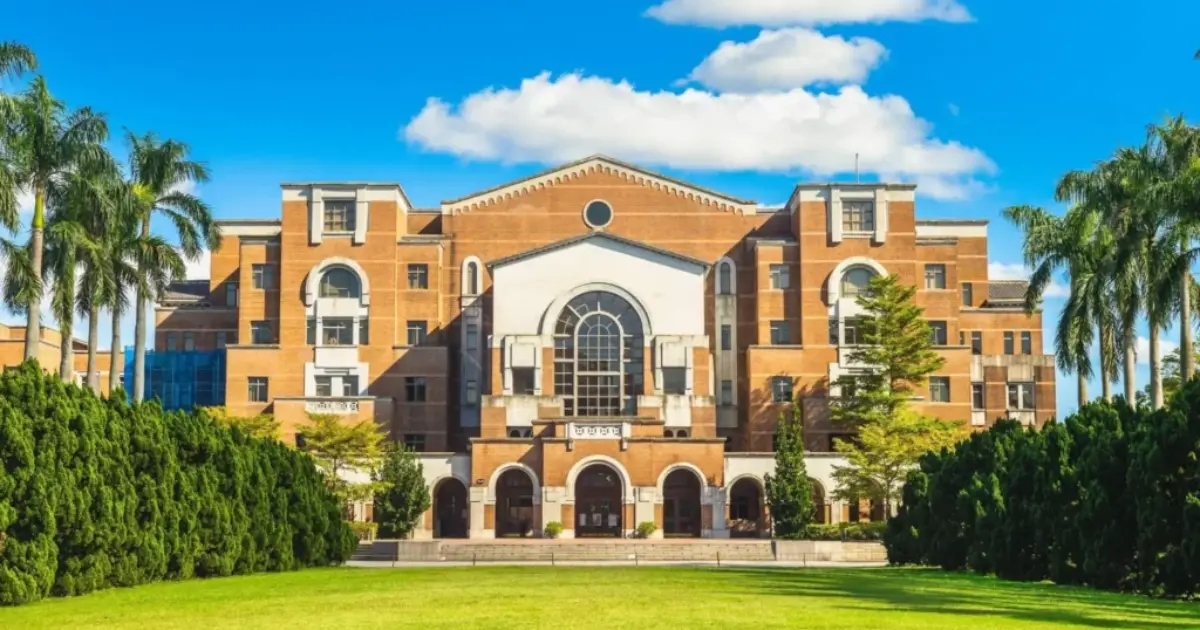
In September 2022, Taiwan’s job platform 104 Corporation and Global Views Monthly jointly released a survey on the “Top 5 Starting Salaries for Master’s Graduates from Public and Private Universities.” In both STEM and business fields, National Yang Ming Chiao Tung University and National Tsing Hua University alternated at the top of the rankings. However, the report sparked heated debate, with professors from National Taiwan University voicing the strongest objections, sharply criticizing the use of salary as a benchmark for evaluating universities and academic programs.
Indeed, using graduate salaries to evaluate universities is a matter of perspective. For one, the survey analyzes salaries based on median monthly income, whereas many companies recruit based on annual compensation, potentially overlooking benefits and other factors. Furthermore, the difference between graduates of National Yang Ming Chiao Tung University and National Taiwan University is marginal—NT$58,000 versus NT$55,000. In the context of a 30-year or longer career, this is merely a starting point and hardly worth overemphasizing.
Moreover, comparing the starting salaries of master’s graduates within Taiwan is like judging who is tallest among a group of short people—it’s a comparison of limited value. Overall, starting salaries for Taiwan’s graduates are relatively low, and when compared to those from top international universities, the gap resembles that between amateurs and professionals.
Today, Taiwanese universities are facing increasingly severe challenges. Years of rigid educational structures have limited progress in higher education, while the corporate sector has advanced rapidly, resulting in a widening gap between academia and industry.
I can’t help but recall a powerful exchange I witnessed at the end of 2021 during the Lee Kuo-Ting Memorial Forum in Taiwan, where two influential figures—one from the semiconductor industry and the other from academia—shared their perspectives. The conversation left a lasting impression on me.
The question was posed by Shih Chin-tai, who had previously served as president and chairman of several institutions, including the Industrial Technology Research Institute (ITRI), the Institute for Information Industry (III), and the College of Technology Management at National Tsing Hua University. The respondent was Mark Liu, Chairman of TSMC.
Shih recounted that during his time studying in the United States, his professors often helped arrange summer internships at prominent East Coast research labs. These experiences significantly benefited his academic and professional development. He also noted that in the semiconductor industry, Intel recruits 700 to 800 interns each summer. This led him to wonder why Taiwanese tech companies like TSMC offer so few internship opportunities in comparison.
In response, Mark Liu explained that, in his observation, most PhD students in Taiwan don’t choose their own research topics—they are typically assigned by their professors. In contrast, during his doctoral studies abroad, students were expected to develop their own research ideas, then approach professors for approval. If the proposal was rejected, they had to rethink and refine it until it gained acceptance.
Liu further remarked that beyond the inadequate research capabilities of doctoral students, he sees many Taiwanese professors as civil servant–like figures, with relatively low salaries. In contrast, professors in Hong Kong and Singapore earn two to three times more, which he believes has a significant impact on talent development.
Liu’s underlying message seemed clear: “With such low research standards at universities, how can anyone blame TSMC for not taking on interns?” I remember seeing several professors in the audience with awkward expressions—they likely felt quite hurt by the remark.
Liu wasn’t the only one to voice such concerns. Another panelist, Wu Tien-yu, CEO of ASE Group, shared his personal experience. He explained that ASE had spent over a decade building automated factories, collecting a vast amount of data, and independently developing algorithms related to semiconductor heterogeneous integration. However, he still felt the results were insufficient and sought help from external experts.
Wu explained that although they consulted many professors in Taiwan, they were unable to find a suitable candidate. As a result, they turned to the international academic community and eventually identified an outstanding algorithms expert. Through the Semiconductor Academy at National Cheng Kung University, they brought him to Taiwan—along with several talented students he had mentored. Working closely with ASE’s R&D team, they ultimately solved a longstanding technical challenge.
TSMC and ASE are now the global leaders in semiconductor foundry and packaging and testing services. They no longer have competitors to catch up with—instead, they are at the forefront of unprecedented innovation challenges. I believe both industry leaders spoke the truth: Taiwanese companies are now at the cutting edge of the global stage, yet the nation’s universities have not kept pace. That is the real issue.
In recent years, TSMC has placed great emphasis on collaborating with universities, including top global institutions like the University of Tokyo, MIT, and Stanford. As long as the research shows potential and promise, both TSMC and ASE are unlikely to turn it away. The real question is: what can Taiwan’s own universities offer to establish meaningful partnerships with industry?
A few years ago, the Department of Chemistry at National Taiwan University reportedly considered suspending its master’s program. The concern was that most graduates were taking jobs at TSMC, effectively turning the department into a training ground for the company’s operators. Moreover, once students entered the workforce, their willingness to pursue doctoral studies often declined—posing a potential setback for long-term academic research.
Ultimately, the NTU Department of Chemistry did not suspend its master’s program and continues to admit students. Many graduates still go on to work at TSMC or other companies in the semiconductor and electronics sectors. The overall trend appears to remain unchanged.
Jensen Huang, CEO of NVIDIA, once stated that Moore’s Law is no longer valid and that chip prices won’t continue to fall—primarily because the investment required for advanced nodes has become enormous. Nevertheless, innovation in semiconductor manufacturing continues. The current technological frontier is widely believed to be 0.5 nanometers. This means that after TSMC’s 3nm mass production began in 2023, it must still move forward to 2nm, 1nm, and eventually 0.5nm. In the past, each generation of process development took at least two to three years. With increasing complexity, the R&D timeline will likely be even longer. TSMC faces another 10 to 20 years of formidable challenges, requiring the collective effort of top talent from across fields.
These are exceptionally difficult challenges—unprecedented, with no reference points to follow. TSMC must forge its own path and face these trials alone, while urgently needing more talent and research support from Taiwan’s universities. In my view, all universities in Taiwan share a common mission. It’s no longer about distinguishing between NTU, NCCU, NYCU, or NTHU. As Taiwan’s companies push the limits of innovation, the academic community must ask itself: what can we bring to the table to collaborate meaningfully with industry?
If I were the head of NTU’s Department of Chemistry, I wouldn’t consider suspending the master’s program, nor would I question why our graduates “only” go to work for TSMC. Instead, I would shift my mindset and actively engage with TSMC and other companies to understand their future directions—what breakthroughs in materials or technologies they seek, and what obstacles lie ahead. Then I would ask: what can our department contribute? What value can our professors’ research create in the years to come? Can we stand alongside industry in confronting global challenges?
If universities across Taiwan take on challenges with such proactive spirit—finding their purpose and sense of direction—they will cultivate more exceptional talent and groundbreaking research that impresses the industry. I believe that leaders like Mark Liu and Wu Tien-yu would then come to see Taiwan’s universities in a new and more appreciative light.
Related Articles
Micron Announces Its Largest Rewards Ever. Its Taiwan Union's Demands Expose a Clash of Pay Systems. A strike threat at Taiwan's largest foreign investor, read in three dimensions
TSMC's 3nm rinse comes exclusively from AEMC, a Taiwanese company once withdrawn from the Emerging Stock Board
Taiwan AI Industry Upgrade Forum Series || Event Report:America Wants More Manufacturing. What Does It Take for Taiwan’s Suppliers to Follow?