Two 800-Pound Gorillas in Talks—If Samsung Electronics Joins Forces with Intel, What Impact Would the No. 2 and No. 3 Players Have on Market Leader TSMC?
After the Trump administration took an equity stake in Intel, the company’s next moves have become the focus of global semiconductor attention. During South Korean President Yoon Suk-yeol’s visit to Washington, Samsung Electronics Chairman Lee Jae-yong accompanied him, and reports surfaced that Samsung was in talks with Intel. The plan involves investing in Intel’s advanced packaging operations and expanding equipment investment to strengthen back-end manufacturing capabilities. If realized, this cooperation would directly affect U.S. industrial policy, South Korea’s corporate strategy, and the balance of the global supply chain.
A potential partnership between Samsung Electronics and Intel—two “800-pound gorillas”—is no trivial matter. If the world’s No. 2 and No. 3 players by market share form an alliance, what challenge would this pose to TSMC, the undisputed leader? And what obstacles might such a massive integration face? These are questions that merit close examination.
First, it is necessary to clarify the potential scope of cooperation between Samsung and Intel, as well as the strategic motivations driving both sides.
According to South Korean media reports, Samsung has already invested $37 billion to establish a wafer foundry in Texas, with the potential to increase its investment further. At the same time, Samsung is considering partnering with Intel by investing in its advanced packaging lines in the United States. This would create an integrated footprint across both front-end wafer manufacturing and back-end packaging, aligning with Washington’s push for localized semiconductor supply chains.
In terms of technical strength, Samsung maintains an advantage over Intel in front-end process technology, while Intel has an edge in advanced packaging. However, Intel’s poor yields and limited capacity in front-end production mean its packaging technology has little room to shine. The logic of a complementary partnership is evident.
Industry observers therefore speculate that Samsung, in strengthening its U.S. presence, will most likely target packaging as the key area of cooperation with Intel. Such an alliance would shore up Samsung’s weaknesses while helping it narrow the gap with TSMC.
Reports also suggest the two companies could work together on next-generation glass substrate technology, viewed as a critical breakthrough for advanced packaging. Taiwanese manufacturer Innolux is also actively pursuing this area, and TSMC has identified glass substrates as one of several potential options in its own technology roadmap.
As for whether the partnership might extend into front-end process technology, that remains unlikely for now. Front-end manufacturing is central to both companies’ competitiveness and involves the interests of many competing customers, making such collaboration difficult.
Recent market research has taken a fresh approach, calculating market share not just by front-end wafer foundry services but by combining front-end and back-end packaging and testing into an integrated “Foundry 2.0” model. The results are strikingly different from traditional statistics.
In the first quarter of this year, by Foundry 2.0 market share, TSMC led the world with 35.3%. Intel ranked second with 6.5%, while Samsung, at 5.9%, placed fourth—slightly behind Taiwan’s leading packaging and testing firm ASE, which held third place.
This contrasts sharply with the traditional rankings. Based solely on front-end wafer foundry share, TSMC commanded 67.6% in Q1, followed by Samsung at 7.7%. China’s SMIC, Taiwan’s UMC, and GlobalFoundries ranked third to fifth with 6%, 4.7%, and 4.2%, respectively.
Intel, by contrast, has historically operated as an integrated device manufacturer (IDM), reserving most of its capacity for in-house products. Its foundry services for external customers contribute so little that Intel’s share remains below 1%—not even making the global top ten and trailing Taiwan’s Powerchip at 0.9%.
Comparing the two approaches reveals the rationale behind Samsung and Intel’s talks. In traditional front-end foundry rankings, Samsung is No. 2, but in the integrated Foundry 2.0 view, Intel edges ahead of Samsung. This difference provides a basis for the two to seek deeper cooperation.
Samsung’s Two Lifelines for a Turnaround
Samsung’s semiconductor business has struggled in recent years. Its dominance in memory has been overtaken by SK Hynix, which now holds the global lead. In foundry, meanwhile, Samsung’s advanced process yields have stagnated, leaving it far behind TSMC.
Yet signs of a turnaround have emerged in 2024, driven by the addition of two major new customers that are helping Samsung regain momentum.
The first is Tesla. CEO Elon Musk awarded Samsung a contract worth $16.5 billion over nine years, with cooperation set to last through 2033. The chips will power next-generation AI applications, including autonomous driving and humanoid robots.
For Samsung, the Tesla deal was a lifeline. It also directly supports Samsung’s investments in advanced 2nm capacity in Texas. Musk himself has said he often drops by the Samsung facility next to Tesla’s headquarters, urging progress and helping optimize the process.
Tesla’s procurement strategy, however, reflects Musk’s tough, unsentimental style: no foundry is given long-term guarantees. Tesla’s current A14 AI chips are made by Samsung, but the A15 is with TSMC, and the A16 may return to Samsung, reflecting a deliberate diversification of suppliers.
Even so, securing Tesla’s business is a major morale boost for Samsung. For years it struggled without major anchor customers, while nearly all leading-edge orders went to TSMC. Winning Tesla marks an important breakthrough.
Industry sources note that Samsung offered steep concessions to secure the deal: price cuts of up to 30% and a pledge to deliver only good dies, absorbing the cost of defects itself. This underscores Samsung’s determination to claw back market share at any cost.
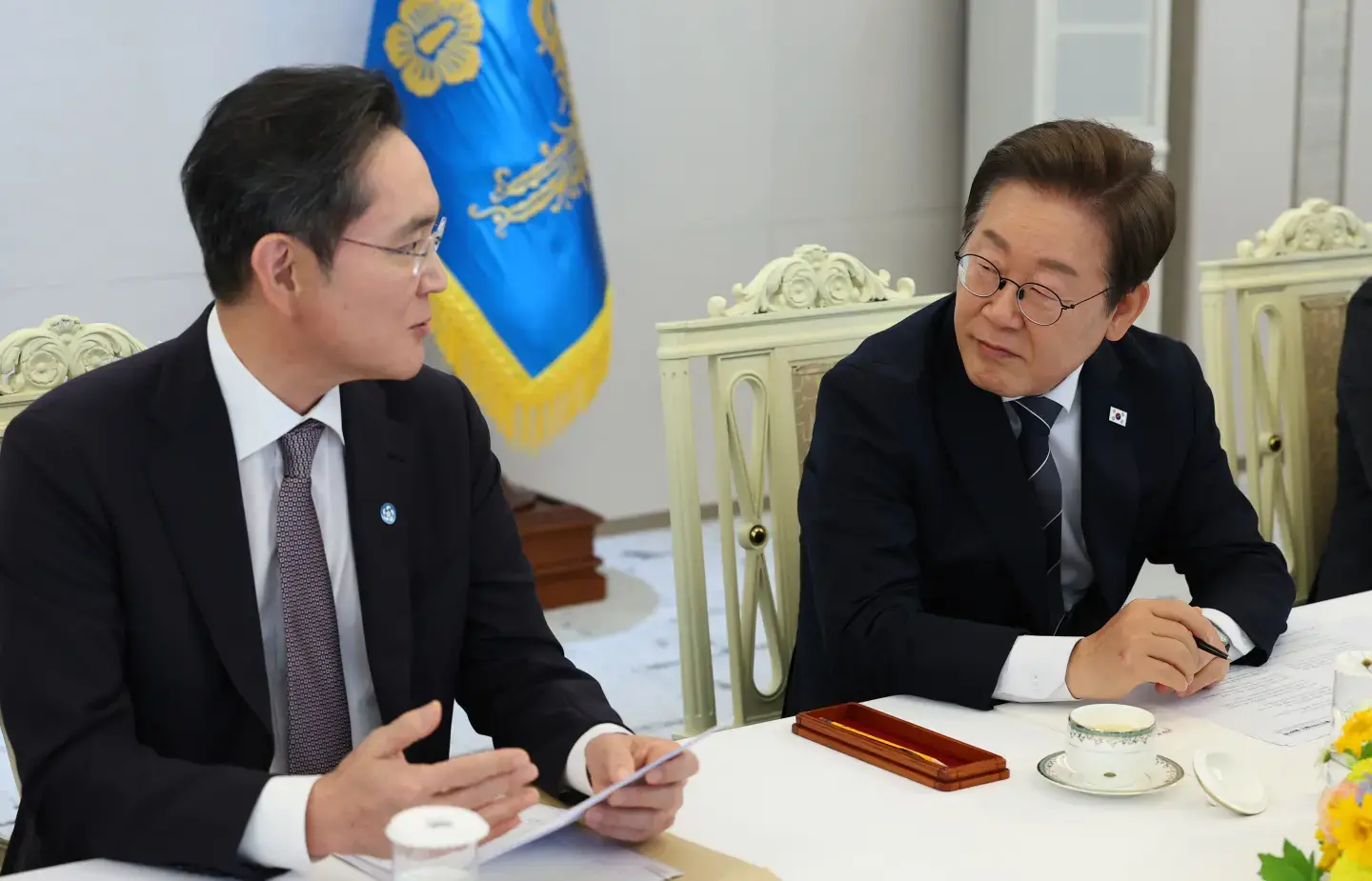
Samsung’s second major breakthrough came in the image sensor (CIS) market, where it succeeded in winning orders from Apple.
In the global CIS market, the leading company is Japan’s Sony (SONY), followed by Samsung, with OmniVision (OV) in third place. Sony has long been the largest—and virtually exclusive—CIS supplier for Apple’s smartphones. However, in recent years, Samsung has been aggressively competing for orders, also offering highly aggressive pricing.
Samsung’s move has put Sony on the defensive. The Japanese company has been Apple’s partner for years, while TSMC has also supported Sony to secure Apple’s business. TSMC’s wafer plant in Kumamoto, Japan, was built largely to serve both Sony and Apple.
Samsung’s entry into Apple’s supply chain has also pressured TSMC. Utilization at its Kumamoto fab has lagged, delaying construction of the second facility. Samsung’s price war is a key factor behind this.
For TSMC, the stakes are high. Protecting Sony means protecting Apple, and that also means keeping Samsung at bay. This is a battle TSMC cannot afford to lose.
The Pros and Cons of Partnership
Having reviewed Samsung’s recent moves, the next question is whether its collaboration with Intel could go beyond packaging. What benefits and risks might such a partnership bring to each side?
For Samsung, the overriding priority in its foundry business is securing more premium customers in advanced nodes. Tesla and Apple are a start, but it needs more. That remains its greatest challenge.
Thus, when Samsung proposed collaborating with Intel, it likely had another goal in mind: leveraging Intel’s new U.S. government backing under Trump to seek entry into Nvidia’s most critical supply chain. For Chairman Lee Jae-yong, this would be the ultimate prize.
Following this logic, Samsung could eventually explore deeper ties with Intel in Texas, including joint capacity sharing or even coordinated production planning. Samsung still leads Intel in both technology and capacity, so the question of whether two giants might further align is worth watching.
Yet one obstacle looms large: Samsung’s deep ties to China. For Intel, now partly owned by the Trump administration, U.S. officials would inevitably scrutinize this factor before supporting closer cooperation.
Samsung’s Chinese footprint is extensive. Its NAND flash output in Xi’an accounts for a significant share, and having failed to break into Nvidia’s HBM supply chain, Samsung has leaned more heavily on sales in China. Reports of distributors moving products into the mainland have circulated frequently. In late March, Lee Jae-yong even met with Chinese President Xi Jinping in Beijing.
For Samsung, these Chinese connections are a business advantage, diversifying its markets. But in the eyes of Washington, they could represent a liability. Future cooperation with Intel may come with political conditions attached.
This concern recalls how, before inviting Intel CEO Lip-Bu Tan to the White House, President Trump had already criticized his prior business ties with China through Walden International and Cadence.
Samsung’s deep involvement in China could similarly become a political flashpoint. In negotiations with Intel, the U.S. government may well seize on this issue again.
In conclusion, geopolitics is making industry competition ever more complex. With Trump’s administration investing in Intel and Samsung now potentially joining forces, the next stage of the global semiconductor race has become even harder to predict. The world will be watching closely to see what Trump’s next move will be.
Related Articles
Micron Announces Its Largest Rewards Ever. Its Taiwan Union's Demands Expose a Clash of Pay Systems. A strike threat at Taiwan's largest foreign investor, read in three dimensions
TSMC's 3nm rinse comes exclusively from AEMC, a Taiwanese company once withdrawn from the Emerging Stock Board
Taiwan AI Industry Upgrade Forum Series || Event Report:America Wants More Manufacturing. What Does It Take for Taiwan’s Suppliers to Follow?