From AI to Quantum Technology: Three Generations of Taiwan’s Semiconductor Pioneers Illuminate the Road Ahead
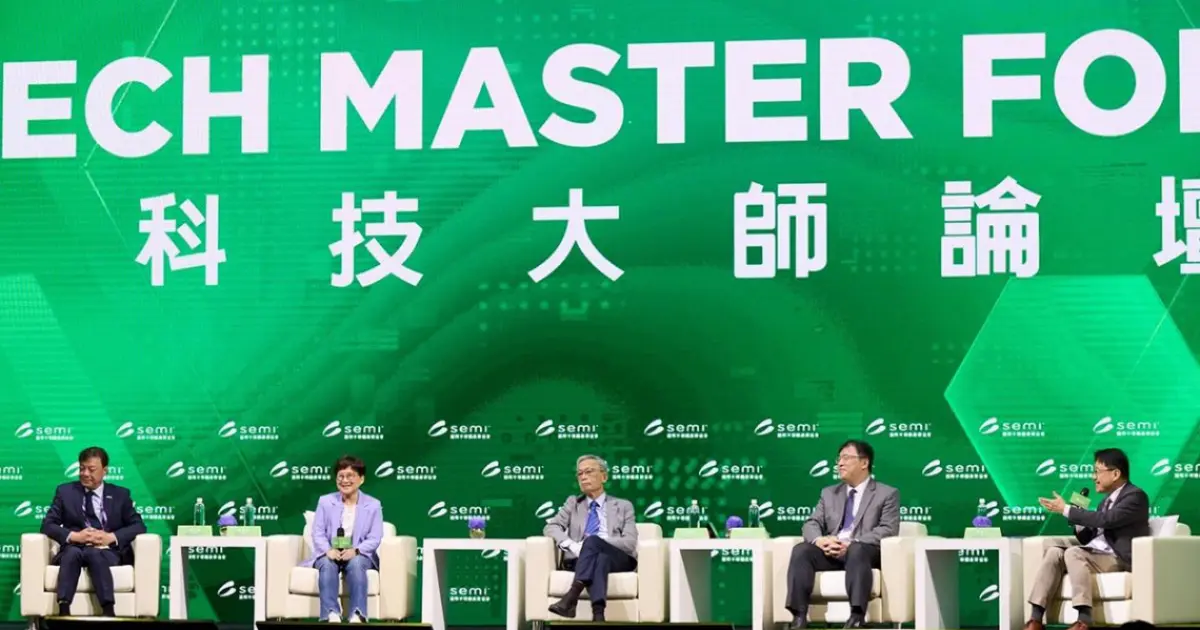
In September 2025, SEMICON Taiwan, the island’s premier annual semiconductor event, took place in grand fashion. Its concluding session, the “Tech Masters Forum,” gathered four key figures from three generations of Taiwan’s technology sector for an intergenerational dialogue: former ITRI President Dr. Shih Chin-tay; Director of the Department of Engineering and Technologies at the National Science and Technology Council (NSTC), Dr. Hung Le-wen; UMC Vice President Hung Kuei-chun; and Wiwynn Chairperson Hung Li-ning. Together, they tackled topics such as AI, quantum technology, and talent cultivation, offering insights into Taiwan’s future. This article highlights the key takeaways from that discussion.
Before the forum began, SEMI hosted its inaugural “20 under 40 Semiconductor Emerging Leaders Awards,” honoring 24 exceptional young professionals under the age of 40, symbolizing the next wave of Taiwanese semiconductor talent.
The award aims to recognize these mid-career professionals who are driving Taiwan’s semiconductor innovation and global engagement, further encouraging generational succession and industry continuity.
Cross-Generational Leadership and the Next 30 Years
This forum embodied the passing of the torch across three generations. The first generation was represented by 79-year-old Dr. Shih Chin-tay, one of the trailblazers who trained at RCA in the 1970s and went on to become president of both ITRI and the College of Technology Management at National Tsing Hua University. The second generation includes Director Hung Le-wen, Vice President Hung Kuei-chun, and Chairperson Hung Li-ning. The third generation was represented by the “20 under 40” awardees and the high school students attending the event.
In a symbolic gesture of continuity, students from Kaohsiung Municipal Kaohsiung Girls’ Senior High School—one of southern Taiwan’s top all-girls high schools—were invited to attend the forum, representing the third generation of future leaders in Taiwan’s semiconductor industry.
Terry Tsao, Global Chief Marketing Officer of SEMI and President of SEMI Taiwan, remarked during the award ceremony: “‘20 under 40’ is not just an award. It marks the beginning of a new semiconductor era. We salute the first-generation ‘mountain builders’ and look forward to this new generation illuminating the next 30 years.”
He also noted that 2025 marks the 30th anniversary of SEMICON Taiwan. He expressed his gratitude to Dr. Shih and Macronix CEO Lu Chih-yuan for their efforts over three decades ago to bring SEMICON to Taiwan, turning the SEMI platform into a major milestone in the nation’s semiconductor development.
Before the forum began, I introduced the four speakers. I noted that Dr. Shih Chin-tay represents Taiwan’s first generation of “mountain builders” in the semiconductor field. His career was defined by two pivotal chapters: 30 years at ITRI, where he helped shape Taiwan’s industrial R&D talent base; and 20 years leading the College of Technology Management at National Tsing Hua University, adjacent to the Hsinchu Science Park.
Director Hung Le-wen, originally a communications engineering professor at Tsing Hua University, is now on secondment to the NSTC, where he oversees science and technology policy and coordinates industry–academic R&D partnerships. Vice President Hung Kuei-chun, with nearly 30 years in the semiconductor sector, played a key role in UMC’s collaboration with Intel on 12nm process development.
I also pointed out that UMC has made substantial contributions to Taiwan’s semiconductor evolution. As early as 1996, it spun off its IC design division, giving rise to MediaTek and Novatek. Realtek’s founder also came from the UMC family. Today, all three firms rank among the world’s top ten fabless IC design companies—proof of UMC’s systemic influence on the industry.
UMC’s bold “unbundling” strategy in the 1990s made it one of the first companies worldwide to separate IDM (Integrated Device Manufacturer) operations into foundry and design segments. Later, computer brands Acer and ASUS followed suit, spinning off their ODM units into Wistron (2001) and Pegatron (2005), respectively. These moves demonstrated Taiwan’s foresight in adapting to global supply chain specialization. In contrast, major Asian tech nations like Japan and Korea have yet to undergo similar structural transformations, and even Intel still retains its IDM model.
Semiconductor: A Vast and Complex Industry Requiring Cross-Disciplinary Talent
The forum officially began with Dr. Shih reflecting on Taiwan’s semiconductor journey. He recalled the early days, when resources were scarce and each major project was fraught with hesitation and doubt. “But in the end, we went ahead—and we made the right calls,” he said. The journey, he noted, was akin to the classic Chinese tale Journey to the West, where the monk Tang Sanzang braves countless trials to retrieve sacred texts—symbolizing Taiwan’s quest to build a world-class industry.
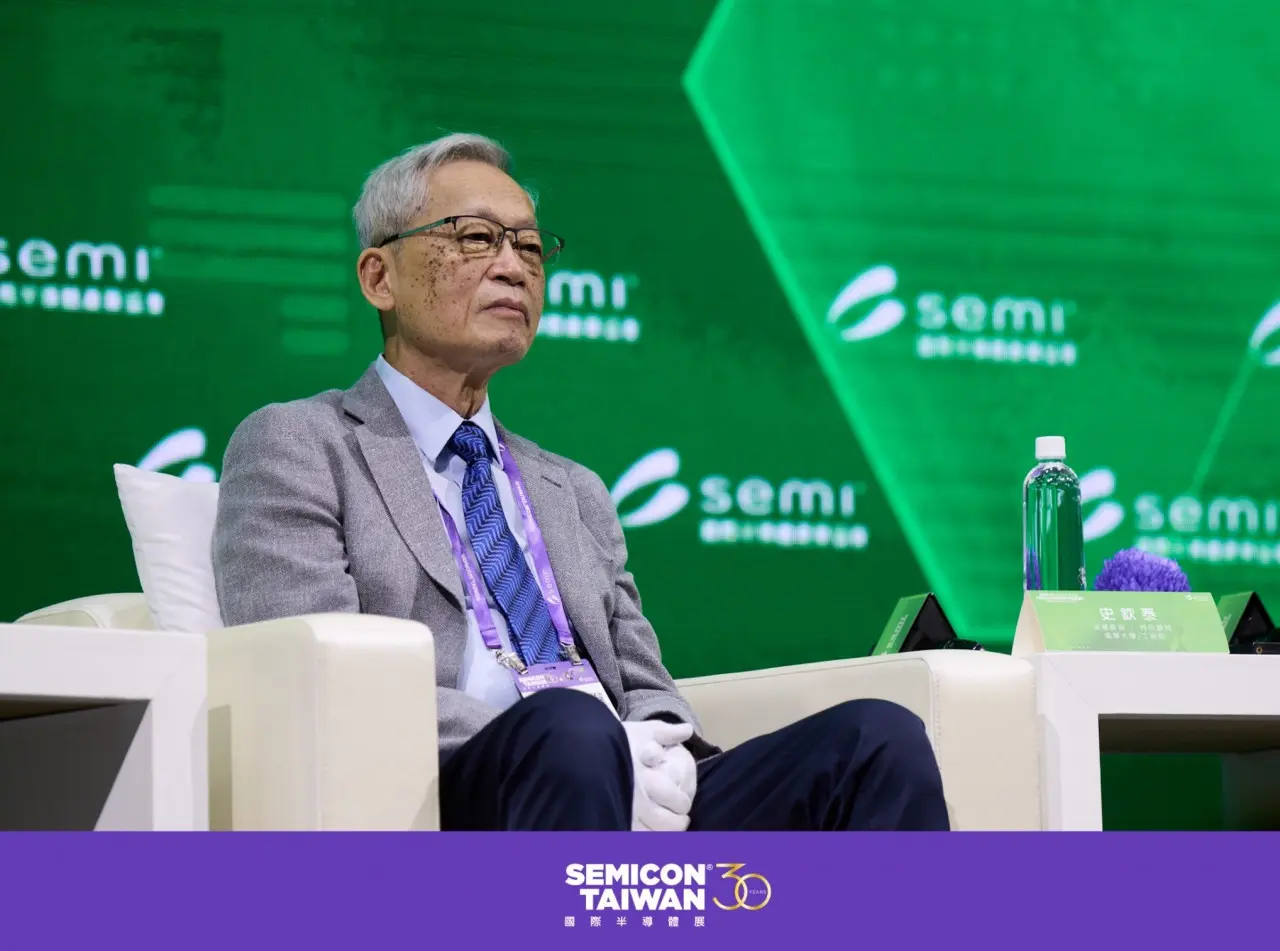
He emphasized that the semiconductor industry today is massive and highly complex. It no longer requires only electrical engineering talent, but must integrate expertise from materials science, chemistry, computer science, management, and even law. “Designing transistors used to be like building a house,” he said. “Now it’s like constructing a world-class metropolis—you need homes, parks, commercial zones, and transportation systems.” Only through the fusion of diverse talents can the industry thrive.
Dr. Shih recalled that Hsinchu was once remote and unattractive to Taipei’s talent pool, making recruitment difficult. ITRI had to recruit chemical engineering and public administration graduates from National Taiwan University. One chemical engineer they hired eventually became UMC’s CEO—proof that interdisciplinary talent played a critical role in Taiwan’s early semiconductor development.
He also shared a personal anecdote: when he returned from the U.S. to join ITRI, he was asked to fill out his occupation while applying for a national ID. None of the listed categories—military, civil service, education, or business—fit his role. He ended up selecting “social service.”
Later, he came to feel that “social service” was an apt description. Whether at ITRI promoting Taiwan’s semiconductor ecosystem or later advancing technology management education at Tsing Hua University, his work was fundamentally about serving Taiwan’s industry and society.
Robotics, Satellite Communication, and Other Emerging Technologies
Director Hung Le-wen, formerly a professor in communications engineering at Tsing Hua University, has served for the past year as Director of the Department of Engineering and Technologies at the NSTC. He also coordinates the R&D collaboration center between Tsing Hua and Taiwan’s major electronics firm, Lite-On Technology.
In his speech, he introduced the government’s “Ten AI Infrastructure Initiatives,” a long-term policy blueprint to support Taiwan’s technology sector over the next 20 years. He also emphasized two promising fields: robotics and satellite communication. The former will extend AI from virtual spaces to the physical world, while the latter will elevate information systems into 3D space—and even into outer space. Both, he noted, are key drivers of future innovation.
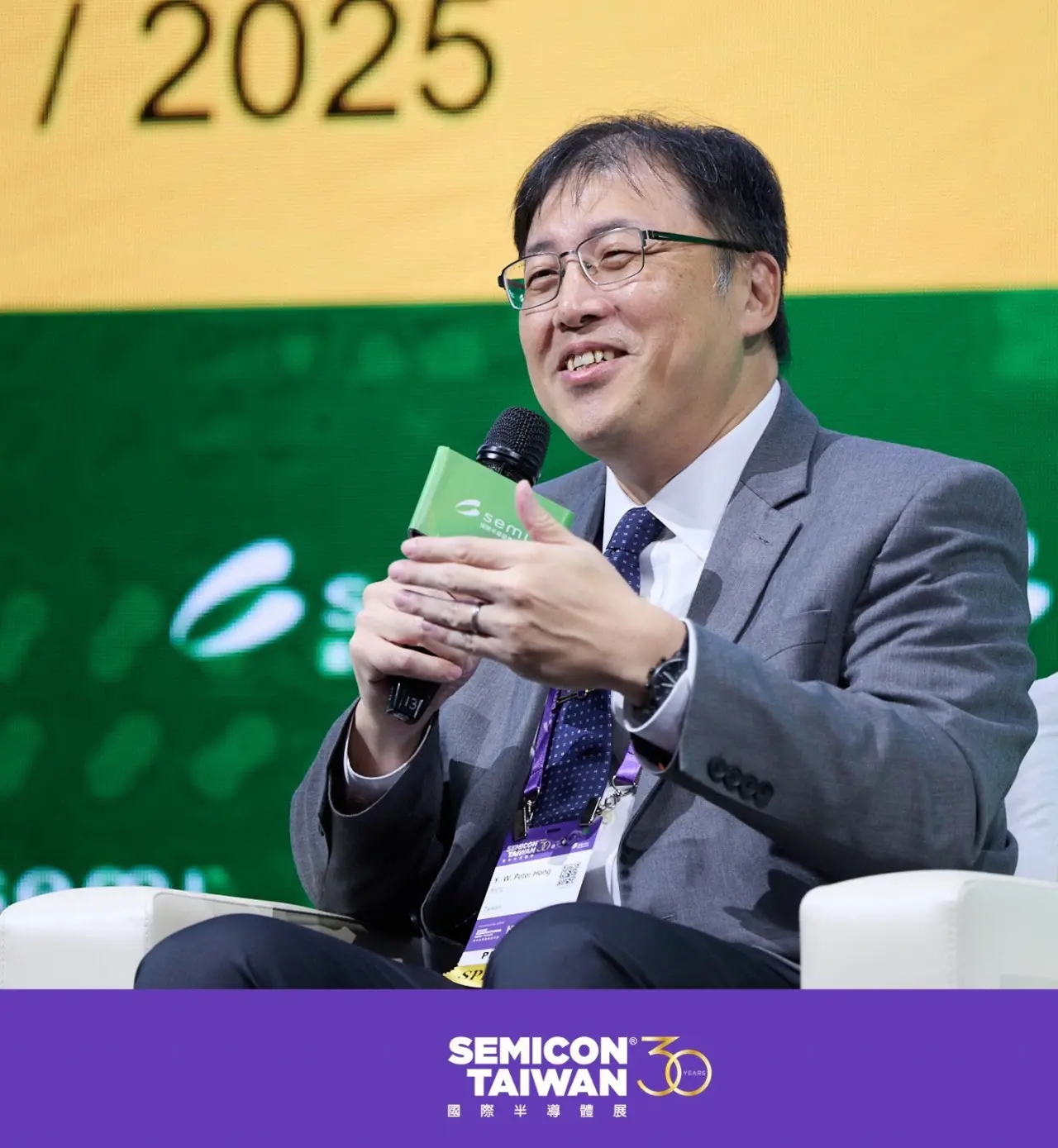
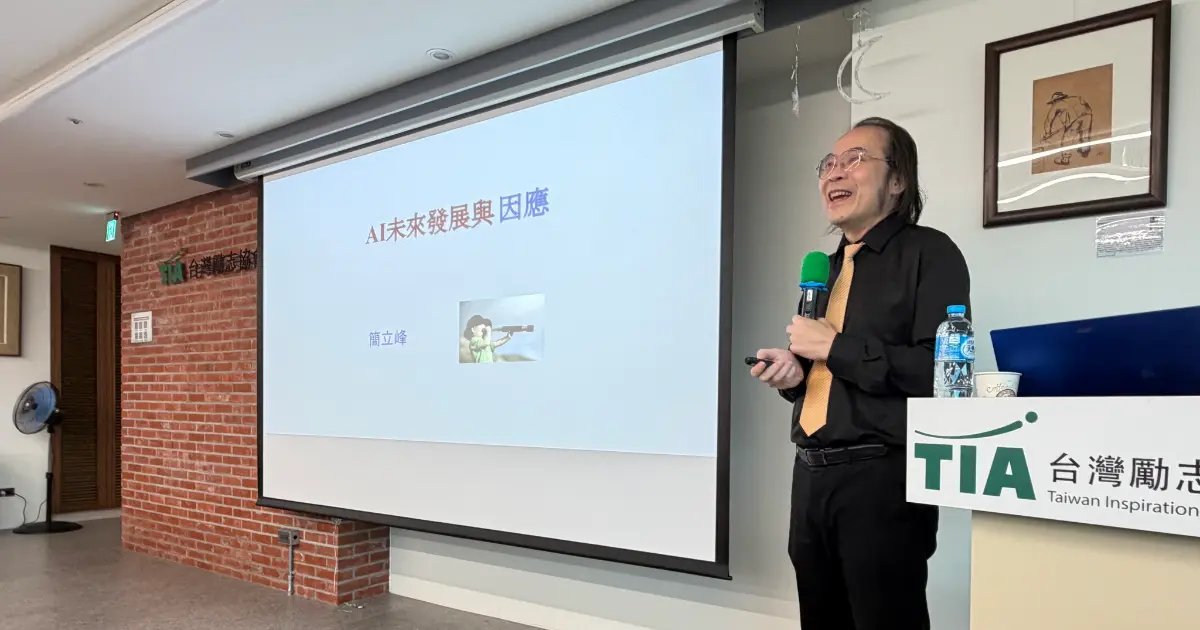
I added that Director Hung’s remarks reminded me of two of Elon Musk’s ventures: Tesla, which focuses on robotics in physical environments, and SpaceX, which advances satellite internet technology. These two domains align closely with Taiwan’s future industrial opportunities.
Director Hung also encouraged young people to actively explore what excites them. “Often, passion is something you discover after doing something—not before,” he said. “If you never try, you’ll never know. So just do it.” He urged students to take initiative, as the process of trying may uncover their true passions.
Surpassing AI Through Human Curiosity and Vision
UMC Vice President Hung Kuei-chun shared that his personal work philosophy has always been “to do things in a way that I grow to love.” Reflecting on his career, he said he has constantly had to learn new fields. For things he wasn’t familiar with, he overcame the challenge through relentless curiosity and learning. In the process of completing each new task, the sense of achievement often led to newfound enthusiasm.
He advised the younger generation to cultivate the ability to think from a higher vantage point—because only from above can one see further. “The next generation must possess both creativity and the ability to surpass AI,” he emphasized. “Everyone is using AI now, but only those with qualities and values that AI lacks will truly stand out.”
Hung has worked at UMC for 28 years and currently leads the company’s collaboration with Intel on 12nm process development. At the forum, he shared the outcomes of this collaboration and the strategic shift UMC has pursued since 2017.
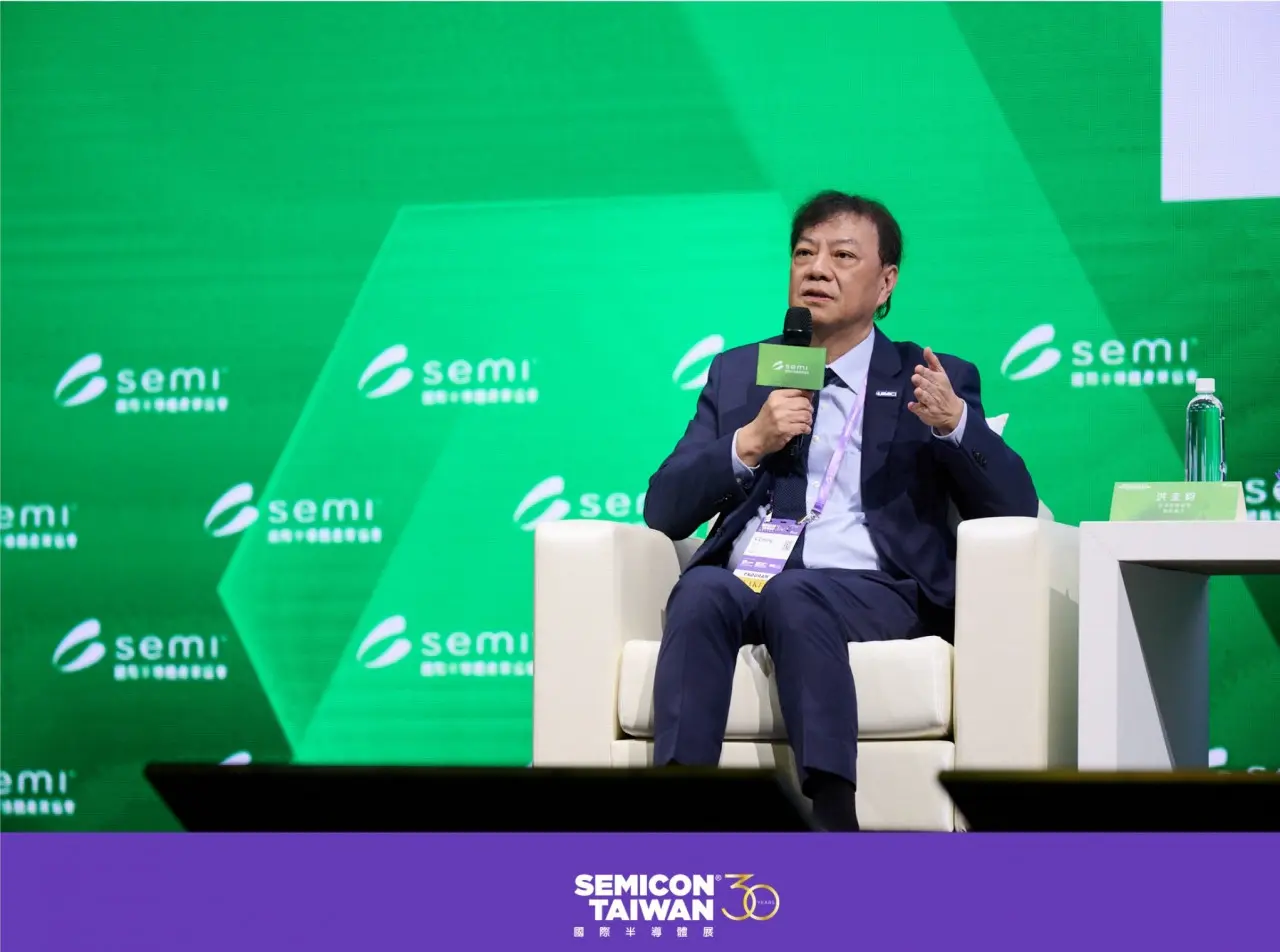
In 2024, UMC and Intel jointly announced the development of a 12nm FinFET process. This partnership allowed UMC to pursue next-generation process nodes through a capital-light model while maintaining growth momentum. At the same time, Intel learned from UMC how to run a foundry business and accelerate product development. Intel even praised UMC as a “valuable tech partner.”
Hung further pointed out that Intel had long prioritized performance in its product development while placing less emphasis on power consumption. But with the rise of mobile devices like smartphones, Intel began to recognize the importance of energy efficiency. UMC’s extensive experience in low-power chip design became a key reference for Intel. According to Hung, the jointly developed 12nm process is expected to complete development and verification in 2026 and enter mass production in 2027.
The Moment Passion Was Called Forth: The “Processor Gardener” Story
Chairperson Hung Li-ning also shared how her passion for work was first awakened—through a profound conversation with Acer founder Stan Shih in her youth.
After graduating from university, she chose to stay in Taiwan rather than go abroad, because her boyfriend at the time didn’t want to leave. Her first job was at a garment export trading company. But she soon discovered that the boss was secretly taking kickbacks, which she found intolerable—so she resigned without hesitation.
Not long after, she came across a job posting from Acer. The position title was unusual: “Processor Gardener.” She had no idea what the job entailed, but applied anyway. The HR team arranged for her to meet with founder Stan Shih in the evening. It was Acer’s fourth year of operation, and Shih spoke with her for two to three hours, passionately explaining how microprocessors could change the world and the importance of Chinese input methods for native speakers.
At the end of the conversation, Shih told her to go home and discuss with her father before making a decision. Hung recalled, “I stood downstairs outside Acer’s Minsheng East Road office and thought: I don’t need to ask my father—I want to join Acer right now.”
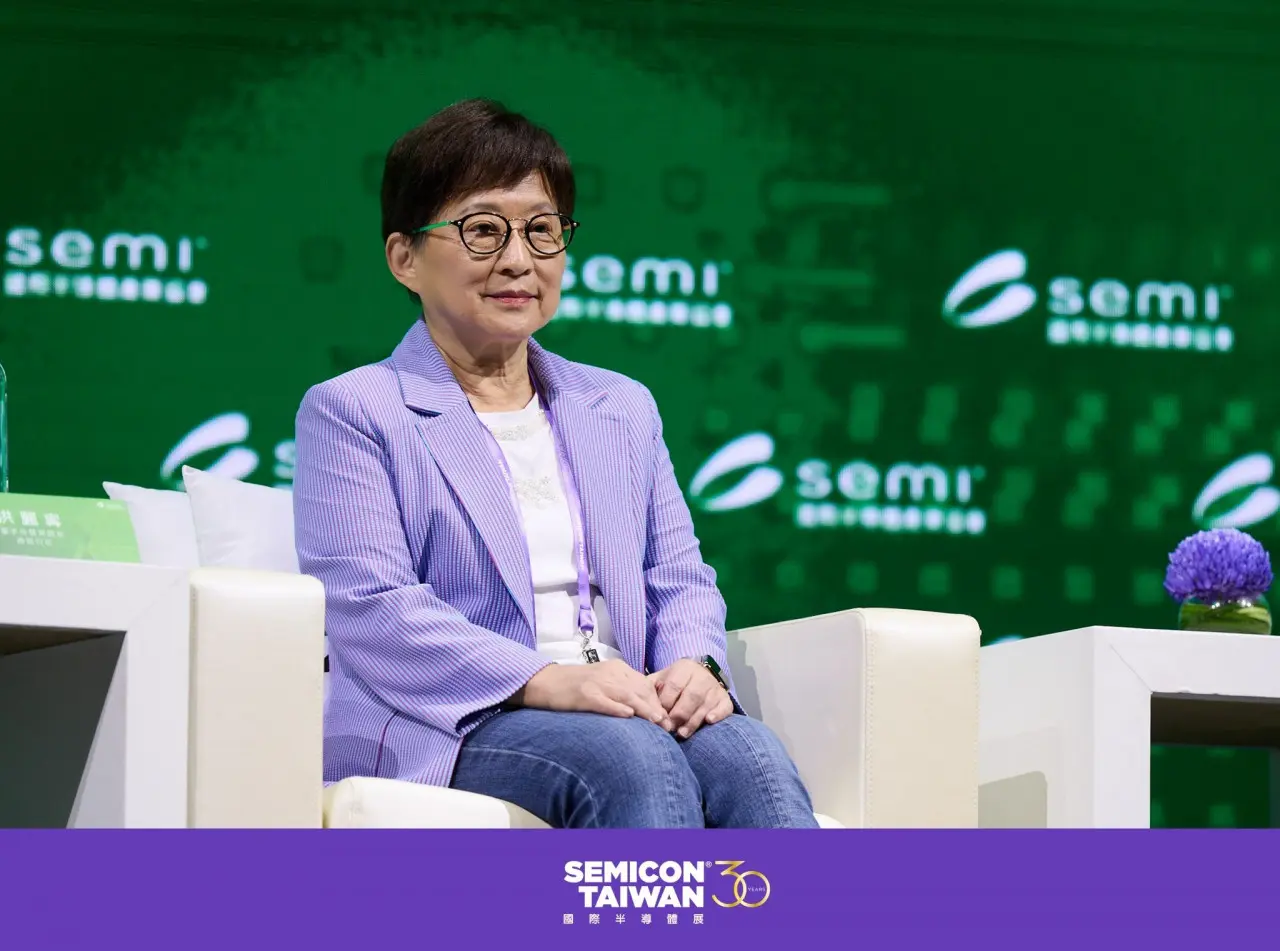
She said that night was the moment when her career passion was truly “called forth.”
Later, as Acer restructured, she was sent to its ODM arm Wistron. After that, she and a group of colleagues spun off to form Wiwynn with a capital of NT$95 million. Today, Wiwynn’s market value exceeds NT$600 billion, making it a global leader in AI servers.
The Strength of Women in Taiwan’s Tech Sector
Hung also addressed the high school girls in the audience directly: “Don’t think you’re incapable of great things.” As a member of Taiwan’s Women on Boards association, she observed that many female chairs have proven just as capable as their male counterparts in running successful businesses.
She believes Taiwan remains a relatively friendly environment for women compared to countries like Japan and South Korea. She encouraged the young women to chase their dreams bravely and not to be limited by social norms or their own self-doubt. She also hoped that young men could learn to better appreciate and support women.
All four panelists emphasized the importance of interdisciplinary learning.
Dr. Shih noted that technologies such as III–V materials, fiber optics, and silicon photonics have all gone through cycles of hype and stagnation. Yet over time, they proved to be foundational to high-frequency communication, data centers, optical sensing, and high-performance computing. These technologies, he said, eventually became indispensable.
Hung Li-ning added that engineers must remain lifelong learners, especially in crossing disciplinary boundaries. “Technology never stops progressing,” she said. “Only a sustained sense of curiosity can drive continued learning.” At Wiwynn, AI applications are now embedded across many departments. The finance team, for instance, aggressively applies AI: every morning, she receives a detailed report—compiled by AI—on competitors’ and clients’ latest financial disclosures.
She further explained that Wiwynn is a company focused on computing power. As compute capabilities have grown, an imbalance has emerged between compute and networking. To address this, Wiwynn is investing in silicon photonics R&D. At the same time, due to AI’s enormous power consumption, thermal management has become increasingly critical. Hung emphasized that the industry must work together to improve energy efficiency and contribute to a more sustainable planet.
She concluded by noting that quantum technology is likely to become a critical field within the next decade, and companies must begin laying the groundwork now.
This inspiring forum brought profound insights from three generations of Taiwan’s tech leaders and spotlighted the emergence of a new generation of “mountain builders.” As Dr. Shih said, the original title of the documentary Mountain Builders was A Half-Century Gamble, later changed to A Century Gamble—because the future of semiconductors is still unfolding, with countless challenges ahead. For Taiwan, the pilgrimage is far from over—and many more pioneers are still needed. Perhaps Dr. Shih’s message is the very direction that the next generation of builders must take to heart.
Related Articles
Micron Announces Its Largest Rewards Ever. Its Taiwan Union's Demands Expose a Clash of Pay Systems. A strike threat at Taiwan's largest foreign investor, read in three dimensions
TSMC's 3nm rinse comes exclusively from AEMC, a Taiwanese company once withdrawn from the Emerging Stock Board
Taiwan AI Industry Upgrade Forum Series || Event Report:America Wants More Manufacturing. What Does It Take for Taiwan’s Suppliers to Follow?