How Are OpenAI’s Collaborations with NVIDIA and AMD Different? Is the AI Industry Forming a Bubble? A Complete Analysis
AI computational power has become the core battlefield of industrial competition, with major market-moving news emerging almost every day. The latest development is that the leading AI company OpenAI announced that it will acquire up to 10% of U.S. semiconductor company AMD (Advanced Micro Devices) at a price of just 1 cent (US$0.01) per share, while committing to purchase AMD’s upcoming MI450 series GPUs, with the total value expected to reach tens of billions of U.S. dollars.
At present, this AI technology race has drawn in all the major players in chips, artificial intelligence, and system integration, forming a dense and fast-evolving industrial battleground. The key figure driving this wave of investment and technological fervor is OpenAI CEO Sam Altman, who is regarded as one of the most influential forces shaping the direction of AI development today.
The following section explains the concrete terms and structure of the OpenAI–AMD collaboration.
According to analysis from Taiwan’s institutional investor platform FOMO Research Institute, OpenAI first committed to deploying AMD GPUs with a total capacity of up to 6 gigawatts. The first phase, totaling 1 gigawatt, will use AMD’s next-generation GPU product MI450 and is expected to come online in the second half of 2026. This procurement scale is already large enough to shake the global chip supply chain and demonstrates OpenAI’s continued massive investment in computing power.
Second, unlike NVIDIA’s previous approach of directly investing US$100 billion into OpenAI, AMD has chosen a different equity collaboration model. AMD issued warrants to OpenAI, allowing OpenAI to acquire up to 160 million AMD shares—equivalent to about 10% of AMD’s total outstanding shares—at a near-zero cost of US$0.01 per share, once specific procurement milestones are met.
Andrew Lu’s View: A High-Risk Investment Game Leveraged by Equity
In this collaboration’s equity design, OpenAI must meet certain conditions—such as purchasing a specified number of AMD GPU chips—before being able to exercise the warrants. Some warrants are further tied to AMD’s stock price; for example, the final tranche can only be fully exercised if AMD’s stock price exceeds US$600 per share.
In other words, if OpenAI fails to meet the procurement thresholds agreed upon with AMD, it will not be able to exercise the warrants and thus lose the opportunity to benefit from AMD’s stock price increase. This structure can be seen as a high-risk, high-leverage incentive mechanism that tightly links both companies’ commercial responsibilities and rewards.
For this collaboration, Taiwan’s renowned semiconductor analyst Andrew Lu (Lu Xing-zhi) described it as an “AI perpetual motion machine,” bluntly stating that it shows “the AI bubble is expanding even further.”
Lu pointed out that AMD effectively issued warrants for 10% of its shares to OpenAI at almost zero cost—only 1 cent per share, totaling 160 million shares. Based on AMD’s current market price of around US$200 per share, this means AMD is effectively giving away over US$30 billion in potential equity value in exchange for OpenAI’s massive chip purchase orders.
Lu further analyzed that while the market generally expects this collaboration to boost AMD’s future revenue, from a capital operations perspective, the transaction resembles a high-risk investment game propped up by equity leverage.
From the details of this AMD–OpenAI collaboration, it is clear that its operational model differs significantly from OpenAI’s previous partnership with NVIDIA.
NVIDIA’s US$100 billion investment in OpenAI was made through a direct cash injection into its private equity, representing a genuine financial commitment. While the investment’s value is substantial, OpenAI remains unlisted, meaning its stock liquidity is relatively limited. NVIDIA CEO Jensen Huang is betting that OpenAI will one day become a successful public company; if that happens, NVIDIA, as a supplier and early shareholder, stands to reap considerable returns.
For OpenAI—whose operating capital needs are enormous—NVIDIA’s US$100 billion investment was a lifeline. Although OpenAI is seen as a leader in the AI industry, publicly available data shows that in the first half of this year, it generated US$4.3 billion in revenue but suffered losses of up to US$13.5 billion. R&D spending alone reached US$6.7 billion, while marketing and advertising expenses soared to US$2 billion—almost double the company’s total annual expenditure in 2023.
By securing this US$100 billion cash injection from NVIDIA, OpenAI obtained the much-needed operating funds. It then used part of the money to purchase AI cloud system services from the U.S. company Oracle and further bought NVIDIA’s AI accelerator chips, forming a mutually reinforcing cycle between client and supplier.
Two Major Collaborations Establish Sam Altman as the Central Force Driving the AI Industry
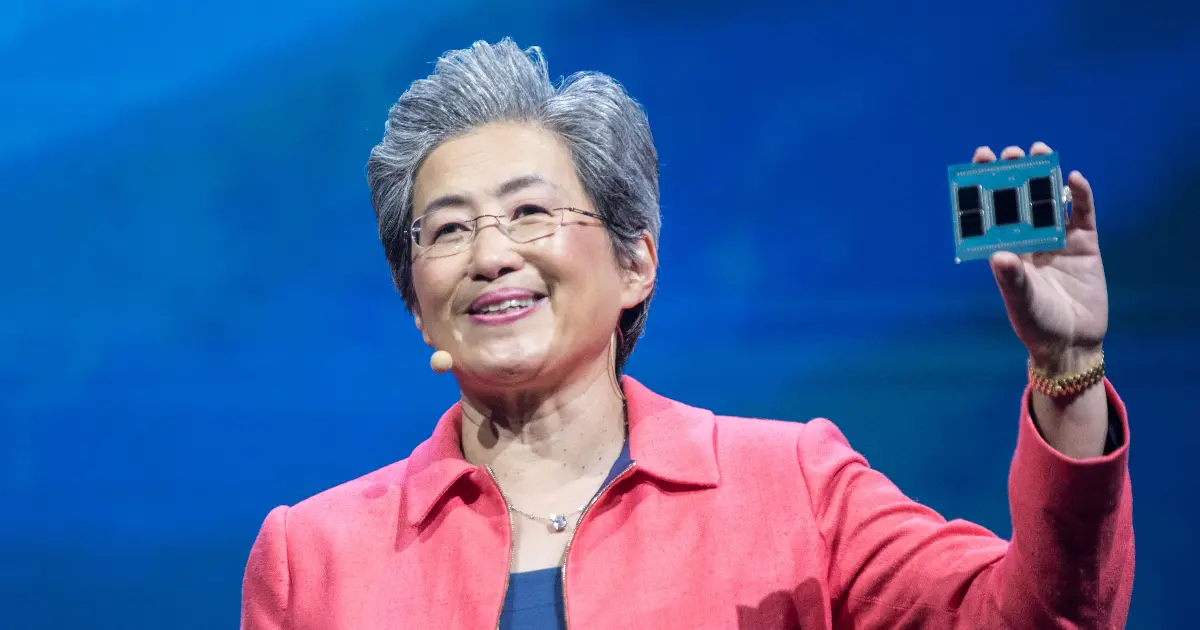
When NVIDIA and OpenAI announced their US$100 billion investment deal, the market began to worry that another GPU giant, AMD, might be marginalized. However, AMD CEO Lisa Su—nicknamed “Su-mom” and, like NVIDIA’s Jensen Huang, originally from Tainan, Taiwan—took a different approach and proposed an alternative collaboration model in response.
This collaboration between AMD and OpenAI not only gives AMD a market endorsement, helping it counter the perception of lagging behind NVIDIA and partially breaking NVIDIA’s monopoly in the AI chip market, but also allows OpenAI to establish a second GPU supply source, thereby reducing operational risk in case of future NVIDIA dominance.
Lisa Su’s strategy was not to invest cash directly into OpenAI. Unlike cash-rich NVIDIA, AMD does not have the same financial capacity. Instead, she chose to issue equity-based financial instruments—warrants—in exchange for OpenAI’s cooperation. The cost of this approach is roughly 10% equity dilution for AMD, effectively borne by the company’s investors.
Of course, this collaboration is premised on OpenAI actually purchasing the agreed-upon quantity of AMD chips. Only then can AMD increase its revenue by billions of dollars as expected. If OpenAI fails to meet its procurement targets, the collaboration will not proceed as planned, and the contract will be difficult to fulfill.
For OpenAI, this collaboration has another significant implication: since AMD is a publicly listed U.S. company, its warrants and shares themselves carry high value. OpenAI can use these potential holdings as collateral to secure bank financing and then use that capital to purchase AMD chips. If it successfully meets its procurement goals, the resulting appreciation in AMD’s stock value could make OpenAI the ultimate financial winner.
From the distinct structures of OpenAI’s partnerships with NVIDIA and AMD, it is clear that OpenAI has become the central player in the current wave of AI investment. CEO Sam Altman is widely recognized as the driving force behind the rapid expansion of the AI industry.
In early 2025, OpenAI, together with Japan’s technology investment giant SoftBank and U.S. cloud service provider Oracle, jointly invested US$500 billion to establish an AI infrastructure company called StarGate. Subsequently, OpenAI placed an additional US$300 billion order with Oracle for computing services. Coupled with NVIDIA’s US$100 billion strategic investment and its new 10% equity partnership with AMD, OpenAI has effectively positioned itself at the center of nearly all major AI infrastructure and capital deployment projects, becoming the core enterprise of the current AI industry chain.
As of now, OpenAI’s generative AI product ChatGPT has surpassed 700 million weekly active users worldwide. According to market estimates, the company’s valuation has exceeded US$500 billion—far ahead of other AI startups such as Anthropic (valued at about US$170 billion) and Elon Musk’s xAI (valued at about US$80 billion).
However, OpenAI’s capital operations have also raised growing concerns about an emerging AI bubble. For example, after receiving US$100 billion in cash investment from NVIDIA, OpenAI used the same funds to place massive AI system orders with cloud service provider Oracle, which in turn procured its GPUs from NVIDIA—forming a circular, high-leverage investment loop.
In contrast, the AMD–OpenAI collaboration appears even more speculative and risky. The viability of the deal entirely depends on whether OpenAI can fulfill large-scale chip purchase commitments. The success of such procurement, in turn, hinges on whether external financing can yield sufficient financial returns to sustain this capital chain.
AI Bubble May Be Inevitable — TSMC Could Be the Ultimate Winner
As Sam Altman continues to emerge as the global driving force of AI development, one question naturally arises:
If AI chips have become such critical strategic assets, why hasn’t OpenAI chosen to invest directly in TSMC (Taiwan Semiconductor Manufacturing Company), the world’s leading semiconductor foundry? Compared to NVIDIA and AMD—both fabless chip designers—doesn’t the actual manufacturer, TSMC, play an even more essential role?
In fact, The Wall Street Journal reported in February 2024 that Sam Altman had been in talks with multiple parties regarding a US$7 trillion semiconductor initiative. The potential partners included SoftBank CEO Masayoshi Son, TSMC, and the United Arab Emirates (UAE) government, which is a major shareholder of GlobalFoundries. The project aimed to build 36 state-of-the-art semiconductor fabrication plants to meet the rapidly growing demand for chips in the AI era.
At that time, Altman had already begun planning to reshape the global semiconductor and AI industry supply chains to prepare for the exponential increase in GPU and computing power demand driven by AI.
However, regarding this US$7 trillion fab construction proposal, TSMC founder Morris Chang (張忠謀) made public comments during the February 2024 opening ceremony of the JASM fab in Kumamoto, Japan. He revealed that, in recent discussions with AI industry leaders (widely believed to include Sam Altman), they had suggested the world would soon need a massive number of new fabs to support AI chip demand. Yet, Chang said he was “not entirely convinced” by these projections, considering them “somewhat exaggerated,” and emphasized that he preferred to take a “middle-ground” view.
Chang’s cautious stance was based on extensive industry experience. Over the decades, the tech sector has experienced numerous bubbles, and TSMC has received its share of unrealistic promises—known colloquially in Taiwan as “papaya cheques.” His refusal to immediately endorse Altman’s ultra-ambitious fab proposal reflected TSMC’s traditional philosophy of prudence and balance.
Perhaps it was precisely because TSMC did not immediately agree to Altman’s plan that he turned instead to other strategic partners—including Oracle, SoftBank, NVIDIA, and AMD—to piece together today’s vertically integrated AI industrial ecosystem, spanning chip design, cloud computing, and capital investment.
Nevertheless, even after Altman secured upstream collaborations with NVIDIA and AMD, all of those companies must still rely on TSMC for chip manufacturing. From a supply chain perspective, this means TSMC remains the ultimate beneficiary of this entire AI investment wave.
After Altman’s extensive cross-border alliances and strategic maneuvers, one key question remains:
Is the AI industry entering a bubble phase?
In truth, a bubble is almost inevitable in the trajectory of technological progress—the only variables are when it will burst and how severe the impact will be. These are the questions that markets around the world will be watching most closely in the months and years ahead.
Related Articles
Micron Announces Its Largest Rewards Ever. Its Taiwan Union's Demands Expose a Clash of Pay Systems. A strike threat at Taiwan's largest foreign investor, read in three dimensions
TSMC's 3nm rinse comes exclusively from AEMC, a Taiwanese company once withdrawn from the Emerging Stock Board
Taiwan AI Industry Upgrade Forum Series || Event Report:America Wants More Manufacturing. What Does It Take for Taiwan’s Suppliers to Follow?