U.S.-China G2 Hard-Splits the World: Taiwanese Firms Forced to Choose Sides as Semiconductor Supply Chains Enter ‘One Country Per Side’ Era?
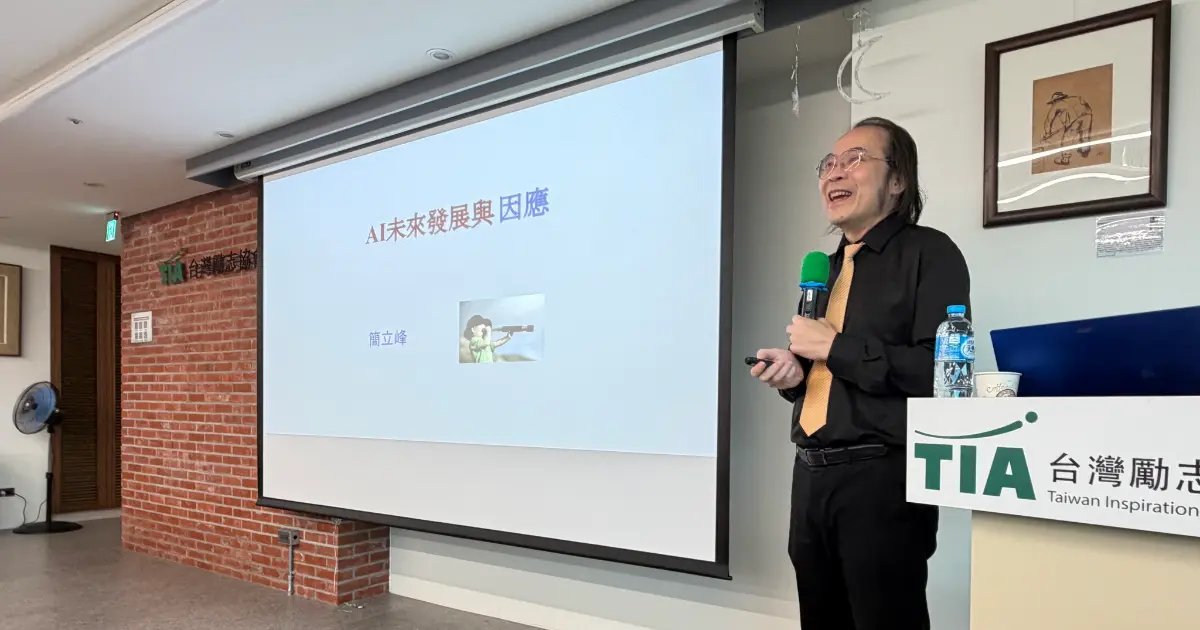
I recently listened to a podcast hosted by Dr. Jian Li-Feng, independent board director of Appier, a leading AI marketing technology firm based in Taiwan. In the episode, he noted that nearly all of the world’s top 100 AI models are developed by companies from the United States or China, and that 45% of AI talent in the U.S. originates from China. While China has a vast pool of AI engineers, many of its companies are unable to expand globally due to U.S. export controls and technology sanctions. For example, Alibaba Cloud, China’s cloud computing giant, currently operates almost exclusively within the domestic market. Without overseas expansion, Alibaba’s AI applications remain difficult to globalize.
Dr. Jian also pointed out that China’s AI industry is experiencing severe “involution” — characterized by excessive internal competition, duplicated investments, and inefficient resource use. He explained that beyond the top three players, Chinese companies face considerable trust and technical barriers when trying to enter Western markets. Against this backdrop, Taiwanese firms, with their bilingual capabilities and cultural fluency, are uniquely positioned to act as a bridge. He described this opportunity as: “Speaking English by day, Chinese by night,” highlighting Taiwan’s potential to connect the West and the Chinese-speaking world.
Dr. Jian, formerly the Managing Director of Google Taiwan, has long been a keen observer of technology trends. His insights are consistently perceptive and thought-provoking. This particular interview prompted me to reexamine how, amid the ongoing U.S.-China contest for technological and market dominance, Taiwanese companies should position themselves and strategize to pursue growth opportunities.
In fact, this topic is not only on the minds of Taiwanese businesses. Over the past two years, during conversations with media and semiconductor industry professionals in Japan and South Korea, I was repeatedly asked similar questions. Their key concerns included: How are Taiwanese semiconductor firms responding to competition from Chinese players? And how do people in Taiwan perceive China’s technological and industrial capabilities?
Most Taiwanese semiconductor firms understand that under intensifying U.S.-China tensions, it’s increasingly difficult for them to compete fairly with local companies in China. As a result, companies such as ASE Technology Holding (the world’s largest OSAT provider), Powertech Technology Inc. (PTI), King Yuan Electronics Co. (KYEC), and ChipMOS Technologies have successively sold off their production lines in China. OSAT (outsourced semiconductor assembly and testing) is considered a lower-barrier segment within the semiconductor industry, making it the first domain from which Taiwanese firms began withdrawing.
In contrast, Taiwan’s wafer foundry and fabless IC design sectors have not significantly reduced their production capacity or talent footprint in China thus far. However, most of these firms have already begun actively expanding into markets outside China — including Southeast Asia, Singapore, India, Europe, the U.S., and Japan — by establishing new sites and recruiting local talent. This strategic shift reflects a proactive adjustment to mounting geopolitical risks.
Many Taiwanese companies have noted that the process of withdrawing from China in recent years has been fraught with difficulties. If a company chooses to leave, it is often required by local authorities to return all tax breaks and investment subsidies it previously received — such as tax exemptions, land discounts, and financial grants. Only after settling all such obligations can the firm officially exit. This “stripping down to leave” scenario imposes a heavy cost on businesses.
Taiwanese Firms Join the Fray of China’s Involution Race, Chasing Exponential Capital Market Returns
Those Taiwanese companies that choose to stay in the Chinese market must commit fully to focusing their operations locally. It is increasingly difficult to “straddle both sides” and maintain a balance between China and Western markets. This dual-track strategy is becoming unviable, not only due to policy constraints but also because of diverging market dynamics.
A friend of mine, a venture capitalist who now focuses exclusively on China, told me that he used to invest across the U.S., Taiwan, and China while working in Taiwan. But under the current international climate, investing in China now essentially means severing ties with the West. This has become conventional wisdom in the VC world — whether in terms of funding sources, technical collaboration, or market access, the barriers are higher than ever.
He said that most of the issues he now follows are discussed within various groups on WeChat — China’s dominant messaging and social networking platform. While he still keeps in touch with his friends in Taiwan, the industry dynamics and professional circles they are each embedded in have diverged so significantly that it feels like they now live in entirely different worlds.
Moreover, China has mobilized vast national resources to support and invest in tech startups. Despite the intensifying “involution” within the sector and fierce internal competition, the potential returns from successful investments are extraordinarily high. For instance, Chinese AI chip design firm Cambricon Technologies has seen its stock price surge recently, becoming a “1,000x home run” case that would have been unimaginable in Taiwan’s capital market. This kind of outsized return is characteristic of highly leveraged capital environments like those in the U.S. and China — and for those who chose to bet on China, there is little regret.
For most companies, once they choose a side, they must clearly separate their U.S. and China operations — it is rare to find firms that can maintain a presence on both sides. Yet there are exceptions. I’ve observed that some upstream, technology-leading Taiwanese semiconductor suppliers are still managing to cooperate with both markets.
The reason is not hard to understand: TSMC’s global leadership in advanced process nodes has driven its domestic Taiwanese supply chain to invest heavily in both front-end and back-end equipment, materials, and chemicals. This segment of Taiwan’s industry has a clear lead. China, recognizing this, has actively sought collaboration with these firms — allowing some suppliers to maintain business relationships across both sides of the strait.
TSMC Leads a “Group Fight” Strategy, Targeting Intel, Samsung, and Rapidus Supply Chains
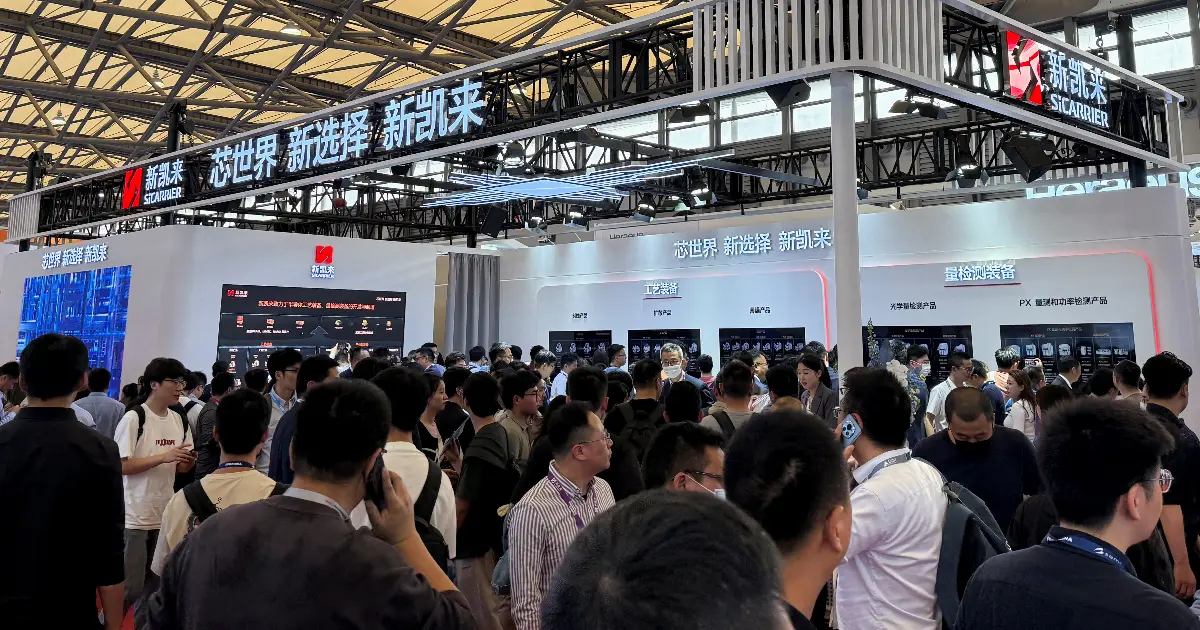
At the 2025 SEMICON Taiwan exhibition held in early September, a representative from an equipment supplier told me that Taiwan’s semiconductor equipment, materials, and chemical supply chains are actively upgrading their capabilities alongside TSMC. As TSMC expands into the U.S., Europe, and Japan, these suppliers are gaining opportunities to enter the supply chains of Intel, Samsung, and Japan’s advanced node project Rapidus. This marks a coordinated, industry-wide push — a collective leap over global competition thresholds led by TSMC, akin to a “group fight.”
Because these suppliers primarily serve the advanced process segment (defined as 5nm and below, or EUV-related manufacturing nodes), Chinese firms are eager to obtain such technologies and products. However, given U.S. export controls and technology sanctions targeting China, some Taiwanese firms have chosen to avoid Chinese customers entirely to steer clear of controversy. Others take a more nuanced approach — closely studying regulatory details and only engaging when they are confident no rules are being violated.
China has also fostered a new crop of domestic semiconductor supply chain companies. One example is NAURA Technology Group, a semiconductor equipment maker that has performed strongly in China’s stock market. The company also participated in this year’s SEMICON Taiwan but focused solely on corporate image promotion — no physical equipment was on display.
NAURA is currently focused on developing and selling various semiconductor manufacturing tools, with its market still largely confined to China. If it attempts to expand internationally, it will face patent litigation risks from major global semiconductor firms — a key barrier to “going global” for Chinese equipment vendors.
Additionally, some Taiwanese companies have reported disappointing experiences after purchasing NAURA equipment — citing poor performance stability, subpar yield rates, and operational difficulties. These reports highlight the significant technological and quality gap that still exists between Chinese equipment manufacturers and international industry leaders.
I once conducted a rough survey of my classmates who graduated with me from National Chiao Tung University in 1990 (now merged into National Yang Ming Chiao Tung University). Today, the majority have joined semiconductor ecosystems aligned with the U.S., with only a few focusing on the Chinese market. The U.S.-China G2 division has effectively hard-split the world — and naturally, my own circle of classmates has likewise fragmented into “one country per person.”
That said, regardless of how the world changes, 40 years of classmate friendship remains unshaken. Even amid the escalating industrial fragmentation driven by U.S.-China tensions, as long as Taiwan’s industry continues to advance technologically and maintain its competitive edge, there is no need to overly fear a loss of global competitiveness.
Related Articles
Micron Announces Its Largest Rewards Ever. Its Taiwan Union's Demands Expose a Clash of Pay Systems. A strike threat at Taiwan's largest foreign investor, read in three dimensions
TSMC's 3nm rinse comes exclusively from AEMC, a Taiwanese company once withdrawn from the Emerging Stock Board
Taiwan AI Industry Upgrade Forum Series || Event Report:America Wants More Manufacturing. What Does It Take for Taiwan’s Suppliers to Follow?