The Taiwan–Japan Alliance Is Not Just About Semiconductors—It Is About National Security:My View on the Taiwan–Japan Alliance, Rapidus’ Challenges, and the Opportunities in the Defense Industry
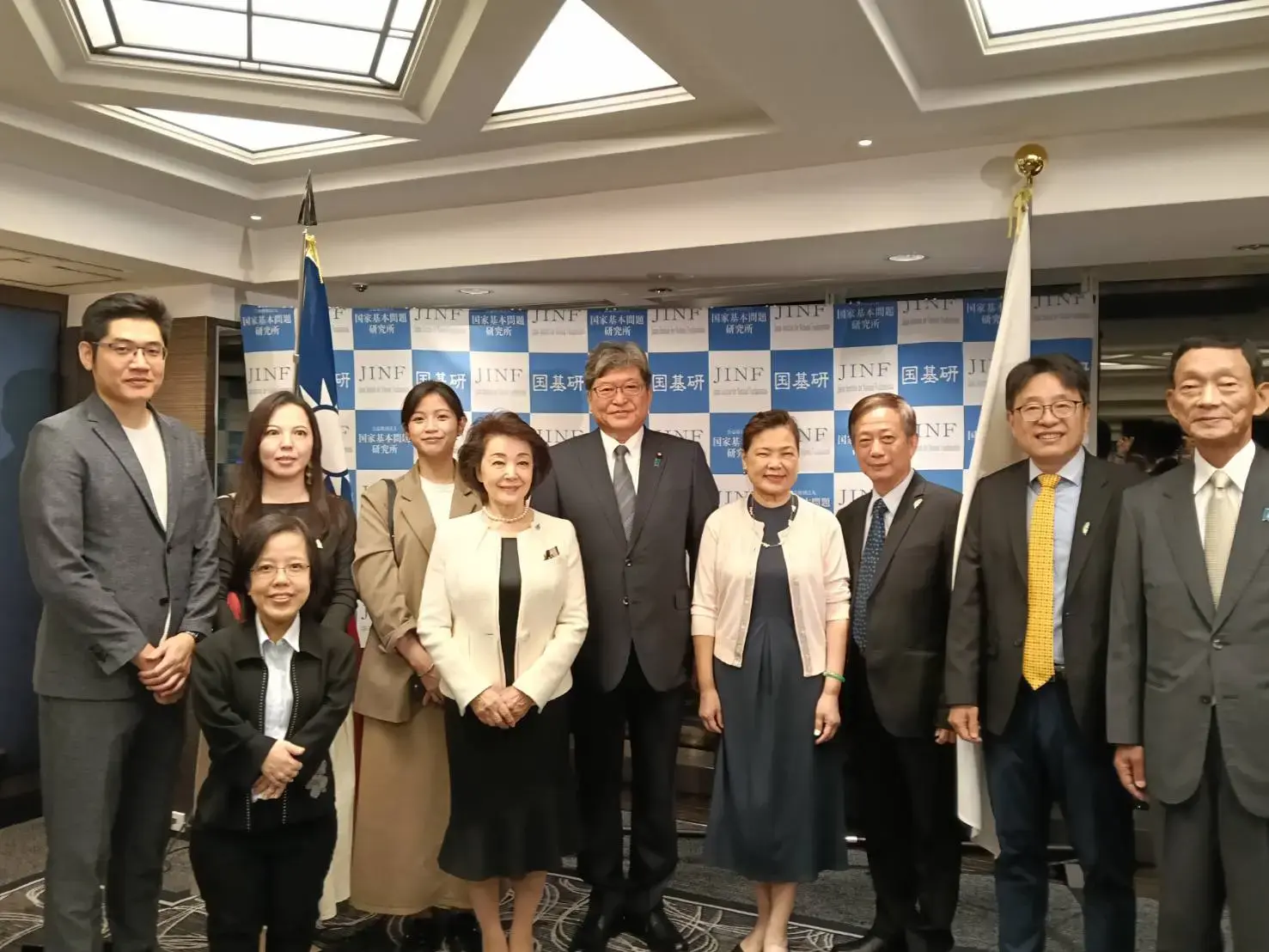
In mid-October 2025, I attended the “Taiwan–Japan Semiconductor Alliance” forum in Tokyo. It was the first high-level dialogue that placed semiconductors and national security side by side as equal priorities, focusing on opportunities for cooperation between the two countries in industry, talent cultivation, and the defense sector. This article summarizes several key insights and impressions from the event.
The forum was co-organized by Taiwan’s Indo-Pacific Strategic Research Center and Japan’s think tank, the Institute for National Fundamental Studies (INFS). Yoshiko Sakurai, Chairperson of INFS, and Akiyoshi Yaita, Executive Director of the Indo-Pacific Strategic Research Center, chaired the discussions, which brought together government, academic, and industry leaders from both nations to explore issues at the intersection of semiconductors and security. The event also drew attention from Japan’s Ministry of Economy, Trade and Industry (METI) and Ministry of Defense, symbolizing the emergence of a dual-track cooperation between the public and private sectors.
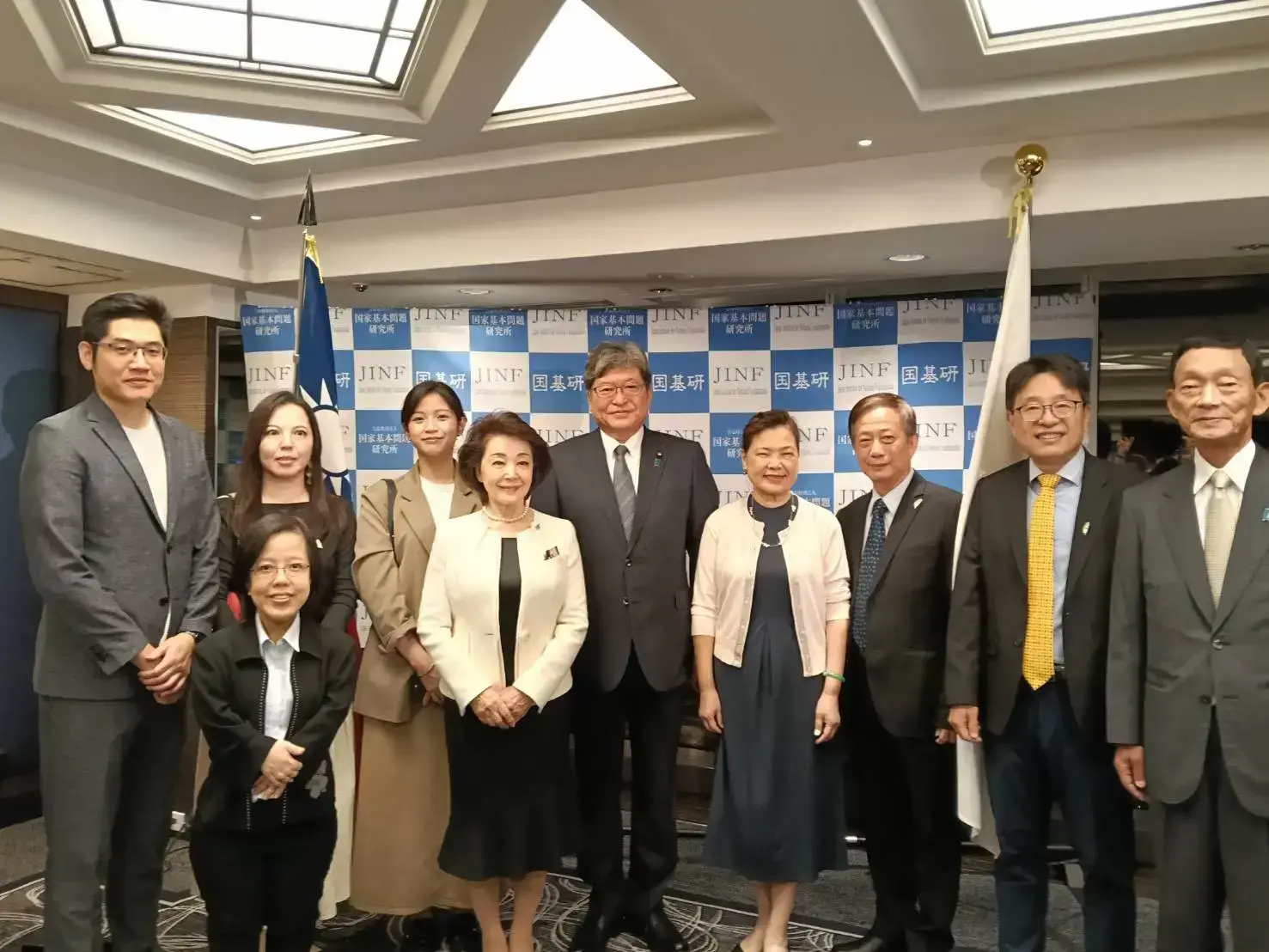
The list of speakers was impressive. They included Taiwan’s former Minister of Economic Affairs, Wang Mei-Hua, and Japan’s former Minister of Defense, Kihara Minoru, who delivered keynote speeches representing their respective nations. Other panelists included Hideki Tsuchimoto, Advisor to Japan’s Ministry of Defense; Joi Ito, President of Chiba Institute of Technology; Kiyofumi Iwata, former Commander and Chief of Staff of the Japan Ground Self-Defense Force; Su Yen-Kun, Dean of the National Cheng Kung University Semiconductor Academy; and Su Tzu-Yun, Research Fellow at Taiwan’s Institute for National Defense and Security Research. Together, they discussed trends from technological, strategic, and educational perspectives.
Semiconductors Are National Security: Why Japan Sees Taiwan as Its Lifeline
Kihara Minoru emphasized that Japan increasingly views “semiconductors” and “security” as two sides of the same coin. Citing his home prefecture of Kumamoto—where Taiwan Semiconductor Manufacturing Company (TSMC) has built its Japan facility—he explained that Japan is rebuilding domestic semiconductor production as part of its economic security strategy. The Economic Security Promotion Act, enacted in 2022, explicitly designates semiconductor self-sufficiency and supply chain resilience as pillars of national policy, recognizing semiconductors as not only an economic asset but also a foundation of national defense.
He further noted that, from a geopolitical perspective, Taiwan lies along Japan’s “maritime lifeline” for energy and food imports, meaning that stability in the Taiwan Strait is inseparable from Japan’s own security. Quoting the late former Prime Minister Shinzo Abe’s 2021 warning that “a Taiwan contingency is a Japan contingency,” Kihara stressed that any disruption in Taiwan’s semiconductor supply would deal a severe blow to Japan’s economy and industrial base. In particular, Taiwan’s TSMC holds an overwhelming global share in advanced process nodes; if its supply were cut off, the impact would ripple through the entire international industrial structure.
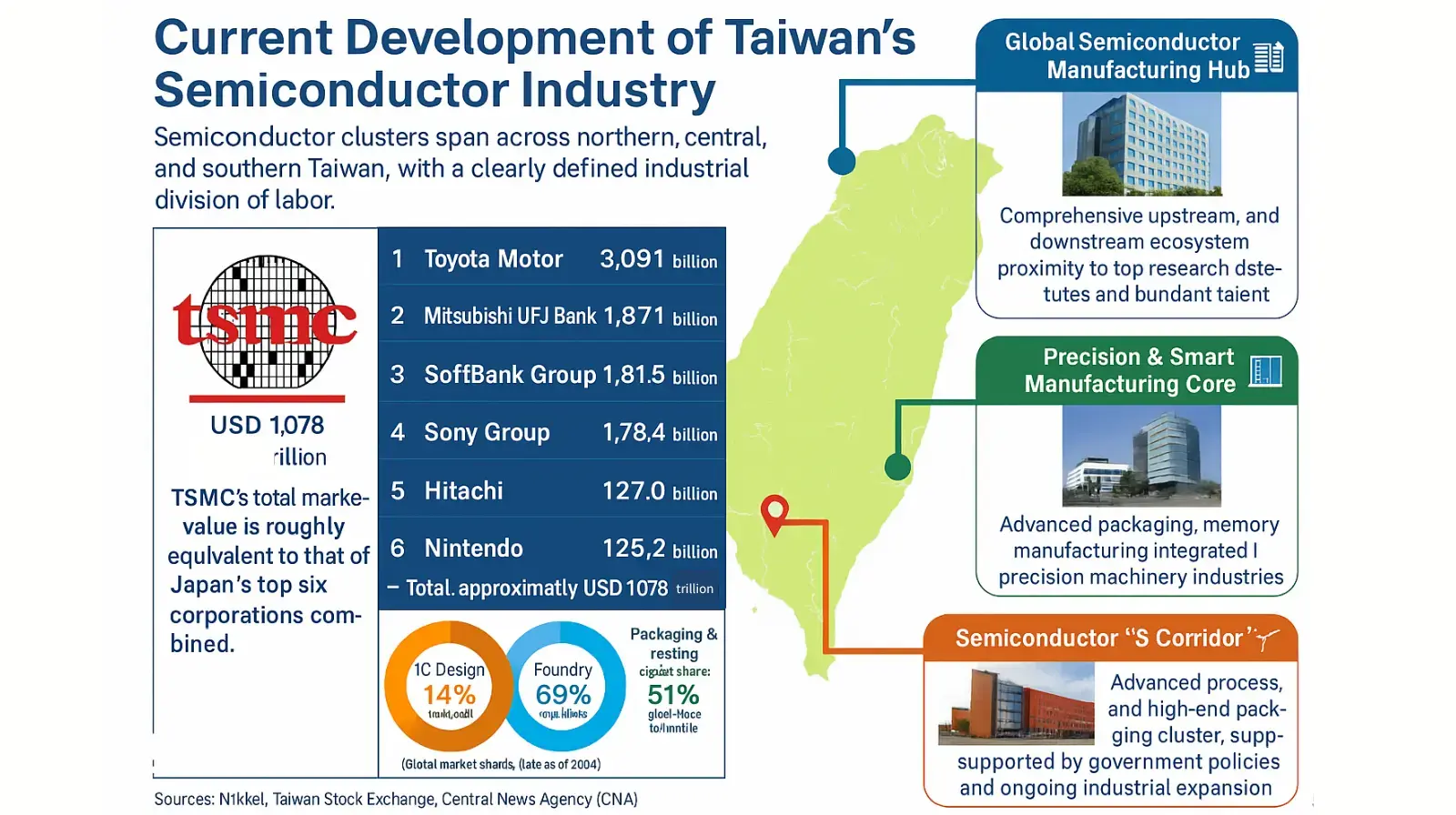
In her remarks, Wang Mei-Hua highlighted that TSMC’s market capitalization had reached US$1.078 trillion (approximately ¥170 trillion as of October 2025), equivalent to the combined market capitalization of Japan’s six largest companies—Toyota Motor, Mitsubishi UFJ Bank, SoftBank, Sony, Hitachi, and Nintendo. She emphasized that this comparison illustrates not only TSMC’s global influence but also the strategic and geopolitical significance of semiconductors as critical assets.
According to data from Taiwan’s Ministry of Finance, Taiwan’s total exports in August 2025 surpassed those of Japan and South Korea, hitting an all-time high. Despite having only one-sixth of Japan’s population and half that of South Korea, Taiwan has outperformed both countries in export volume, driven by global demand for AI servers and semiconductor-related products—underscoring the island’s formidable industrial competitiveness.
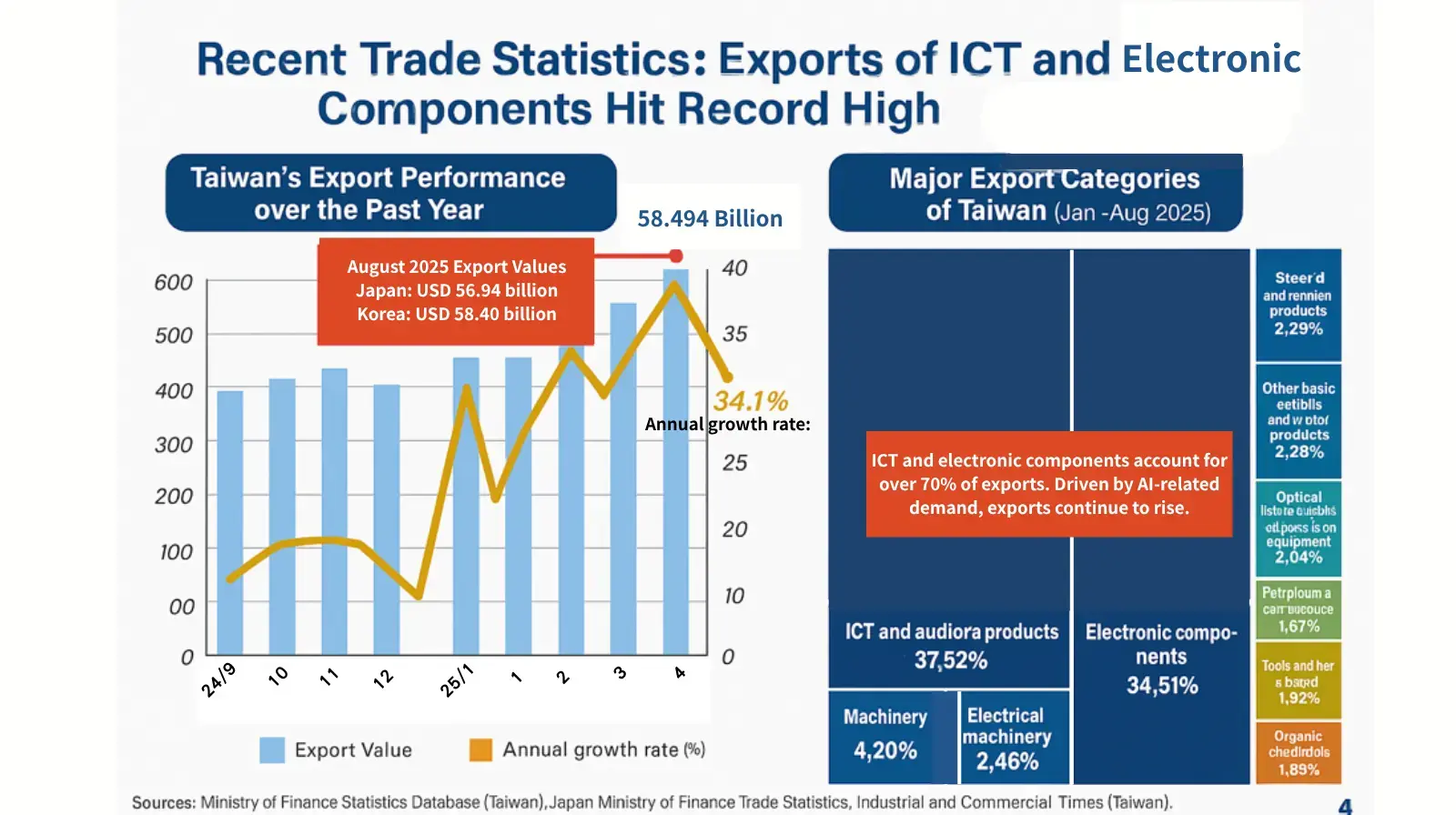
These two figures astonished many Japanese participants. Yoshiko Sakurai, Chairperson of the Institute for National Fundamental Studies, later reconfirmed the data with the Taiwanese delegation, remarking that Taiwan’s economic performance demonstrates its rapidly rising status within Asia’s industrial ecosystem.
However, Wang also stressed that Japan’s contributions in technology and materials have been vital to Taiwan’s export success. Much of Taiwan’s high-value output—such as semiconductor wafers, ICT equipment, and AI servers—is built upon Japanese equipment and chemical materials, highlighting the deeply intertwined and mutually dependent nature of the Taiwan–Japan supply chain.
Currently, Taiwan’s main exports to Japan include integrated circuits, memory products, and polyester materials, while Japan’s major exports to Taiwan are integrated circuits, semiconductor equipment, and automobiles. Japan has consistently maintained a trade surplus with Taiwan, underscoring its strong technological and quality competitiveness, while both countries have formed a stable and complementary industrial partnership.
According to bilateral trade statistics for 2024, Taiwan’s exports to Japan totaled US$25.8 billion, while Japan’s exports to Taiwan reached US$46.4 billion, maintaining Japan’s surplus position. On the investment side, Taiwan invested US$5.49 billion in Japan—mostly from TSMC—while Japan’s investment in Taiwan totaled US$450 million. Each ranks as the fourth-largest investment source for the other, showing that Taiwan–Japan economic relations have evolved beyond trade into two-way cooperation in capital and technology.
A closer look at trade structures among Japan, South Korea, and Taiwan further illustrates the high level of trilateral integration. Japan supplies semiconductor manufacturing equipment and chemical materials; South Korea’s two major memory makers export high-bandwidth memory (HBM) chips to Taiwan; and Taiwanese firms combine them with NVIDIA’s GPUs for packaging and testing before server assembly and shipment to the U.S. market. This cross-border process forms a new industrial division of labor in the AI era—“Japan and Korea supply, Taiwan integrates, the U.S. sells.”
Thus, Taiwan’s export performance surpassing Japan and Korea is not the result of mere competition but a reflection of regional supply chain realignment. Benefiting from the AI boom, Taiwan—leveraging its strengths in wafer foundry, packaging, and server manufacturing—has become an “Asia-Pacific industrial integration hub” connecting Japanese and Korean technology with the U.S. market, standing out in the trilateral race.
Compared with the more competitive nature of Taiwan–Korea relations, Taiwan and Japan enjoy an inherently cooperative dynamic. Korean industries tend to adopt a “vertical integration and total coverage” model, whereas Taiwan and Japan, bound by cultural affinity, active civil exchange, and complementary technologies, have built a natural synergy in semiconductors, materials, and equipment. This collaboration has proven far more efficient than the Taiwan–Korea model.
TSMC’s Expansion in Japan: A Symbol of Upgraded Cooperation
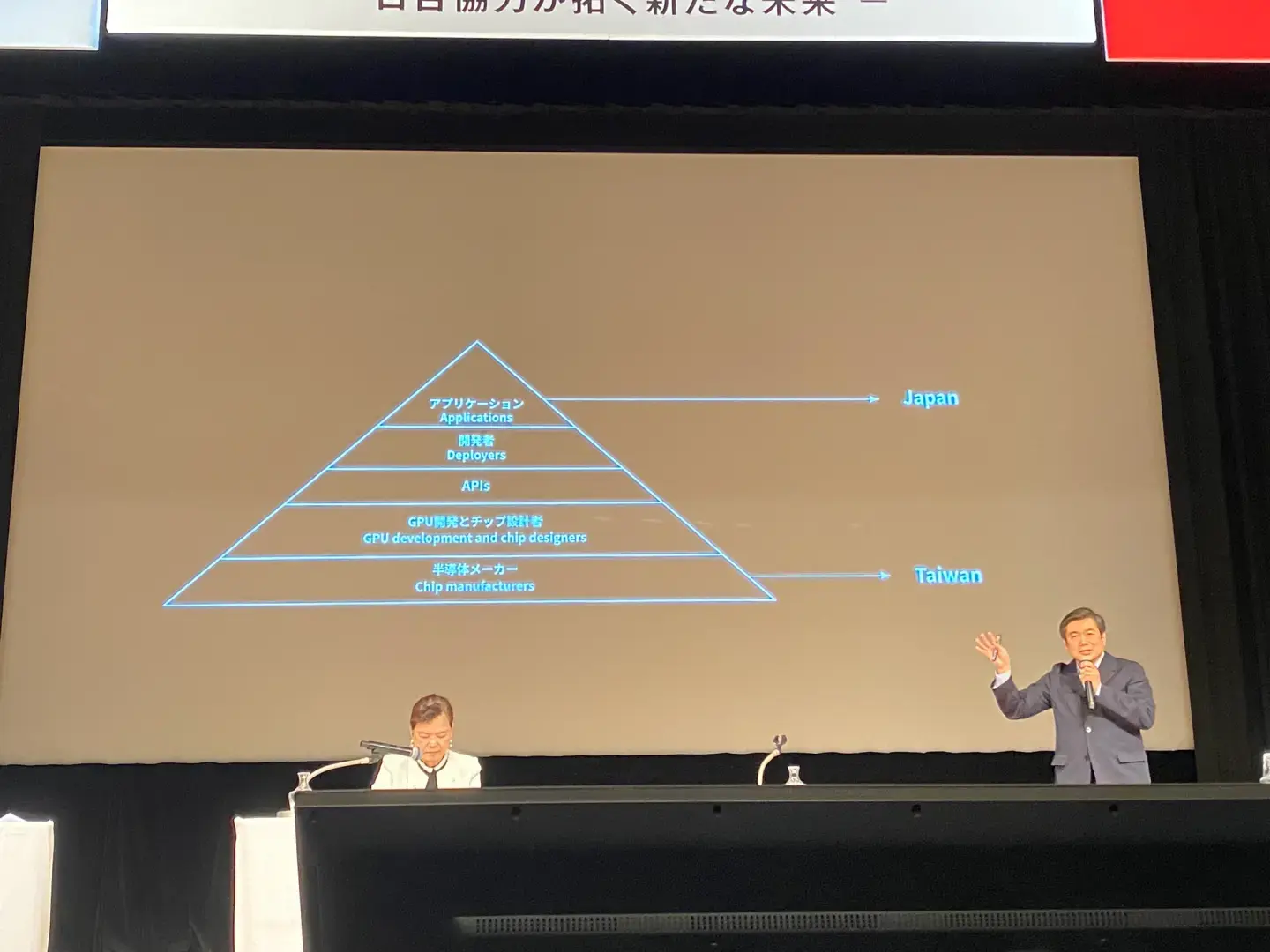
Joi Ito, President of Chiba Institute of Technology, stated that the potential for Taiwan–Japan cooperation is enormous. In the industrial pyramid, semiconductors occupy the foundation, while applications and end products sit at the top. Japan holds global strengths in automobiles, robotics, and gaming; combining these with Taiwan’s semiconductor leadership could create a fully integrated technology ecosystem. Ito also noted that Japan’s culture—rooted in Shinto and a reverence for nature—emphasizes “harmony” over “confrontation,” fostering brands and creativity through a distinct philosophy from Western competition-driven thinking. He cited Apple founder Steve Jobs, who drew inspiration for the iPhone during multiple visits to Kyoto, as an example of Japan’s cultural influence on global innovation.
Chiba Institute of Technology has recently gained national attention as the first university in Japan to establish a Department of Semiconductor Engineering. Backed by government initiatives to nurture semiconductor talent, the university saw a record 170,000 applicants in 2025—outpacing even elite institutions—reflecting Japan’s growing enthusiasm for the semiconductor sector.
Ito, one of Japan’s most internationally minded academic leaders, was born in Kyoto and raised in Michigan, U.S. He studied at Tufts University and the University of Chicago before earning his doctorate from Keio University. Having served as Director of the MIT Media Lab and engaged in venture capital and internet industries in Silicon Valley, his global experience and open thinking have enabled Chiba Institute of Technology to align rapidly with global AI and semiconductor trends.
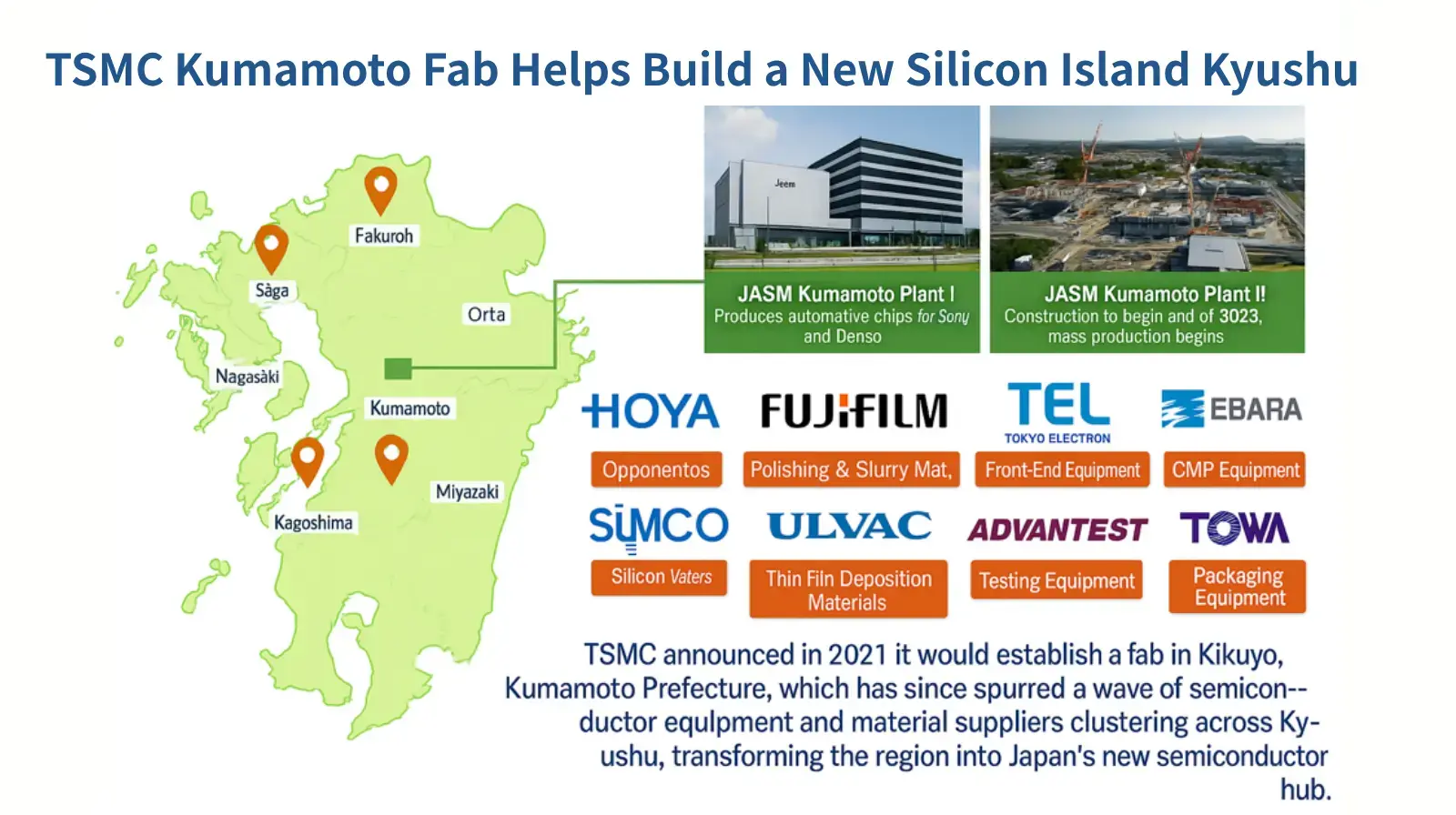
The establishment of TSMC’s wafer fabrication plant in Kumamoto marks a new stage of Taiwan–Japan semiconductor cooperation and serves as a key indicator of the deepening strategic partnership between the two nations. After the forum, many Japanese participants asked whether the company’s investment in Japan might be affected by former U.S. President Donald Trump’s calls for TSMC to expand its investments in the United States.
In my view, while U.S. political pressure may have short-term effects, over the long run TSMC’s investment decisions will be shaped by a combination of market demand and geopolitical factors rather than by any single political variable.
The main reason is that Japan is steadily becoming the “third key semiconductor manufacturing base” after China and Taiwan. Amid rising cross-strait tensions, U.S. and European clients have adopted “China + 1” and “Taiwan + 1” strategies to diversify supply-chain risk, and Japan has emerged as the most viable “+1” option. This not only consolidates Japan’s role within the global semiconductor ecosystem but also positions it as a major beneficiary of industrial realignment.
Within Asia, South Korea remains the other semiconductor powerhouse next to Taiwan. Samsung Electronics, which operates foundry businesses, continues to maintain its IDM (Integrated Device Manufacturer) model, creating competition with its own clients and hindering its ability to catch up with TSMC. In contrast, SK hynix—focused solely on memory—has earned stronger client trust precisely because it does not compete with them, recently surpassing Samsung in revenue to become the world’s leading memory producer.
I emphasized that regardless of location, TSMC’s core investment principle is always “customer demand.” The company’s decision to build a fabrication plant in Arizona stemmed directly from surging U.S. demand for high-performance computing (HPC) chips. With American customers accounting for more than 70 percent of its revenue and orders far exceeding existing capacity, expanding production in the United States became a practical necessity.
Japan, however, remains relatively weak in chip product design (IC design). To sustain TSMC’s investment momentum, Japan must accelerate the development of its design and innovation capabilities. Many of Japan’s flagship industries—automobiles, robotics, and gaming—will need to integrate artificial intelligence (AI) to stay competitive, making IC design the most critical component. I suggested that Japan strengthen collaboration and strategic investment with Taiwan’s IC design sector. Taiwan not only has outstanding design teams but also a complete intellectual-property (IP) supply chain that could help Japan enhance its IC product competitiveness.
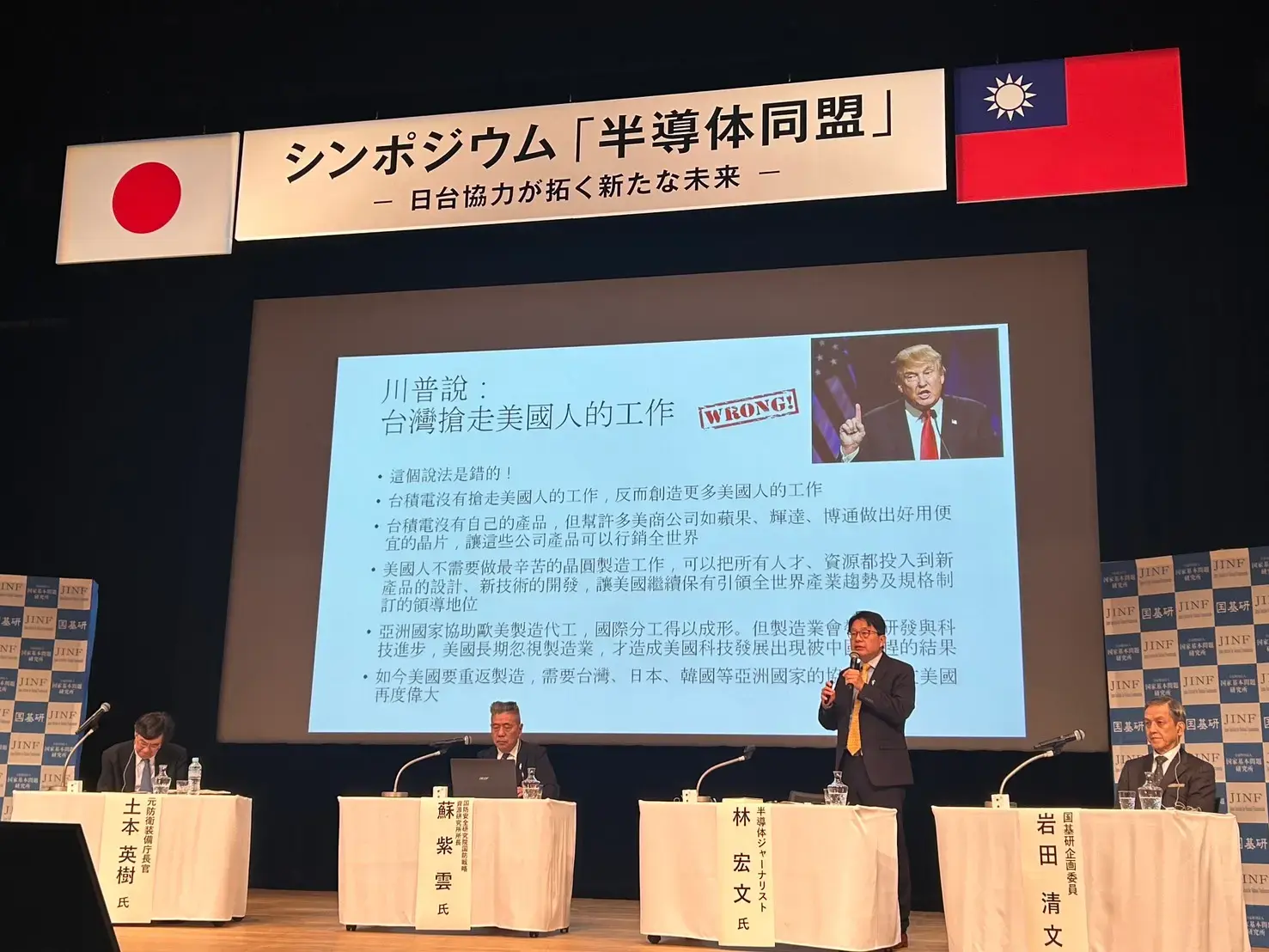
During the discussion session, moderator Akiyoshi Yaita asked for my assessment of Rapidus, Japan’s newly established advanced wafer-manufacturing company.
I replied that many of my Japanese contacts were skeptical about Rapidus’s prospects. I reminded the audience that the essence of competition in advanced process technology lies not only in R&D but also in economies of scale. For example, when TSMC (Taiwan Semiconductor Manufacturing Company) develops a new process node—such as its currently mass-produced 2-nanometer technology—its monthly production capacity quickly scales to 100,000 wafers and doubles to 200,000 within a year. This scale advantage enables TSMC to expand market share rapidly while significantly reducing costs.
Leveraging economies of scale, TSMC continues to raise the competitive threshold—something rivals struggle to match. Although Rapidus has achieved progress in 2-nanometer R&D, mass production will not begin until 2027, with a planned monthly capacity of only 20,000 wafers. Such a small scale makes it difficult to achieve cost or technological breakthroughs.
I also noted that the semiconductor industry’s barriers to entry are extremely high, not only because of the enormous capital expenditures but also due to massive R&D requirements. Leading companies typically spend at least US$2 billion annually on research and development, amounting to 5 to 8 percent of revenue. This means a firm must generate at least US$40 billion in annual sales to sustain such costs. Today, only TSMC, Intel, and Samsung meet that threshold—one reason these three dominate advanced-process development and why Rapidus faces such intense competitive pressure.
Recently, Rapidus CEO Atsuyoshi Koike gave an interview to NHK World, where he recounted his days as a rugby player at Waseda University. At 73, he appeared on camera clutching a rugby ball and charging forward, a vivid symbol of his enduring passion and determination to revive Japan’s semiconductor industry.
Koike is often described as the man who dreams the most about Japan’s return to wafer manufacturing—yet also the one who has experienced the most disappointment. In 2000, he spearheaded “Trecenti,” a joint project between Hitachi and Taiwan’s UMC that ultimately failed to take off. Stephen Wu, former UMC president who worked closely with Koike, described him as “a man driven by an extraordinary sense of mission.” Today, through Rapidus’s collaboration with IBM on advanced-process development, Koike has reignited his dream of restoring Japan’s semiconductor manufacturing prowess.
I believe that for Rapidus to succeed in foundry manufacturing, it must differentiate itself strategically from TSMC. Any new entrant seeking to challenge an industry giant must take a distinct path. If Rapidus focuses on emerging fields such as quantum computing or specialized process technologies, it might find a chance to overtake competitors on a curve.
From Semiconductors to Defense Technologies: The Next Step for the Taiwan–Japan Alliance
In my speech, I emphasized that the Taiwan–Japan partnership should extend beyond semiconductors to encompass defense and national-security technologies. A case in point is Anduril Industries, founded by Silicon Valley entrepreneur Palmer Luckey. Anduril represents a new model of defense innovation driven by software, breaking the mold of the traditional military-industrial complex. Its integration of information and communication technologies (ICT) into weapons development offers a valuable reference for both Taiwan and Japan as they modernize their defense industries.
I further noted that incorporating Silicon Valley’s spirit of innovation and agile-development methods into the traditional defense sector could dramatically increase the efficiency and flexibility of military technology while raising the costs and risks for potential aggressors. This carries strategic implications not only for industrial development but also for national security. Leveraging its strengths in semiconductors and ICT, Taiwan has the potential to become a core force in “technology-based defense,” protecting its democracy and sovereignty while establishing a new model for defense autonomy.
Through this pivotal “Taiwan–Japan Semiconductor Alliance” forum, I deeply sensed the shared conviction between the two sides across both industrial and security dimensions. It was not merely a policy or technical dialogue but also an opportunity to deepen mutual trust and lay the foundation for long-term cooperation.
Although Japan must publicly balance its diplomatic relations with China, in practice cooperation with Taiwan is expanding rapidly in the private and industrial sectors. In fields such as semiconductors, defense technology, and AI applications, both sides are pursuing closer exchanges and joint initiatives. Going forward, the Taiwan–Japan relationship is expected to deepen along two axes: as an “economic-security partnership” and a “technology alliance.”
The strengthening of semiconductor cooperation is also creating new opportunities for young engineers and researchers from both nations to engage in cross-border training and joint R&D, extending collaboration from technology to talent development and strategic security.
In summary, the evolution of Taiwan–Japan cooperation—from strategic collaboration in semiconductors to potential joint development in defense technologies—marks the formation of a new partnership founded on technology, security, and democratic values. This transformation goes beyond economic cooperation and is poised to become a vital pillar supporting the Indo-Pacific security architecture.
Related Articles
Micron Announces Its Largest Rewards Ever. Its Taiwan Union's Demands Expose a Clash of Pay Systems. A strike threat at Taiwan's largest foreign investor, read in three dimensions
TSMC's 3nm rinse comes exclusively from AEMC, a Taiwanese company once withdrawn from the Emerging Stock Board
Taiwan AI Industry Upgrade Forum Series || Event Report:America Wants More Manufacturing. What Does It Take for Taiwan’s Suppliers to Follow?