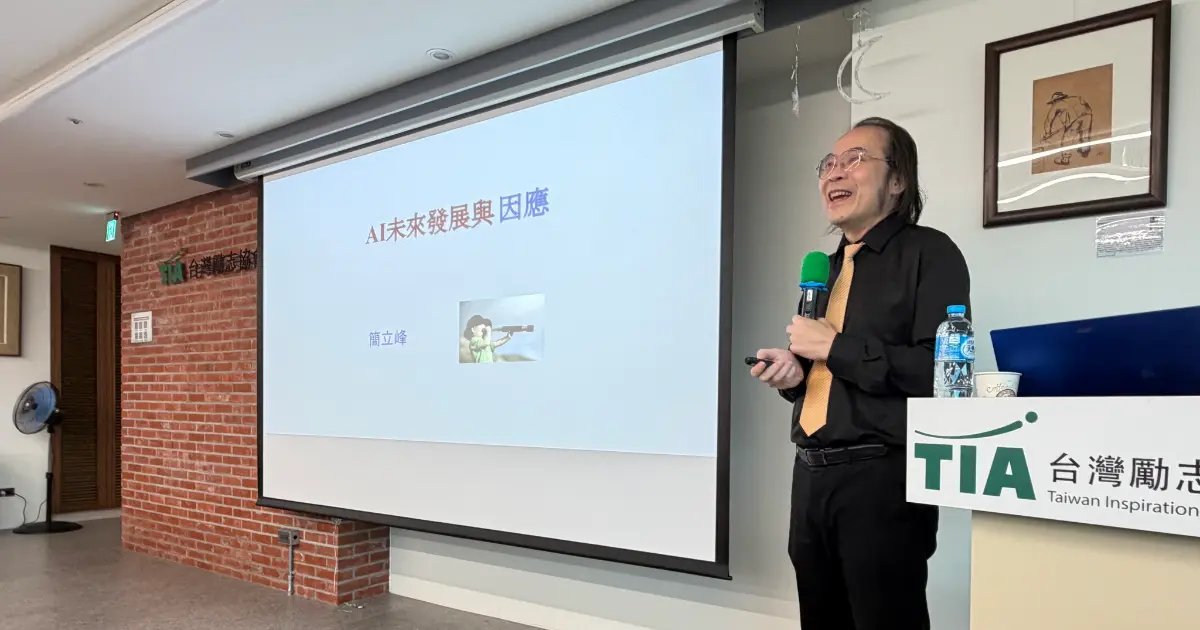
With long-term holdings via sovereign funds, book value surpasses NT$1 trillion! Why has TSMC won in semiconductors to become the “chip champion”?
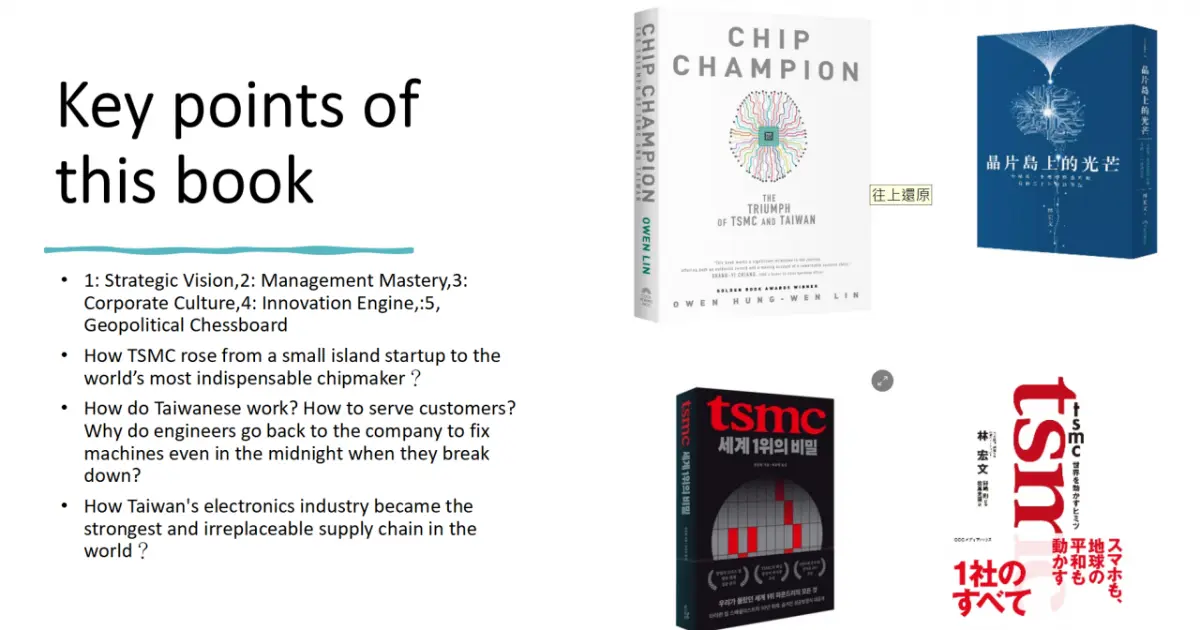
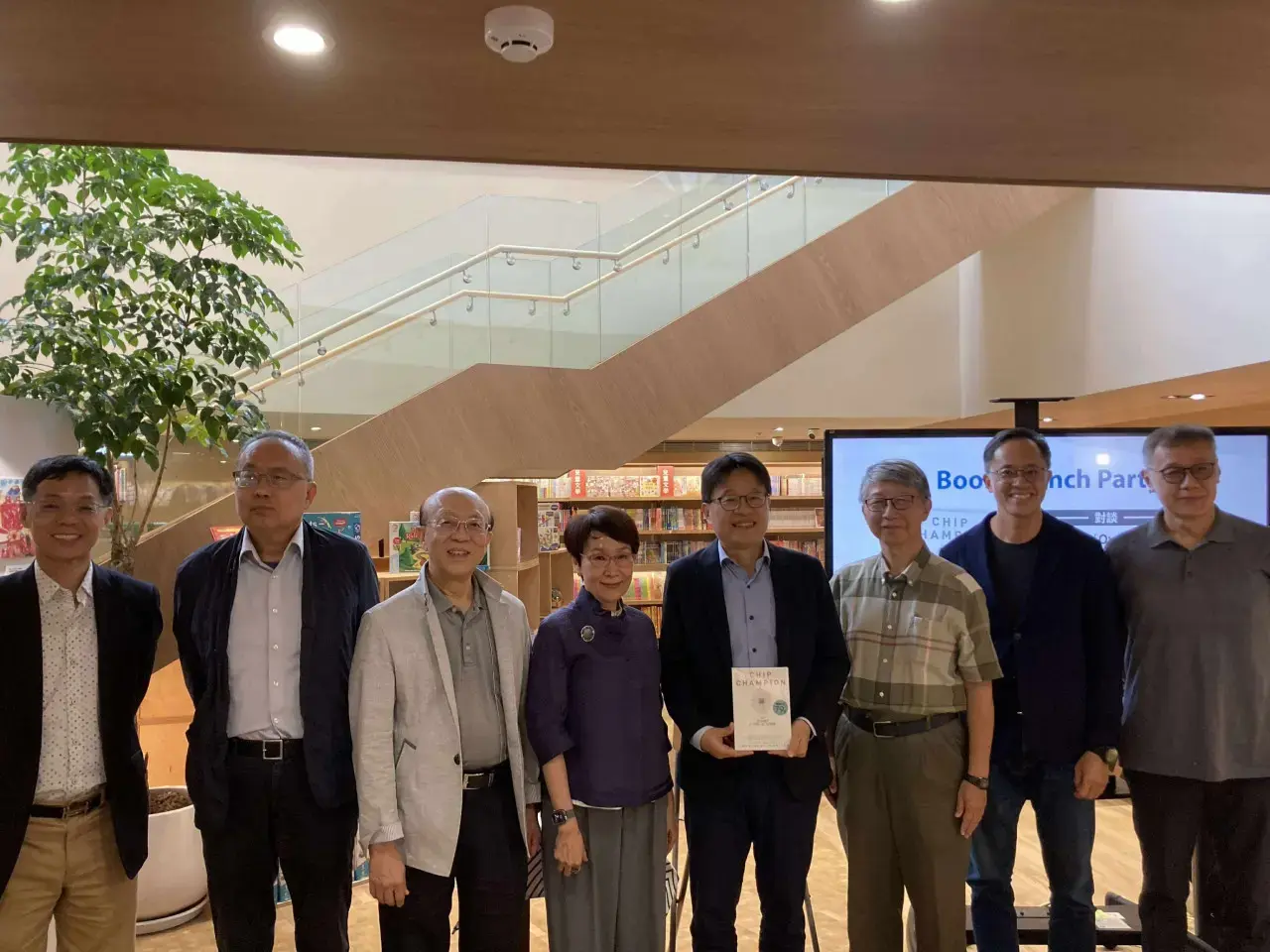
At the end of October, I held the English-language launch event for Chip Champion and met many old and new friends. This English edition is the fourth language version of The Light on the Chip Island after Chinese, Japanese, and Korean, and it focuses on how Taiwan Semiconductor Manufacturing Company (TSMC) has become a critical hub in the global semiconductor supply chain.
Although the English edition came out a bit later, it carries even greater significance: it can help more English-language readers understand Taiwan and also reach international audiences with decision-making influence, giving them a chance to hear Taiwan’s perspective.
For many seasoned industry friends, and for someone like me who has worked in media for more than thirty years, 2025 is undoubtedly the year of the greatest career shifts and challenges.
Beyond the ongoing U.S.–China confrontation over technology and supply chains, the AI investment boom and the tectonic shift of “manufacturing returning to the United States” are happening simultaneously. Changes are unfolding almost daily, with many turns beyond expectations, making this year full of challenges yet rich with opportunities.
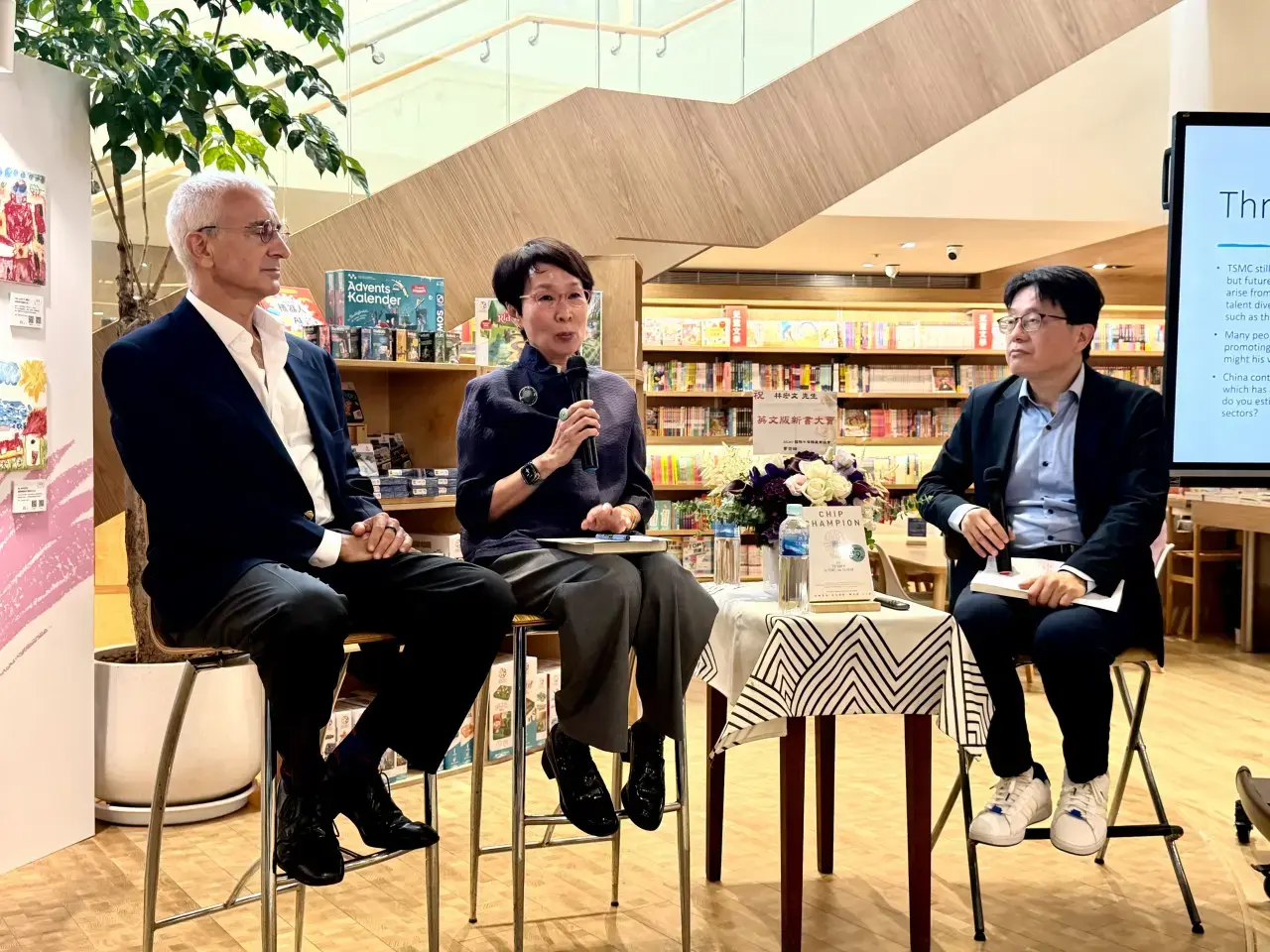
Therefore, I invited several opinion leaders to participate, including retired TSMC executives, key members of the supply chain, “Mr. Taiwan” Peter Kurz(谷月涵), and former acting spokesperson of TSMC Elizabeth Sun(孫又文), to share their views on new policies from U.S. President Donald Trump and the challenges of TSMC’s internationalization.
The supply chain following TSMC to invest in the United States is an inevitable trend
As I noted in the preface, whether it is Trump saying “Taiwan has stolen Americans’ jobs,” or Commerce Secretary Lutenike(盧特尼克) asserting that within a few years the advanced-process production split between the United States and Taiwan will be fifty–fifty, these statements are closer to political rhetoric.
However, industries have their own operating logic and an established order of international division of labor. On the development experience of semiconductors, more attention should be paid to voices from Taiwan; Taiwan will also be the most critical helper and partner as the United States returns to high-end manufacturing.
Even if the international community has differing understandings of semiconductor history and Taiwan’s contributions, and views vary on Taiwan’s investments in the United States, I believe this: Taiwan’s semiconductor sector going to the U.S., with the supply chain following TSMC’s layout, is an inevitable and inescapable trend.
Taiwan’s electronics industry has long been oriented toward contract manufacturing and services. TSMC has already entered the global top ten by market capitalization and urgently needs a more comprehensive international layout; the past situation of investment being overly concentrated in Taiwan must also be adjusted. Taiwan’s resources and talent are limited, and the trend of low birthrates is clear, making it difficult to support continued expansion of the semiconductor and ICT industries alone—especially since semiconductor manufacturing is inherently labor-intensive.
Fortunately, during the chairmanship of Mark Liu(劉德音), TSMC began investing in the United States. I believe keeping the R&D stronghold in Taiwan while appropriately dispersing production sites to regions closer to customers is already an inevitable trend; even if one wished to block it, it would be hard to reverse.
Speaking of TSMC’s competitiveness, Elizabeth Sun(孫又文) pointed out that TSMC is a “learning organization” that learns from mistakes and prevents recurrence; when problems arise, the team does not blame one another but traces root causes, solves the problem, and ensures it does not happen again—this is TSMC’s culture.
She also emphasized that she hopes the media will stop portraying “employees who work hard at the company” as “people willing to sell their livers to make a living.” Such characterization is “deeply disrespectful,” because employees work with “a sense of achievement, pride, and mission.”
The 921 Earthquake: TSMC employees returned to the company at the first moment
Peter Kurz(谷月涵), now chairman of Jujie Clean Energy(聚界潔能), specifically mentioned TSMC’s strong competitiveness and recalled events surrounding the 921 Earthquake in 1999.
He said that at the time his colleague Zhiyuan Tian(田至元) had just joined TSMC. On the day of the major quake, many employees entrusted household matters to their spouses and immediately returned to the company to stand by, which greatly surprised those from the investment world; after seeing so many companies worldwide, they were even more astonished that Taiwan would have such a corporate culture.
Earlier in his career, Zhiyuan Tian(田至元) had been a subordinate of Peter Kurz at Merrill Lynch. In 1998, he was recruited by then–CFO Harvey Chang(張孝威) to TSMC to take charge of investor relations (IR). He said that on the night of the earthquake, investors had originally planned to visit the company in Hsinchu, but all appointments were canceled because of the disaster.
He recalled that he had intended to calm his family and children and even considered going to Taipei to see the collapsed buildings; but when he called the company, he found many people had already returned to their posts. Mingduo Yu(喻銘鐸) answered and said, “Where are you? We’re all back and discussing what to do next and how to brief investors.”
Zhiyuan Tian(田至元) said that he had been at TSMC for less than a year and commuted daily from Taipei to Hsinchu, and he deeply felt the cultural difference between engineers and the investment world. “With this kind of work attitude, how could the company not do well? What’s more impressive is that Taiwan has many companies like TSMC.”
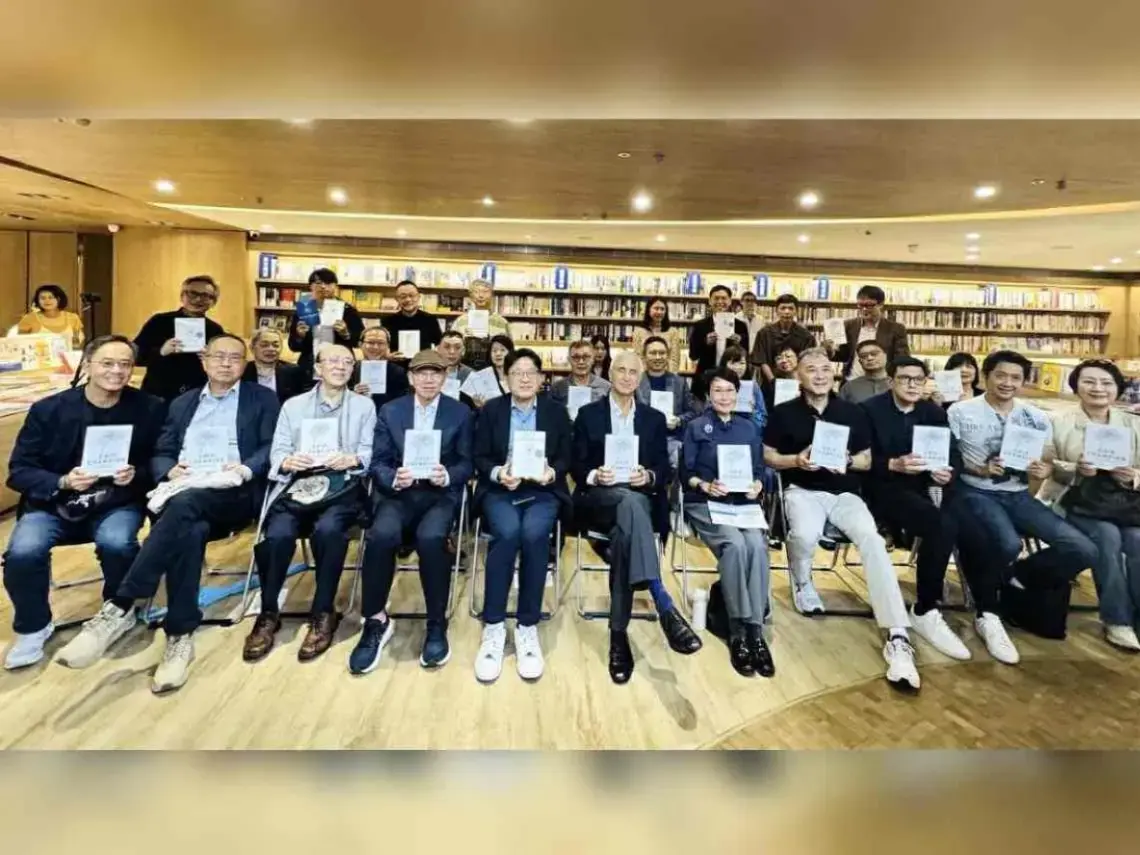
Many senior industry figures also attended the book launch. These included the low-profile chairman of WPG Holdings (大聯大控股) Weixiang Huang(黃偉祥), who, together with cofounder Zailin Lin(林再林), sponsored this English edition; both have been my friends for more than thirty years.
I started covering news in 1993. When I was still a rookie reporter, World Peace Industrial(世平興業) was a small company originating from the Nangang Industrial Park and promoted the semiconductor industry through a components magazine. I often rode my scooter there to interview and chat. Over the years, World Peace Industrial has grown into the WPG Holdings group with annual revenue of about NT$880 billion, leading Taiwan’s industry-holding and peer alliance model.
In addition, what pleased me most was that seven former TSMC executives were present: besides Elizabeth Sun(孫又文), there were Kunxi Lin(林坤禧), Jianbang Chen(陳健邦), Guanglei Yang(楊光磊), Mingduo Yu(喻銘鐸), Zhiyuan Tian(田至元), and Jianwen Peng(彭建文).
I introduced them in the order of when I got to know them. In 1993, when I had just started as a reporter, I attended for the first time a media gathering held by TSMC in Kenting; at that time, TSMC was preparing to list its shares and therefore held a media meet-up for the first time.
At that time, Kunxi Lin(林坤禧) was TSMC’s spokesperson. He mentioned two things that impressed me: first, Chairman Morris Chang(張忠謀) did not like the term “foundry,” because it could not reflect the value TSMC created for customers and the industry; second, the key to TSMC’s cultural success lies in employees’ accountability.
Back then, I was unfamiliar with the meaning of “accountability.” After looking it up in the dictionary at home, I understood that it means each person takes responsibility for goals and does things to the highest standard.
After leaving TSMC, Kunxi Lin(林坤禧) became a serial entrepreneur, working through firms such as Neo Solar Power and MacroMicro, and now leads Beili Technology(倍利科技). Beili has entered the field of “AI inspection systems for semiconductor product defects,” has become an important member of TSMC’s supply chain, is growing rapidly, and plans to list next year.
Singapore’s sovereign capital has long held TSMC book value over NT$1 trillion
Next was Jianbang Chen(陳健邦) (nicknamed “Abang”). He was among the first hundred employees spun off from ITRI to TSMC, is well read with many ideas and suggestions, and enthusiastically shares information and videos—so much that friends feel there is never enough time to watch and learn it all.
After receiving the English book, he immediately offered several suggestions for improvement, once again demonstrating “TSMC culture”—facing problems head-on and proposing workable fixes.
Next was Guanglei Yang(楊光磊). In 2002, I interviewed six of TSMC’s R&D leaders—Shang-Yi Chiang(蔣尚義), Meng-Song Liang(梁孟松), Ben-Jian Lin(林本堅), Yuan-Cheng Sun(孫元成), Guanglei Yang(楊光磊), and Zhenhua Yu(余振樺)—who had won a major government award for the successful development of the 0.13-micron process. We took a group photo of the six and called them TSMC’s “Six Knights of R&D.”
Later, Guanglei Yang(楊光磊) served as an independent director at SMIC and as a technical advisor at Intel; he now focuses on cultivating talent, having taught at National Taiwan University and National Taiwan University of Science and Technology, and he is passionate about guiding younger generations and spending time in conversation with them.
As for Mingduo Yu(喻銘鐸), I probably knew him even before he joined TSMC. I joked that when he was at TSMC he was just a “small potato” (a finance manager), but after leaving, his career climbed steadily—he served as CFO at MediaTek and Xiaomi and later became vice chairman at EGIS—so he has long since become a “big potato.”
In recent years, after a short break he set out again, forming Carp Ventures(鯉魚創投) with Shaotang Li(李紹唐). Their first core investment was a cleanroom filter manufacturer (鈺祥), which is also an important member of TSMC’s supply chain.
In addition, Zhiyuan Tian(田至元) is another “big potato.” He and Mingduo Yu(喻銘鐸) were both key figures in the finance department during Harvey Chang(張孝威)’s tenure. After leaving TSMC, he was invited by Singapore’s sovereign capital and became a senior vice president at GIC (Government of Singapore Investment Corporation); later, TSMC also became one of the important core holdings of GIC and Temasek.
I also joked that Zhiyuan Tian(田至元) might be “the person who made the most money from TSMC” among all attendees that day, because he helped Singapore’s sovereign capital hold TSMC for the long term and for years kept recommending: “The company’s fundamentals are solid—keep holding it.”
The Government of Singapore, through its sovereign wealth funds, holds about 2.63% of TSMC (台積電), making it the company’s second-largest shareholder after Taiwan’s National Development Fund, Executive Yuan (行政院國發基金) at 6.38%; the book value of that stake now approaches NT$1 trillion.
The last and youngest was Jianwen Peng(彭建文). He served as a manager in TSMC’s operations efficiency department and as an internal training instructor, integrating TSMC work experience with his own research into a unique methodology called the “International PJ Method,” which has been published, and he has been invited to give lectures at many companies.
TSS Holdings, formed by 18 TSMC suppliers, prepares to “fight as a group” in the United States
In addition to retired TSMC executives, I also invited several current industry executives, all key players in the field.
For example, Terry Tsao(曹世綸), president of SEMI Taiwan and global chief marketing officer, completed SEMICON India and SEMICON Taiwan in September and then in October led a delegation to SEMICON West on the U.S. West Coast, continuing to raise global visibility for Taiwan’s semiconductor industry.
In addition, Mingzhe Li(李明哲) is the chairman of Synopsys Taiwan. Synopsys is the leader in EDA software, is actively deploying in AI, and is expanding hiring in Southeast Asia and Eastern Europe.
Recently, discussion of U.S. restrictions on software exports to China has heated up, and related developments—together with high-level U.S.–China interactions—are drawing global attention.
I also invited two important representatives from TSMC’s supply chain. The first was Youwen Liang(梁又文) (general manager of CSUN(志聖) and concurrently CEO of GPM(均豪) and GMM(均華)), who is driving Taiwan’s semiconductor equipment “G2C+ Alliance,” formed by CSUN, GPM, GMM, CONTREL, and others. The alliance focuses on advanced packaging equipment to support new-process needs such as CoWoS, SoIC, and hybrid bonding.
Youwen Liang(梁又文) is a second-generation successor who took the baton from his father Maosheng Liang(梁茂生), chairman of CSUN. CSUN first cultivated its capabilities in PCB equipment and then deeply developed within TSMC’s supply chain for many years; after sustained investment, it and its alliance partners have now entered the advanced-packaging supply chain.
The second was Shengzhe Que(闕聖哲), chairman of Yeedex(意德士), who also serves as chairman of TSS HOLDINGS LIMITED (“the TSS Alliance”). TSS is composed of 18 TSMC suppliers, including Gudeng, ANT, SAA, GreenFiltec, CHD Tech, Microprogram, Yeedex, SPTI, UVAT, AEMC, EISO, APLEX, SynPower, AblePrint, PVI, Nytex, Fusion Tech, and CONCORD.
All 18 companies have TSMC vendor codes and cover a wide range of products and technologies in their division of labor. The alliance has set up joint offices in Arizona and Kumamoto to expand overseas markets together.
In addition, Dr. Songren Fang(方頌仁) is the chairman of Daying Venture Capital(達盈創投). He served in the semiconductor field for many years and, at age 36, became the youngest vice president in UMC’s history; he now focuses on startup investment and is deeply engaged in the Japanese market, making his firm one of the few Taiwanese VCs able to penetrate Japan’s startup ecosystem.
At present, Daying is managing about 60 post-investment startups, 10 of which are Japanese companies; among these 10, two have been selected for the government’s JSTAR program, allowing them to go to Silicon Valley and other overseas startup hubs for business development.
Another is Yingzi Yang(楊櫻姿), deputy secretary general of the Taipei Computer Association (TCA), who is responsible for COMPUTEX/InnoVEX and overseas marketing; in recent years, multiple forums have been held in Japan, and in November, during Edge Tech+ 2025 in Yokohama, TCA will host the large-scale “Taiwan Edge AI Day” conference.
There are also two experts with legal backgrounds. The first is Zhicheng Zhang(張智程), CEO of DSET(科技、民主、社會研究中心). DSET (Research Institute for Democracy, Society and Emerging Technology) is the “Technology, Democracy, and Society Research Center” established by the National Science and Technology Council in 2013, and it is Taiwan’s first national-level, cross-disciplinary, cross-generational, and cross-border research institution.
After taking office, Zhicheng Zhang(張智程) promoted DSET’s focus on research into semiconductors, sensitive technologies, and geopolitics; with a doctorate in law from Kyoto University and fluency in English and Japanese, he has also become an important bridge for the international community to understand Taiwan.
A Voice from Taiwan: A new website offers content in Chinese/English/Japanese/Korean
The second is Yaonan Tan(譚耀南), chairman of Hui Li International Policy Consulting Group(匯理國際政策諮詢集團) and an expert in international political economy strategy. He holds an MBA in the United States and a J.D. from the University of Pittsburgh and is a licensed attorney; he has served as a partner at Baker McKenzie, chairman of the Cross-Strait Policy Association, and a visiting fellow in foreign policy at the Brookings Institution. In recent years, he has continued to focus on U.S.–Taiwan industry, technology, and policy and has frequently written columns.
This English edition of the book was released a bit later than planned. The main reason is that after Trump took office early this year, policies came rapidly and changed quickly; after several rounds of updates, I decided to stop revising and proceed with publication.
However, although the book came out a bit late, I feel an even greater urgency for Taiwan to speak to the world. In early October, Terry Tsao(曹世綸) led Taiwan’s semiconductor companies to SEMICON West; many Taiwanese firms believe that after TSMC increased investment in the United States, investment in the U.S. will accelerate and supply-chain members will begin following suit—many even feel this year can be regarded as the first year of investing in the United States.
Finally, I also introduced a new website, TaiwanInside (www.taiwaninside.com
), which provides content in Chinese/English/Japanese/Korean. In this AI era filled with Taiwanese suppliers, I hope more people can understand voices coming from Taiwan.
On that day, electronic media also asked me about my view of the recent AI bubble. I shared a few points, but the story is long, so I will discuss it in another article.
Related Articles
Micron Announces Its Largest Rewards Ever. Its Taiwan Union's Demands Expose a Clash of Pay Systems. A strike threat at Taiwan's largest foreign investor, read in three dimensions
TSMC's 3nm rinse comes exclusively from AEMC, a Taiwanese company once withdrawn from the Emerging Stock Board
Taiwan AI Industry Upgrade Forum Series || Event Report:America Wants More Manufacturing. What Does It Take for Taiwan’s Suppliers to Follow?