AI Rebuilds America’s New Hegemony: From the “Petrodollar” to the “Tech Dollar,” Trump Is Making a Big Strategic Move
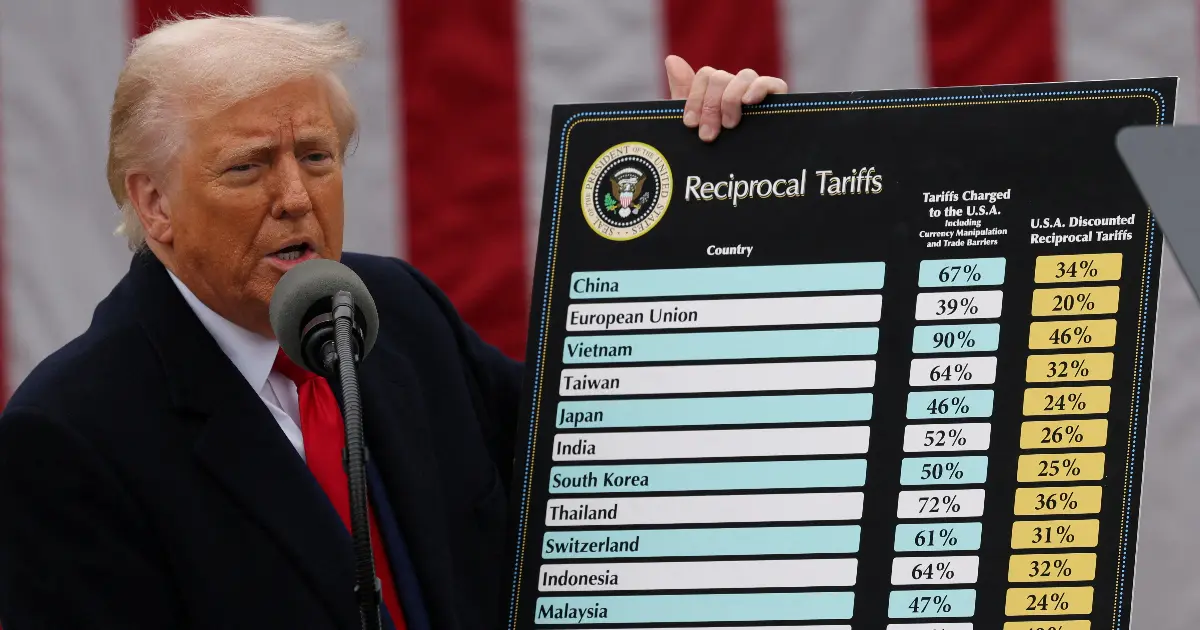
In late October, I attended a talk by Zheng-Dao Lu(呂政道), chief economist at President Capital Management Corp. (統一證券投顧, PCMC), and Wan-Ting Liao(廖婉婷), the firm’s general manager. The theme was how, since taking office, President Donald Trump has assembled a policy package that clearly shifts from the “petrodollar” to a “tech dollar.” The speakers also mapped Taiwan’s role and position in this major transition. I have organized their key points along with my own observations below. (Translator’s note: “Petrodollar” refers to the dollar circulation formed since the 1970s by pricing/settling international crude oil in U.S. dollars. “Tech dollar” here means a new dollar circulation centered on technology products/services and standards, coupled with compute and capital markets.)
Around the same time, foreign and industry reports said that on the sidelines of APEC in the Republic of Korea(韓國), NVIDIA CEO Jensen Huang(黃仁勳) met with the president and leaders of Korea’s four major conglomerates, held an informal dinner with the heads of Samsung Electronics and Hyundai Motor, and—reportedly—secured an additional order of roughly 260,000 GPUs for AI computing. This is part of NVIDIA’s global push for “sovereign AI,” and it is also a fresh example of Trump and Huang energetically exporting the “tech dollar.”
The so-called “tech dollar” stands in clear contrast to the “petrodollar.” The center of dollar circulation is shifting from energy trade to a tech-finance regime built on technology standards × compute infrastructure × capital circuits. In other words, the United States is exporting not only oil and financial services but critical technologies and related services, anchoring global economic activity to U.S.-led technology and capital-market rules.
In the era of the tech dollar, the main assets the U.S. exports are technology products and services—AI, cloud, software, and semiconductors. Countries seeking these capabilities must pay in dollars or participate through investment. As a result, global capital actively raises dollars to allocate into U.S. tech assets, buys U.S. equities and tech-related assets, and further adds U.S. Treasurys—forming a new round of dollar reflux.
Trump Uses AI’s Technological Advantage to Re-Lock the Dollar Cycle
In this new cycle, the lead actors of the trade chain have shifted from the oil majors, commercial banks, and central banks of the petrodollar era to the VCs, FDI, multinationals, and sovereign funds of the tech chain. Payment/settlement has also expanded beyond reliance on SWIFT and traditional banking to stablecoins, API licensing, and SaaS subscriptions. (Translator’s note: Stablecoins typically hold reserves in dollar-denominated assets to maintain price stability. API/SaaS models allow cross-border tech services to be embedded in enterprise workflows with monthly or usage-based billing.)
The driver of dollar circulation has likewise moved from current-account flows (trade in goods/services) toward the capital account (cross-border investment and transactions in IP, equity, and non-financial assets). If the petrodollar era resembled goods exchange and trade settlement, the tech-dollar era looks more like a capital- and technology-anchored investment network, tying dollar demand directly to tech investment activity.
On this basis, Trump is advancing an “AI Action Plan” said to include more than 90 policy tools, aiming to secure U.S. leadership in the global AI race. Key steps include easing regulation (to accelerate commercialization), consolidating U.S. leadership across the AI supply chain, and driving broad-based capex and demand up and down the stack.
Put differently, Trump is trying to re-lock the dollar cycle via AI advantage: first tariffs and subsidies to pull production back to the U.S.; then technology and standards to anchor transactions to the dollar system; and finally stablecoins and capital-account mechanisms to channel dollars back to America’s financial core—essentially “locking the dollar back home.”
Moreover, Trump’s push for a U.S. manufacturing return is not about reviving the old “world’s factory” model. It targets industries with national-security and long-term competitiveness implications, focusing on core technologies plus high-value links to raise bargaining power and control—thereby rebuilding the U.S.-led cadence and rules of global supply chains.
Following this principle, the U.S. designates semiconductors, defense, critical minerals, and AI-server manufacturing as strategic cores, while keeping at home those end-product lines with high added value and strong employment multipliers—for example, EVs, aerospace, and medical devices.
In the blueprint for a return to critical manufacturing, partner selection and division of labor depend on the closeness of strategic cooperation with the U.S.: the closer to the core alliance, the more likely a partner will undertake higher-tier, more sensitive manufacturing and technical nodes.
Stablecoin Transactions Sell U.S. Treasurys to the World—Reforging Dollar Hegemony
In the geopolitical division of labor, the U.S. assigns near-shoring to Mexico and Canada, while rapidly shifting supply dependence on China toward Southeast Asia and India. For more critical industrial modules, Washington directly calls for on-shore/friend-shore investment in the U.S. For example, key sectors such as semiconductors and shipbuilding in Japan, the Republic of Korea, and Taiwan are encouraged (or asked) to expand U.S. investment to strengthen supply-chain security and enhance deterrence against strategic rivals.
Early in Trump’s term, public attention focused on the large federal debt and trade deficit. In my view, customs duties totaled about $195 billion in FY2025, up sharply from about $77 billion in FY2024, helping narrow the federal deficit. The same year’s deficit was about $1.8 trillion, roughly 5.8% of GDP. Looking ahead one year, if the courts ultimately uphold the current tariff framework, tariff revenue could rise further. If the Federal Reserve turns to rate cuts, lower financing costs and improved growth momentum could further compress the deficit. Add in exports of AI chips and related “tech-dollar” revenues, and America’s deficit ratio could decline meaningfully.
As for the deficit ratio (deficit/GDP), I rely on the latest official and research-institution data: FY2025 is around 5.8%, a slight decrease from the prior year. If reciprocal tariffs hold, tech exports and investment continue to expand, and rates trend lower, the deficit ratio has room to fall further.
As I see it, stablecoins are foundational payment and settlement infrastructure in the tech-dollar blueprint. Under an appropriate regulatory framework, they tighten the linkage between global tech services and capital transactions and dollar-denominated assets, deepening and widening dollar usage and amplifying the network effects of the dollar system.
In practice, many stablecoins hold like-for-like dollar assets (e.g., short-term U.S. Treasurys, deposits, reverse repos) as reserves. Thus each unit’s issuance and circulation corresponds to real demand for dollar assets. As cross-border transactions expand, dollar assets such as Treasurys are effectively “exported with the coin,” strengthening the global allocation and liquidity of dollar assets and supporting the reforging of dollar hegemony. (Translator’s note: Reserve composition varies by issuer and is subject to disclosures and regulation.)
Accordingly, I view two recent key bills as institutional pillars of the tech dollar. The first is the GENIUS Act (Guiding and Establishing National Innovation for U.S. Stablecoins Act), signed into law in July 2025, which establishes a federal-level framework for payment stablecoins. The second is the Digital Asset Market Clarity Act of 2025 (the CLARITY Act), focused on digital-asset classification and supervisory boundaries, which has passed the House and moved to the Senate. Together—one inward, one outward—they bring stablecoins and broader crypto assets into a compliant regime, providing legal underpinnings for cross-border payments and capital circulation in the tech-dollar system. (Terminology note: GENIUS Act = stablecoin oversight; CLARITY Act = market structure and supervisory boundaries for digital assets.)
In the same vein, World Liberty Financial (WLF) announced a U.S. dollar-linked stablecoin “USD1” (some Chinese-language media render it UDC1), backed by dollars and U.S. Treasurys and initially deployed on Ethereum and BNB Chain. This vividly illustrates the tech-dollar loop described above: regulatory frameworks cement stablecoins’ standing while market products expand on-chain use and allocation of dollar assets. (Terminology note: USD1 is the token name; WLF is the issuing/operating entity.)
The “Perpetual Motion Machine” Is the Core Mechanism Behind America’s Tech-Dollar Push
Trump’s strong support for stablecoins has drawn criticism, but from another angle his message is plain: “I’ve invested this much already—why don’t you believe?”
As for U.S.–China interactions I observed on the sidelines of APEC, both sides touted progress, but I focus on spillovers to the tech dollar: any adjustment in tariff and procurement cadence would directly affect the transmission efficiency from “goods → capital.” Meanwhile, whether controls on rare earths and critical minerals are eased will shape the policy continuity across upstream materials → advanced manufacturing → the AI supply chain. (This paragraph is a policy interpretation; details and annexes are subject to official documents.)
I also noted the statement by U.S. Treasury Secretary Beisent (English name to be confirmed), signaling that the two leaders had reached a temporary balance on some items, while warning China that using rare earths as leverage will be difficult going forward because the U.S. has countermeasures. He added that China’s leverage in rare earths may last only 12–24 months. (Translator’s note: Rare earths are used in EV motors, high-performance magnets for wind turbines, and precision electronics.)
Skepticism about this view is understandable. Even so, the Trump administration is laying out mining rights through equity/financing participation and dollar-denominated long-term contracts, folding lithium, copper, and rare earths into strategic nodes of AI, EVs, and the power grid. At the same time, these supply-chain arrangements are being used to buttress the tech-dollar loop I described earlier—the contours are now visible.
Concrete examples include advancing Thacker Pass in Nevada (lithium, strengthening domestic supply), participation in Trilogy Metals/Ambler Road in Alaska, positioning in Tanbreez in Greenland (rare earths), a critical-minerals supply agreement with Japan, “friend-shoring” cooperation with Indonesia, using dollar long-term contracts to secure high-nickel battery metals, a roughly $1 billion U.S.–Australia framework, building a U.S.–Canada fuel chain, DOE strategic stockpiles, and multiple mine/smelter agreements with Australia and Southeast Asia. I regard these as supports on the upstream materials side of the tech dollar.
In AI, the most critical sector, OpenAI has announced various partnership and investment schemes with NVIDIA, AMD (Advanced Micro Devices), and Broadcom, forming a closed loop in which equity, chips, and data centers reinforce each other. Observers call this a “perpetual motion machine,” often in a critical context that warns of a potential AI bubble.
From another angle, that “perpetual motion machine” also represents an intra-alliance circulation: in operating the AI tech dollar, only the U.S. and its friendly allies—for example Japan, the Republic of Korea, the Netherlands, and Taiwan—are included, while China is excluded. This tightly self-reinforces technology, capital, and capacity within the alliance system.
Thus, in geopolitical terms I view the “perpetual motion machine” as one of the core mechanisms of America’s tech-dollar strategy—binding standards, compute, and capital into a single loop and amplifying it inside the alliance.
Returning to Taiwan: Taiwan possesses full capabilities in the high-performance AI-chip supply chain and server industry—from wafer fabrication and advanced packaging to key data-center components and complete-system integration. This density makes Taiwan an indispensable pillar of the tech dollar discussed above—one reason Jensen Huang(黃仁勳) calls Taiwan his most important partner and why Taiwan serves as a key fulcrum in U.S. strategy.
The U.S. and China Each Hold Their High Ground and Advance Their Own Strengths
On Japan and the Republic of Korea: in my view, during this Asian tour Trump met Japan’s new prime minister, Sanae Takaichi(高市早苗), for the first time yet showed an extremely friendly rapport, chatting about Shinzo Abe(安倍晋三), baseball, and “whatever Japan wants to do.” The signal is clear: the U.S.–Japan relationship sits at the core of the alliance. By contrast, Korean President Lee Jae-myung(李在明) continues a relatively equidistant diplomacy between Washington and Beijing, leaving uncertainty from Washington’s perspective. Japan is seen as the most stable and fast-plugging strategic partner; Korea’s policy orientation bears continued watching—how it chooses and paces its positions on security, supply chains, and China.
Back to U.S.–China dynamics: the latest Trump–Xi Jinping(習近平) meeting showed no major short-term breakthrough. My read is that, after fierce competition, the two sides have landed at a sustainable balance point, each claiming gains while avoiding over-boasting; the result looks like “loud signals, limited substantive adjustment.”
In other words, I treat the current phase as a “temporary rest mark.” The U.S. holds the initiative in the tech dollar and leads in AI-related key technologies and alliance coordination; China holds relative advantages in mature technologies and scale manufacturing. With clearer boundaries to each other’s spheres of influence, both sides are unlikely to step across in the short term—choosing to cool things down and watch instead.
On the industry front, I observe that China shows strong scale and cost-efficiency advantages in mature tech (e.g., solar and EVs). After intense internal competition, accumulated capacity and supply-chain coordination produce powerful spillovers, exerting price and capacity pressure in many markets.
Given this structural competition, I expect the U.S. to keep concentrating policy and resources on the key technologies that define future advantage. With different paths and strengths, the U.S. and China will each hold their high ground and advance separately.
In sum, so long as it can maintain and expand structural advantages in AI and the tech dollar, the United States has room to keep advancing on both industrial and financial fronts—giving the political narrative of “Make America Great Again” a verifiable economic and industrial footing.
Related Articles
Micron Announces Its Largest Rewards Ever. Its Taiwan Union's Demands Expose a Clash of Pay Systems. A strike threat at Taiwan's largest foreign investor, read in three dimensions

TSMC's 3nm rinse comes exclusively from AEMC, a Taiwanese company once withdrawn from the Emerging Stock Board

Taiwan AI Industry Upgrade Forum Series || Event Report:America Wants More Manufacturing. What Does It Take for Taiwan’s Suppliers to Follow?