A 26-year-old graduate student at National Taiwan Normal University “lays bare” the PLA’s deployment map: even Japan’s Self-Defense Forces are impressed! Who is Joseph Wen(溫約瑟), and how did he crack it using open information online?
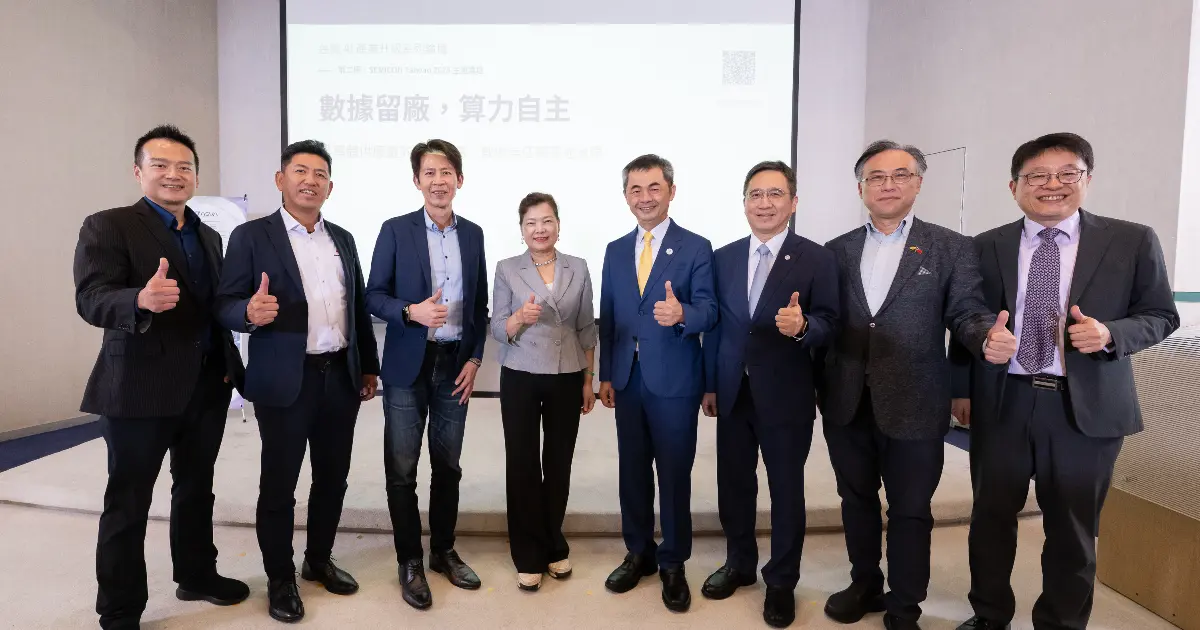
In mid-October I attended the “Japan–Taiwan Semiconductor Alliance” symposium in Tokyo, Japan. Taiwan’s former Minister of Economic Affairs Wang Mei-hua(王美花) and Japan’s former Minister of Defense Minoru Kihara(木原稔) delivered keynote speeches on behalf of their respective countries; prominent scholars and experts from both sides also shared opportunities for alliances and cooperation in the semiconductor industry, talent, and the defense and military sectors.
However, in this event centered on a “semiconductor alliance,” the last speaker—26-year-old Joseph Wen(溫約瑟), a student at the Graduate Institute of East Asian Studies at National Taiwan Normal University(國立臺灣師範大學)—became the focus of the entire audience and received the most applause.
The forum was ticketed (¥5,000 per person) yet very well attended. During the morning talks by Minoru Kihara and Wang Mei-hua, numerous officials from Japan’s Ministry of Foreign Affairs (MOFA), Ministry of Economy, Trade and Industry (METI), and Ministry of Education, Culture, Sports, Science and Technology (MEXT) were present. Kihara is a key figure in the Liberal Democratic Party, a former member of the House of Representatives and Minister of Defense, and currently Chief Cabinet Secretary in the Takaichi administration; he is also regarded as a principal right-hand to Japan’s prime minister Sanae Takaichi(高市早苗).
The afternoon session drew even more attendees, including specialists in national defense and information security. The intelligence branch of the Japan Self-Defense Forces (JSDF) also turned out in force, with more than fifty serving officials attending specifically to hear Joseph Wen(溫約瑟), a young Taiwanese who specializes in the People’s Liberation Army (PLA).
Who is Joseph Wen(溫約瑟)?
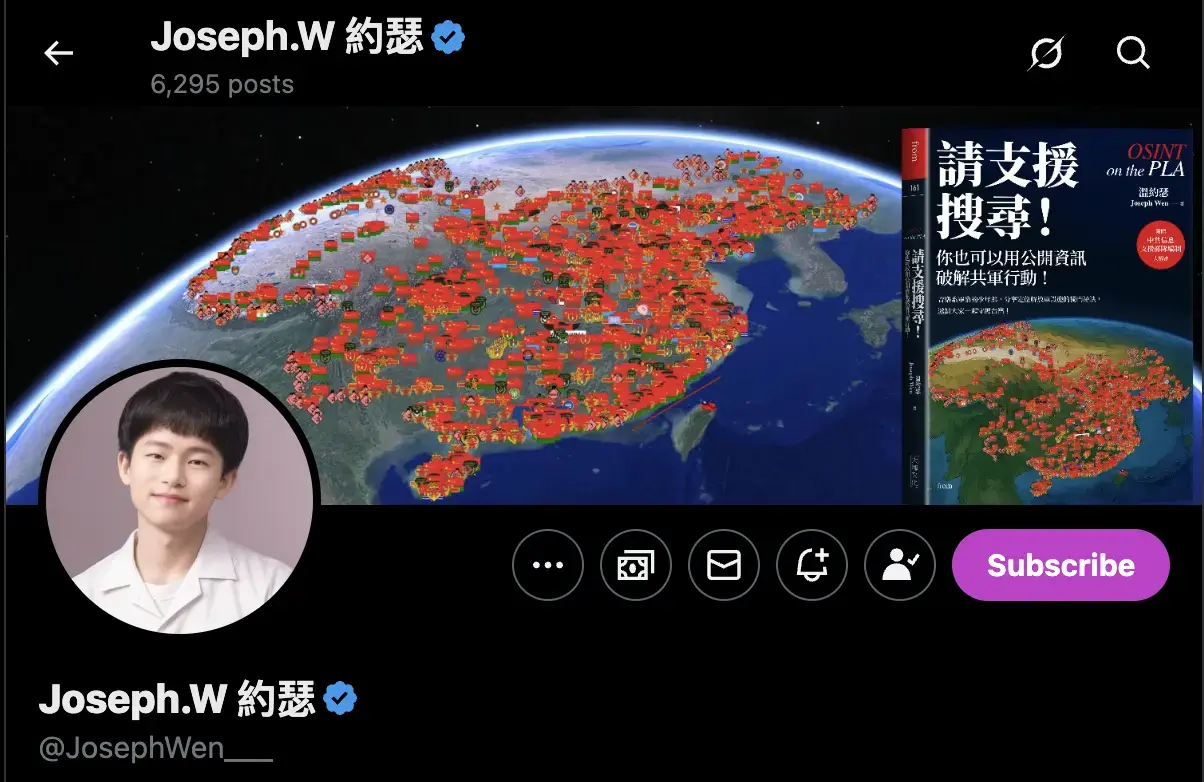
Still relatively little known even in Taiwan, he graduated from the Department of Music at Soochow University(東吳大學) and is now enrolled at the Graduate Institute of East Asian Studies at National Taiwan Normal University. Outside class, he devotes roughly six hours almost every day to long-term collection and study of the PLA; his results have drawn attention from military experts at home and abroad and have impressed many Japanese researchers.
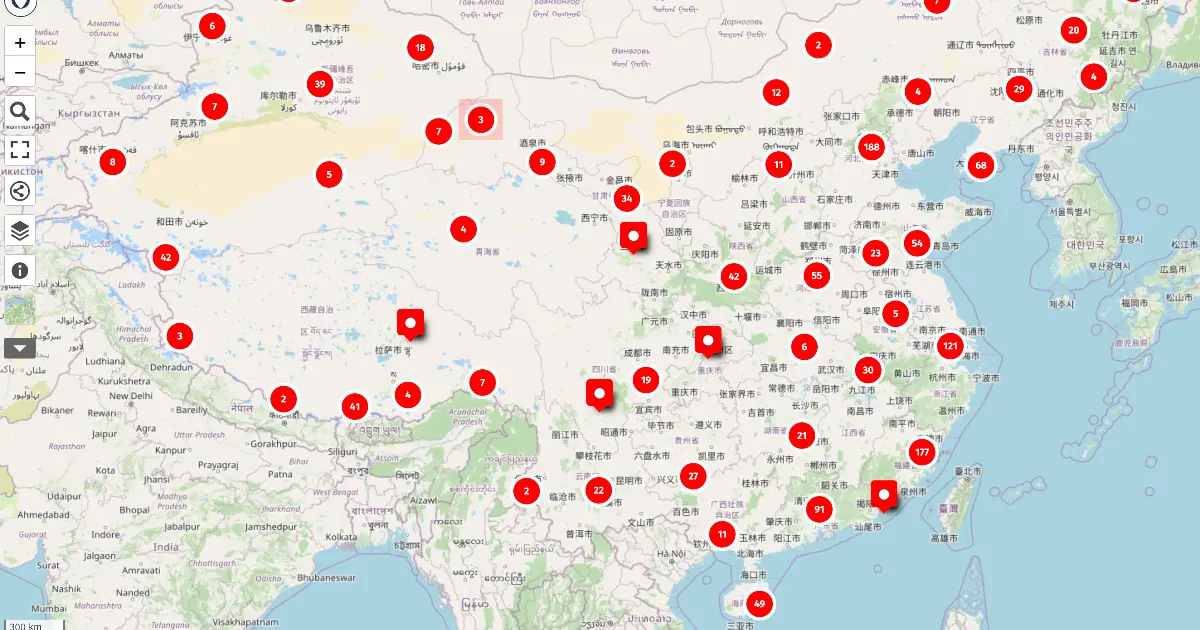
His work is based almost entirely on open-source information (OSINT), including footage and photos from official and local media, news reports, and social platforms and forums. Using these, he alone has drawn up deployment maps covering units of the ground, naval, air, and Rocket Forces, annotating coordinates and details one by one; the tally now exceeds 8,000 entries, documenting PLA sites and activity clues across China.
In August this year, Joseph Wen published “請支援搜尋!你也可以用公開資訊破解共軍行動!” The book focuses on the PLA and systematically explains how to use open sources—search engines, social media, documents and publications inside China, and official media reports—to identify unit numbers, garrison locations, and indications of activity, and it demonstrates a full verification process.
OSINT (Open-Source Intelligence) refers to intelligence derived from publicly or commercially available information that is systematically collected, extracted, and supplied to meet specific intelligence needs; this framework is also the standard definition adopted by the U.S. Office of the Director of National Intelligence (DNI) and the Department of Defense (DoD). OSINT is widely used in Europe and the United States, especially in military intelligence; in Asia, Japan’s community is the most mature, while Taiwan is still in an early stage—and Joseph Wen stands out among its practitioners. His account on X (formerly Twitter) has more than 60,000 followers, many of them military researchers and enthusiasts around the world.
A named invitation from the Japanese side; even the JSDF intelligence branch was greatly surprised
The forum’s theme was a “semiconductor alliance.” Semiconductors concern not only commercial division of labor but are closely tied to national security. Yaita Akio(矢板明夫), executive director of the Indo-Pacific Strategic Think Tank that advanced this event, initially planned to invite experts from both countries in government decision-making, industry, national security, and academia; Joseph Wen became a speaker because Japan specifically requested him by name.
Yaita revealed that the co-organizer, Japan’s Japan Institute for National Fundamentals(國家基本問題研究所, JINF), is a major think tank on Japan’s national development issues and has long engaged in national security and military intelligence research. During consultations, the Japanese side repeatedly said, “We must invite Joseph Wen to Japan—everyone wants to meet him.”
Maki Nakagawa(中川真紀), a JINF researcher who shared the stage with Joseph Wen, said the JSDF had noticed him early on; people admire that, as a student, he uses what look like “slow, painstaking methods” yet produces large volumes of precise research results—something that has quite surprised the JSDF’s intelligence branch.
Nakagawa’s background is substantial as well. She served 35 years in the JSDF, holding posts including chief of intelligence for the JGSDF 1st Division and commander of the Basic Intelligence Unit. After retiring as a colonel, this long-time PLA specialist was invited to join JINF and continues to work on Japan’s defense intelligence research.
At Japan’s named request, Yaita Akio formally invited Joseph Wen to speak in Japan. Given that many other invitees were heavyweights, to align the speaker’s standing with the occasion, the organizers also appointed him a “researcher at the Indo-Pacific Strategic Think Tank,” and he took the stage under that title.
Using free online tools: a full reveal of the PLA’s base and facility deployment map
In his talk, Joseph Wen explained his methods: starting from open sources such as CCTV’s military broadcasts and various videos and photos, he compares and cross-validates item by item, building over time a large, searchable database.
He gave examples: from aerial images of storage tanks in different locations, one can infer the amount of fuel by observing the height of floating roofs; cross-checking with time-series imagery and older photos then allows estimates of recent changes in stored volumes.
He has also run checks using open imagery: in a case where a Taiwanese influencer filmed a video in Cambodia claiming to be pursued, comparing building styles and terrain features in the footage showed it was actually an urban environment, inconsistent with the location claimed.
Another case: a Chinese stowaway came from Fuzhou to Taiwan in a powered rubber boat and said he landed near Taoyuan Airport at 2:30 p.m. By matching onshore wind turbines, the length of flagpole shadows, and surrounding terrain visible in his selfies against coastal features and sun conditions off Taoyuan Airport, Joseph Wen inferred that the stated time and location were consistent.
Comparing extensive imagery with existing databases often yields additional leads. In the case of PLA live-fire exercises, even when locations are not announced, one can cross-match road alignments, bridge structures, fishpond geometry, and mountain ridgelines in the footage to pinpoint the actual training site.
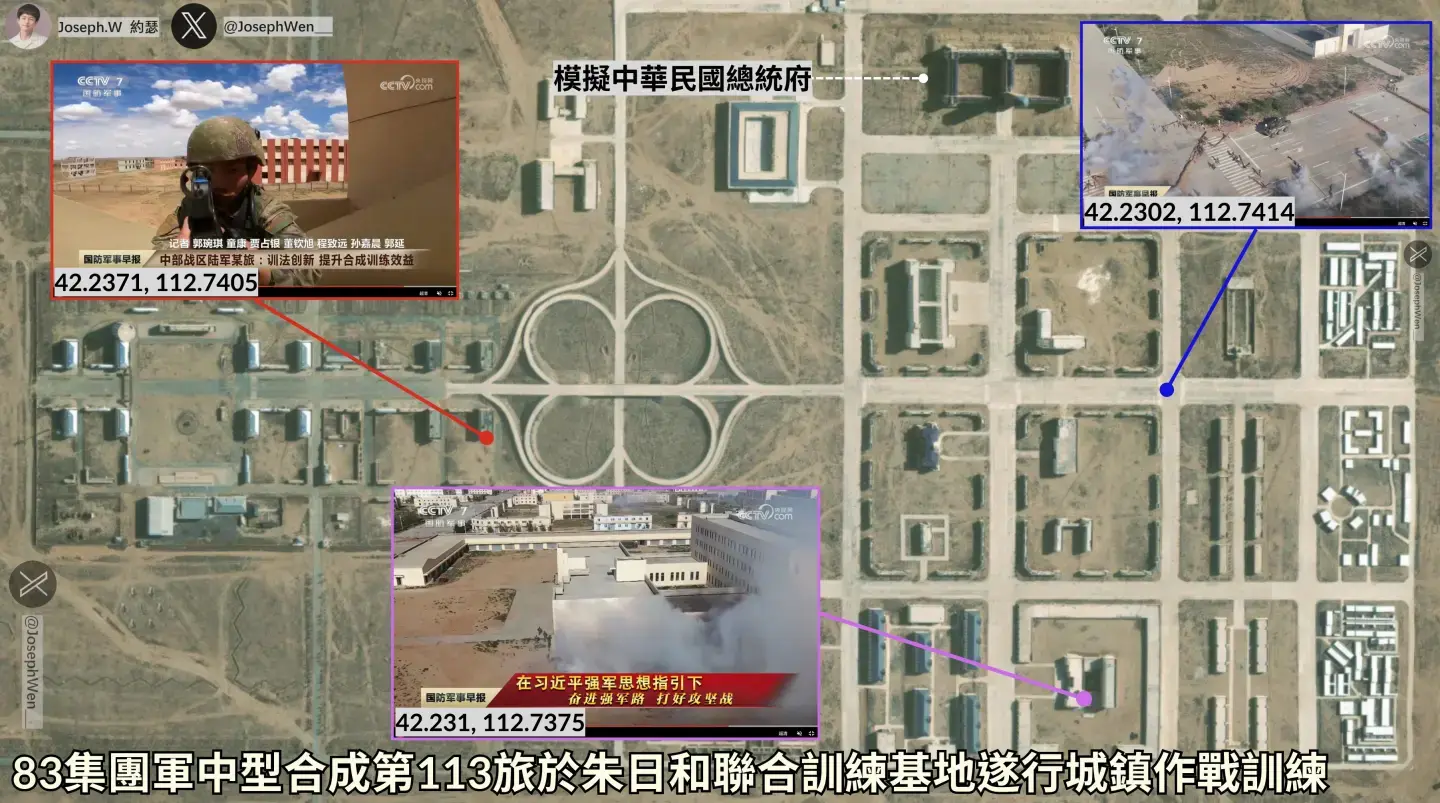
Among these, matching numerical unit codes is especially crucial. The PLA often uses five-digit numbers to designate units (for example, Unit 71282), and numbers alone are hard to map to actual structures or garrisons, requiring further corroboration.
His approach is: compare the numbers in the PLA’s external procurement documents with the addresses listed in the contracts; through large-scale data collection and pairing each number with the document’s address, he clearly marks the garrisons of units across China.
He also uses information such as honorific titles and footage of color-guard units as auxiliary evidence: units at company level and above often have titles or markings on their flags, and the numbers and symbols on those flags can serve as side evidence. These clues are likewise incorporated into the database, continually filling out the “PLA Bases and Facilities” deployment map.
On tools, he uses Excel and Google Maps for annotation and organization, and employs free tools such as Google Earth and SunCalc for matching and verification. SunCalc is a free web tool that calculates sun angles, shadow length, and direction, often used to back-calculate time and location. He describes the method as akin to building a “hobby map” in the civic space, only with greater emphasis on evidentiary chains and reproducibility.
He also candidly notes the boundaries of the work: high-resolution, real-time satellite imagery and submarine acoustic signatures are non-public or professional paid resources that are difficult for civil researchers to obtain and are typically held by national institutions or the military; this is a current limitation of his research.
Studying the PLA: rooted in a dreary middle-school life
This was Joseph Wen’s first trip to Japan. Because he has not yet performed military service, exit procedures related to conscription briefly delayed his departure at Songshan Airport(松山機場); after handling the paperwork, he arrived a day late, catching the last flight to Tokyo the night before the forum and making it in time for the next day’s event.
On the day of the talk he wore a dark shirt and took the stage in a cap, sharing the platform with speakers at least thirty years his senior. Staff on the Japanese side asked whether he should be asked to remove the cap; in the end they chose to respect his style, and he delivered a talk lasting more than an hour.
Afterward, when Yaita Akio asked him for his impressions of the trip, he laughed and said, “The lunch bento was delicious,” showing the unvarnished attitude of the younger generation.
Following the talk, Sankei Shimbun(產經新聞) invited him for a formal interview, and he changed his flight to return to Taiwan a day later; the interview is expected to run as a full-page story.
I asked Joseph Wen: Why take up research on the PLA?
He said that in his first year of junior high he attended Shiyu Junior High School(時雨中學) in Jinguashi(金瓜石), where boarding rules were strict and there was little access to the internet or mobile phones. Having been interested in the military since childhood, one day a classmate handed him a military magazine whose cover story was the PLA’s 2009 parade: “At the time I just thought the camouflage uniforms looked cool, and that’s how I started studying.”
Through the dreariness of middle school he used international and military news as topics to connect with classmates. In high school and then as a music major in college, the sensitivity and patience honed through composition and piano practice turned into the ability to track down military data. Four years ago that June, as graduation neared, he decided to turn his self-taught knowledge into a “PLA Bases and Facilities Map” and began systematic annotation.
A year later he had built a database with 800 marked locations and attracted 520,000 views. For a long time he did not realize that what he was doing was precisely OSINT, having entered the field on his own; subsequently he was invited onto television programs as a “self-taught PLA researcher” to share his work.
He then set his course, switching from a music major to apply to NTNU’s Graduate Institute of East Asian Studies and embarking on the path of PLA research. After more than a decade of work, he still enjoys it, though he says long hours staring at screens are increasingly hard on his eyesight.
Promoting a military-sharing community: the armed forces can draw on civilian strength
OSINT communities are mature in Europe and the United States, and in Asia Japan is the most developed, with multiple civic communities exchanging regularly. Taiwan lacks such a platform; he hopes to promote the creation of a Taiwanese military-sharing community, or co-build a cross-border community with Japanese partners, to bring more young people into the field.
He has also been invited to share with Taiwan’s armed forces. He notes that although the military has intelligence officers, low staffing ratios, heavy workloads, and frequent rotations make it hard in practice to devote long stretches to open-source analysis. If a model of cooperation between the military and civilian OSINT could be built, it would help fill gaps in manpower and time.
Regarding tensions in the Taiwan Strait, open-source intelligence can be used for fact-checking and early warning. In the run-up to the Russia–Ukraine war, for example, OSINT communities observed abnormal congestion on border roads via Google Maps and inferred that war was imminent. Such verifiable signals help government and society start risk communication earlier.
There are outside concerns that if more people join this research, China might reduce disclosures or rely on masking and mosaics to curb leakage. Joseph Wen says the PLA has always favored publicity; as long as official media continue to release footage and reports, the OSINT community will still have material to work with.
This forum helped Taiwan and Japan see one another’s strengths more clearly and reconfirmed the importance of technological cooperation and economic security. Faced with U.S. high tariffs and pressure to invest locally, as well as China’s military threat, if Taiwan and Japan can extend cooperation from a semiconductor alliance to intelligence collaboration and deepen it in tandem, they will be better placed to reduce risks together and find a way out of the impasse.
Related Articles
Wherever TSMC Builds a Fab, a Taiwanese University Brings Training: NYCU Plans Arizona Courses in 2027 and a U.S. Branch-Campus Application From 2030
Micron Announces Its Largest Rewards Ever. Its Taiwan Union's Demands Expose a Clash of Pay Systems. A strike threat at Taiwan's largest foreign investor, read in three dimensions
TSMC's 3nm rinse comes exclusively from AEMC, a Taiwanese company once withdrawn from the Emerging Stock Board