Morris Chang Was Once Underestimated Too! How the "Unglamorous" Foundry Business Became the World's Greatest Enterprise
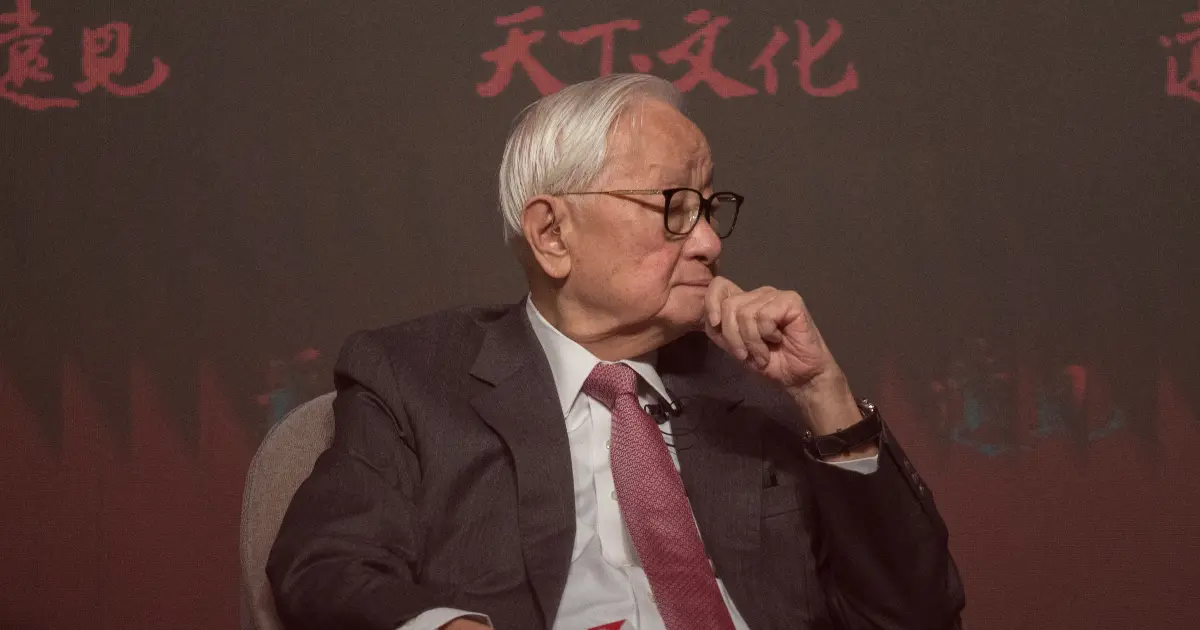
Morris Chang, the founder of TSMC, recently missed the company's November sports day due to a mild health issue. According to his bridge friends, he was hospitalized for surgery to treat a herniated disc. His long-time bridge partner, however, remarked that it shouldn't be a major problem and expressed hope that Chang would recover soon to return to the card table.
Seeing this news, I too hope for Morris’s speedy recovery so that he can return to share his insights and wisdom with us. It reminds me of a time I heard him speak; despite being nearly 90 years old at the time, he was hale and hearty, his voice resonant and full of energy—an image that remains vivid in my mind.
Back then, when Intel CEO Pat Gelsinger decided to enter the foundry business, Chang was skeptical, believing it was a path that wouldn't work for them. He spoke of his younger days as a senior executive at Texas Instruments, where he knew Intel founders Gordon Moore and Andy Grove well. They would attend semiconductor conferences together, drinking beer and chatting after dinner, enjoying the breeze as they walked back to their hotels.
In 2021, when then-Intel Corp. CEO Pat Gelsinger announced the company's return to the wafer foundry business, TSMC founder Morris Chang publicly expressed skepticism, suggesting that the path would be fraught with difficulties for the American chipmaker.
Chang recalled his earlier years as a senior executive at Texas Instruments Inc., where he maintained close relationships with Intel co-founders Robert Noyce and Gordon Moore. He described memories of attending industry gatherings, such as the International Electron Devices Meeting (IEDM), with them. Chang fondly recounted evenings spent drinking beer and chatting with the Intel founders after dinner, followed by walks back to their hotel in the breeze.
Later, when Chang founded TSMC, he visited them again. At that time, Intel was at its zenith and, naturally, did not think highly of TSMC, rejecting Chang's invitation to invest. One can imagine the disregard Chang endured during his entrepreneurial journey. He once mentioned that in the eyes of many old friends, he was seen merely as "an entrepreneur from Asia trying to make it."
Today, after years of endeavor, TSMC has become the industry leader, while Intel has faded from its peak, its former brilliance dimmed like a setting sun.
I recall Chang standing on that stage, the spotlight casting his shadow behind him. He reminisced about his contemporaries, most of whom had already passed away. Yet there he was, vibrant and full of life, recounting the past with clarity. Watching his commanding figure, I felt that among the titans left from that era, he is the one whose influence runs deepest.
Entrepreneurship is "Self-Inflicted Pain"
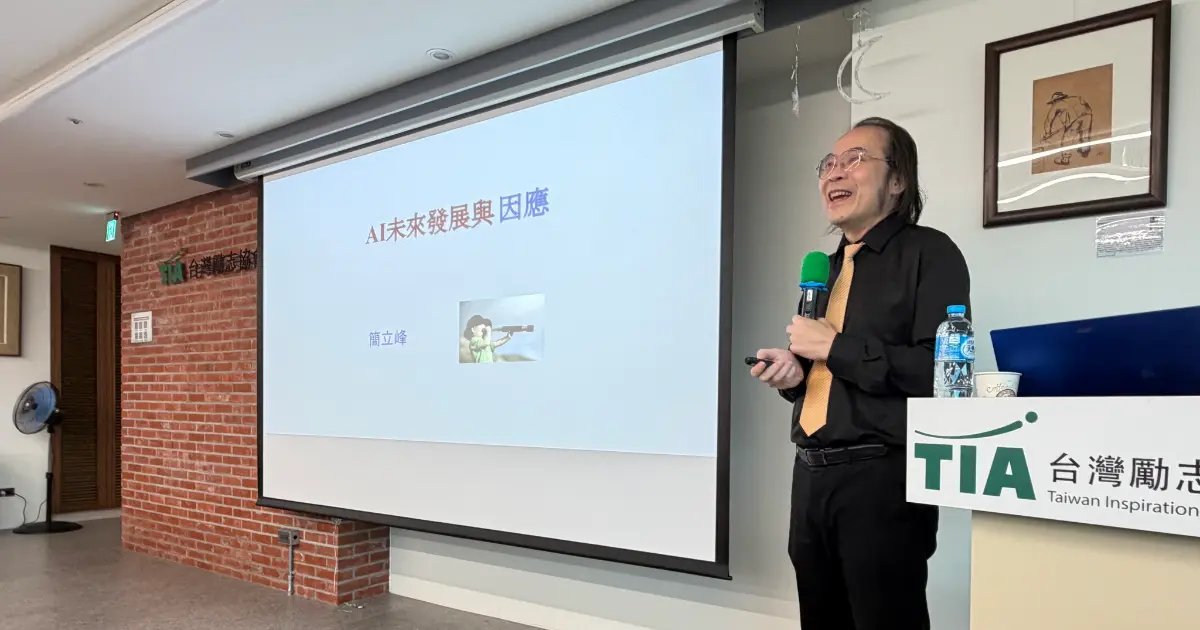
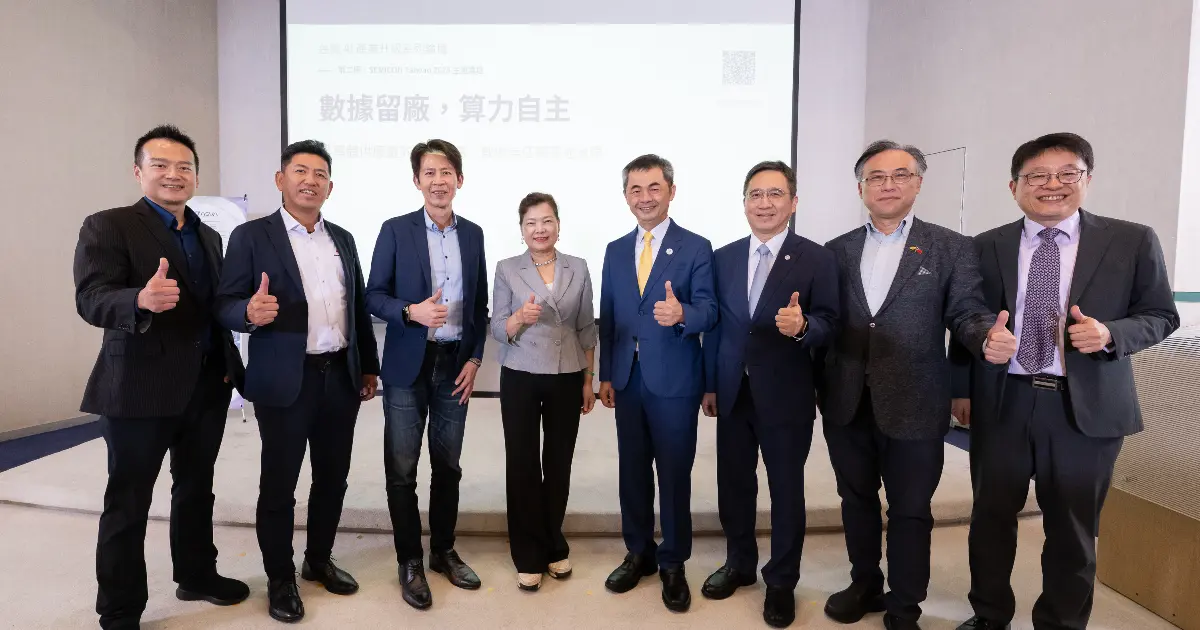
Recently, I was invited to the Global Semiconductor Alliance (GSA) Taiwan celebration to share a post-screening discussion of the documentary A Chip Odyssey (Chinese title: The Makers) with friends from various countries. This film records how Taiwan's semiconductor industry built a protective industrial stronghold from scratch in a barren landscape. One of the topics was to offer advice to entrepreneurs. Due to time constraints, I couldn't mention it then, so I would like to share it here.
I believe that entrepreneurship is absolutely not easy; in fact, it is often painful. Many entrepreneurial friends around me are not only struggling to survive but are constantly facing challenges, living in a perpetual state of anxiety. Therefore, I cannot offer any comforting advice. I can only say that the decision to start a business is self-inflicted, and everyone surely knows before starting that 95% of startups face failure.
Since you have decided to take on the challenge, you can only accept and bear it. But if you think about it, even Morris Chang, who was once the No. 3 figure at Texas Instruments, had to endure ridicule and being looked down upon when he started his own venture. Perhaps that offers some small consolation?
I also believe that after watching A Chip Odyssey, you will gain some courage and strength. Looking back at Taiwan 50 years ago, wasn't the entire nation a startup built from nothing? Of course, after the movie ends, entrepreneurs must return to reality to face criticism from clients or the struggles of product development.
However, when entrepreneurship succeeds, the fruits are undeniably sweet and filled with a sense of achievement. Just as Morris Chang founded TSMC, and the "makers" led Taiwan to where it is today, bringing immense change to the world—this is the best encouragement I can offer to entrepreneurs.
TSMC has not only brought revolutionary impact to the semiconductor industry but has also changed Taiwan's destiny. In the past, few people cared about Taiwan. I have interviewed many friends from Europe, the US, Japan, and Korea, and they rarely thought Taiwan was anything special. Many foreigners sent to Taiwan in the past came with the sole purpose of driving down prices, viewing Taiwan merely as a cheap manufacturing base where they could slash costs at a few contract factories before going home to report "mission accomplished."
Figures like Andy Grove, Bill Gates, Michael Dell, Steve Jobs, Tim Cook, or Elon Musk did not view Taiwan with any particular significance. Even when Japan was at its economic peak, it didn't hold Taiwan in high regard. But now, foreign friends visiting Taiwan all want to understand why TSMC is so successful, and they arrive with a sense of respect.
Jensen Huang is the most special among them. NVIDIA's hegemony was, in fact, half-built by the Taiwanese supply chain. He understands Taiwan better than others because he was born in Tainan, giving him a deeper comprehension of Taiwan's past and its current strength.
An "Unglamorous" Foundry Business Becomes the Greatest Enterprise
I remember interviewing Morris years ago when he said the term "foundry" sounded "very low" (unglamorous) at the time—implied to be menial work lacking prestige—and failed to reflect the value TSMC created for its clients. Today, TSMC has created value that competitors find hard to chase, and Taiwan as a whole contributes immense value to the global electronics supply chain.
I also believe the greatest inspiration TSMC offers entrepreneurs is that even an idea disregarded by the world—manufacturing chips for IC design companies that couldn't afford their own fabs—can grow into a massive business with infinite possibilities. If entrepreneurs are willing to strive for their beliefs and let that value extend indefinitely, the power of realized dreams will far exceed imagination.
Therefore, what is the greatest value and return for an entrepreneur? I feel that entrepreneurship is not just about financial returns; more importantly, it is about bringing change to the world.
To this day, TSMC not only continues to lead the semiconductor industry but has also reversed Taiwan's destiny, even altering the landscape of geopolitics and the US-China competition. Entrepreneurs who are still struggling to stay afloat might think of Morris Chang, and then look at themselves; perhaps they will find significant inspiration.
Morris Chang has set the ultimate example for entrepreneurs in Taiwan. I look forward to his return to good health, so he may continue to bring wisdom and inspiration to the world. I also hope that Taiwan will see more entrepreneurs who fear no challenge, continuing to write new pages in the history of Taiwan's electronics industry.
Related Articles
Micron Announces Its Largest Rewards Ever. Its Taiwan Union's Demands Expose a Clash of Pay Systems. A strike threat at Taiwan's largest foreign investor, read in three dimensions
TSMC's 3nm rinse comes exclusively from AEMC, a Taiwanese company once withdrawn from the Emerging Stock Board
Taiwan AI Industry Upgrade Forum Series || Event Report:America Wants More Manufacturing. What Does It Take for Taiwan’s Suppliers to Follow?