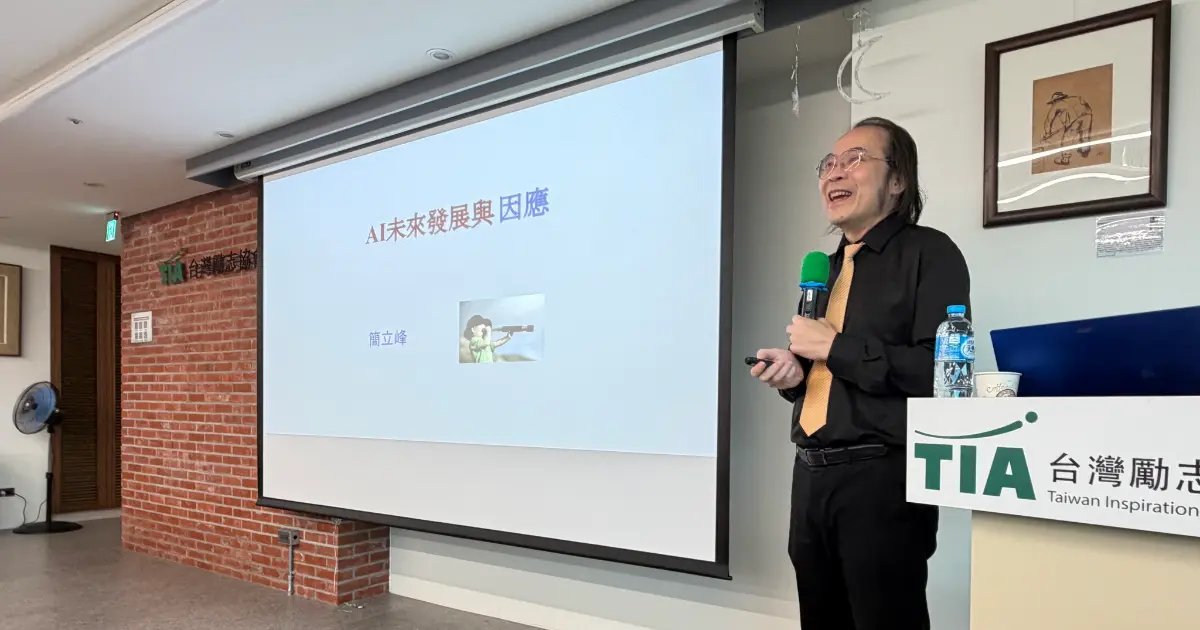
The Great Tech Bifurcation: What the Sony-TCL Deal and Micron’s Taiwan Bet Reveal About the New Geopolitical Order
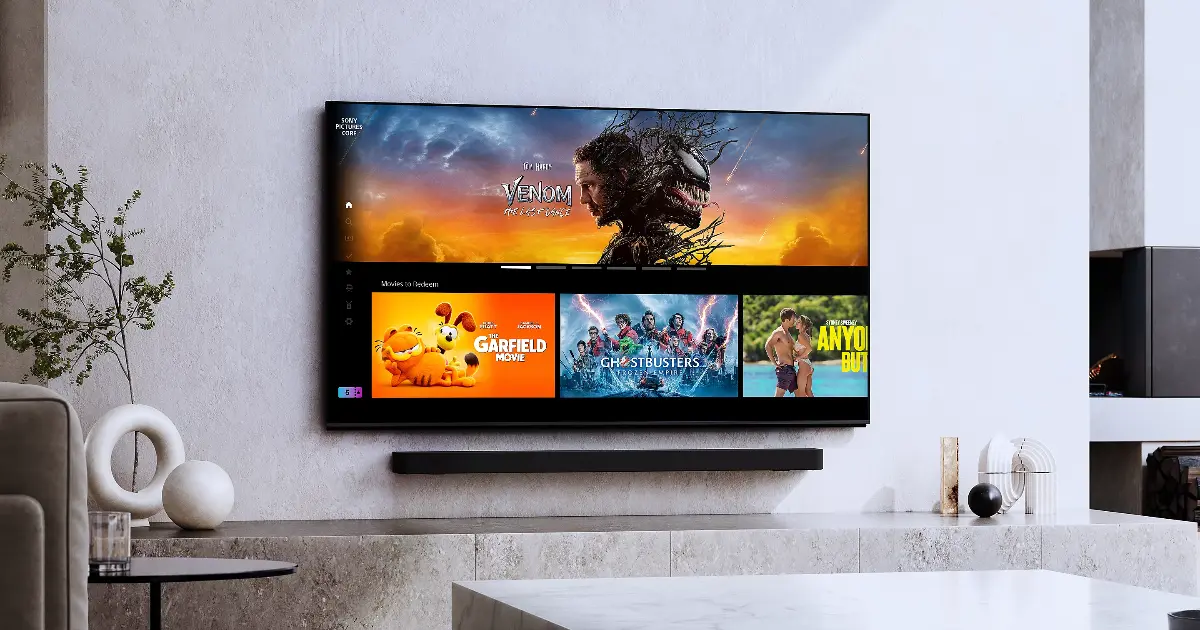
Two blockbuster developments have recently shaken the tech world. First, Japan’s Sony has signed a Memorandum of Understanding (MOU) with China’s TCL to form a joint venture for its home entertainment business, with TCL holding a controlling 51% stake and Sony 49%.
The second development concerns Micron Technology. The U.S. memory giant has acquired a facility in Tongluo, Taiwan, from PSMC for $1.8 billion. Furthermore, Mark Liu, the former Chairman of TSMC and a current board member of Micron, recently purchased approximately NT$246 million ($7.8 million) worth of Micron stock.
Beneath the surface of these two transactions lie critical issues worthy of discussion. Specifically, in an environment defined by U.S.-China rivalry and shifting industrial dynamics across Japan, Korea, and Taiwan, we are witnessing a subtle but definitive realignment of global tech alliances.
First, Sony’s move may come as a shock to those following Japanese industry. "SONY" is a source of national pride and remains Japan’s most valuable brand. According to a 2024 global brand survey by Nikkei, Sony ranked fourth among Asia’s most valuable brands, trailing only Samsung, Adidas, and Apple.
Yet, Sony is now spinning off its home entertainment business—including televisions and home audio—into a joint venture where a Chinese enterprise, TCL, holds the majority stake. For many Japanese, this decision likely delivers a significant psychological blow.
Sony’s Spin-off Strategy: A Case Study for Samsung
However, viewed through the lens of recent corporate strategy, this move is merely one component of Sony’s broader restructuring plan. Sony has firmly committed to a conglomerate discount resolution strategy, shifting its core operational focus toward intellectual property-heavy sectors like film, music, and gaming, while gradually carving out or spinning off non-core hardware businesses.
I wrote about this transformation mid-last year. Sony announced the separation of its organization and business units, with financial services (banking and insurance) being spun off into the Sony Financial Group. Plans are also in the works for the independence of its semiconductor arm, Sony Semiconductor Solutions (SSS), which dominates the global image sensor (CIS) market, though a precise timeline has not yet been set.
Later, I was invited to give a lecture in South Korea on the success model of TSMC and Taiwan’s semiconductor industry. A Korean professor, knowing I had written books on both Samsung and TSMC, asked me: "If you had the chance to meet Samsung Chairman Lee Jae-yong, what advice would you give him?"
I replied that Samsung’s business structure is too massive and complex. It houses everything from semiconductors and smartphones to televisions under one roof, with deep vertical integration. Consequently, the interests and directions of each division often diverge, creating internal conflicts of interest that need to be addressed.
I added that since Korea’s industrial landscape differs from Taiwan’s, the TSMC model might not be suitable. However, Sony—another massive conglomerate—is currently executing a strategic decoupling of its business units. This, I suggested, could serve as an excellent reference for Samsung Electronics.
Of course, Samsung has made no such moves toward spin-offs. With the AI boom driving severe shortages in memory and even foundry capacity, Samsung has clearly emerged from its downturn and losses. Its priority now is to capitalize on the supercycle to maximize free cash flow, leaving structural reform on the back burner.
Returning to Sony, the plan to carve out its TV and audio business has taken a step forward. By forming a JV with TCL and ceding a 51% majority stake, Sony is effectively handing operational control to an external party—specifically, a Chinese one. While this may seem abrupt given the current complexities of Sino-Japanese relations, it is undoubtedly a calculated strategic decision.
Global TV Market: The Era of Korean and Chinese Dominance
Unfolding the global TV market rankings reveals a landscape now dominated by Korean and Chinese brands. According to TrendForce statistics, the top five global TV brands for 2025 are Samsung, Hisense, TCL, LG, and Xiaomi. These five command a combined market share of 64.3%. notably, Chinese brands have now collectively surpassed a 50% market share in Japan for the first time.
Of particular concern to Japanese observers is Hisense. After acquiring Toshiba’s "Regza" brand, Hisense pushed Regza to a leading 24.6% market share in Japan. When combined with Hisense’s own branded sales, the group sits firmly at the top. The next best-performing Chinese brand is TCL, with a 9.7% share, already surpassing traditional Japanese giants like Sony and Panasonic to take fourth place.
With Chinese brands surging ahead and legacy Japanese brands like Toshiba regaining market leadership through Chinese partnerships, Sony’s choice to partner with TCL is driven by market logic.
Sony has already begun transitioning the operation of its Japanese domestic sales channels to TCL. China possesses a massive consumer market and its appliance manufacturers boast ever-expanding manufacturing scales, granting them unassailable price competitiveness.
Therefore, at a time when sensitive industries like semiconductors, AI, and military-aerospace are seeing a sharp divide between the U.S. and China camps—a split between China’s indigenous supply chain (often referred to as the "Red Supply Chain") and non-Chinese chains—Sony’s decision to partner with TCL for home appliances is a recognition of reality. Sony is simply making the most rational, asset-light choice for its own survival.
Moreover, Sony had few other options. It was never going to choose Samsung or LG; Japanese conglomerates are historically averse to partnering with Korean rivals, and past collaborations have rarely yielded benefits for the Japanese side.
TCL, on the other hand, poses fewer risks. TV technology is less sensitive regarding national security or data leakage. Furthermore, as price becomes the key competitive factor, Sony can rely on TCL for future manufacturing outsourcing, allowing Sony to focus its resources on brand management and content, rather than low-margin manufacturing.
In fact, this mirrors the trajectory of Japan’s PC industry. IBM sold its PC division to Lenovo; years later, NEC’s PC business was sold to Lenovo, and Fujitsu eventually followed suit.
Lee Po-heng, former General Manager of NEC Taiwan, notes that even after these restructuring moves, Sony will retain its powerful audio and imaging technologies—critical applications in the AI era. Additionally, with its global monopoly in CIS (CMOS Image Sensors), Sony is expected to maintain the premium brand power of "Sony" and "Bravia."
The Micron-TSMC Alliance: The Mark Liu Factor
In contrast to the mature TV market, the booming memory sector is witnessing aggressive strategic maneuvers. Micron, a key industry player, has been active. Amid a capacity crunch, Micron acquired PSMC’s Tongluo facility for $1.8 billion to secure backend manufacturing capacity for High Bandwidth Memory (HBM), addressing its own production bottlenecks.
Micron’s strategy for competing with Korean giants Samsung and SK Hynix over the past few years has been to forge a coalition with Taiwan and Japan. Through successive acquisitions of Inotera, Rexchip, and Elpida, Micron has created a "Taiwan-Japan Alliance" to counterbalance Korean dominance. Today, Micron’s largest production capacities are concentrated in Taiwan and Japan, and the PSMC acquisition only tightens its integration with Taiwan.
To diversify risk, Micron HQ also announced two days ago the groundbreaking of a new "megafab" in Clay, New York. This $100 billion investment, planning four fabs, will become one of the largest semiconductor manufacturing bases in the U.S., creating approximately 50,000 jobs.
As the memory industry enters a supercycle, Micron is positioning itself as the U.S. "National Team" champion. This not only aligns with President Trump’s manufacturing reshoring policies but also prepares for the looming threat of China’s memory sector. These investments make Micron the prime representative of the "US-Japan-Taiwan" semiconductor alliance.
Significantly, Mark Liu, who retired as TSMC Chairman in June 2024, was invited to join Micron’s board as an independent director in March 2025. This is another potent signal of the deepening alliance between Micron and TSMC.
During his tenure at TSMC, Liu actively promoted collaboration with Micron. Beyond deep ties with SK Hynix, Micron’s HBM has become a key memory component for AI systems built by TSMC and NVIDIA. Furthermore, in 2021, Liu recruited Albert Hsu, then Chairman of Micron Taiwan, to return to TSMC as Vice President of R&D to head the Integrated Interconnect & Packaging (IIP) organization, further solidifying the technical partnership.
Adding to this narrative, insider trading disclosures from last Wednesday (Jan 14) revealed that Mark Liu purchased 23,200 shares of Micron stock, a total investment of roughly $7.8 million.
US-Led Semiconductor Strategy: The "Korea Passing" Phenomenon
With memory stocks surging, many analysts interpret Liu’s bold purchase at these high valuations as a sign that the sector still has significant upside.
However, I believe Liu’s investment goes beyond mere profit seeking; it reflects a deeper geopolitical logic. In structuring the global memory industry, the U.S. clearly intends to reduce the market dominance of the two Korean giants, and its primary partner in this endeavor is Taiwan.
Recent geopolitical developments—including South Korean President Lee Jae-myung’s moves to deepen cooperation with Beijing and the unfavorable outcome for Korea in recent US tariff negotiations—offer a glimpse into Washington’s intent to exclude South Korea from the semiconductor "core circle."
In early January, President Lee Jae-myung undertook a state visit to China. During talks with President Xi Jinping, Lee expressed hopes that China would lift its unofficial ban on Korean cultural imports (a retaliation measure dating back to the THAAD missile deployment) and signaled a desire to deepen economic and cultural cooperation.
Beyond the emotive exchange of gifts and taking selfies with a Xiaomi smartphone, President Lee emphasized a shift in doctrine: "In the cold reality of the international order, there are no eternal enemies, allies, or rules. The fate of the Republic of Korea depends on our independent, national-interest-first 'Pragmatic Diplomacy' (Realpolitik). My government will actively pursue flexible and thoughtful pragmatic diplomacy to expand cooperation with neighboring countries."
Lee’s statement makes it clear: under his leadership, South Korea is realigning to engage more closely with China. These moves are undoubtedly being watched closely by President Trump. This geopolitical divergence explains why the U.S. recently negotiated a tariff agreement with Taiwan that was significantly more favorable than the one offered to South Korea, sparking anxiety in Seoul.
Synthesizing these two major stories leads to a clear conclusion: In mature industries like home appliances, Chinese brands will continue to dominate the globe. However, in sensitive semiconductor technologies, the world’s tech powers will not disengage; they will continue to battle. The "US-Japan-Taiwan Alliance" will continue to compete fiercely against China—and increasingly, against a drifting South Korea. The drama of this great bifurcation is far from over.
Related Articles
Micron Announces Its Largest Rewards Ever. Its Taiwan Union's Demands Expose a Clash of Pay Systems. A strike threat at Taiwan's largest foreign investor, read in three dimensions
TSMC's 3nm rinse comes exclusively from AEMC, a Taiwanese company once withdrawn from the Emerging Stock Board
Taiwan AI Industry Upgrade Forum Series || Event Report:America Wants More Manufacturing. What Does It Take for Taiwan’s Suppliers to Follow?