US-China Competition: A New Era of Co-opetition?

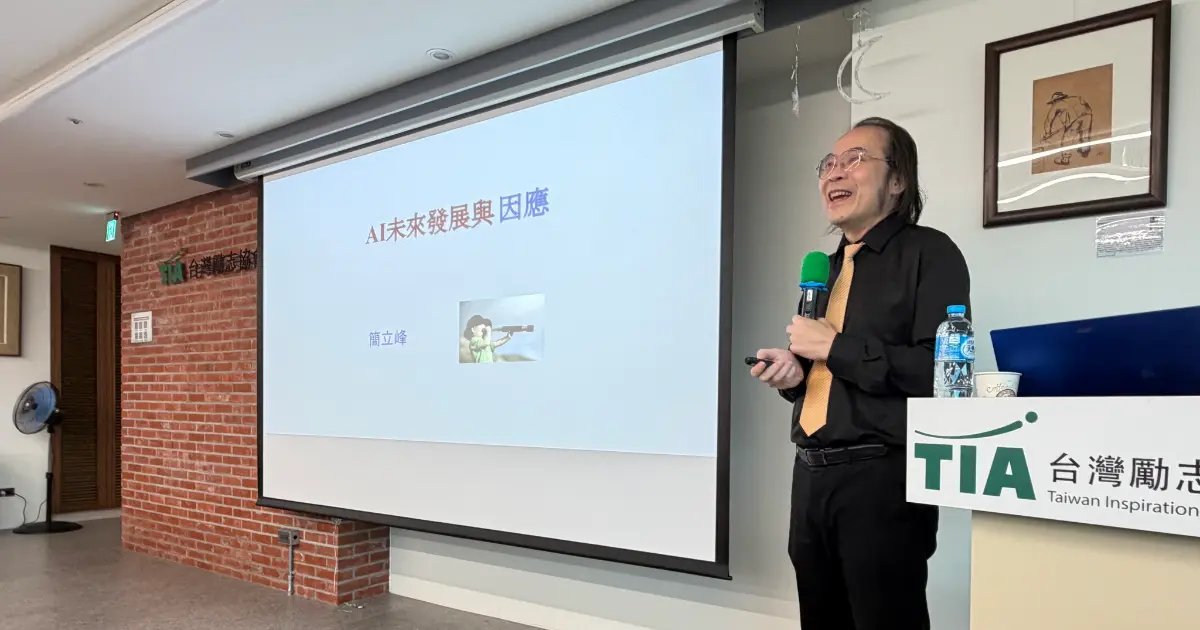
Recently, I attended a forum on the US-China economic and technological race. The discussion delved into China’s 2025 export data, the escalating AI rivalry, and NVIDIA CEO Jensen Huang’s perspective on the Chinese market. The insights shared were profound, and I would like to share them with you here.
In 2025, China’s total exports reached 26.99 trillion RMB (approx. $3.77 trillion), a 6.1% increase. Total imports stood at 18.48 trillion RMB (approx. $2.58 trillion), a marginal year-on-year growth of 0.5%.
While overall exports grew, the geographic distribution shifted significantly. Under the high-tariff pressure of President Donald Trump, who returned to the White House following the 2024 election, China’s exports to the US dropped by 20%. Conversely, exports to Southeast Asia grew by 13.4%, and to the EU by 8.4%.
Furthermore, there was a marked increase in "high-tech" and "green industry" exports. High-tech exports reached 5.25 trillion RMB, up 13.2% YoY. Notably, industrial robot exports surged by 48.7%, making China a net exporter in this field. Exports of high-end machine tools and specialized equipment grew by over 20%. In the green sector, lithium battery exports rose by 26.2%, wind turbine units by 48.7%, electric motorcycles and bicycles by 18.1%, and railway electric locomotives by 27.1%.
Most striking was the automotive sector: China exported 7.098 million vehicles (up 21.1%), with New Energy Vehicles (NEVs) accounting for 2.615 million units—a staggering 103.7% increase. NEVs now represent over one-third of China's auto exports, signaling a rapid structural upgrade.
These figures suggest that while Trump’s tariffs have impacted direct trade with the US, China has successfully diversified into other markets to maintain export growth. Additionally, China achieved a record-breaking trade surplus of nearly $1.2 trillion—the first time in history a nation’s surplus has exceeded the trillion-dollar mark.
However, the stagnant 0.5% import growth reflects weak domestic demand and the impact of US sanctions. China remains eager to import semiconductor equipment, high-end chips, and precision materials, but these remain restricted under US trade blacklists.
Domestic Stagnation vs. State-Driven Tech Ambitions
Despite the robust export figures, a key question remains: Why hasn't this success revitalized China's domestic economy? While China’s AI development is tailing the US and its legacy semiconductor processes have moved past the drag of "stalled projects" (previously plagued by over-investment without output), domestic consumption remains weak.
The primary causes are rising unemployment and falling incomes. Despite a rebound in the stock market last year, the collapse of property prices—the primary asset for Chinese households—has led to a "negative wealth effect." Furthermore, a weak social safety net (inadequate healthcare and pensions) has driven "precautionary savings," where citizens hoard cash for future emergencies rather than spending.
In the AI chip sector, Beijing’s aggressive investment in companies like Cambricon, Moore Threads, and MetaX has made China the world's second-largest investor in the field after the US. While these companies show explosive growth potential with P/E ratios exceeding 300x, they remain largely unprofitable due to the lack of access to advanced semiconductor manufacturing processes. Consequently, China has pivoted toward dominating the legacy (mature) nodes, where it currently performs well.
However, these tech investments are largely state-driven subsidies. Unlike the previous mobile internet boom, the benefits are concentrated among tech giants and the capital class, offering limited gains for the middle class.
The Rise of the "AI-Tech Dollar" Ecosystem
The US-China race has reached a stage where both sides have found their respective positions, entering a phase of "co-opetition."
In the US, as I have noted previously, the Trump administration has successfully transitioned the foundation of the US dollar from the "Petrodollar" to the "AI-Tech Dollar." This new standard is built on US dominance in AI models and chips. NVIDIA CEO Jensen Huang, acting as the "prophet of AI," has collaborated with the US administration to promote "Sovereign AI" globally—from Saudi Arabia and India to Japan and the UK.
While OpenAI is often described as a "perpetual motion machine" for investment, the entire US-led AI supply chain functions similarly. It excludes China while integrating key allies: Taiwan for manufacturing, South Korea for memory, Japan and the Netherlands for semiconductor equipment and materials.
In response, China is building its own independent AI ecosystem. Unlike the US-led international alliance, China’s model is a vertically integrated "closed-loop", encompassing design, manufacturing, advanced packaging, and downstream applications like autonomous vehicles and robotics.
Taiwan’s Strategic Choice: The Indispensable Partner
In this "Two Worlds" scenario, the US has claimed the high-end AI and chip markets, while China aims to dominate the mid-to-low-end manufacturing sectors through industrial overcapacity.
For Taiwan’s electronics industry, there is little room for neutrality. With over 90% market share in global AI chips and AI servers, Taiwan’s best path is deep integration with the US-led chain. The US defines the specifications and designs, while Taiwan handles the manufacturing and commercialization—a highly successful model of mutual dependency.
A prime example is Wiwynn (a leading global provider of hyperscale data center IT infrastructure). Wiwynn serves the world’s largest Cloud Service Providers (CSPs) like Meta and Microsoft, bypassing traditional distributors to design bespoke server solutions. In 2025, Wiwynn recorded an EPS of 275.06 TWD (approx. $8.50), the highest among all publicly listed companies in Taiwan.
Wiwynn Chairwoman Emily Hong has been vocal about avoiding the China market to mitigate the risk of Intellectual Property (IP) theft and the threat of state-backed Chinese competitors designed to replace foreign suppliers.
Recently, Jensen Huang’s visit to Taiwan highlighted this ongoing friction. Regarding reports that Beijing approved NVIDIA’s H200 chips for import, Huang dismissed them as "fake news," stating he received no such orders during his visit to China. He noted that while the H200 is "perfect" for that market, the "decision lies with Beijing."
The dilemma facing NVIDIA today differs from Wiwynn’s early strategy. Wiwynn chose to focus on US CSPs over China’s "BAT" (Baidu, Alibaba, Tencent) from the start, insulating its supply chain. NVIDIA, while maintaining a Taiwan-based supply chain to prevent technology leakage, now faces a China where local competitors are rising rapidly. If NVIDIA cannot sell to China, it risks not only losing revenue but also allowing domestic Chinese rivals to grow unchecked. This remains the core of the US-China tech struggle.
Related Articles
Micron Announces Its Largest Rewards Ever. Its Taiwan Union's Demands Expose a Clash of Pay Systems. A strike threat at Taiwan's largest foreign investor, read in three dimensions
TSMC's 3nm rinse comes exclusively from AEMC, a Taiwanese company once withdrawn from the Emerging Stock Board
Taiwan AI Industry Upgrade Forum Series || Event Report:America Wants More Manufacturing. What Does It Take for Taiwan’s Suppliers to Follow?