AI Isn't a Bubble, But It Will Burst Many Companies! Deciphering Google and TSMC's Winning Edge from IBM's 13% Crash
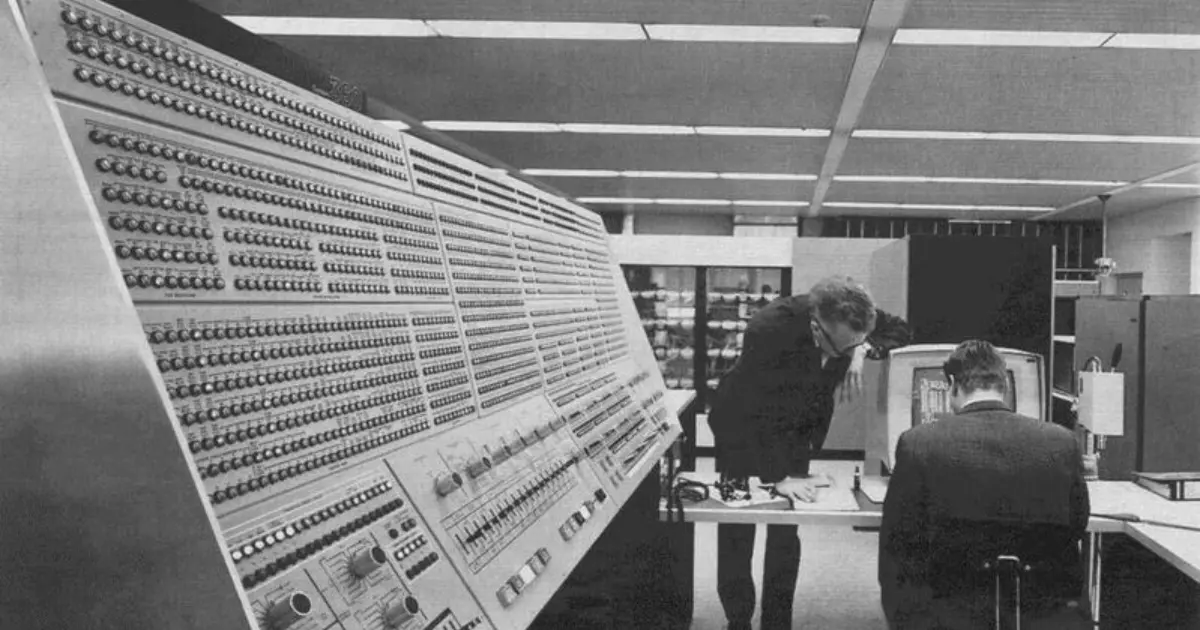
IBM couldn't escape the clutches of AI either. Yesterday (the 23rd), IBM's US stock plunged 13%, primarily because Anthropic announced an AI tool designed to simplify the modernization of COBOL code. Furthermore, global leading management consulting firm Accenture (NYSE: ACN) and Cognizant Technology Solutions (NASDAQ: CTSH) also saw significant declines following the announcement.
US equity investors should have noticed long ago: the hotter AI gets, the harder legacy software stocks impacted by AI bleed.
Since January 28, the S&P 500 Software and Services index has evaporated approximately $830 billion in market capitalization in just a few trading days. The hardest hit among them is the SaaS (Software as a Service) industry.
Microsoft, a bellwether of the software industry, saw its stock price fall from a peak of $555 to a closing price of $384 yesterday, a drop of over 30%. Microsoft was initially viewed as an AI leader and is a major shareholder in OpenAI. However, because its core business is software, the rise of AI has conversely created a substitution effect on its existing businesses, resulting in today's severe stock plunge.
The Collapse of Legacy Moats: When Autonomous AI Agents Directly Replace High-Paid Consultants
Let's first look at exactly how IBM was impacted by AI. Why couldn't "Big Blue" escape Anthropic's grasp?
According to Anthropic, their newly launched tool, Claude Code, can automate the exploration and analysis phases of COBOL modernization—tasks that traditionally required massive and exorbitantly expensive management consulting teams to complete.
COBOL is a 60-year-old commercial and financial programming language providing software support for critical systems in finance, aviation, and government. I personally encountered COBOL when I was in college over thirty years ago. Today, about 95% of ATM transactions in the US are processed by COBOL, and IBM is the largest software service provider dominating the global banking market. It is estimated that roughly 70% of global banking transactions are built on COBOL-based mainframe systems.
Not only that, but as the engineers who built these legacy systems retire one by one, the number of developers who understand this programming language continues to dwindle. Financial institutions, faced with legacy tech debt they have invested in for years, hope to avoid major updates, clinging to the mindset of "if it ain't broke, don't fix it."
Recognizing this lucrative opportunity, IBM also launched generative AI assistants. In recent years, they have helped many financial institutions migrate COBOL code to Java, boosting processing efficiency by more than 10 times compared to the past, and continued to dominate the massive market pie of the traditional financial and banking industry.
However, Anthropic's Claude Code will now use far more powerful AI to automate code analysis and implementation tasks, helping teams modernize COBOL codebases in a few quarters rather than years. With Anthropic cutting into this market and carving up the pie alongside IBM, it is no wonder IBM's stock price took a nosedive.
The COBOL ecosystem was historically IBM's moat. This moat included IBM's hardware and software sales, as well as high-margin subsequent maintenance services. But today, if financial institutions can upgrade their systems at a much lower cost using Anthropic, it means IBM's competitive advantage will vanish. This is the primary reason for the drastic correction in IBM's stock.
IBM's stock plunge also makes everyone realize that the AI era has not only arrived, but simply knowing how to use AI is not enough. The ultimate winner is the one who uses AI better. It’s not that IBM isn't using AI, but likely because they aren't utilizing it as effectively as Anthropic, meaning they are just as likely to lose their livelihoods in the future.
The Greatest Infrastructure Frenzy in History: $600 Billion in Annual AI CapEx
Recently, many people have been debating whether AI has already formed a bubble. I still believe that the AI industry itself is not a bubble; it will continue to develop for a long time, and AI applications will continuously emerge. The real question is: have you seized the opportunity? Are you riding this trend, or are you going against it?
The very definition of a revolution means someone will inevitably be harmed, while others will benefit. Companies leading the AI trend will become even more exceptional—like NVIDIA, TSMC, or Google. As for companies just catching up to AI, they might barely survive. But those who fail to keep up entirely, or worse, move backward, are destined to be eliminated.
So, is AI a bubble? From this perspective, AI is indeed a bubble because it has already caused many companies and industries to burst. But I must emphasize again: the AI industry is still in its developmental phase, and brand-new AI companies capable of operating AI more efficiently will be the ultimate winners of the future.
Take the comparison between Anthropic's Claude Code and IBM's generative AI assistant again. In the past, SaaS companies like IBM sold "tools" to solve problems. Today, Anthropic has evolved to sell "outcomes."
When AI is no longer just an "assistant" but starts stepping in as a "substitute" (Autonomous AI Agents), elevating service value for enterprises in a faster and more effective manner, it becomes a trend no business operator can afford to ignore. If you cannot keep up with AI, many of your jobs will inevitably be replaced by AI in the future.
However, taking Microsoft as an example again: Microsoft itself possesses many traditional SaaS businesses, very similar to IBM. Both were the biggest winners of the traditional software business in the past. Therefore, like IBM, Microsoft is inherently exposed to the shockwaves of the great AI revolution. How Microsoft rapidly pivots to apply AI to add value and upgrade its traditional businesses, avoiding attacks from numerous new-breed AI companies, is a critical challenge it faces.
What I really want to focus on, though, is Google. In this wave of debates over whether AI is a bubble, many focus on the massive sums large enterprises are constantly pouring into AI. For example, the world's top four CSPs (Cloud Service Providers) are expected to invest another $600 billion to $700 billion in AI infrastructure this year. With such staggering investment amounts, are there enough applications to justify it? Can profitability keep pace? These are the doubts shared by many.
Take Google as an example: its total capital expenditure (CapEx) for fiscal year 2025 will reach $91 billion to $93 billion. For 2026, this jumps to $175 billion to $185 billion—a 90% increase—with the vast majority of this CapEx dedicated to building AI.
And Google's CapEx isn't even the largest. Amazon's CapEx last year was $125 billion, and it mentioned an increase to $200 billion this year, a total growth of over 60%. In its previous earnings release, Amazon noted that AI applications are accelerating so rapidly that the company quickly feels its investments in AI infrastructure are insufficient; this is the primary reason Amazon continues to ramp up its CapEx this year.
As for Meta, its CapEx last year was $72 billion, and this year it sits at $115 billion to $135 billion, growing another 75%. Meanwhile, Microsoft was at $88 billion to $95 billion last year and $120 billion this year, marking a 30% growth.
I believe this colossal injection of AI capital must be the largest investment initiative in human history. I checked with Gemini and compared it to the largest investment projects ever undertaken on Earth. It should be the US Interstate Highway System, which began in 1956 and saw $620 billion to $1.2 trillion invested over 36 years (adjusted for current currency values), averaging $20 billion to $30 billion annually.
Other high-dollar human infrastructure investments—including the Apollo moon landing program, the International Space Station, nuclear power, and the Manhattan Project that built the atomic bomb—were only $280 billion, $150 billion, $70 billion, and $40 billion, respectively. With the exception of nuclear power (which is a 2025 figure), the others were projects spanning several years or even two decades. When averaged out annually, they are naturally small investments compared to AI.
Plunging Free Cash Flow and "Century Bonds": Wall Street's ROI Reckoning for Tech Giants
Today's AI CapEx construction sits at over $600 billion a year, more than 20 times the historic Interstate Highway project. If we add the figures from the past few years and the next few, calling it the largest investment project in human history is absolutely no exaggeration. If that is the case, investors naturally have reason to worry about the possibility of an AI bubble.
What currently worries everyone about Google is that its Free Cash Flow (FCF) for 2025 is $73.3 billion, but due to massive AI CapEx, its 2026 FCF will plummet to $8.2 billion. A 90% drop is indeed a staggering decline.
The current perspective of investors regarding Google and the related Big Three CSPs is transitioning from a period of comprehensive stock price rallies to strict profitability reviews (ROI). Companies can no longer just "tell a story"; they must face the "ROI reckoning" from Wall Street.
To win the AI war, Google even issued "century-spanning" 100-year British pound bonds in early February of this year. This marks the reappearance of century bonds in the tech industry since Motorola in 1997. Consequently, many are beginning to worry: from Google and Meta to Amazon, tech giants are raising capital from the bond market on an unprecedented scale, frantically pouring it into AI data centers and compute infrastructure. Are these debt-fueled investments essential infrastructure for the AI era? Or the next tech bubble?
If viewed from the perspective of AI CapEx, century bonds are indeed a symbol of a bubble. Just think about it: the lifecycle and amortization period of an AI chip (GPU) is 5 to 7 years, while an AI data center is 10 to 15 years. This means the current investments will lose their primary value in 15 years. Why would anyone dare to buy a 100-year bond to support a hypothetical century-long hegemony for Google?
As mentioned earlier with Motorola, the company raised century bonds in 1997. However, just over a decade later, due to the emergence of smartphones like Apple and Android, Motorola's core business took a massive hit, leading to the company splitting in 2011. Naturally, the century bonds did not end well.
The Pick-and-Shovel Play in the Gold Rush: Why TSMC is the Ultimate Hedge Against the Bubble
Of course, Google today dominates various ecological chains, spanning diverse values from search, YouTube, maps, and autonomous driving to AI layouts—it cannot be compared to Motorola back then. Furthermore, I checked: the 100-year pound bonds Google raised this time amount to only £1 billion (roughly $1.26 billion). In contrast, Google also raised $20 billion in regular bonds, making the century bond proportion very low. If we total the approximately $100 billion in bonds issued by the four major CSPs for comparison, the proportion of century bonds in the market is currently indeed very low.
Moreover, Google's 100-year pound bond was oversubscribed tenfold by the market, with an interest rate of 6.125%—very favorable terms. This indicates that investors firmly believe Google will definitely pay back the money and are not worried in the slightest. It also highlights the high level of liquidity in the market, dropping investment vigilance to a low point.
Will Google become a bubble in the future? Honestly, I don't know. But I am quite certain that if we are debating who is a bubble, TSMC should be the least likely to be one. Because, judging from various metrics, TSMC's investments and growth are the most robust, making it the biggest winner to benefit from the AI trend.
For example, looking at CapEx: from 2024 to 2026, TSMC's CapEx was $29.8 billion, $40.9 billion, and this year's $52 billion to $56 billion—growing at an annual rate of roughly 40%. Compared to the massive, near-doubling capital injections of its clients (like the four major CSPs mentioned above), and considering that TSMC still holds absolute dominance in advanced manufacturing processes (as the sole, irreplaceable pick-and-shovel provider), TSMC can be said to have adopted the most prudent and conservative CapEx discipline.
Therefore, I believe discussions about an AI bubble will continue, and accusations of an AI stock price bubble are no longer just baseless suspicions. Stock market performances to date have indeed exceeded many people's expectations. While everyone is still intoxicated by a widely optimistic environment, it is best to carefully review your investment targets and positions, and properly implement risk management (hedging).
Related Articles
Micron Announces Its Largest Rewards Ever. Its Taiwan Union's Demands Expose a Clash of Pay Systems. A strike threat at Taiwan's largest foreign investor, read in three dimensions

TSMC's 3nm rinse comes exclusively from AEMC, a Taiwanese company once withdrawn from the Emerging Stock Board

Taiwan AI Industry Upgrade Forum Series || Event Report:America Wants More Manufacturing. What Does It Take for Taiwan’s Suppliers to Follow?