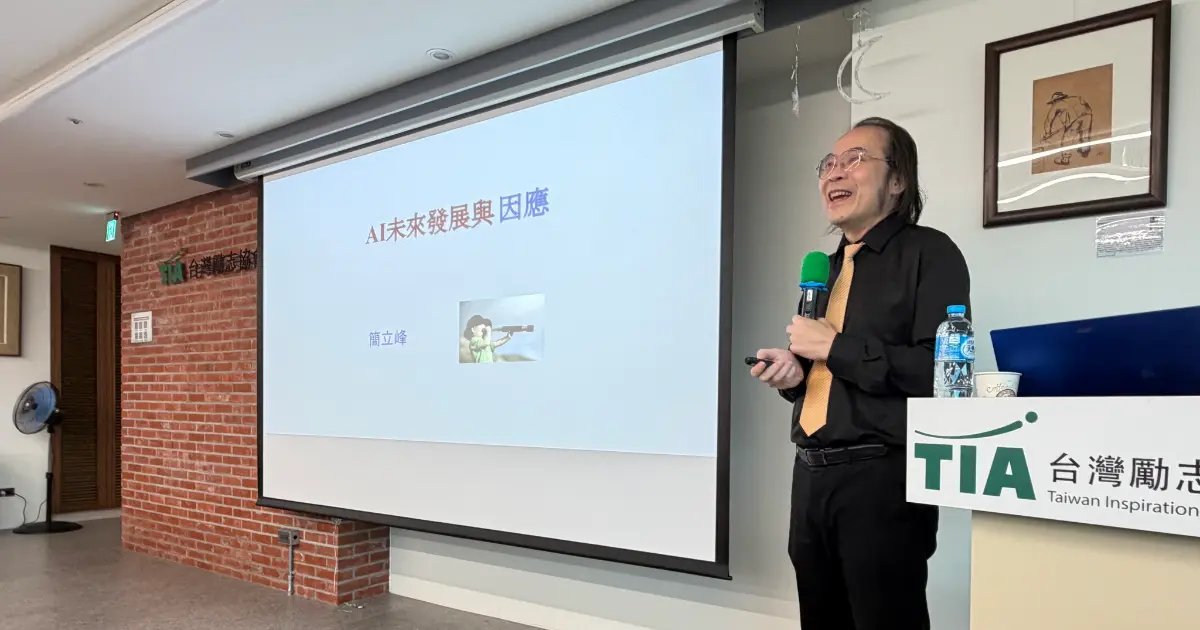
Former TSMC VP's Third Venture: How V5 Technology Leveraged AI Inspection to Become a Hidden Champion in CoWoS and SoIC Supply Chains
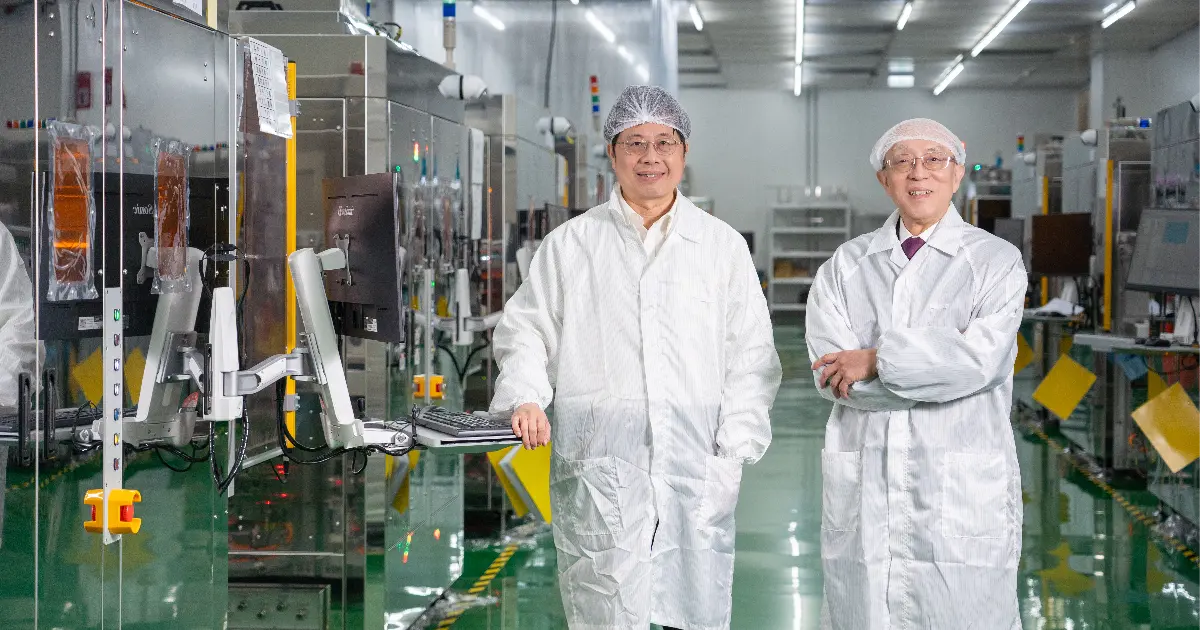
The advanced packaging market, spearheaded by TSMC (Taiwan Semiconductor Manufacturing Company), continues to extend its influence to OSATs (Outsourced Semiconductor Assembly and Test providers), benefiting global players like ASE and Amkor. The expansion of advanced packaging capacity and the increasing complexity of these processes are driving a surge in demand for metrology and inspection equipment. Pursuing this growth opportunity, Taiwanese companies such as V5 Technologies, Machvision, and Cheng Mei Instrument Technology (CMIT) are carving out their unique competitive edges to rival international equipment giants.
V5 Technologies: Former TSMC Veteran Quincy Lin's, Third Venture Uncovers New AI Applications in Semiconductors
Since 2024, V5 Technologies, a supplier of automated semiconductor metrology and inspection equipment, has experienced explosive growth, positioning itself as the enterprise with the highest "AI value content" across the entire supply chain. Its 2024 revenue surged by 2.5 times compared to the previous year, with an expected further climb of nearly 200% in 2025. Becoming the focal point of the market, the company joined the elite "TWD 1,000-plus club" (a term for ultra-high-valuation stocks priced over NT$1,000 per share) before the Lunar New Year, with its intraday stock price briefly breaching the NT$1,800 mark in late February.
In truth, the current success of V5 Technologies, founded by former TSMC Senior Vice President Quincy Lin, is the culmination of 12 years of extensive exploration and two major business pivots.
Crossing the Valley of Death: Pivoting from Traffic Control to a Dual-Track Strategy in AI Medical and Semiconductor Inspection
Rewind to 2014. After retiring from TSMC, Quincy Lin—who had already successfully founded solar giant Neo Solar Power (later merged into United Renewable Energy, URE) and RFIC leader Rafael Microelectronics—believed artificial intelligence would be the next critical technological megatrend. He began actively scouting for exceptional local teams to enter the AI application market. Ultimately, he zeroed in on a research team guided by Lin Chin-Teng, the former Dean of Academic Affairs at National Chiao Tung University (one of Taiwan's premier engineering institutes), whose core expertise lay in machine vision, image processing, and analysis. Thus, V5 Technologies was born, initially targeting the intelligent traffic control and security market.
Lin recalls that at the time, global AI technology was still in its infancy, and companies with stable revenue in the sector were exceedingly rare. V5 Technologies was one of only three companies worldwide capable of applying image processing AI to traffic control, competing primarily with US and French firms.
Shortly after its founding, V5 leveraged its cutting-edge technology to secure over 50 government tenders in Taiwan and China. For instance, Taiwan's National Highways No. 4 and No. 6, as well as the Wugu-Yangmei Elevated Expressway, utilized V5's image recognition and sensor equipment to execute automatic incident detection, ramp metering, lane control, and alternative route guidance. The company's annual revenue quickly reached NT$15 million.
However, after two years, the team realized that government tenders were too volatile. "A company must have stable EPS (Earnings Per Share). If revenue fluctuates wildly, the company's valuation won't be high. So, we started thinking about how to pivot," says Lin.
Lin firmly believes that entrepreneurship must tackle difficult problems; because simple businesses that anyone can do often descend into a red ocean (a fiercely competitive, hyper-saturated market). Therefore, when the team considered transitioning into AI lung cancer imaging and automated semiconductor inspection, both were recognized as monumental challenges.
Lung cancer is considered Taiwan's leading health threat. The recognized screening tool for early detection and reducing mortality rates is the Low-Dose Computed Tomography (LDCT) scan. Each patient examination generates 300 images. If a doctor typically sees 50 patients a day, that amounts to reviewing 15,000 images daily—an overwhelming workload. If image-processing AI could enhance both the quality and speed of these diagnoses, more lives could be saved.
On the other hand, V5 also contemplated expanding into the electronics sector. Given that both Lin and President Huang Chien-Chung had early-career experience at TSMC and possessed a deep understanding of the semiconductor industry, they ultimately chose to enter the semiconductor market, which boasts a larger scale and higher gross margins. Even though their competitors were world-class inspection equipment giants, it was a battle worth fighting.
The R&D process for both technologies proved even more grueling than anticipated. For example, when developing the lung cancer recognition system, they expected results within three months, but after half a year, there was zero progress.
Huang says he decided to halt the medical team's project for six months, pivoting their focus entirely to semiconductors first. Unexpectedly, this gave the team a breakthrough inspiration. By leveraging their semiconductor development experience, they created an entirely new AI model that reconstructed the original 2D lung cancer imaging data into 3D. Concurrently, they utilized public lung imaging data sourced online from the US to train their AI model.
The recognition rate of this model improved dramatically. With the assistance of medical experts including then-Deputy Superintendent Chen Shih-Ann and Department Head Chen Yuh-Min of Taipei Veterans General Hospital (a top-tier medical center in Taiwan), Deputy Superintendent Chen Chih-Yi of Chung Shan Medical University Hospital, and Director Wu Ting-Yao of the Taiwan Food and Drug Administration's (TFDA) AI Office, V5 successfully obtained Taiwan's first TFDA certification for an AI medical device detecting small pulmonary nodules. Currently, it is also the only Taiwanese product of its kind to secure U.S. FDA certification.
Breaking the Japanese Monopoly: Penetrating the Advanced Packaging Supply Chain with Agile Localized Support
As for the semiconductor sector, V5 chose to start with clients in high-end advanced packaging. In 2016, the market for automated high-magnification optical microscope inspection equipment was dominated by Japanese giants. On one occasion, a Japanese-made high-magnification optical microscope burned out. When the Taiwanese OSAT firm contacted the Japanese manufacturer, they were told it would take a month to dispatch an engineer and cost hundreds of thousands of NT dollars.
Unable to wait that long, the OSAT firm, in a last-ditch effort to minimize downtime, allowed the relatively unknown engineers from V5 to enter their fab and attempt a repair. To everyone's surprise, the V5 engineers worked relentlessly around the clock for two weeks and successfully fixed the microscope. "The moment the power was plugged in, the equipment actually ran. Many fab engineers gathered around the machine—repaired locally by Taiwanese engineers—and cheered," Huang proudly recalls of the battle that propelled V5 to fame.
Huang notes that before entering semiconductor applications, the V5 team originated from traffic control; not a single engineer had ever worn a cleanroom suit. Yet, when faced with new challenges, the employees embraced a relentless, hands-on spirit to solve every problem one by one.
Advancing into the Core of SoIC and CoWoS: Achieving Explosive Growth Alongside the Expansion of Taiwan's Foundry Giant
Scaling up from the OSAT sector to tackle the inspection of even more advanced SoIC (System on Integrated Chips) and CoWoS (2.5D advanced packaging) processes represented another massive leap. These processes demand significantly higher capabilities in optomechatronics, software, and AI technologies.
In 2020, to win orders from the leading semiconductor foundry giant (TSMC), a V5 sales executive drove daily from Taichung to Tainan. He would wait for calls at a convenience store next to the major client in the Southern Taiwan Science Park (STSP, TSMC's hub for advanced nodes), before driving back to Taichung at night. He set a daily goal for himself: he had to make sales calls until his phone battery completely died. However, for over a year, the client completely ignored him.
Enduring this high-pressure, groundwork-heavy environment for three years, it wasn't until late 2023 that V5 finally delivered its high-magnification optical microscope equipment to this client. This breakthrough fundamentally transformed V5's operational scale. In 2024, the company's revenue vaulted from over NT$200 million the previous year to break the NT$700 million mark, turning a profit; in 2025, revenue is projected to hit NT$2 billion.
Currently, V5 Technologies' largest institutional shareholder is United Renewable Energy (URE, Taiwan's solar energy giant), holding nearly a 20% stake. When V5 was established, Lin was the chairman of Neo Solar Power, which led to their initial investment. After Neo Solar Power merged with Gintech and Solartech to form URE, the V5 stake became a highly profitable subsidiary (cash cow) for URE. Based on V5's current market valuation of approximately NT$50 billion to NT$60 billion, URE's potential unrealized gain exceeds NT$10 billion.
Hermes-Epitek, an expert in Taiwan's semiconductor equipment industry, is also a current shareholder of V5. Lo Li-Ju, a director at Hermes-Epitek, stated that they had been an agent for V5's equipment since 2020. Recognizing the company's strong competitiveness, they took a further step to invest in equity. He also predicts that once V5 firmly establishes its foothold in the Taiwanese market, there will be massive business opportunities with international clients and markets in South Korea, the US, and Japan.
Having achieved success in both the medical and semiconductor AI application fields, V5 decided to spin off its medical division into an independent entity, V5med Inc. Lin explains that the primary reason was feedback from investors: some were interested in semiconductors, while others wanted to invest in medicine. Thus, the decision to separate was made, though V5 Technologies currently retains a 90% stake in V5med. Lin also believes that the convergence of Bio-ICT (the integration of medicine and electronics) is undoubtedly an absolute strength for Taiwan, and V5med will have excellent development opportunities in the future.
Hung Chuan-Hsien, who co-founded Neo Solar Power with Lin and currently serves as the Chairman of URE, says that having worked together for many years, he has always found Lin to be honorable, trustworthy, and possessing a rigorous management style that earns his team's trust. As a long-time partner, he is very pleased to see V5's robust development.
Lin analyzes that his core philosophy across his three entrepreneurial ventures has remained consistent: to provide a stage for young people to showcase their talents, and to choose difficult problems, which is the only way to secure high-quality growth opportunities.
Lin notes that during his early years at TSMC, he interviewed countless candidates. He believes he has a good eye for building teams; usually, within a brief 15-minute assessment of a person's personality, skills, and knowledge, he can determine whether an employee has the potential to succeed.
He says that when he first met the team from Chiao Tung University, he found them both brilliant and hardworking. Even when V5 endured years without turning a profit, he remained confident in their eventual success and continued to inject capital to support the team. Furthermore, he believes it is actually beneficial for a startup team to experience the "Valley of Death." As long as they can survive it, they will emerge significantly stronger. This pattern occurred with Rafael Microelectronics as well, giving him a strong intuition that V5 Technologies would ultimately thrive.
Related Articles
Micron Announces Its Largest Rewards Ever. Its Taiwan Union's Demands Expose a Clash of Pay Systems. A strike threat at Taiwan's largest foreign investor, read in three dimensions
TSMC's 3nm rinse comes exclusively from AEMC, a Taiwanese company once withdrawn from the Emerging Stock Board
Taiwan AI Industry Upgrade Forum Series || Event Report:America Wants More Manufacturing. What Does It Take for Taiwan’s Suppliers to Follow?