Bridging the Computer and Semiconductor Industries:How Stan Shih Grew Acer into a Family of Companies and Developed More of Taiwan's Top Talent Than Anyone Else
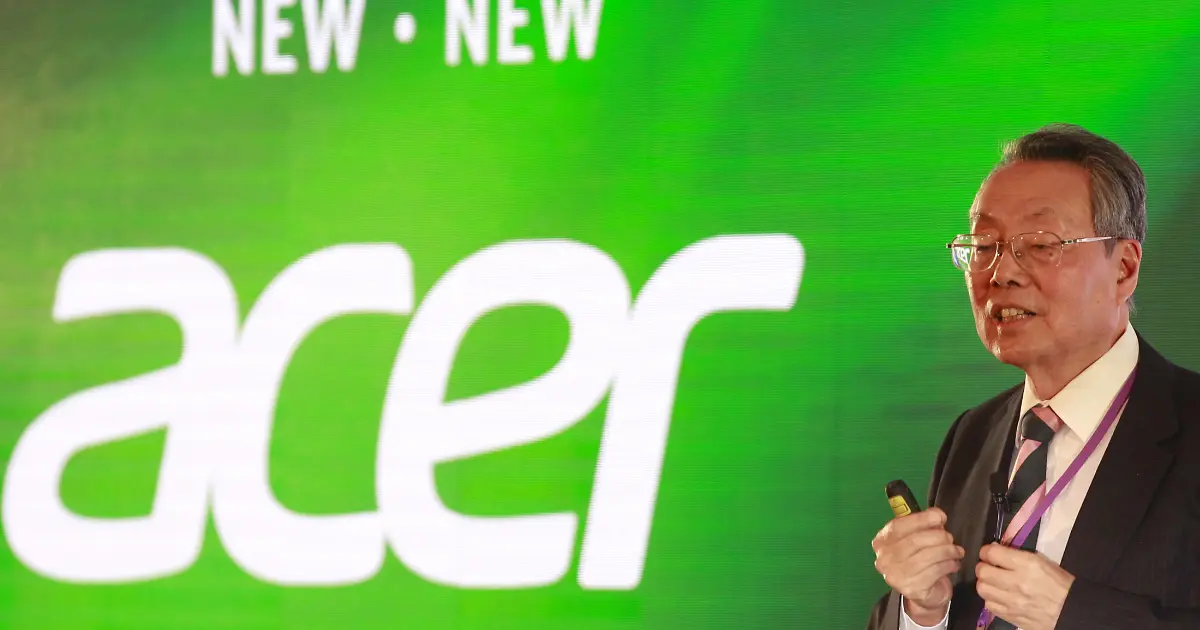
Acer, founded in 1976 with NT$1 million, has given rise to Wistron, Wiwynn, Qisda and AUO, and its family of companies now includes more than 40 listed companies. Acer also set up TI-Acer with Texas Instruments to make DRAM, and its founder Stan Shih served as an independent director of TSMC for 21 years. Acer has been through three crises and three re-engineerings. How does Stan Shih see TSMC and the value of Taiwanese manufacturing?
Founded in 1976, Acer is Taiwan's oldest and best-known computer brand. It has also spun off major Taiwanese electronics companies such as Wistron, Wiwynn, Qisda and AUO, branching out into Taiwan's most influential family of electronics companies.
In the semiconductor industry, Acer invested early in Kuo-shan Electronics (國善電子, transliterated), an IC design company in Silicon Valley, and in ALi in Taiwan. In 1989 it formed a joint venture with Texas Instruments (TI), TI-Acer, to produce DRAM. In 1999 TI-Acer was merged into TSMC, and Acer founder Stan Shih also served as an independent director of TSMC for 21 years.
As for Stan Shih himself, he is not only a pioneer of Taiwan's computer and information and communications technology industries. He also led Taiwan in catching the microprocessor revolution, set the precedent for Taiwanese companies building their own international brands, and put forward far-reaching ideas about industry, such as the Smiling Curve, the Wangdao ("Kingly Way") philosophy, and tangible and intangible value.
At Acer's 50th anniversary celebration, Stan Shih said that Acer "may not be the company that has made the most money, but its greatest contribution has been developing talent for Taiwan." Over 50 years Acer has trained countless people and given young people confidence and hope, allowing the industry to keep growing and renewing itself. That is the most valuable part.
On October 10, 2026, Taiwan's National Day, I moderated the "Double Ten Forum" with two senior figures, Stan Shih and Chintay Shih. After the forum I sat down with Stan Shih for an in-depth interview. I have organized that interview here, so that friends abroad who want to understand why Taiwan's computer and semiconductor industries have been so successful can have more first-hand material. The following is a record of the interview.
Starting Up with NT$1 Million in 1976, Acer Beat IBM to Market with a 32-Bit Personal Computer
Q: This year Acer is celebrating its 50th anniversary. In September, the musical *Half a Century of Smiles* (微笑半世紀) premiered, telling the story of how you and four partners founded Acer in 1976. It is a very enjoyable musical and can be found online. Please share what you were thinking when you started the company, and the challenges of leading Taiwan in building its own international brand.
A: In 1976, my wife and I, together with five other partners, started the company with NT$1 million. Our goal was to seize the second industrial revolution driven by the microprocessor. Our thinking at the time was simple: if we did not do it, we would be "sinners in the eyes of history."
So in its early days Acer called itself "the gardener of the microprocessor" and promoted microprocessors in Taiwan. Later it launched the Micro-Professor series of learning computers, and then beat IBM to market with a 32-bit 386 personal computer, which gave Taiwan a name of its own in the international computer industry.
As for how Acer set the precedent for Taiwanese companies building their own international brands, it started early on, when I made Taiwan's first electronic calculator at Qualitron (榮泰電子). Later Acer developed personal computers (PCs). At that time we did both brand and manufacturing, and only later did opportunities in contract manufacturing appear. Taiwan's electronics industry generally moved toward contract manufacturing, but Acer insisted on running its own brand. In the end we spun off the contract manufacturing business, and Acer became one of the first Taiwanese technology brands to break into the global market.
Later, we separated the brand business from contract manufacturing so that the two models would no longer conflict, spinning off BenQ (today's Qisda) and Wistron. This approach created today's family of companies, the four major groups of Acer, AUO, Qisda and Wistron, with more than 40 listed companies under them.
From Leonard Liu to Gianfranco Lanci: Three Crises and Three Re-engineerings in Acer's 50 Years
Q: Acer has faced many challenges over its 50 years and has launched three re-engineerings. Could you talk about the crises the company went through after you appointed Leonard Liu and Gianfranco Lanci, and how you overcame those challenges?
A: Over 50 years, Acer has been through three major crises and has launched three "re-engineerings." The mistakes I made in choosing people were mainly in the first (Leonard Liu) and the third (Gianfranco Lanci).
The first crisis was from 1989 to 1992. At that time Acer wanted to internationalize quickly. It recruited Leonard Liu, a vice president at IBM, as president, brought in the management systems of a large corporation, and expanded through acquisitions, for example buying Altos in the United States. As a result, in 1991 Acer posted the biggest loss since its founding, NT$607 million, and the actual losses in its European and American businesses were even worse than the books showed. Leonard Liu resigned in April 1992.
Acer's reflection at the time was that acquisitions can quickly bring markets and sales channels, but capabilities and culture cannot be acquired through a transaction alone. So in 1992 we launched the first re-engineering of Acer and put forward the Smiling Curve, rethinking where value lies and shifting resources toward the two ends, R&D and brand.
We also introduced the fast-food model, in which Taiwan produced motherboards and other key components, playing the role of a central kitchen, while final assembly moved to each local market and was completed there (like a McDonald's restaurant). This also reduced transportation, inventory and price-decline risks.
As for our strategy of a global brand combined with local roots, we let local shareholders hold a majority stake in our overseas subsidiaries and used local talent, making up for Acer's lack of experience in managing across borders.
The results of these reforms gradually showed. From the second half of 1993, overhead in the manufacturing division fell to one-sixth of its previous level, and inventory turnover days fell from 100 to 50. In 1995 Acer became the world's seventh-largest PC brand, and its US business also returned to profit.
The second crisis came around 2000, and it was mainly caused by conflict between brand and contract manufacturing. Because Acer ran both its own brand and contract manufacturing, its brand customers worried that Acer was both their supplier and their competitor, and contract orders suffered as a result.
So we launched the second re-engineering of Acer and split the group apart: Acer focused on its brand, contract manufacturing became the independent company Wistron, and the businesses on the periphery of brand and manufacturing became BenQ (today's Qisda). This split later grew into an entire "family of companies," and today the broader Acer group has more than 40 listed companies.
The third crisis came from 2008 to 2013. At that time Gianfranco Lanci, Acer's Italian president, opened up the European market for Acer by pushing inventory into sales channels, and built Acer to the scale of the world's second-largest PC brand.
Premium Members Only
This is a premium article. Please join our membership to read the full content.
Become a member to unlock all in-depth reports and exclusive analysis.
Already a member? Login Now
Related Articles
AI Demand Is Booming, but Are Profits Keeping Up? From Anthropic's Earnings to Marvell's Pricey Acquisition, a Full Look at AI's Current Bottlenecks and Where It Goes Next

Anthropic's IPO Prospectus Is a Barometer of the AI Bubble: What Opportunities and Risks Will Follow Its Listing?
One of the "Mountain Builders" of Taiwan's Semiconductor Industry: How Chintay Shih Led ITRI and Helped Give Rise to TSMC, Taiwan's "Sacred Mountain"