DDR4 Prices Soar, Can Taiwanese Firms See Profit Surge? Latest Investment Moves by SK Hynix, Samsung, and Micron Set Stage for New Round of Competition
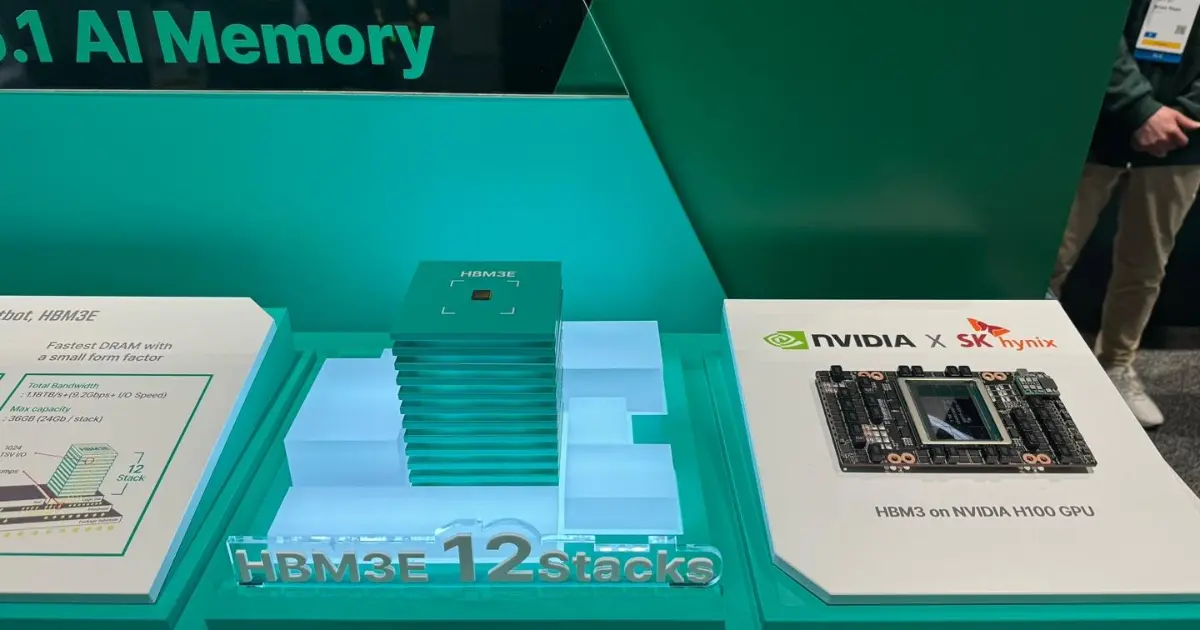
Recently, several significant developments have emerged in the DRAM industry. DDR4 prices have surged due to supply shortages, benefiting companies such as Nanya Technology (Taiwan Stock Code: 2408), which may see stronger profits in the second half of the year. However, these price movements, while favorable to Taiwanese firms, are closely tied to the investment strategies of the three global DRAM giants—SK Hynix, Samsung, and Micron—and also relate to the latest developments at China’s CXMT (ChangXin Memory Technologies).
To put it succinctly, describing recent changes in the DRAM industry as “AI reshaping the global DRAM landscape” is highly accurate.
The rise of AI has significantly altered the market share structure in DRAM. The most telling figure lies in the rapid growth of AI servers over the past three years, which require large volumes of high-priced HBM chips. According to TrendForce, HBM revenue this year could reach 26.2% of the total DRAM market, up from 14.6% last year and just 3.9% the year before (see Figure 1, provided by Uni-President Securities).

HBM (High Bandwidth Memory) is an advanced memory technology designed for AI, graphics, and high-performance computing. By vertically stacking chips and using TSV (through-silicon via) packaging, HBM delivers far greater bandwidth and capacity while reducing power consumption, making it a critical component for AI servers and GPU workloads.
The fast growth of HBM has become the decisive factor reshaping the market share among the three leading DRAM makers. Moreover, differences in their investment strategies have led to a rare phenomenon in the industry: SK Hynix has overtaken Samsung.
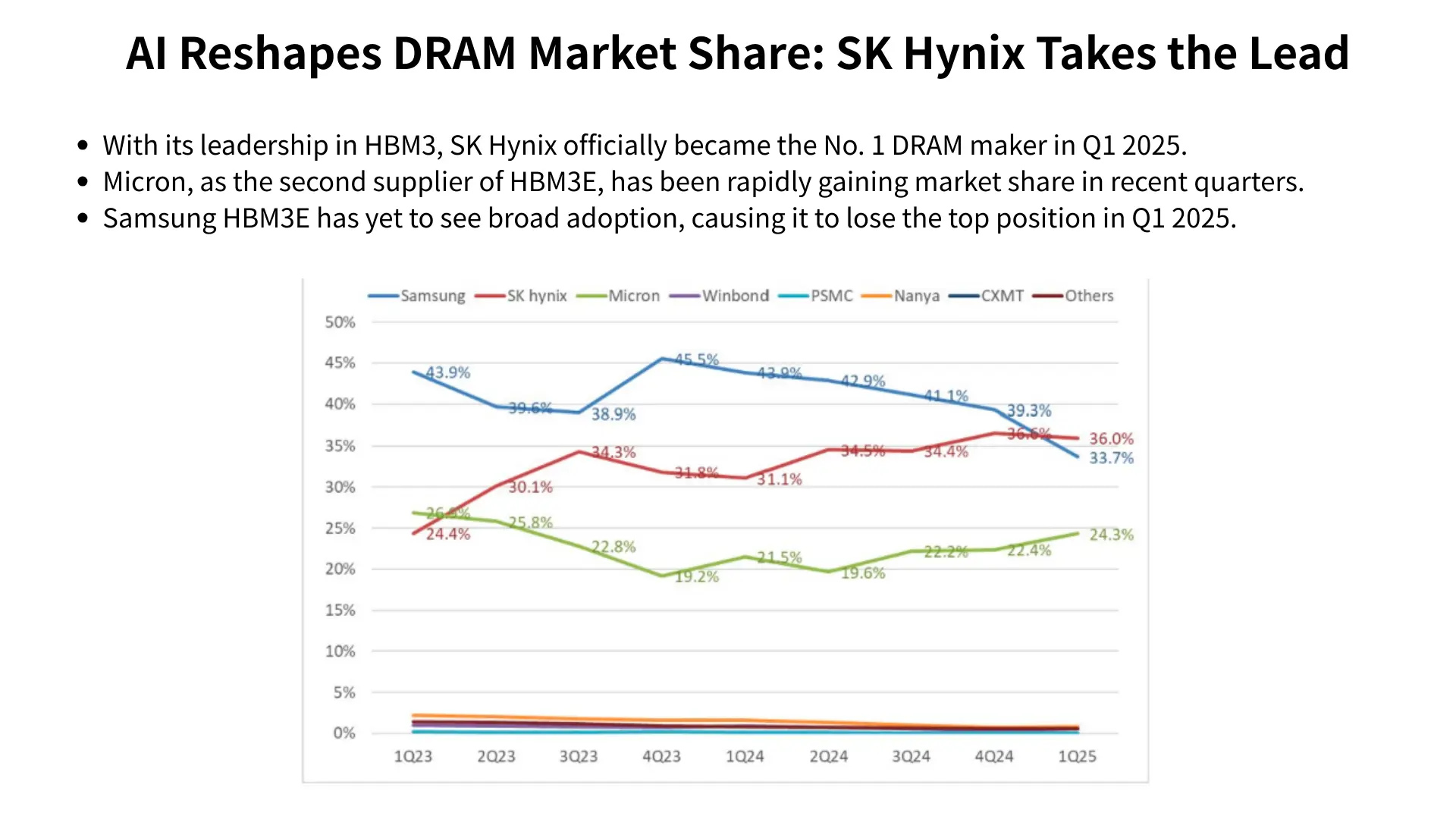
Statistics show that, thanks to its leadership in HBM3E(an enhanced version of third-generation HBM), SK Hynix captured a 36% market share in the first quarter, officially rising to the top of the DRAM industry. Samsung’s share fell from 39.3% to 33.7%, losing its long-held lead. Micron, meanwhile, gained as NVIDIA’s second HBM supplier, with its share increasing from 22.4% to 24.3% (see Figure 2, provided by Uni-President Securities).
The spike in DDR4 prices is also closely related to how the three majors have reallocated investments between HBM and conventional DRAM. To understand why DDR4 prices are rising, it is necessary to first examine DRAM investment spending in recent years.
Looking at the past three years, DRAM capital expenditures jumped 54% in 2025, marking the second consecutive year of strong growth. In 2024, spending increased 48.8% from the previous year, but in 2023 it had actually declined 33.5%.
However, higher capital expenditures do not necessarily translate into a sharp increase in output. Because HBM requires advanced process technology, large die sizes, and complex back-end packaging, the overall rise in DRAM monthly production capacity has been limited. In 2025, despite capex growing 54%, monthly output rose only 9% compared with 2024 (see Figure 3, provided by Uni-President Securities).
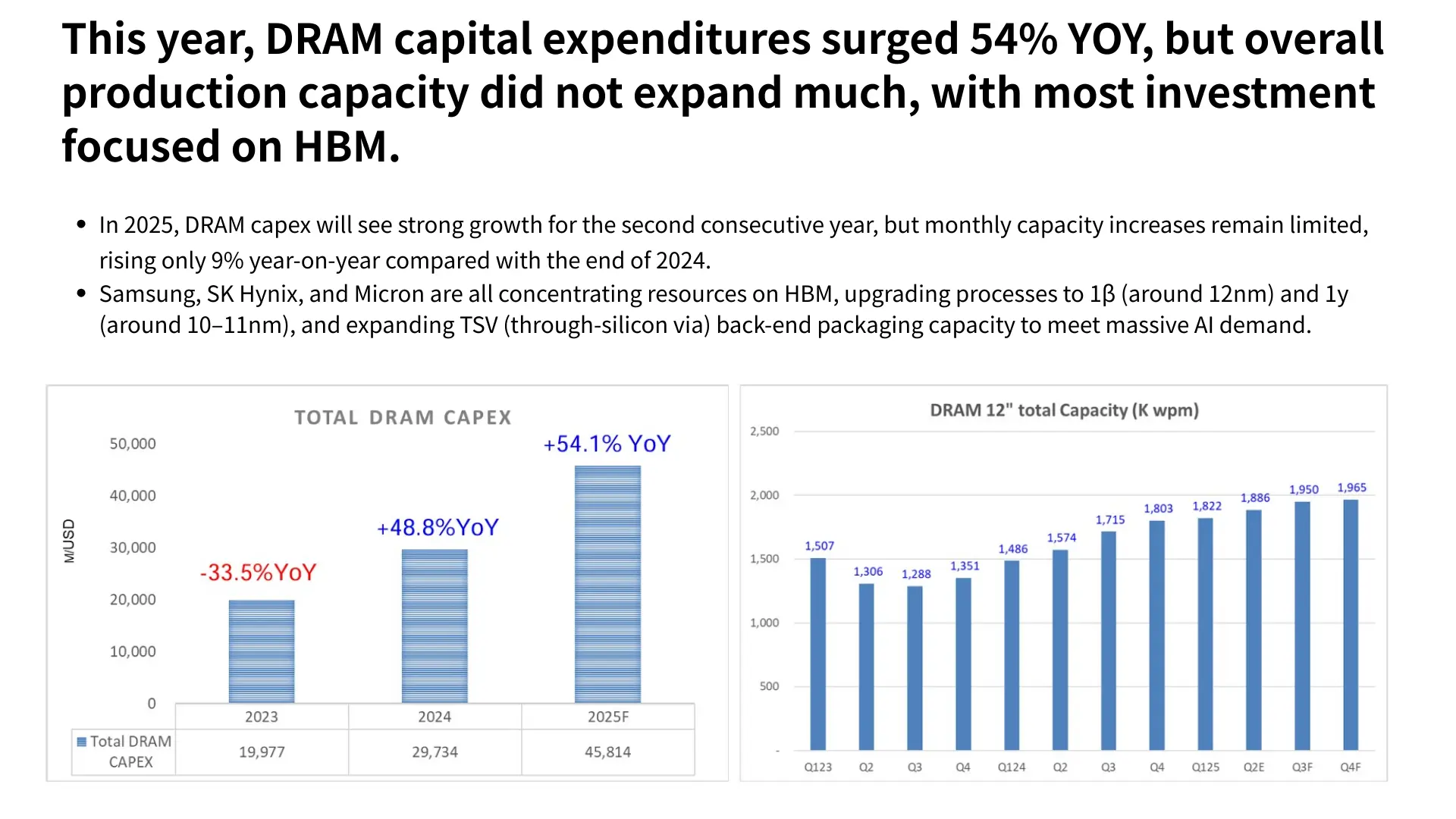
Moreover, most of the three majors’ spending has gone into HBM, including migrating processes to 1β (about 12nm) and 1Y (about 10–11nm), as well as expanding TSV (through-silicon via) packaging capacity for HBM back-end, in order to meet surging AI demand.
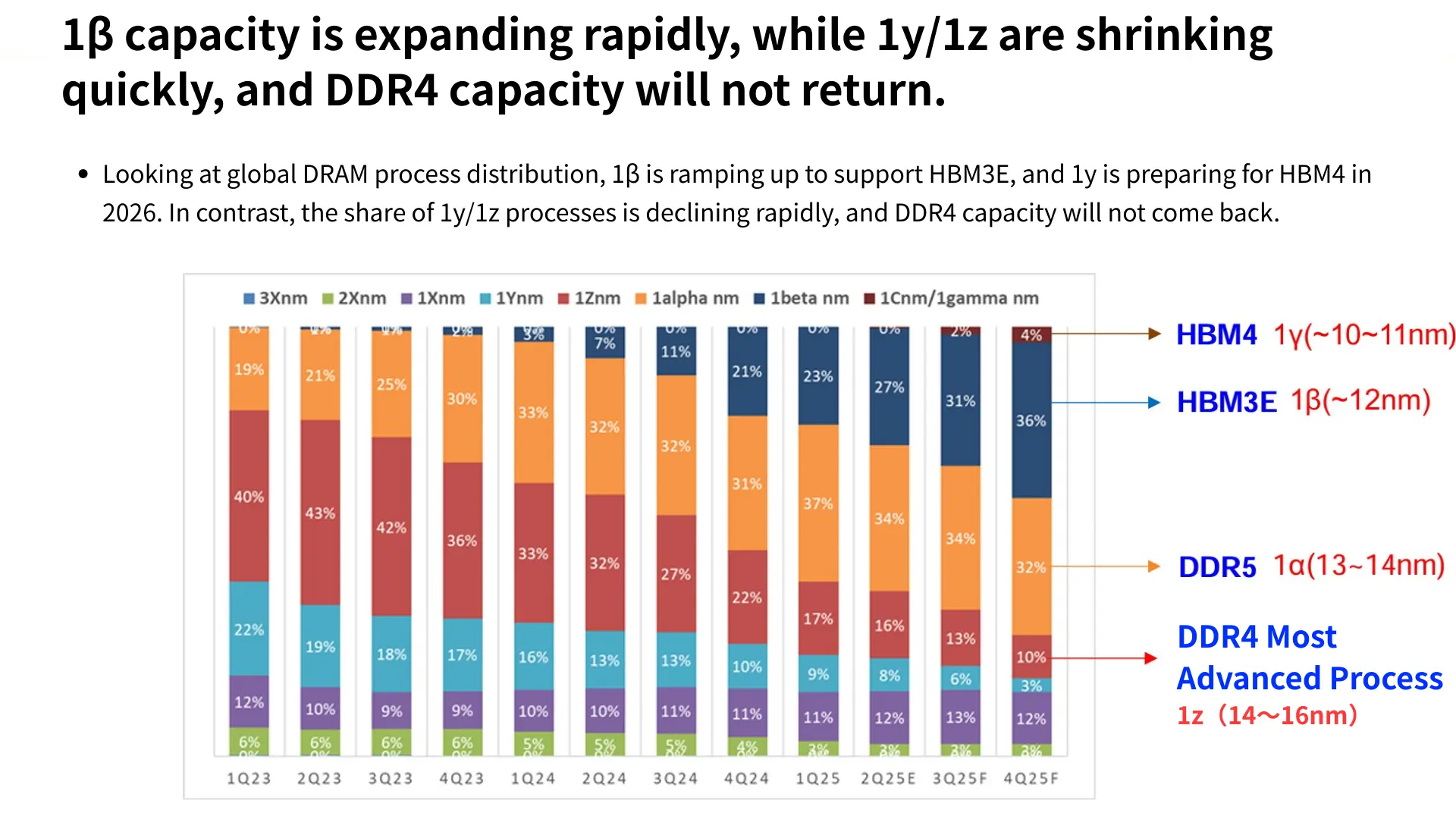
From a process technology perspective, 1β capacity has expanded rapidly, mainly to support this year’s booming demand for HBM3E. At the same time, 1Y capacity is being actively built up to serve the heavy demand expected for HBM4 starting next year.
Meanwhile, slightly older processes such as 1α (13–14nm), used primarily for DDR5 production, have been squeezed as resources are funneled into HBM. The share of 1z capacity (14–16nm), used mainly for DDR4, has dropped sharply (see Figure 4, provided by Uni-President Securities).
Currently, DDR5 is used mainly in general servers, PCs, and laptops, while DDR4 serves lower-end consumer products. With AI servers being the only segment with strong demand, and demand for general servers, PCs, laptops, and consumer electronics all weak, the three majors have not expanded production capacity for these products.
DDR4–DDR5 Price Inversion Emerges
Because the three majors cut back most sharply on DDR4 investment, a supply gap has emerged. By contrast, DDR5 capacity has not been reduced as much, leading to the unusual phenomenon of price inversion between the two products.
Price inversion occurs when DDR5, which by design and technology should be priced higher than DDR4, instead trades lower. This time, because the three majors prioritized cutting DDR4 capacity, DDR4 prices surged sharply in a short period.
Looking at the price trend, DDR4 spot quotes have risen by 1x to 3x since the beginning of the year. Among them, 16Gb 1G×16 products are in the tightest supply, with prices soaring above US$15, while DDR5 prices remain around US$5—showing a stark divergence (see Figure 5, provided by Uni-President Securities).
Such price inversion has occurred before—in 2021–2022, between DDR3 and DDR4. Back then, as the majors cut DDR3 production to phase it out (EOL), supply shrank suddenly and prices spiked in the short term.
However, the DDR3-to-DDR4 transition lasted about seven years, with price inversion lasting for two years at most, and the widest gap reaching 30%. By contrast, the current DDR4-to-DDR5 inversion has reached a threefold difference. The main reason is the sudden and overwhelming wave of AI demand, which prompted SK Hynix, Samsung, and Micron to shift capacity rapidly toward HBM, leaving DDR4 production to shrink dramatically and prices to surge.
For the majors, phasing out low-end processes and migrating to advanced nodes is a natural step in industry progress. But during this transition, Taiwanese firms with weaker process technology find opportunity: when DDR4 prices exceed DDR5, companies such as Nanya Technology (Taiwan Stock Code: 2408) and Winbond (Taiwan Stock Code: 2344) have every incentive to maximize DDR4 output, as profits remain attractive.
According to TrendForce, DDR4 spot prices in June were about 95% higher than contract prices. As a result, TrendForce revised its forecast for third-quarter consumer DDR contract prices upward—from the original 40–45% increase to 85–90%—effectively catching up with spot prices.
Still, TrendForce also forecasts that this transition-phase anomaly, where DDR4 prices exceed DDR5, may last through the second half of this year, but starting in the second quarter of next year, DDR4 prices are expected to decline sharply.
In fact, DDR5 spot prices may even face downside risk in the first half of 2026. DDR5 is mainly used in general servers, PCs, and laptops, but weak demand in these segments, coupled with a 20% price increase so far, could suppress demand further (see Figures 6 and 7, provided by Uni-President Securities).
Another key factor to watch is Samsung’s validation progress with HBM3E. If problems persist, the company may shift capacity toward DDR5 production, which could push DDR5 spot prices down significantly.
Thus, the Taiwanese DRAM industry clearly lags the three global leaders, especially in process technology. While Taiwan dominates the world in foundry manufacturing, it remains behind in memory, leaving its DRAM makers to earn only short-term windfalls during transition phases like the DDR4-to-DDR5 shift, when big players exit but brief excess profits emerge.
Taiwanese Firms Gain Short-Term Benefits but Face Long-Term Challenges
Currently, the three major global DRAM makers are focusing on the high-value-added HBM market. In AI servers, demand for GPU performance, CoWoS packaging (pioneered by TSMC, an advanced semiconductor packaging technology supporting HBM and high-performance computing), and HBM capacity continues to expand, prompting each company to make HBM expansion a strategic priority.
In the competition over HBM3E and next-generation HBM4, SK Hynix currently leads Micron, while Micron has an edge over Samsung. Samsung has already fallen to the back of the pack.
SK Hynix was the first to mass-produce HBM3E and supply it to NVIDIA. As for HBM4, samples were shipped in March 2025, with mass production readiness expected by 2025. The company has adopted MR-MUF technology (an underfill process for HBM packaging), achieving higher yields than its peers.
Micron’s HBM3E is already in mass production and being supplied to NVIDIA, with shipments expected to ramp up in the second half of this year. HBM4 samples were delivered in the second quarter of 2025, with mass production scheduled for 2026.
Samsung, the most behind among the three, has begun mass production of HBM3E but has yet to secure NVIDIA’s qualification. The company is using TC-NCF technology (a non-conductive film thermo-compression process for HBM packaging), but it has yet to overcome yield issues.
Samsung’s struggles with HBM3E raise a potential risk: whether future 1β capacity will be heavily redirected to DDR5, creating supply-side risks for DDR5. This is an area that warrants close monitoring.
Another competitive factor comes from China. CXMT (ChangXin Memory Technologies), tasked with advancing domestic substitution, is now moving into higher-end markets rather than remaining in DDR4. Its process technology has advanced to 16nm, shifting toward DDR5 development while also investing in HBM R&D.
Taiwan’s DRAM makers currently max out at the 17.5nm node and lack the capability to develop HBM. With the three major players plus CXMT all having ceased DDR4 production, this temporary market-segmentation strategy may give Taiwanese firms a short breather. However, in the long run, their lack of competitiveness means they can only survive in the low-end market—a regrettable outcome.
In summary, as DDR5 penetration rises, DDR4 supply and revenue will decline in tandem. By 2026, DDR4 is expected to become a stable niche market, with prices also stabilizing.
Nanya Technology (Taiwan Stock Code: 2408) currently allocates half of its production capacity to DDR4, with consumer applications accounting for 65%. As a result, the company stands to benefit from DDR4’s higher pricing. It is expected to swing back to profitability as early as the third quarter, with earnings likely to stabilize in the second half of the year.
Winbond (Taiwan Stock Code: 2344) derives about 50% of its output from DDR3, 20% from DDR2, and only 10–20% from DDR4, making DDR4 a relatively small portion. As for Powertech Technology (Taiwan Stock Code: 6239), its advanced packaging business has growth potential, but meaningful contributions are not expected until 2027.
In the long run, however, Taiwan’s DRAM industry lacks the momentum to move into HBM, making it difficult to catch up with the three global leaders. Investors should therefore exercise caution when selecting related stocks.
Related Articles
Micron Announces Its Largest Rewards Ever. Its Taiwan Union's Demands Expose a Clash of Pay Systems. A strike threat at Taiwan's largest foreign investor, read in three dimensions

TSMC's 3nm rinse comes exclusively from AEMC, a Taiwanese company once withdrawn from the Emerging Stock Board

Taiwan AI Industry Upgrade Forum Series || Event Report:America Wants More Manufacturing. What Does It Take for Taiwan’s Suppliers to Follow?