U.S.-Japan-Taiwan Alliance Leaves South Korea Feeling Sidelined — My Experience with Korean Media Interviews
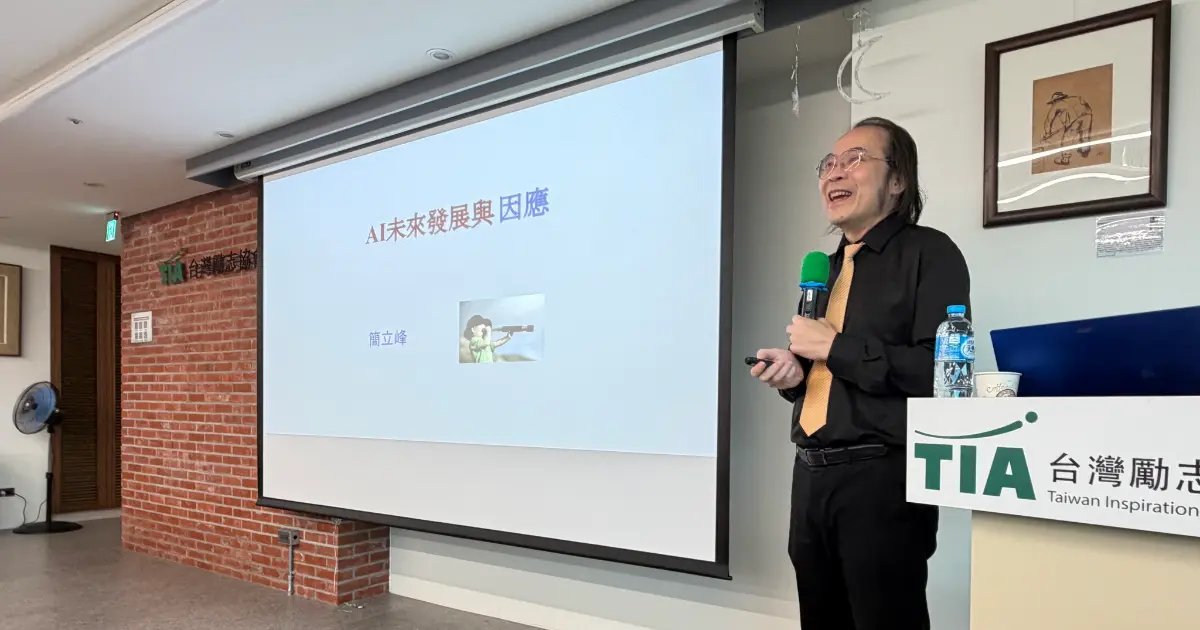
In recent months, several Korean media outlets, including Insight Korea and Hankyoreh, have interviewed me. Their questions ranged from TSMC, Samsung Electronics, and SK Hynix to AI trends, Trump’s policies, and the competitiveness of Taiwan and South Korea. From these exchanges, I summarized the topics Koreans care most about and shared my own observations.
Over the past two years, I have frequently traveled to Japan and South Korea for lectures and visits related to my book. Through these trips, I have strongly sensed the heavy pressure South Korean companies are facing.
On one hand, the AI boom has created enormous opportunities for Taiwan. Companies such as TSMC and Hon Hai have benefited, while Jensen Huang, CEO of NVIDIA, and Lisa Su, CEO of AMD—both Taiwanese Americans—play pivotal roles in the AI sector. On the other hand, Japan has been investing aggressively in recent years and has secured support from both the U.S. and Taiwan. For example, Rapidus licensed advanced technology from IBM, and TSMC invested in Kumamoto. This U.S.-Japan-Taiwan alignment has left South Korean firms under mounting pressure.
A senior reporter from Hankyoreh noted that Taiwan’s GDP growth in the first half of this year exceeded 5 percent, while South Korea’s was close to zero, adding that many in Korea felt Taiwan’s performance was enviable.
Korean journalists asked a wide range of questions: the key factors behind TSMC’s success, its governance model, the international competitiveness of Taiwan’s IT sector, the impact of Trump’s policies on Taiwan, and the role of Taiwan’s government in industrial development. I responded to each.
Yet I could tell that while they inquired about other countries’ strengths, what they truly cared about was their own country’s competitiveness. I could relate—I also tend to benchmark Taiwan when examining other nations.
Because I wrote a book on Samsung Electronics more than a decade ago, Korean reporters were especially eager to ask about Samsung’s future.
I explained that although Samsung is currently behind, it will inevitably work to catch up with TSMC. Of course, TSMC will also continue to move forward. For now, TSMC’s lead is evident, and Samsung remains its strongest challenger. Intel and Rapidus still lag far behind.
I stressed that this was not meant as comfort but as an honest assessment. Recently, Samsung cut prices by 30 percent, aggressively competing for Tesla’s AI chip orders and Sony’s CIS orders for Apple. These moves show Samsung is fighting to stage a comeback, and TSMC must be prepared.
〈Further Reading:Two 800-Pound Gorillas in Talks—If Samsung Electronics Joins Forces with Intel, What Impact Would the No. 2 and No. 3 Players Have on Market Leader TSMC?〉
Samsung’s main challenge is the vast scale and complexity of its businesses, which makes internal management difficult. I suggested Samsung consider Sony’s approach of spinning off its finance business and planning to separate its semiconductor division to streamline operations and improve efficiency.
In particular, in the AI era, industrial collaboration and alliances are becoming increasingly important. Building partnerships and earning customer trust will be Samsung’s most critical tasks.
Samsung’s Struggles and Leadership Challenges
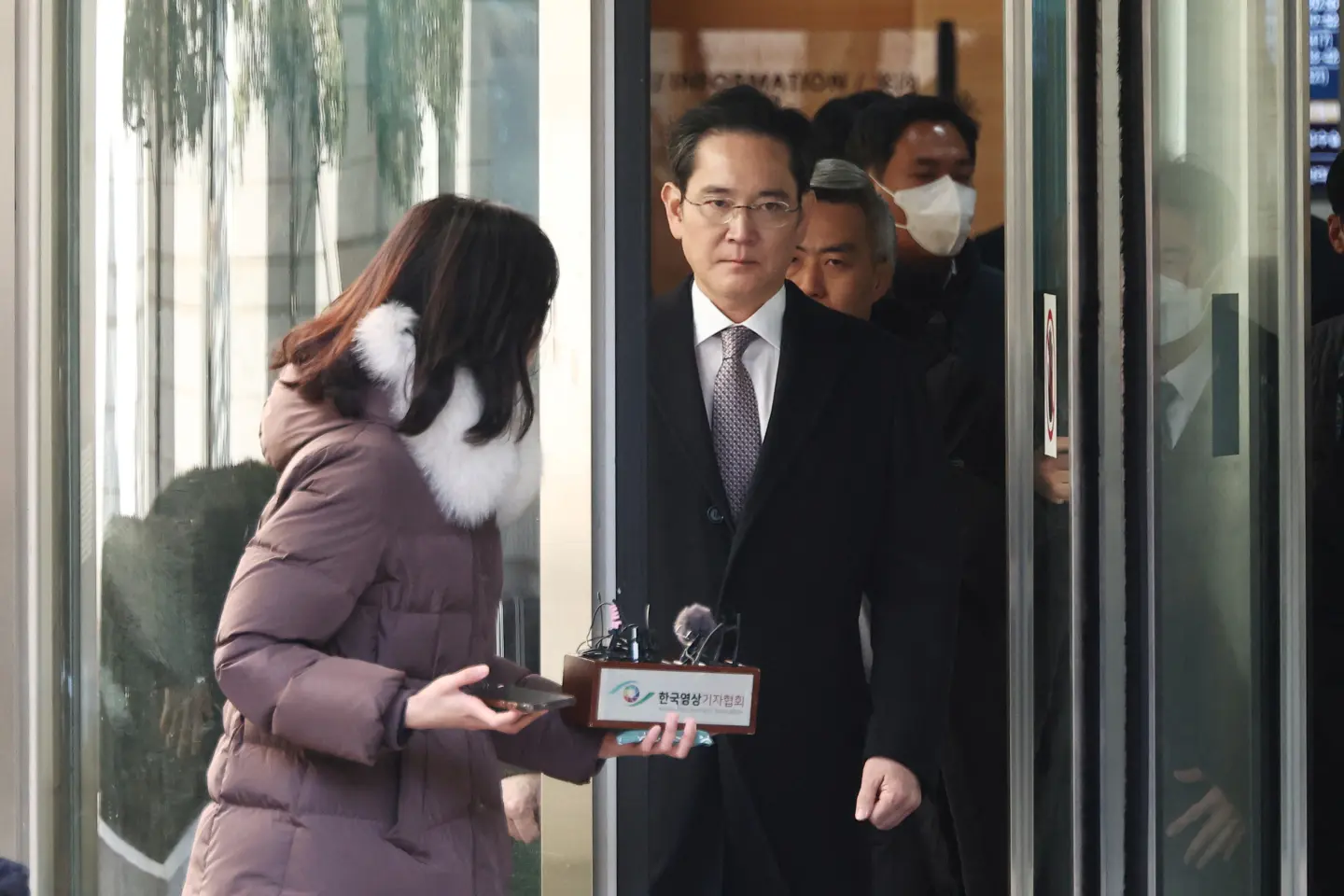
Reporters also asked about the differences between Lee Jae-yong and his father, Lee Kun-hee.
I said Lee Kun-hee was a once-in-a-generation business leader. During the U.S.-Japan trade tensions of the 1980s, he seized the moment to expand Samsung into a vast empire—an achievement his son Lee Jae-yong may find difficult to match.
Lee Jae-yong, by contrast, has been called a “diplomat.” Groomed from childhood as an heir, he inherited a conglomerate that was already massive. His task was not to “conquer” but to “govern.”
However, in his decade at the helm, he has struggled to strengthen corporate philosophy, shape organizational culture, and upgrade internal management and systems. His involvement in multiple legal cases, including imprisonment, has been a key factor behind Samsung’s decline over the past ten years.
Song Chang-seop, editor-in-chief of Insight Korea, further asked: Samsung has strengths in both foundry and memory, something TSMC lacks. How does this affect their competition?
I replied that Samsung’s dual strength is indeed unique. But in the AI era, specialization and division of labor are paramount. Excelling in one area is more important than trying to do everything. Currently, Samsung is behind in both foundry and memory—a serious warning sign.
Song also asked about SK Hynix’s collaboration with NVIDIA and TSMC.
I said it was an excellent question. SK Hynix has endured many crises and restructurings, yet it has achieved remarkable success today. I even suggested that documenting its rise in a book could inspire both Korean and global companies.
For years, SK Hynix was regarded as the perennial “No. 2,” far behind Samsung. But in HBM, it turned the tables and surpassed its larger rival.
Its success came from a consistent and correct investment strategy, strong persistence, and—most importantly—close strategic alliances with NVIDIA and TSMC. This allowed it to secure major advances in the AI era.
This illustrates a key lesson: Samsung should move away from doing everything in-house and pursue more external collaborations instead.
AI as the Defining Keyword and Investment Driver
Song also asked me what keyword would matter most in the semiconductor industry in 2026.
After careful thought, I replied: AI. Many forecasting institutions expect the global semiconductor industry to hit an inflection point in 2026, with growth slowing.
Even so, SEMI projects that global fab equipment spending in 2026 will rise 18 percent to $130 billion, a record high. Key areas will include 2-nanometer process technology, backside power delivery, AI chips, and high-performance computing.
The AI boom will last a decade, but each year will see different industries benefit. For example, this year the PCB sector surged thanks to Amazon and Google’s large-scale push into ASIC-based AI systems, which drove soaring demand for upstream materials.
In my view, AI chips and high-performance computing will be the strongest drivers of technological upgrades and capital investment across the industry.
During this AI golden decade, both Taiwan and South Korea will play increasingly important roles. TSMC will lead, Samsung will follow, and Asia will remain the world’s semiconductor manufacturing hub.
Finally, reporters also asked about the rise of China’s semiconductor industry and its future influence.
I responded that China is advancing rapidly and has built an almost self-sufficient ecosystem. With the backing of its vast domestic market, China will become the most formidable challenger in global semiconductors.
I added that Taiwan and South Korea have taken different approaches to their China strategies. Taiwanese firms have clearly reduced investment in China in recent years, moving production lines elsewhere.
Several Taiwanese packaging and testing firms—including ASE, Nanya, Powertech, and KYEC—have even sold facilities to Chinese companies, reallocating resources to other countries.
Taiwanese firms understand that competing head-to-head on price with Chinese players is unrealistic. Instead, they are withdrawing and redeploying resources to the U.S., Europe, and Japan.
If there is one lesson from Taiwan’s experience for Korea, it is this: leaders must face reality, know when to retreat, regroup, and prepare to fight another battle.
Some friends have told me that Taiwan and South Korea are mostly competitors with little room for cooperation—and even cautioned not to reveal too many secrets for fear of being copied.
Yet I believe the AI era is opening up new possibilities for cooperation. The SK Hynix-NVIDIA-TSMC partnership has already encouraged suppliers in both Taiwan and South Korea to work together.
Though their industrial structures differ, there is much they can learn from each other. Taiwan can learn from Korea’s industrial integration and long-term investment mindset, while Korea can learn from Taiwan’s entrepreneurial spirit and adaptability.
Taiwan’s industrial ecosystem functions as a broad alliance of specialized players. In the past, it worked more with Japan. In the future, I expect more new cases of cooperation with South Korea. I sincerely hope Taiwan-Korea collaboration will become increasingly successful.
Related Articles
Micron Announces Its Largest Rewards Ever. Its Taiwan Union's Demands Expose a Clash of Pay Systems. A strike threat at Taiwan's largest foreign investor, read in three dimensions
TSMC's 3nm rinse comes exclusively from AEMC, a Taiwanese company once withdrawn from the Emerging Stock Board
Taiwan AI Industry Upgrade Forum Series || Event Report:America Wants More Manufacturing. What Does It Take for Taiwan’s Suppliers to Follow?